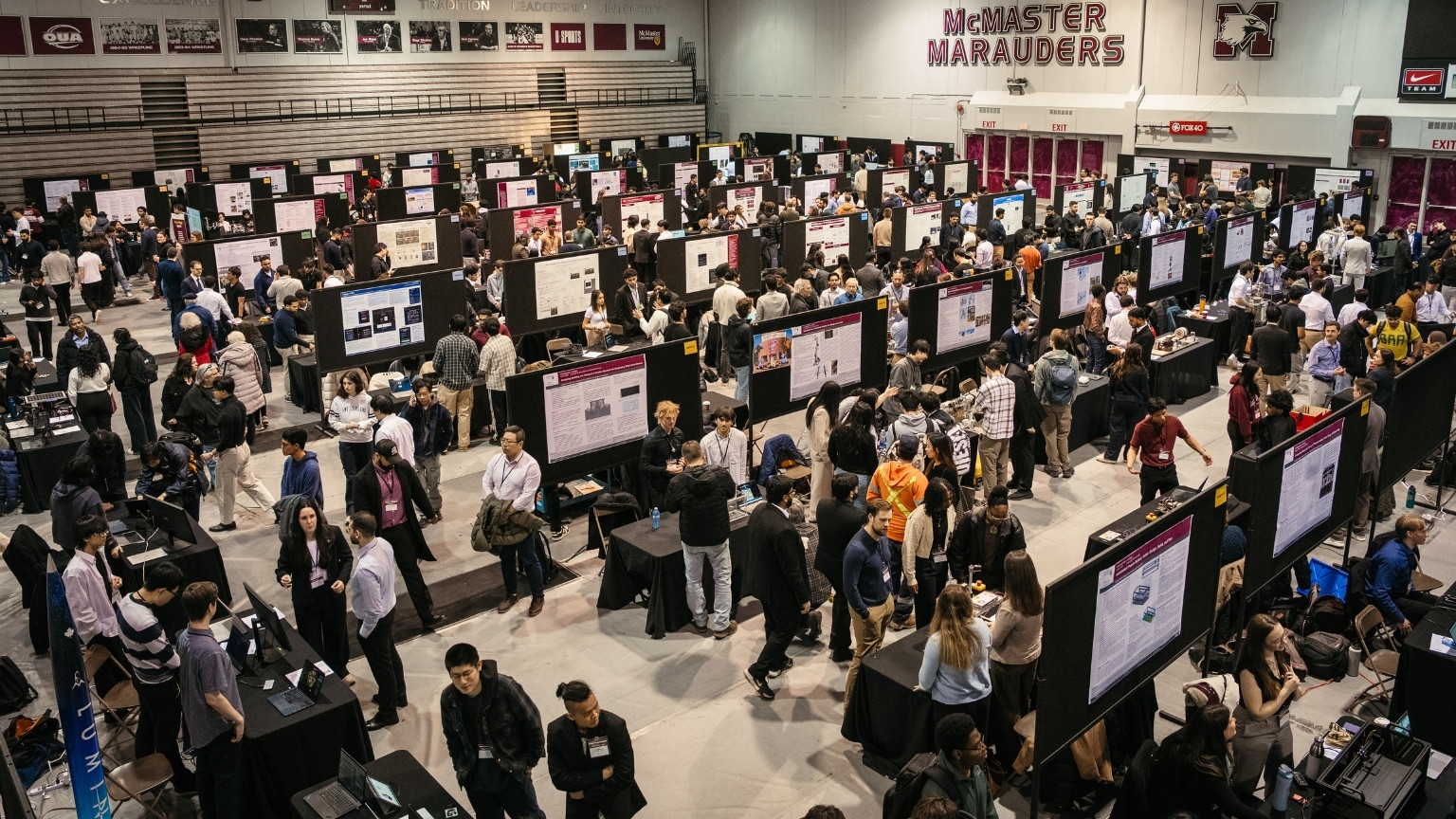
Nearly 250 engineering Capstone projects created by our students and guided by our expert professors took centre stage at this year’s Capstone Expo. Marking the culmination of a full year of applied learning, research and industry‑inspired problem solving, the annual Expo, held on the last day of classes, highlights how classroom theory translates into real‑world engineering solutions.
Here is a sampling of the projects that are engineering a brighter future.
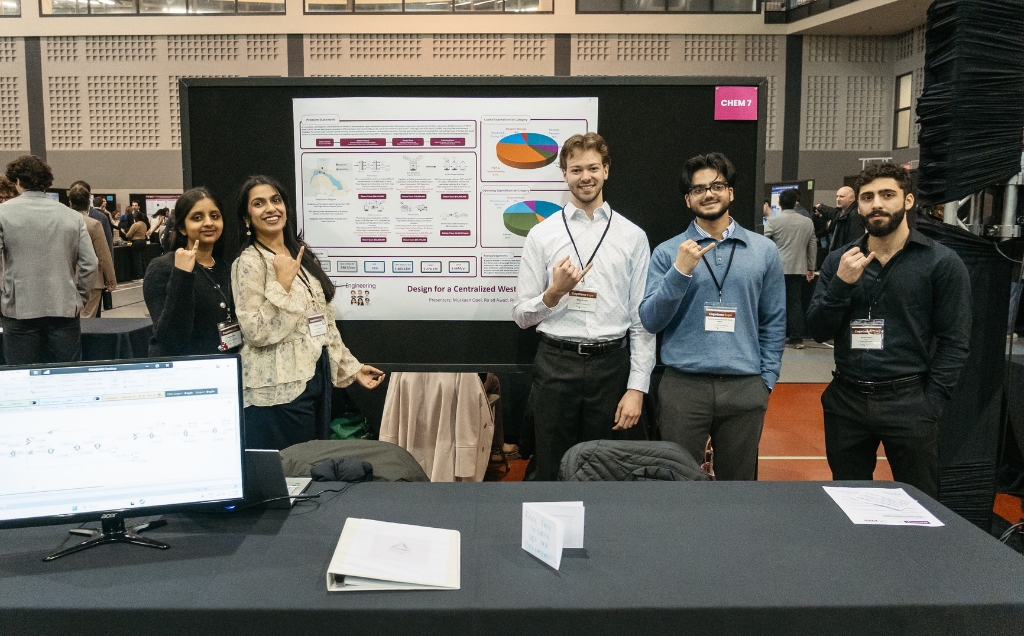
Chemineers – Design for a centralized Western lithium refinery with HATCH
Syed Muhammad Zain Raza Naqvi, Yash Vanama, Ra’ad Awad, Muskaan Opel, Ryan Gimple
Advisor: Jake Nease
The team collaborated on a solution to the challenge of efficiently extracting and purifying lithium from brine to produce high-purity lithium carbonate. It focuses on doing this in a way that is cost-effective, sustainable and scalable for growing battery demand.
Over the year, members pulled their skills from previous courses, like 3G04 and 4N04, to apply concepts they learned to a real, open-ended design project. But they were also exposed to new programs, like ASPEN, which represented both the largest challenge they faced and thebiggest engineering feat they accomplished by modeling an entire refinery with it.
For the team, Capstone “improved our problem-solving, teamwork and communication skills, and gave us a better understanding of what engineering work is like in the real world. Furthermore, having the opportunity to work with an extremely professional team like HATCH really was a great learning experience.”
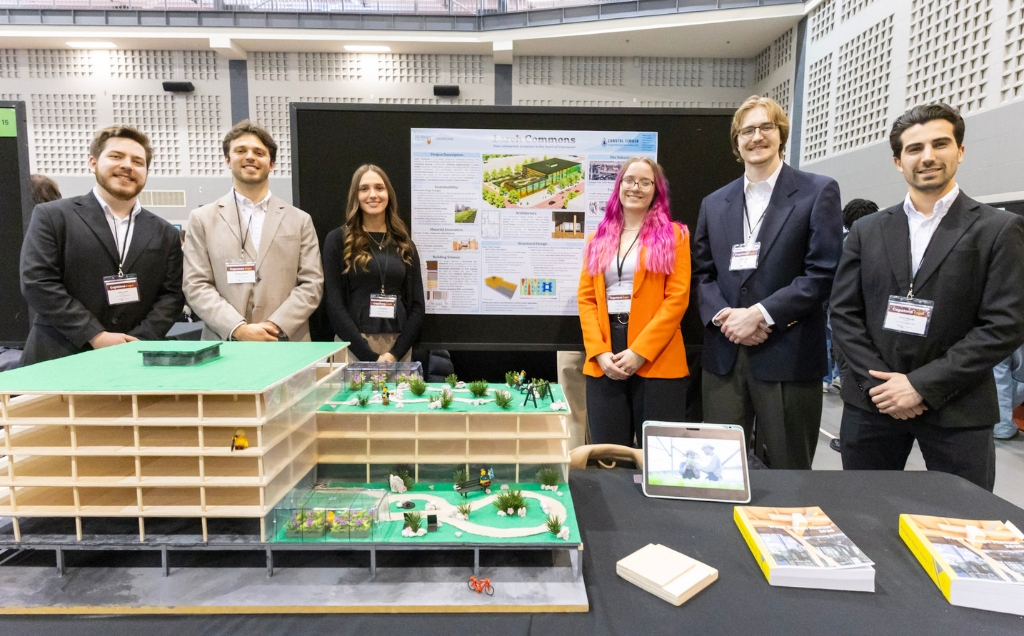
Coastal Timber Engineering Services Ltd.
Orin D’Souza, Carina Skoko, Dylan Irwin, Matteo Lonardi, Olivia Wiper, Chris Reimer
Advisor: Zoe Li
The team worked on Larch Commons, a six-storey mixed-use development that blends urban living with public green spaces and commercial areas. The team designed the columns, beams and floor panels out of mass timber, an innovative structural solution utilizing laminated wood members to offer a high-strength, fire-resilient and carbon-efficient alternative to traditional construction materials. The result is a biophilic and environmentally friendly space that prioritizes reconnecting tenants with nature and their community. Larch Commons provides a step towards walkability and accessibility in the busiest transit corridor in North America.
When it comes to their work, the team’s diverse co-op experiences in transportation, project management and structural engineering, as well as their extensive experience in both technical and non-technical clubs, allowed them to develop the strong leadership, collaboration and communication skills that were directly applicable to this project. The team combined complex structural design with a thorough architectural vision, leading to a functional, transit-oriented solution, showcasing their shared commitment to bettering the world around them using the engineering skills they have learned throughout their years at McMaster.
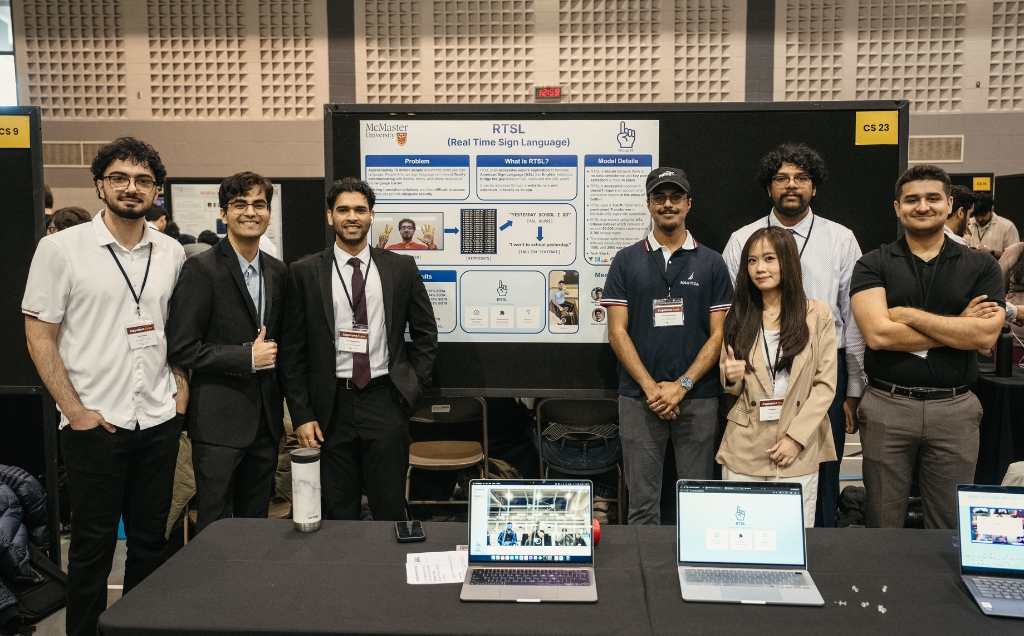
Team RTSL – Real-time sign language
Gaurav Sharma, Bani Somo, Arin Khandelwal, Dhruv Chand, Ha Nguyen, Roshaan Quyum, Vinoth Robinson
Advisor: Mehdi Moradi
The team developed an application that translates American Sign Language into written English in real time using a three‑stage machine learning pipeline: identifying body keypoints, converting gestures into words and refining those words into clear English sentences. To protect user privacy, all video is processed locally, and the tool is freely accessible as a website, browser extension or app.
Falling back on learnings from COMPSCI 4ML3 – Fundamentals of Machine Learning – and COMPSCI 4AL3 – Applications of Machine Learning – they were able to select optimal architecture and the necessary expertise to create a machine learning model to successfully translate physical gestures into English. Their teamwork resulted in custom-engineered models which perform competitively alongside state-of-the-art benchmarks in translation accuracy.
“We are most proud of the application’s responsiveness; the immediate visual feedback of your body’s keypoints and word translations creates an engaging, intuitive user experience.”
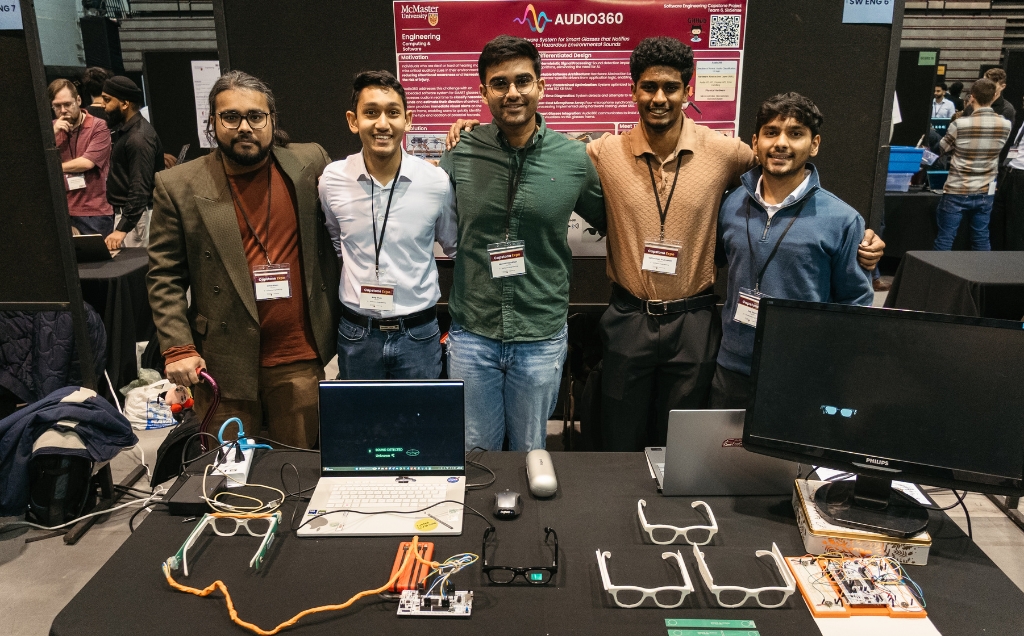
SixSense – Audio 360
Sathurshan Arulmohan, Omar Alam, Jay Sharma, Nirmal Chaudhari, Kalp Shah
Advisor: Martin Mohrenschildt
The team navigated their first experience with the fundamentals of signal processing to create Audio360, a software system for SMART glasses for individuals with reduced hearing.
Audio360 uses a computing system onboard the glasses to perform digital signal processing of real-time audio to determine the relative direction of the audio source and its classification. Through multiple microphones, the glasses listen for emergency sirens (e.g. Firetrucks, Ambulances), fire alarms and people talking nearby, and display the information directly on the lenses to help individuals navigate their environments safely.
“We believe that we applied the best of what we learned from every course, from teamwork in Engineering 1P13, all of the technical skills learned in various SFWRENG courses, our experiences volunteering for teams such as McMaster EcoCAR, and the co-ops that we all completed throughout our Mac Eng journey!”
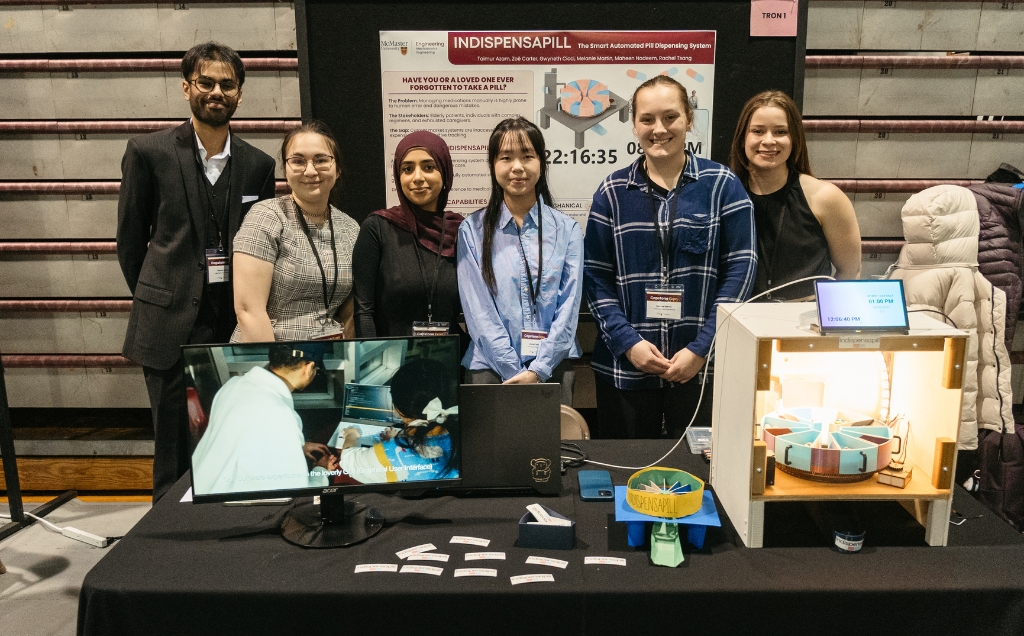
Indispensapill – Automatic pill dispenser
Melanie Martin, Zoë Carter, Gwyneth Cicci , Taimur Azam , Rachel Tsang, Maheen Nadeem
Advisor: Alan Wassyng
Indispensapill is a smart automatic pill dispenser designed to bring peace of mind to daily use. The Indispensapill addresses the major challenges in taking pills by providing reminders for patients to prevent forgotten dosages. It also eliminates the need to count pills by automatically dispensing the exact dosage required, making pill management easier.
Discussing their Capstone project, the team reflected on all the courses that led to its completion: “Our CAD/CAM/CAE course provided beneficial techniques that went into the mechanical designed components. The Embedded Systems Design courses gave us the basis for programming our hardware and integrating them into our device. Electronics and Instrumentation exposed us to the working principles of electrical components and allowed us to optimize our circuit for control.
“We are proud of how much we were able to accomplish and problem solve in this short time. Seeing the way our project evolved from a paper prototype to a working automated pill dispenser using all the knowledge we gathered through our undergrad was very rewarding.”
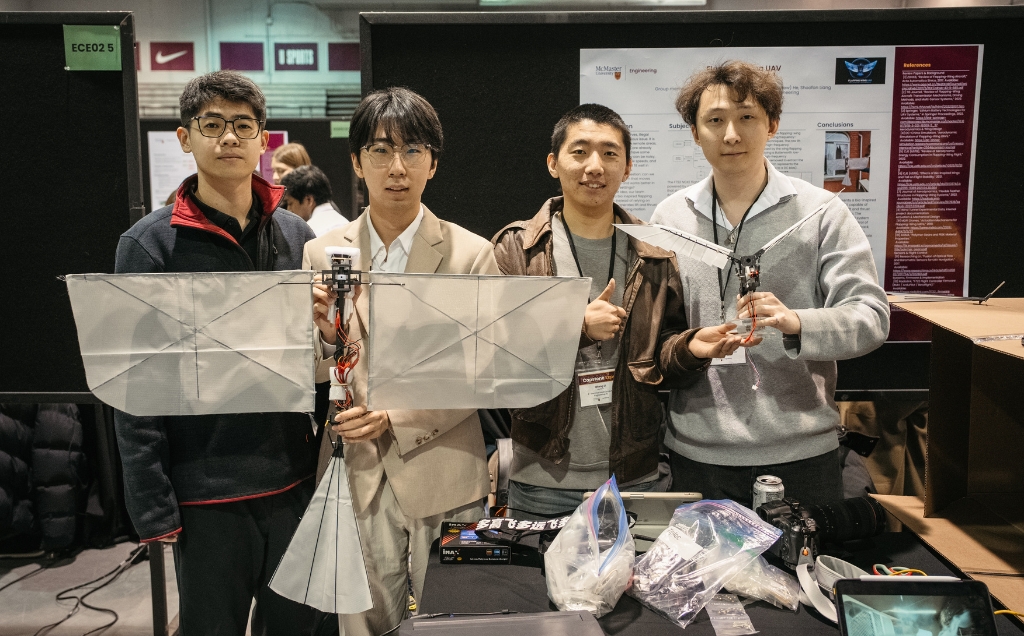
NextSI – Ornithopter (Biomimetic flapping-wing drone)
Yiyang He, Qiteng Li, Shaofan Liang, Shangrui Wu
Advisors: Xun Li and Mohamed Bakr
With an interest in bio-inspired robotics and a desire to explore an alternative to conventional drone designs, this team took on the Ornithopter. Early in the project, the team was drawn to the idea that bird-like flapping flight could offer advantages such as lower noise, better low-speed performance and more natural movement in sensitive environments.
The key achievement for the team was not just making individual modules work, but making them communicate, respond and support meaningful testing as one system. In the end, the team achieved repeatable flapping motion, basic control functionality and airflow visualization in the wind tunnel, which was a major systems-level accomplishment.
“One of the biggest takeaways from this capstone experience was understanding the gap between a good concept and a working engineering system. As ECE students, we are more familiar with control, sensing, and system design, but this project showed us that a system only truly works when the hardware interfaces, mechanical structure, control logic and testing process all come together successfully.”
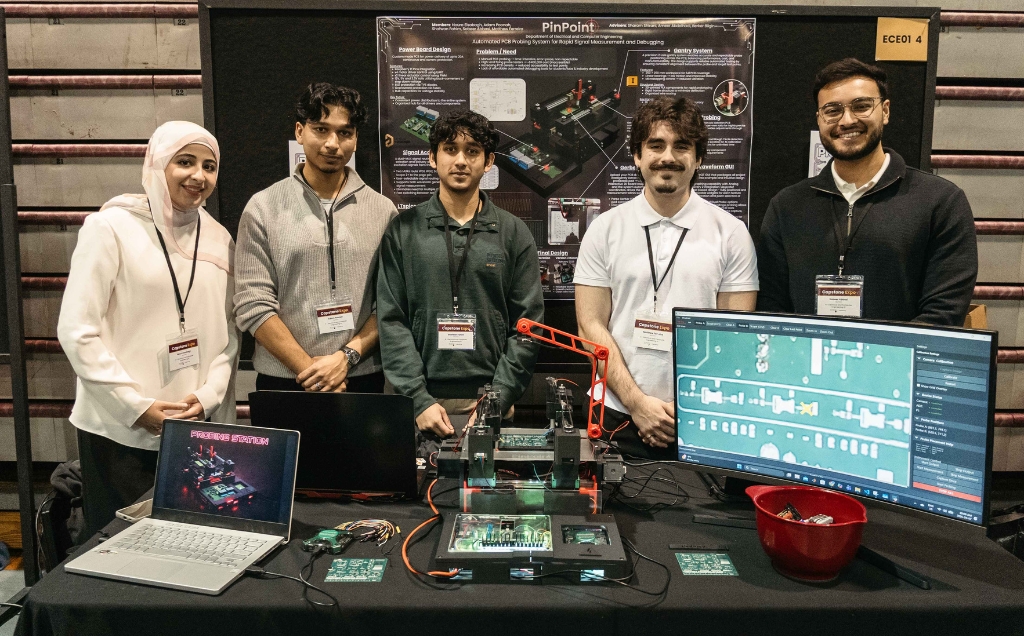
PinPoint – Automated PCB tester
Noura Elsabagh, Adam Poonah, Shafwan Fahim, Sabeer Abbasi, Matthew Ferreira
Advisors: Shahram Shirani, Ameer Abdelhadi, Berker Bilgin
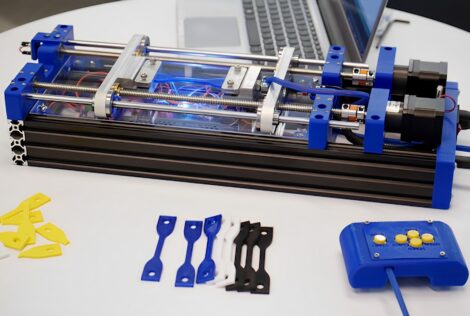
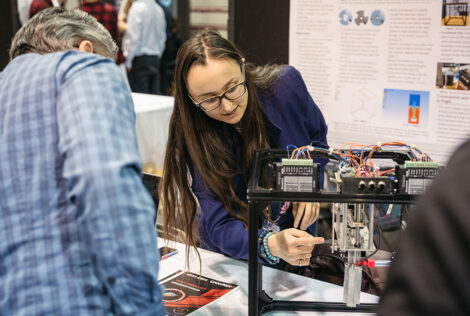
The team created an automated printed circuit board (PCB) testing system that is designed to make electronics manufacturing faster, more accurate and less dependent on manual inspection. To address the timely, manual labour typically involved with verifying connections, they created a system that uses precision motion control, electrical probing and software automation to test PCBs efficiently and consistently. The project brings together mechanical design, electronics, embedded systems and software highlighting how interdisciplinary engineering projects can become real-world solutions.
Their leadership and confidence in prototyping, troubleshooting and leading complex projects were strengthened in courses like 1P13, experiences through design teams, co-ops and technical clubs.
“We built a team culture where every member had a voice, and that collaborative environment helped us create a final product we are incredibly proud of!”
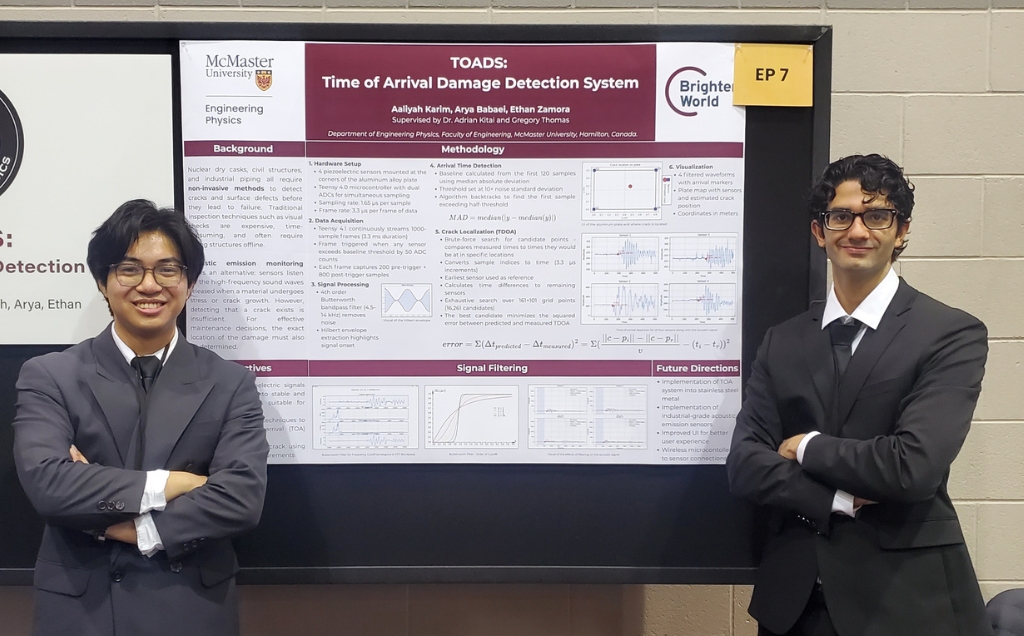
TOADS – Time of arrival damage detection system
Arya Babaei, Ethan Zamora, Aaliyah Karim
Advisor: Gregory Thomas
The team created a monitoring device for nuclear waste canisters that can pre-emptively track, in real-time, the location and arrival-time of stress crack formation in a single, low-cost and remote device.
Since infrastructure is traditionally monitored using visual inspection methods like cameras, this project aimed to create a real-time, non-visual system that detects cracks the moment they begin forming on a surface and pinpoint where it occurs.
Members of the team were grateful for the lessons learned in ENGPHYS 3L04, as it taught them how to evaluate different detection methods to choose the one best suited to their application, which was piezoelectric sensors for detecting perturbations through a solid medium.
“What we are most proud of is that we were able to develop a highly novel non-destructive testing method using very low-cost components. A large part of the work went into refining the software, especially optimizing signal sampling times, signal processing, and the time-of-arrival algorithm for detecting incoming signals.”
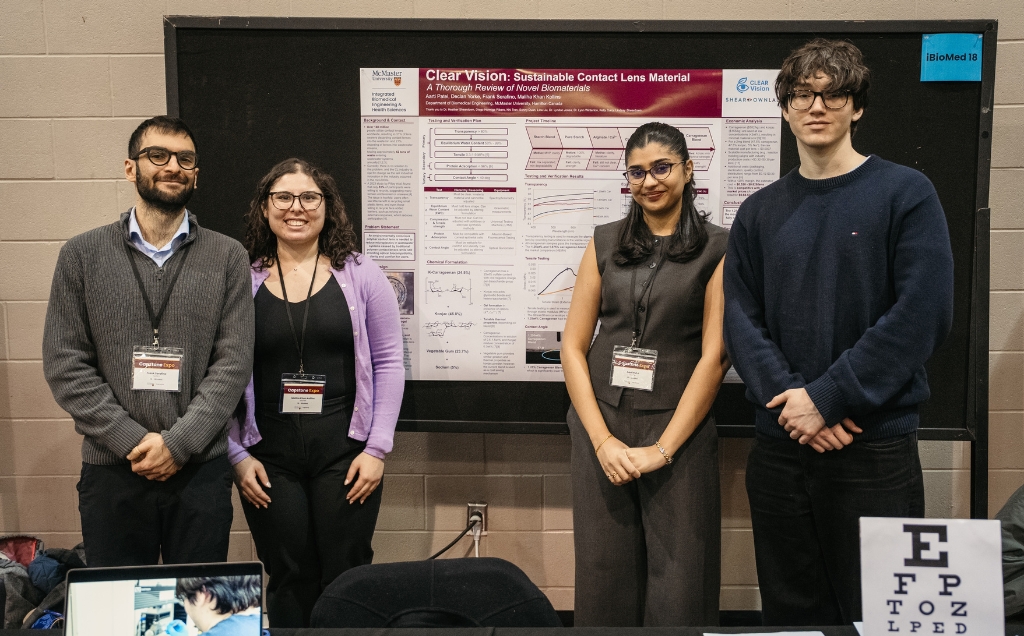
Clear Vision – Sustainable contact lens material
Frank Serafino, Maliha Khan Kollins, Aarti Patel, Declan Yorke
Advisors: Heather Sheardown
The team designed a sustainable contact lens using naturally sourced biomaterials as an alternative to traditional plastic-based lenses. The project combines chemical engineering concepts like polymer synthesis, material characterization and biocompatibility testing to ensure the lenses perform safely and effectively for the human eye. It is a great example of how engineering can be used to solve real-world problems by balancing performance, safety and environmental impact.
Pulling on their experiences in Mac Eng design courses like 1P10, 3P04, and 4P03, as well as their Chemical Engineering coursework, made it easier to approach a complex biomedical problem with both technical depth and organized project execution.
“Beyond the technical outcome, we’re proud of how much we grew as a team, especially in learning new lab-based skills like polymer synthesis and experimental testing.”
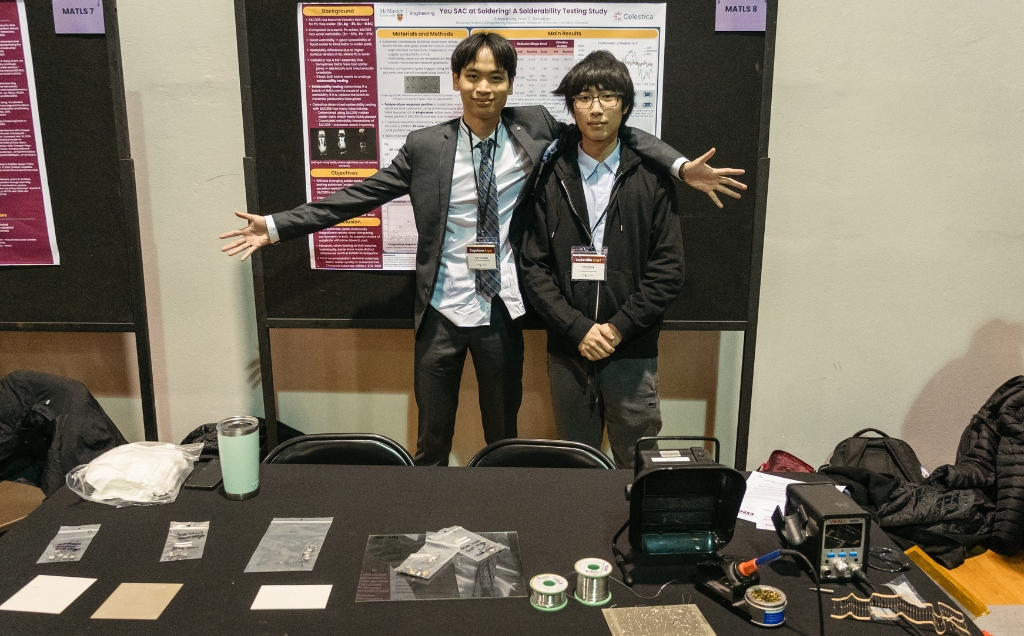
Tin Titans were on the case to help their industry partner, Celestica, make their solderability tests more reliable. Solderability testing involves using a plate that simulates a real circuit board, where the solder flows on top of the plate and surrounds the leads of the components on top of the plate. This checks if solder can do its job at creating electrically and mechanically reliable connections to the components and form a conductive bridge between the component and circuit board pads. For their project, they researched and tested alternative plates to ensure reliable solderability tests that keep production lines running smoothly.
Of note, the project increased the reliability of solderability tests which prevents circuit board assembly slowdowns, allowing companies to release electronic products to consumers faster. Their industry partner, Celestica, will benefit from the team’s work with reduced component waste, which also benefits the environment and saves them around $1M dollars every decade.
“We were most proud of figuring out the exact science on how solder flows on a surface that fundamentally proved which alternative plate was best to use.”
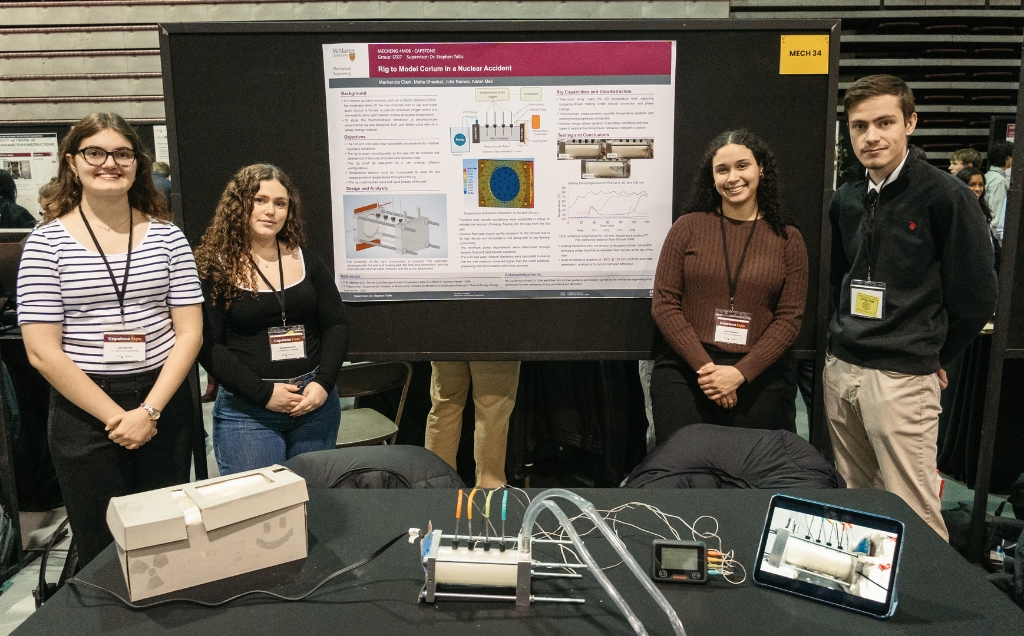
ST07 – Experimental rig for nuclear core collapse accidents
Maha Shawkat, Julia Barnes, Mackenzie Clark, Aaron Meli
Advisors: Stephen Tullis and Ethan Sun
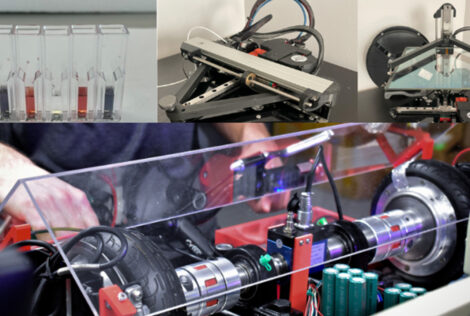
Supporting the growing nuclear field, the team designed, built and commissioned a benchtop rig that melts paraffin wax to study the behaviour of phase-change materials. At McMaster, nuclear researchers use simulation software to model the phase change process during a nuclear reactor meltdown. The rig provides a physical reference to compare against computer models, and allows for testing different experimental conditions. Delivering the test rig, the team paved way for the experimental validation of phase change models.
“What makes us most proud of this project is that we developed a benchtop rig with a scale and configuration that has not been implemented before, enabling a unique experimental approach to a complex research problem.”