Engineering Physics – Faculty of Engineering

Engineering Physics

Apply your aptitude for science and mathematics to tackle complex engineering problems head-on.

Length
4 years
Degree
Bachelor of Engineering (Co-op Available)
Program
Engineering
Options

Co-op, Management, Society

Overview

Engineering Physics explores the science behind technologies that shape everyday life, from computers, lasers and medical imaging to renewable energy, space systems and quantum computing. You will build a strong foundation in physics, mathematics and engineering through hands-on labs, design projects and research experiences. The program prepares graduates for careers in advanced technology industries, research, innovation and graduate studies, where they can help develop the next generation of scientific and technological breakthroughs.

Why study this program?

  1. Study in one of Canada’s only dedicated Engineering Physics departments, where faculty members are specialized researchers and educators in this field.
  2. Learn in exceptional facilities, including a student-accessible clean room and the unique opportunity to study alongside research connected to the McMaster Nuclear Reactor.
  3. Explore emerging technologies shaping the future, from quantum computing and telecommunications to renewable energy and semiconductor devices, through hands-on labs, research opportunities and co-op experiences.
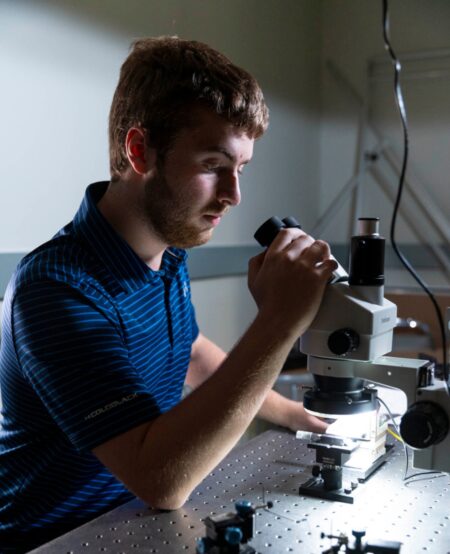
A student leans forward to peer into a microscope.

What you'll learn

Engineering Physics combines physics, mathematics and engineering to explore the technologies behind modern systems such as computers, lasers, telecommunications, renewable energy, medical imaging and space technologies.  

Study core areas including electronics, optics, quantum physics, materials, communication systems and energy systems. The program also offers opportunities to explore specialized areas such as quantum computing, nuclear engineering, photonics, biomedical engineering and space systems.  

The Engineering Physics program is offered by the Department of Engineering Physics.

All students in McMaster’s undergraduate engineering programs participate in a common first year — Engineering 1. Build a solid base in the fundamentals of engineering disciplines and get exposed to engineering design work right at the start of your degree.

ENGPHYS 2A04 – Electricity and Magnetism

Explore how electric and magnetic fields power the technologies around us. Through problem-solving and applied labs, you’ll connect fundamental physics to real systems like motors, sensors, and communication devices.

ENGPHYS 2QM3 – Introduction to Quantum Mechanics

Step into the world of quantum physics and discover how nature behaves at the smallest scales. You’ll develop the tools to understand technologies like quantum computing and advanced materials.

ENGPHYS 3SP3 – Space Systems Engineering

Explore how space missions are designed and built from the ground up. You’ll learn systems engineering principles used in the space industry, including mission design, requirements, spacecraft subsystems and verification processes. This course also introduces orbital mechanics and the challenges of operating in space environments.

Get practical experience and grow your portfolio with interdisciplinary design courses. All students in a Bachelor of Engineering take four project-based design courses:

1. ENGINEER 1P13: Integrated Cornerstone Design Projects in Engineering

2. ENGINEER 2PX3: Engineering Design 2: Communications and Societal Impact

3. ENGINEER 3PX3: Engineering Design 2: Engineering Economics

4. Capstone project (year-long design project)

Potential career paths

Graduates will be career-ready for high-demand areas such as advanced technology, energy systems, telecommunications, materials, and space and quantum technologies.

  • Electrical Engineer
  • Embedded Software Engineer
  • Manufacturing Engineer
  • Mechanical Designer
  • Quality Engineer
  • Research Assistant

Explore Engineering Physics in grad school

You’ll already be connected to world-renowned researchers leading innovation in your undergrad: continue pursuing research and innovation in a master’s program.

  • Innovative Student Learning Spaces

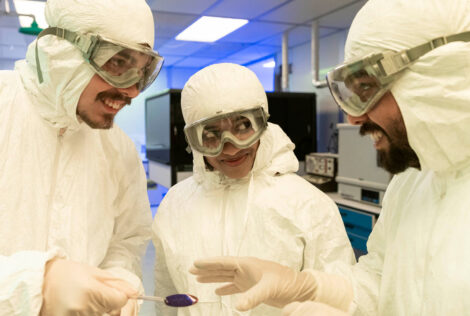
    Gain hands-on experience designing and building advanced semiconductor and photonic technologies in a state-of-the-art clean room.

    The Engineering Physics clean room lets students design and build real computer chips, solar cells, and photonic devices in a controlled, industry-style environment.
    Learn about The Centre for Emerging Device Technologies (Opens in new window)
  • Clubs and teams

    McMaster has many clubs, teams and societies you can join to practice your engineering skills, get more hands-on experiences and explore new activities.

    Quantum Club explores and demonstrates quantum mechanics through hands-on learning, focusing on quantum computing and communication.
    Learn more about Mac Eng Experiences
  • Canada's largest undergraduate research program

    Engage in hands-on research and complex problems with a mentor as early as your first year.
    Donna Strickland’s Nobel-winning chirped pulse amplification advances ultrafast laser physics and high-intensity optical applications field (Engineering Physics/1981)
    Learn about undergrad research opportunities
Red and white flowers blooming on campus

Upper-year specializations

Specialized programs at McMaster can take your Engineering degree to the next level.

At the end of your first year in Engineering, you can apply to two other exciting options:

  • Engineering & Management
  • Engineering & Society
Here are further details to help you imagine your McMaster future.

Become a leader that solves complex challenges with your technical and business expertise in this five-year program.

Once you’ve completed first year requirements in good standing, you can apply to this program.

Follow your passion in Engineering & Society. Combine your engineering education with a deeper understanding of human-centred design and problem-solving skills in this five-year program.

Once you’ve completed first year requirements in good standing, you can apply to this program.

More helpful links