Chemical Engineering and Society – Faculty of Engineering

Chemical Engineering and Society

Master the principles of chemical engineering for innovation in material manufacturing, energy development, and product creation, while delving into the complex interactions between technology and society.

Length
5 years
Degree
Bachelor of Engineering & Society (Co-op Available)
Program
Engineering
Options

Co-op

Admission requirements

Academic Prerequisites

This is an above level 1 specialization that requires successful completion of the Engineering 1 general first year.

Use the Future Students admissions tool for entry requirements.

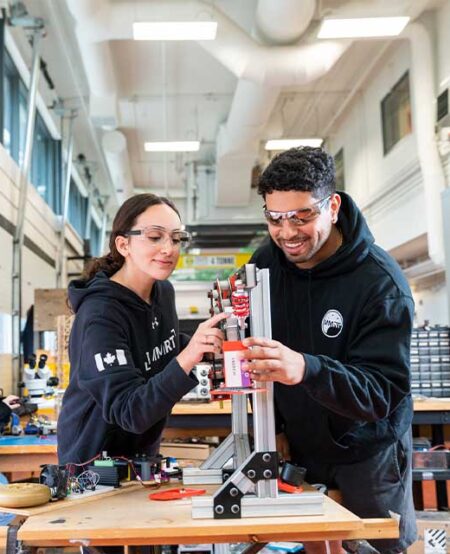
MMRT students in workshop

Program structure

This program layout applies to students registered in 2021-2022.
Where there are discrepancies in this document, the published Academic Calendar will always take precedence.
For a detailed breakdown of your course requirements, please refer to your Student Summary in Mosaic.

Level 2: 37-40 units (as of 2022)

Term 1Term 2
ChE 2D04
Chemical Engineering Principles I
Chem 1AA3
Introductory Chemistry II
ChE 2E04
Numerical Methods and Computing for Chemical Engineers
ChE 2F04
Chemical Engineering Principles II
Math 2Z03
Engineering Mathematics III
ChE 2O04
Fluid Mechanics
ENGSOCTY 2X03
Inquiry in an Engineering Context I
Math 2ZZ3
Engineering Mathematics IV
ENGSOC FOCEngSoc Focus Elective
ChE 2DW1
Problem Solving Strategies

Notes for Terms 1 and 2:
Complementary Studies 
means one or two courses (6 units total) selected from the list of acceptable Complementary Study courses maintained by the Associate Dean of Engineering. These units have been equally divided between the terms in this analysis, but the student may choose to take all 6 units in either Term 1 or 2. 

Level 3: 35-38 units (as of 2022)

Term 1Term 2
ChE 3D04
Chemical Engineering Thermodynamics
ChE 3G04
Chemical Process Synthesis and Simulation
ChE 3TP6
Transport Phenomen
ChE 3K04
Introduction to Reactor Design
ChE 3U04
Unit Operation
ChE 3L03
Intermediate Laboratory Skills
CHEM 2E03
Organic Chemistry
EngSoc Focus Elective

 Level 4: 34 units (as of 2022)

Term 1Term 2
MATLS 3J03
Statistical Methods for Materials Engineers
ChE 3P04
Process Control
ENGSOCTY 3Z03
Preventative Eng: Environmental Perspectives
ENGSOCTY 3X03 
Inquiry in an Engineering Context II
Chem Eng ElectiveChem Eng Elective
Chem Eng ElectiveScience Elective
EngSoc Focus ElectiveEngSoc Focus Elective
ENGSOCTY 3Y03
Technology and Society

Level 5: 31-33 Units (as of 2022)

Term 1Term 2
ChE 4W06A
Capstone A
ChE 4W06B
Capstone B
ChE 4L03
Advanced Laboratory Skills
Chem Eng Elective
ChE 4N04
Engineering Economics and Problem Solving
Chem Eng Elective
ENGSOC 4X03A
Inquiry III A
ENGSOC 4X03B
Inquiry III B
ENGSOC 4Y03
Society Capstone
List-A Elective
EngSoc Focus Elective

Co-op and experiential learning

Experiential learning provides students with hands-on opportunities beyond the traditional lecture-style format to gain valuable experience.

The Engineering Co-op Program is an optional program which provides you with the opportunity to work in real engineering positions before you graduate. The Centre for Career Growth and Experience (the Centre) administers the undergraduate co-op program.

Example employers:

  • Xerox Canada
  • Imperial Oil
  • Hatch
  • Dow Chemical
  • Suncor/Petro-Canada
  • Uniroyal
  • GE Water & Process Technologies

Learn more about co-op.

McMaster Engineering has many engineering clubs, teams and societies you can join to enhance your practical knowledge and soft skills, provide support, or give you the chance to explore new activities. Clubs are an enjoyable way to enrich your student life and contribute to your social development and academic success.

  • Chemical Engineering Club
  • Engineering Without Borders
  • McMaster Solar Car Team
  • MAC Formula Electric

Browse opportunities to get involved and gain experience.

Engineering programs have been enriched with interdisciplinary design courses, enabling students to work in teams on real-world problems. This practical experience builds their portfolios and hones skills vital for managing complex projects and utilizing emerging technologies. It prepares them for co-ops and future careers, fostering critical thinking, collaboration, and an understanding of societal issues.

Four project-based design courses that all students take include:

  • ENGINEER 1P13: Integrated Cornerstone Design Projects in Engineering
  • ENGINEER 2PX3: Engineering Design 2: Communications and Societal Impact
  • ENGINEER 3PX3: Engineering Design 2: Engineering Economics
  • CAPSTONE

Find out more

Example career paths:

  • Process and refine fuels (gasoline, natural gas, propane)
  • Develop sustainable energy systems
  • Manufacture silicon chips
  • Produce the food we eat
  • Resolve environmental problems

Research areas:

  • Energy production and energy systems
  • Biological interface engineering and nanotechnology
  • Water and wastewater treatment

How to apply

Understand every step, from applying, to accepting your offer and joining us on campus!

Department of Chemical Engineering

We are tackling challenges in energy, water, food, health and environment with practical solutions that will lead to new opportunities in a fast-paced world.
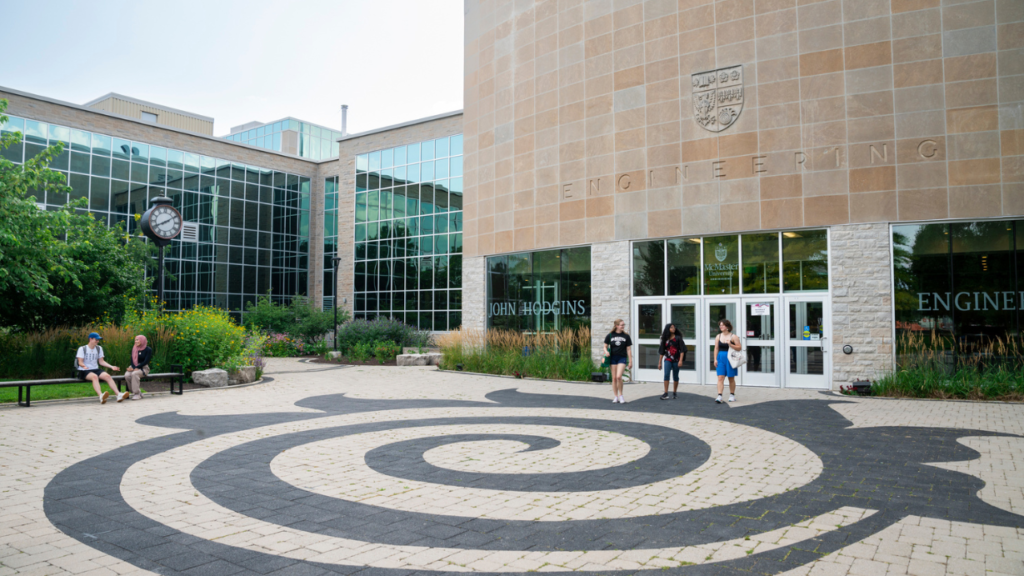
Image of JHE