Chemical Engineering and Bioengineering – Faculty of Engineering

Chemical Engineering and Bioengineering

Blend chemical engineering and biological sciences for groundbreaking solutions in bioengineering.

Length
5 years
Degree
Bachelor of Engineering & Biosciences (Co-op Available)
Program
Engineering
Options

Co-op

Overview

Chemical Engineering and Bioengineering explores how chemical processes and biological systems are used to create products that improve everyday life from medicines to sustainable materials. Students learn core chemical engineering principles through lectures, labs and design projects, with added focus on biology, bioreactions and pharmaceutical applications.

Graduates are prepared for careers in biotechnology, healthcare, and industrial manufacturing, including drug development, process design and environmental solutions.

Why study this program?

  1. Gain hands-on experience through industry-based capstone projects, undergraduate research opportunities and award-winning student design teams
  2. Benefit from an average of ~80 students per lecture and 20-25 per tutorial, ensuring a more personalized, supportive and interactive learning experience
  3. Access one of the largest undergraduate research programs in the Faculty, with extensive opportunities for paid research experience alongside faculty on cutting-edge projects
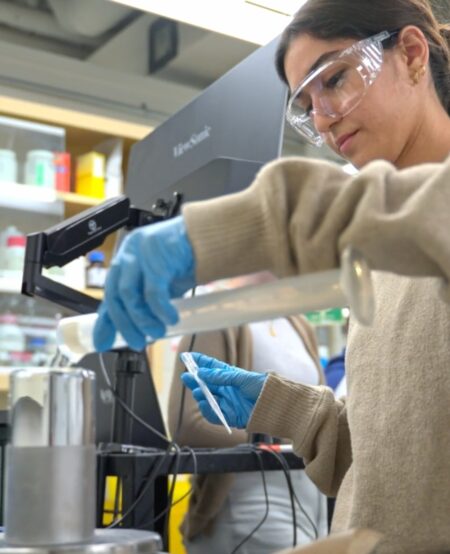
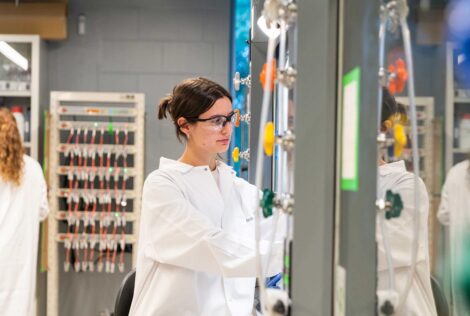
A student wearing safety glasses performs a chemical engineering experiment.

What you'll learn

Study an interdisciplinary field focused on transforming raw materials into useful products and processes.

This program follows the same core curriculum as Chemical Engineering, with added emphasis on biological systems and the industrial use of biological molecules and agents. You will engage with bioreactions, bio-separations, cellular biology, human anatomy and applications in medicine and pharmaceutical production.

The Chemical Engineering and Bioengineering program is offered by the Department of Chemical Engineering.

All students in McMaster’s undergraduate engineering programs participate in a common first year — Engineering 1. Build a solid base in the fundamentals of engineering disciplines and get exposed to engineering design work right at the start of your degree.

CHEMENG 3BM3 – Bioseparations Engineering

Learn how to isolate and purify biological products like proteins, vaccines, and antibodies. Emphasizes techniques used in pharmaceutical and biotech manufacturing.

CHEMENG 3BK3 – Bio-Reaction Engineering

Study how living cells and enzymes are used to produce valuable products like pharmaceuticals and biofuels.

CHEMENG 3T04: Applications of Chemical Engineering in Medicine

Learn the principles and applications of chemical engineering principles to biological systems and medical problems including examples from engineered biomaterials, biomaterial-induced host body response, tissue engineering, 3D bioprinting, controlled drug delivery and microfluidic systems.

Get practical experience and grow your portfolio with interdisciplinary design courses. All students in a Bachelor of Engineering take project-based design courses:

1. ENGINEER 1P13: Integrated Cornerstone Design Projects in Engineering

2. ENGINEER 3PX3: Engineering Design 2: Engineering Economics

3. Capstone project (year-long design project)

Potential career paths

Graduates will be career-ready for high demand areas such as process design, energy systems, materials and industrial operations: 

  • Biotechnology
  • Chemical engineering
  • Clean technology
  • Environmental engineering
  • Manufacturing engineering
  • Process engineering
  • Quality assurance analysis
  • Regenerative medicine
  • Research and development
  • Tissue engineering 

Explore Chemical Engineering in grad school

You’ll already be connected to world-renowned researchers leading innovation in your undergrad: continue pursuing research and innovation in a master’s program.

  • The largest undergraduate research program in the Faculty

    With the largest undergraduate research program in the Faculty of Engineering, Chemical Engineering provides unmatched opportunities for experiential learning.

    Students can engage in research early, building valuable skills, professional connections and a competitive edge for future careers or graduate studies.
  • Clubs and teams

    McMaster has many clubs, teams and societies you can join to practice your engineering skills, get more hands-on experiences and explore new activities.
    The Chem-E-Car Team designs and builds a chemically powered car that runs on controlled reactions, competing in engineering challenges focused on performance, safety, and design innovation, earning 1st place at the 2025 North America Central Regionals.
    Learn more about Mac Eng Experiences
  • Research in action

    Engage in hands-on research and complex problems with a mentor as early as your first year.

    A Chemical Engineering student helped develop an inexpensive vaccine stabilization method that dissolves easily and avoids cryogenics, improving vaccine distribution in low-resource regions and leading to a start-up!

More helpful links