
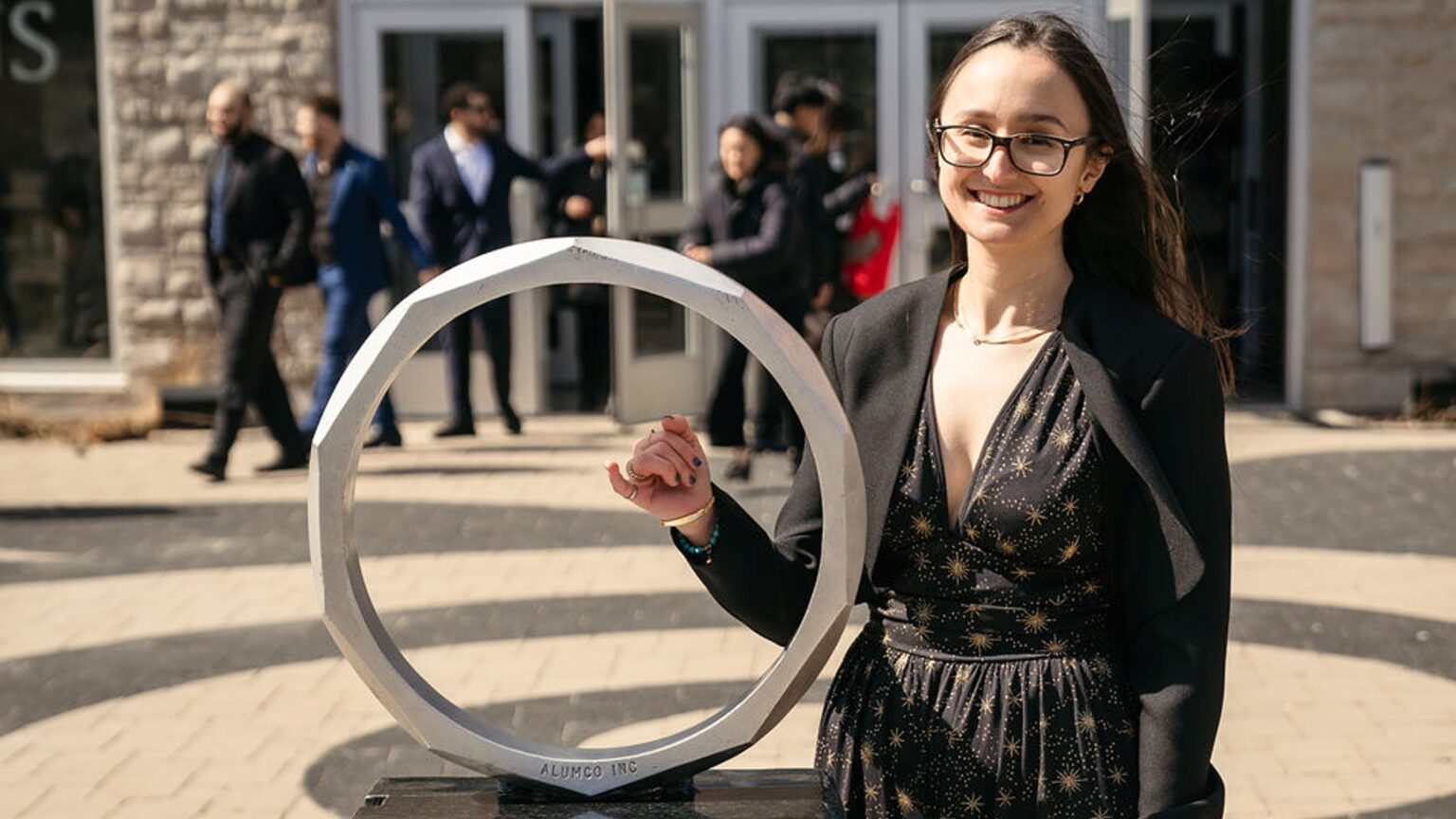
Since graduating in June from the Mechanical Engineering and Society program, Angela Tollis has charted an inspiring path in the space sector. Her hands-on experience with the McMaster Interdisciplinary Satellite Team (MIST), leadership in her final-year Capstone project, and early mentorship opportunities fueled a lifelong passion for space.
Now, as a Hardware Quality Engineering Specialist at Kepler Communications, she is helping the company scale its satellite launches while driving innovation in manufacturing and quality assurance.
Heavily involved in the McMaster Engineering community throughout her undergraduate experience, Angela continues to give back by supporting student teams and mentoring future engineers.
In her Alumni Blueprints Q&A, Angela reflects on her journey from student projects to satellite launches, the value of building a strong support system in undergrad, as well as the experiences at McMaster that continue to shape her career today. She also shares the lessons she’s learned along the way and her advice for aspiring engineers.
What I’ve loved so much from McMaster is that everyone works really hard to raise each other up. It’s always been, we’re all getting to the finish line with nobody left behind.
Here’s our Q&A with Angela:
Can you describe your work as a Hardware Quality Engineering Specialist at Kepler Communications?
Quality assurance at Kepler is a newer department, and it’s really important as we transition from a smaller to a medium-sized company and as we launch more satellites into space.
I graduated from the mechanical engineering program at Mac, and I’ve had to opportunity to work in various space roles while I was there, both on the McMaster Interdisciplinary Satellite Team (MIST) and at MDA Space. Throughout my time of being in leadership and working on those mechanical teams, I learned how important it was to have mechanical input from a quality perspective, especially when you’re launching large batches of satellites into space.
This also wasn’t a role I had stepped into before, but when you work on quality assurance, it forces your design ability to be very good and up to any of the build standards that are out there – especially for me. There is an aerospace standard that a lot of quality assurance folks go after.
By being the first person in this role at the company, I thought it was a really great opportunity to grow by working under some great people who have helped make our missions work so well so far. It also gave me the opportunity to push the team at Kepler to be something greater and not only have the chance to learn, but the chance to have great input and to make things go from good to great.
Where does your passion for space stem from, and how did that passion grow throughout your time at Mac?
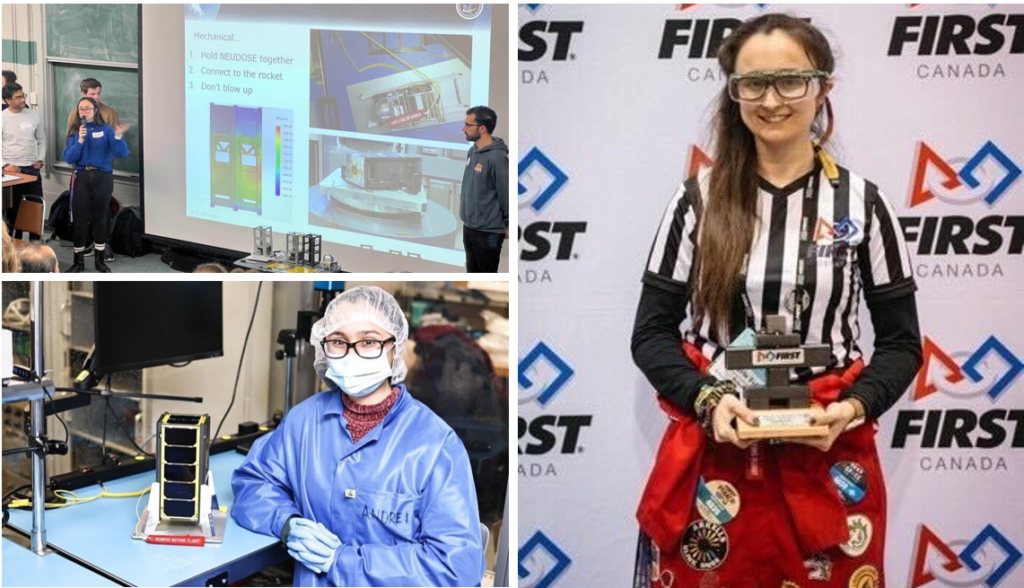
Ever since I was a kid, it was always something I was interested in. But what led me into the program and want to go towards space was actually because of my time in FIRST Robotics, with which McMaster has a very close partnership. I found my passion for engineering there and I never would have if I wasn’t part of that program. During my time of leading that team, I got to meet leaders like Julie Payette and Chris Hadfield, so it was very inspiring.
Also, I can’t say enough about how seeing something that you’ve launched into space truly changes your life. I was introduced to the satellite team through a friend, a mentor, if you will, in first year. They told me that the team was still in its early stage and hadn’t launched their first satellite yet. Based on my interests as a kid and from FIRST Robotics, I knew I had to go for that team, but I needed to build up my experiences and work on a simpler project.
Once I got onto the team, I got to contribute to the design, the testing and help build the actual satellite that went into space – that was amazing. The ownership you feel of something like that and how much you learn so quickly is amazing. I went to Florida for the launch and I got to see the rocket go up while standing with all the amazing folks on the team.
All that to say, I always had a bit of an interest, and I knew I wanted to come to McMaster for engineering because they had teams like MIST and we wouldn’t have been able to go through with the launch without the Faculty’s support and funding to run the club. Again, that completely changes your life, it changes your brain chemistry, and I got to do it throughout university until I graduated. I still volunteer on the team, and I help advise students because I really do love it.
McMaster really gave me a lot of great leadership opportunities and ways to grow that have allowed me to get where I am.
Can you share any other memorable experiences from your time at Mac?
I want to highlight another reason that led me to space – my McMaster Engineering Capstone project. My project was a variation of the Canadian Reduced Gravity Experiment in partnership with the Canadian Space Agency (CSA), National Research Council and SEDS Canada. We put our group together about two years before Capstone and got approval and support from the Faculty of Engineering. They wanted to see this new innovative Capstone idea come to McMaster Engineering, so that future students could use this as an opportunity to get into space.
When you do this research opportunity, you’re one of four teams and you go through the design process with the CSA, where you design an innovative experiment that contributes to microgravity or lunar gravity research. You then get to actually fly with it on a microgravity plane. Our flight hasn’t happened yet, it’s scheduled for November, but we went through a successful Capstone round and it really helped us stand out in that competition.
I’d also like to give a shoutout to Dr. Morton and Dr Gadsen. Without them as our Capstone supervisors, the project wouldn’t have been possible.
I founded that team to help others see themselves in space because this is just another opportunity to get the right experience and pave the way for future Capstone teams to do the same.
Can you tell us about your experience in the Mechanical Engineering and Society program and how it prepared you for your career?
I loved my program; it was the perfect thing for me. It went so well and I’m so happy I tailored it to what I wanted during my time at McMaster. For Mechanical Engineering, all the courses were always so great and had such a wide variety offered to students. I am more in the design and manufacturing space and getting the opportunity to specialize within that was interesting and we have a lot of really supportive professors.
Someone that’s truly helped me within this role so far would have to be Dr. Koshy. He is such an amazing professor, and he teaches a course that’s very niche, called metal removal. It’s about the physics behind manufacturing and how we can improve processes and the industry based off the technology we have now. So much of it I’ve already used in the workplace and so much of it has stuck just because of how interactive his teaching was.
Also, Dr. Hassan, she’s amazing and took a very similar approach in her experiential course for clubs and teams. So that’s something that I got from the program and there were so many other professors like that, that really care about what they do, and they would always be so open and excited when you have questions.
The Mechanical Engineering community has always been so great. I always felt so home within Mac and everyone was so nice and collaborative, from the professors, the TAs, all the way to the students.
Society is such an amazing program too and was the right choice for me to get to do a minor with my degree. It helps you stand out and kind of show what you care about outside of engineering. I did a minor in Sustainability because it’s so important in our current world – it’s important in the space industry, and it’s important in every other industry and can be applied everywhere. Being able to relate that to your engineering career, for me, being in mechanical, was very important. I can’t stress enough how amazing the community is within society. You have classes where you get to have those tough industry conversations and you get to learn about how to inquire about real-world problems and how to ask the right questions. It allowed us to talk about ethics and sustainability, and that’s what makes you a well-rounded engineer.
What advice would you give to engineering students starting out in their career?
The biggest thing that I believe relates both to your career and for coming into your first year, is to slow down and to take your time. I know it might not seem that way when you see LinkedIn profiles full of experiences or seeing people go so far, but you have to remember, everybody starts somewhere.
I think my biggest regret for first year, and it was a good lesson learned for sure, but it was that I did too much at once. As a commuter student, I was trying to be involved in every club and team, trying to meet friends and get good grades because I thought I had to do everything right away.
Take your time, get to know people, and just recognize that it’s going to take time to figure things out.
You should take care of yourself – study when you can and just get used to being a student, get the sleep you need and meet new people. The co-ops, the clubs and teams, all of that will come eventually, and when they do, just reach out to your community. The Redsuits were my primary contact point for so many clubs and teams that I joined or even the job opportunities I had.
I think research at McMaster is a great starting point for people in their first year. But when you’re going for your first co-op, you’re going to apply to so many jobs and you’re going to get rejected because you’re just starting out, but meeting with co-op advisors is always helpful. You can talk to them about improving your resume and LinkedIn profile, getting interview prep, or even asking where to start.
I started out in product design and construction before I went into aerospace. So, you have to find what you like and what you don’t like. When you eventually get that, that’s what’s going to kick off your career, but don’t stress if it doesn’t happen right away.
Any advice you can give to first year students?
When I was a rep for Welcome Week, I always told people that engineering is not meant to go through alone as an individual. It’s meant to go through with people that potentially end up becoming the closest friends you ever have moving forward in life. You can meet people anywhere on campus, from where you study, mentorship groups, industry nights or even support group drop-in sessions, that many engineering clubs offer. I met some of my closest friends just sitting beside them in a lab and then we just went through university together, so take the time to build those connections.
When you go through your hardest moments in engineering, because you will – it’s a great program, but it’s a hard program and it challenges you – you go through it with other people, and that’s what makes it so special. They will support you, just like how you will support them and if you have that support network, I promise you’ll get through it.
Can you tell us more about how your mentorship experiences impacted you?
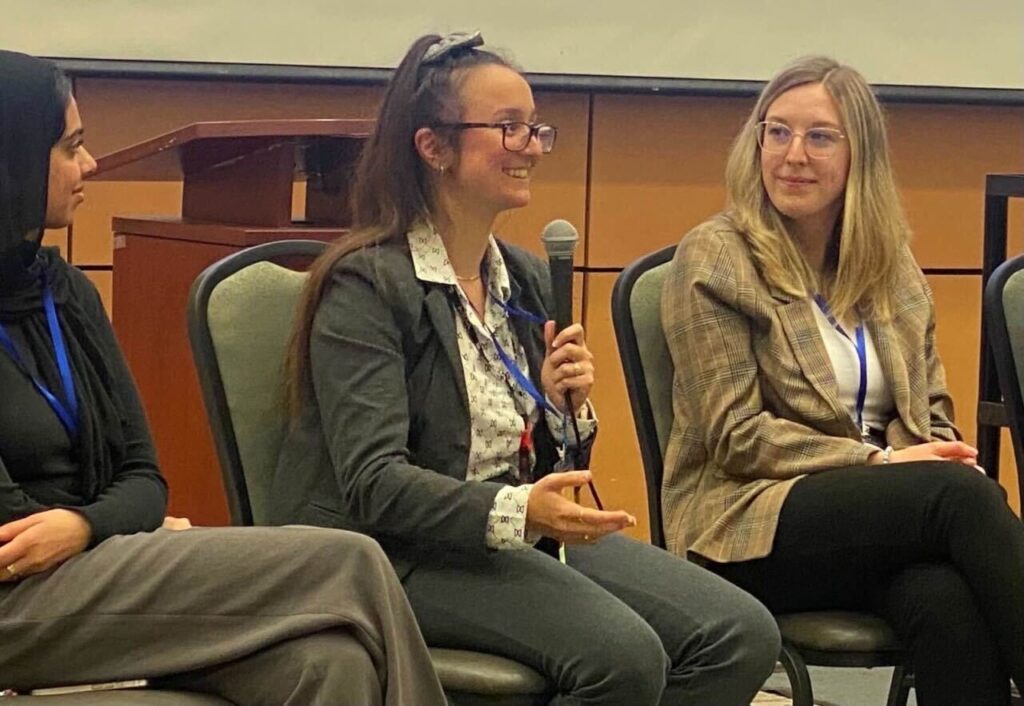
Coming from high school, I was involved in many women in STEM initiatives. Having the Women in Engineering Society (WIE) at McMaster is awesome because they’re such a great group and run so many great events. One of the reasons I bring them up is because they have a great mentorship program, and so does the McMaster Engineering Society (MES). There are mentorship opportunities available for every student and if you have any question, no matter how small, the upper years are there to help and provide guidance.
What I’ve loved so much about McMaster is that everyone works really hard to raise each other up. We’re all getting to the finish line with nobody left behind.
I don’t think I’d be in the position I am now, without that community and without how much they welcomed me.
Alumni Blueprints is a Q&A series that highlights the journeys of exceptional McMaster Engineering alumni. Discover how they built their careers, from joining student clubs and teams to seizing co-op opportunities that ignited their passions during their undergraduate years. Our alumni share their unique stories and insights, offering a blueprint for success in their respective fields. Want to share your blueprint for success? Contact the Alumni Team at engalum@mcmaster.ca.