Civil and Biomedical Engineering – Faculty of Engineering

Civil and Biomedical Engineering

A unique integrated program delivered jointly by the Faculties of Engineering and Health Sciences, uniting Civil Engineering with biomedical sciences to forge new frontiers in sustainable infrastructure.

Length
5 years
Degree
Bachelor of Engineering & Biomedical Engineering (Co-op Available)
Program
Integrated Biomedical Engineering & Health Sciences (iBioMed)
Options

Co-op

Overview

Civil & Biomedical Engineering combines civil engineering with biomedical innovation to support human health and resilient communities.

Through hands-on labs, design projects, and engineering courses, you’ll learn to design infrastructure such as water systems, transportation networks, and structures while integrating knowledge of human physiology and biomedical systems. Graduates are prepared for careers in infrastructure, environmental engineering, healthcare systems, and climate-resilient design.

Why study this program?

  1. Canada’s first undergraduate program to integrate civil engineering with biomedical engineering and entrepreneurship, preparing students to design infrastructure systems that directly support human health and resilient communities.
  2. Develop in-demand skills for careers in civil infrastructure, environmental engineering, transportation planning, water and wastewater systems, and climate-resilient design in rapidly growing urban environments.
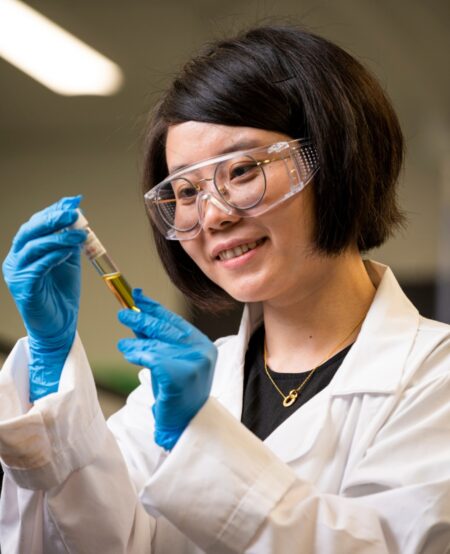
A person wearing safety glasses holds a test tube filled with liquid.

What you'll learn

Study an interdisciplinary field that combines civil engineering principles with biomedical applications at McMaster University.

You’ll build a strong foundation in core civil engineering areas such as structural engineering, geotechnical engineering, transportation systems, and water resources engineering, while also exploring biomedical concepts related to human physiology and health systems. 

This program is part of iBioMed: Integrated Biomedical Engineering & Health Sciences.

All students in McMaster’s Integrated Biomedical Engineering & Health Sciences (iBioMed) program participate in a common first year — IBEHS 1. Build a solid base in the fundamentals of engineering, health and entrepreneurship and get exposed to design work at the start of your degree.

CIVENG 2X03 – Introduction to Civil Engineering:

A first look at the profession this course features field trips to construction sites, engineering firms, and water treatment facilities.  

CIVENG 3M03 – Municipal Hydraulics: 

Explore how water moves through urban systems and learn how engineers design and manage water supply, drainage, and flood protection for communities. 

CIVENG 4DD4 – Structural Dynamics & Seismic Design  

Learn how engineering design buildings and bridges to withstand earthquakes, wind and extreme forces. Explore real seismic events and design safer, more resilient structures 

IBEHS 4B03 – Biomechanics: 

Study how forces interact with the human body, connecting engineering mechanics to movement, injury prevention, and biomedical applications. 

CIVBME 5P06 A/B – Integrated Civil & Biomedical Engineering Capstone Design Project:

Work in teams on a major real-world design challenge that integrates civil infrastructure and biomedical engineering to develop impactful, practical solutions. 

Get practical experience and grow your portfolio with interdisciplinary design courses. All students in Integrated Biomedical Engineering and Health Sciences take six project-based design courses:

1. IBEHS 1P10 A/B – Health Solutions Design Projects I: Introduction to Engineering Fundamentals and Design 

2. IBEHS 2PA2 – Health Solutions Design Projects II-A: Lab Skills in Genetic Engineering

3. IBEHS 2PB2 – Health Solutions Design Projects II-B: Project in Genetic Engineering

3. IBEHS 3P04 – Health Solutions Design Projects III: Economic Analysis and Risk Management

4. IBEHS 4P03 – Health Solutions Design Projects IV: Decision Making and Project Management

5. Capstone project (year-long design project)

Potential career paths

Graduates will be career-ready for high-demand areas such as infrastructure design, structural engineering, transportation systems, water resources, construction and project management in engineering and health-related fields.

  • Civil Engineering
  • Development Engineering
  • Environmental Engineering
  • Geotechnical Engineering
  • Project Design
  • Project Management
  • Transportation Engineering

Explore grad school

You’ll already be connected to world-renowned researchers leading innovation in your undergrad: continue pursuing research and innovation in a master’s or PhD program.

  • Classes in the field

    In CIVENG 2X03, students brings learning to life through field trips to construction sites, engineering firms and water treatment facilities.

    All second-year Civil Engineering students will participate in this course!
  • Clubs and teams

    McMaster has many clubs, teams and societies you can join to practice your engineering skills, get more hands-on experiences and explore new activities.

    You can participate in competitions such as concrete canoe, seismic design, steel bridge and more, gaining hands-on design and teamwork experience.
    Learn more about Mac Eng Experiences
  • Canada's largest undergraduate research program

    Engage in hands-on research and complex problems with a mentor as early as your first year.

    A Civil Engineering student is advancing earthquake resistant building design, moving beyond “crumple-zone” safety toward structures that remain usable after major earthquakes, with minimal added construction cost
    Learn about undergrad research opportunities

More helpful links