Nuclear Engineering – Faculty of Engineering

Nuclear Engineering  

Power the future of nuclear energy, design, analysis, safety, operations and regulatory compliance.


Length
4 years
Degree
Bachelor of Engineering (Co-op Available)
Program
Engineering
Options

Co-op, Management and Society


Overview

Build fundamental skills and explore the complex topics of nuclear engineering in this Bachelor of Engineering. Through labs and design projects, you’ll explore reactor physics, thermal systems, materials science, nuclear fuels and radiation protection. 

You’ll be well-prepared for careers in nuclear power generation — such as reactor design, safety regulation and operations — helping advance clean energy and infrastructure resilience.

Why study this program?

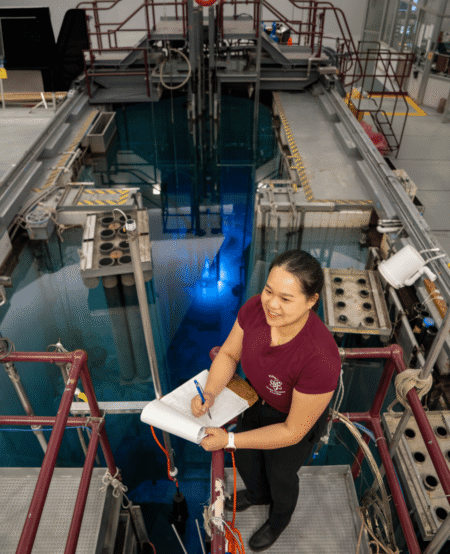
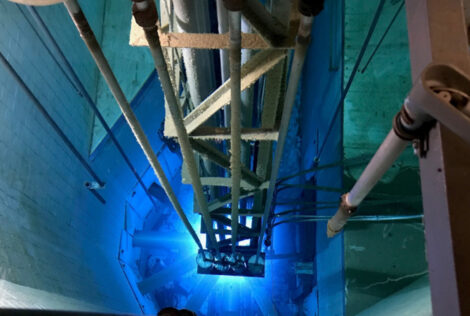
  1. You’ll study at the only Canadian university with a full-scale research nuclear reactor on campus.
  2. There’s a growing need for experts in the nuclear industry, and you’ll graduate with in-demand technical and analytical skills.
  3. You’ll be able to make a meaningful impact in sustainable energy and climate change.
Someone stands by the nuclear reactor with a checklist

What you'll learn

Study the possibilities of nuclear engineering in a unique learning environment at McMaster University.

From topics ranging from heat transfer and material science to control systems, reactor physics and chemistry, you’ll graduate with interdisciplinary knowledge of nuclear engineering.

The nuclear engineering program is offered by the Department of Engineering Physics.

Students may enter the program directly from first year, with those completing Engineering 1 in 2026/27 eligible to select Nuclear Engineering at Level II. In addition, Engineering Physics students who complete Level II in 2026/27 will have the option to transfer into Nuclear Engineering at the third-year level.

All students in McMaster’s undergraduate engineering programs participate in a common first year — Engineering 1. Build a solid base in the fundamentals of engineering disciplines and get exposed to engineering design work right at the start of your degree.

NUCENG 3D04 – Principles of Nuclear Engineering:

Perform labs in the McMaster Nuclear Reactor to learn about the processes behind its operations and applications. Learn about fission energy systems, interactions of radiations with matter, radioactivity and more.

NUCENG 4AN6 A/B – Nuclear Engineering Design and Synthesis Project:

Work on a nuclear engineering capstone project — a year-long project to end your degree. Select a meaningful real-world problem and engineer a solution by mathematically modelling the impact of design decisions and implementing them on a team.

NUCENG 4FC3 – Nuclear Fuel Cycles and Waste Management:

You’ll explore nuclear fuel production, including its fabrication and properties, along with fuel reprocessing and failure detection.

Get practical experience and grow your portfolio with interdisciplinary design courses. All students in a Bachelor of Engineering take four project-based design courses:

1. ENGINEER 1P13: Integrated Cornerstone Design Projects in Engineering

2. ENGINEER 2PX3: Engineering Design 2: Communications and Societal Impact

3. ENGINEER 3PX3: Engineering Design 2: Engineering Economics

4. Capstone project (year-long design project)

Potential career paths

Graduates will be career-ready for high-demand areas such as reactor safety, radiation protection and nuclear instrumentation.

  • Senior Technical Engineer
  • Radiation Protection Manager
  • Project Manager
  • Nuclear Reactor Operator
  • Systems Engineer
  • Section Manager
  • Nuclear Design Engineer
  • Nuclear Safety Analyst
  • Reactor Physicist
  • Research Scientist
  • Business Development Director

Explore nuclear in grad school

You’ll already be connected to world-renowned researchers leading innovation in your undergrad: continue pursuing research and innovation in a master’s program.

  • McMaster Nuclear Reactor

    Students will gain access to the nuclear reactor, where they’ll go through containment, enter the control room and learn at this world-class facility.

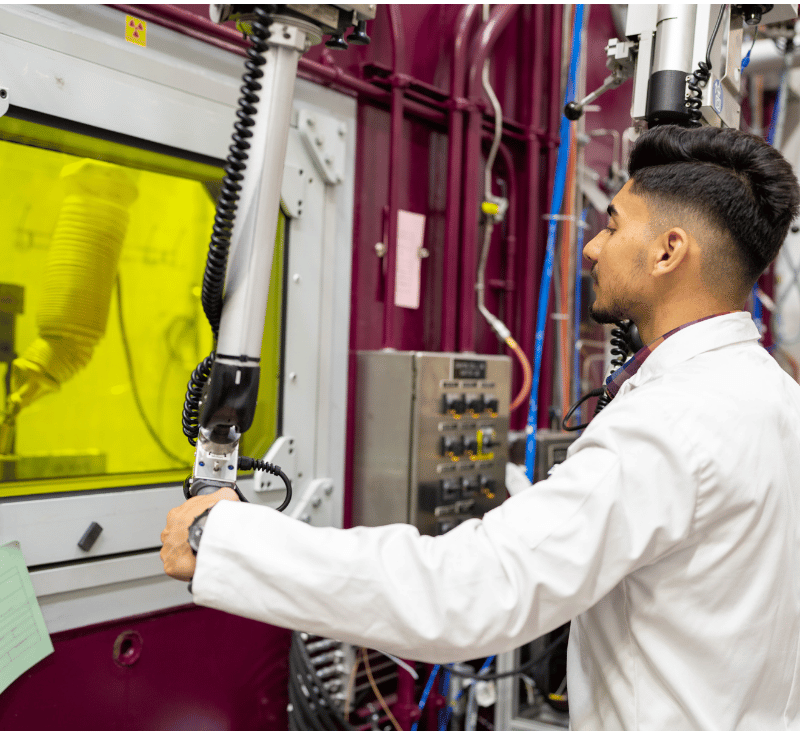
    Did you know: Nuclear Engineering students can access McMaster’s hot-cells, where they safely handle radioactive materials.
    Watch a video about the reactor (Opens in new window)
  • Clubs and teams

    McMaster has many clubs, teams and societies you can join to practice your engineering skills, get more hands-on experiences and explore new activities.
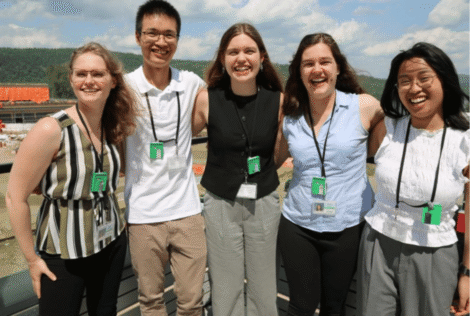
    Club spotlight: The North American Young Generation in Nuclear at McMaster chapter hosts outreach on nuclear science and plans off-campus trips to industry sites.
    Learn more about Mac Eng Experiences
  • Canada's largest undergraduate research program

    Engage in hands-on research and complex problems with a mentor as early as your first year.
    Research spotlight: Award recipients of the CNL Nuclear Research Experience gain field experience at Chalk River labs.
    Learn about undergrad research opportunities
Red and white flowers blooming on campus

Upper-year specializations

Specialized programs at McMaster can take your Engineering degree to the next level.

At the end of your first year in Engineering, you can apply to two other exciting options:

  • Engineering & Management
  • Engineering & Society
Here are further details to help you imagine your McMaster future.

Become a leader that solves complex challenges with your technical and business expertise in this five-year program.

Once you’ve completed first year requirements in good standing, you can apply to this program.

Follow your passion in Engineering & Society. Combine your engineering education with a deeper understanding of human-centred design and problem-solving skills in this five-year program.

Once you’ve completed first year requirements in good standing, you can apply to this program.

Selected awards

The Faculty of Engineering offers substantial financial support to students, including one of the largest faculty-based entrance scholarship programs in the country, with over $2.5 million awarded annually. The following are a sample of awards available to students pursuing a Bachelor of Engineering in Nuclear Engineering:

Established in 2025 by Ontario Power Generation.

Requirements: To be awarded to undergraduate students enrolled as co-op students in either: Bachelor of Engineering, Bachelor of Technology or Bachelor of Applied Science (Computer Science) who self-identify as equity-deserving, attain high averages and demonstrate financial need.

Typically available: 2 x $2,500 

Requirements: To be awarded to undergraduate students in the Faculty of Engineering or the Faculty of Science who demonstrate academic excellence and a clear interest in nuclear studies—whether through coursework, research, or participation in related clubs and societies

Typically available: 1 x $1,000

Requirements: To be awarded to undergraduate students enrolled in any Faculty of Engineering co-op programs (Level 2 or above) who attain high averages and are interested in working in the nuclear industry to power a sustainable future.

Typically available: 4 x $3,000

Established in 2024 by CNL.

Requirements: To be awarded to undergraduate students enrolled in either the Faculty of Engineering or the Faculty of Science who attain high averages and demonstrate an interest in nuclear studies through coursework, and/or participation in clubs or societies.

Typically available: 2 x $4,000

More helpful links