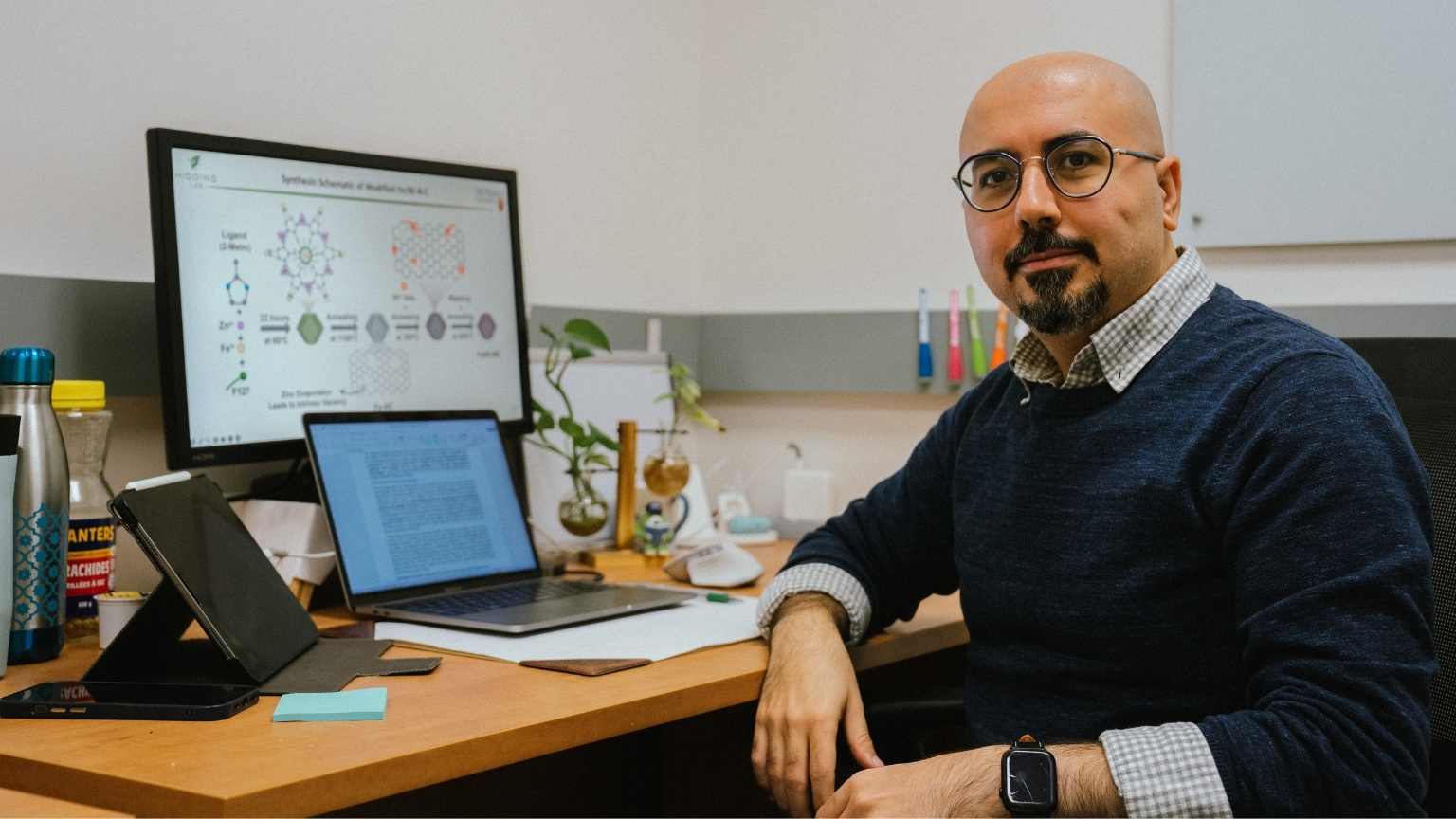
In the early days of founding Sensofine Inc., an electrochemical-based wearable device startup company, Reza Eslami noticed a large gap between industry market requirements and academia.
“I was trying to translate my lab discoveries to real-world solutions and products,” says Eslami, postdoctoral fellow in the Department of Chemical Engineering.
That’s when I noticed how strongly McMaster connects researchers with industry partners, and I knew it was the ideal environment to grow my ideas.
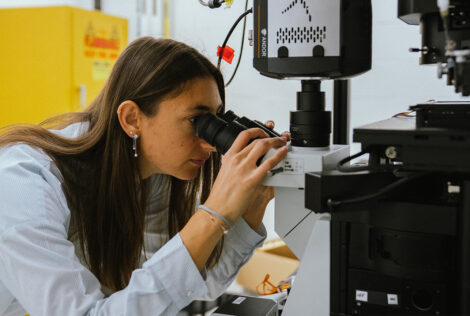
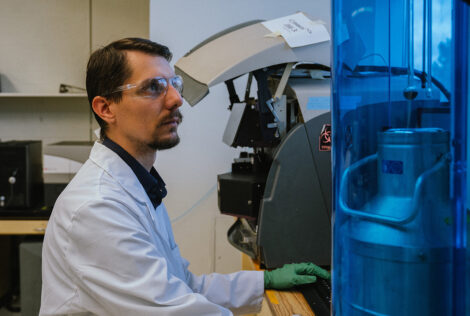
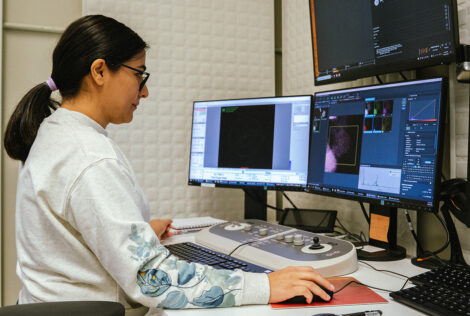
Beyond its strong industry partnerships, Eslami was also drawn to McMaster Engineering’s state-of-the-art facilities, including the worldclass Canadian Centre for Electron Microscopy (CCEM). CCEM provides state-of-the-art electron microscopy capabilities and expertise for nanomaterials research and development, giving Eslami the technical foundation needed to develop and refine his innovations.
Engineering a sustainable future
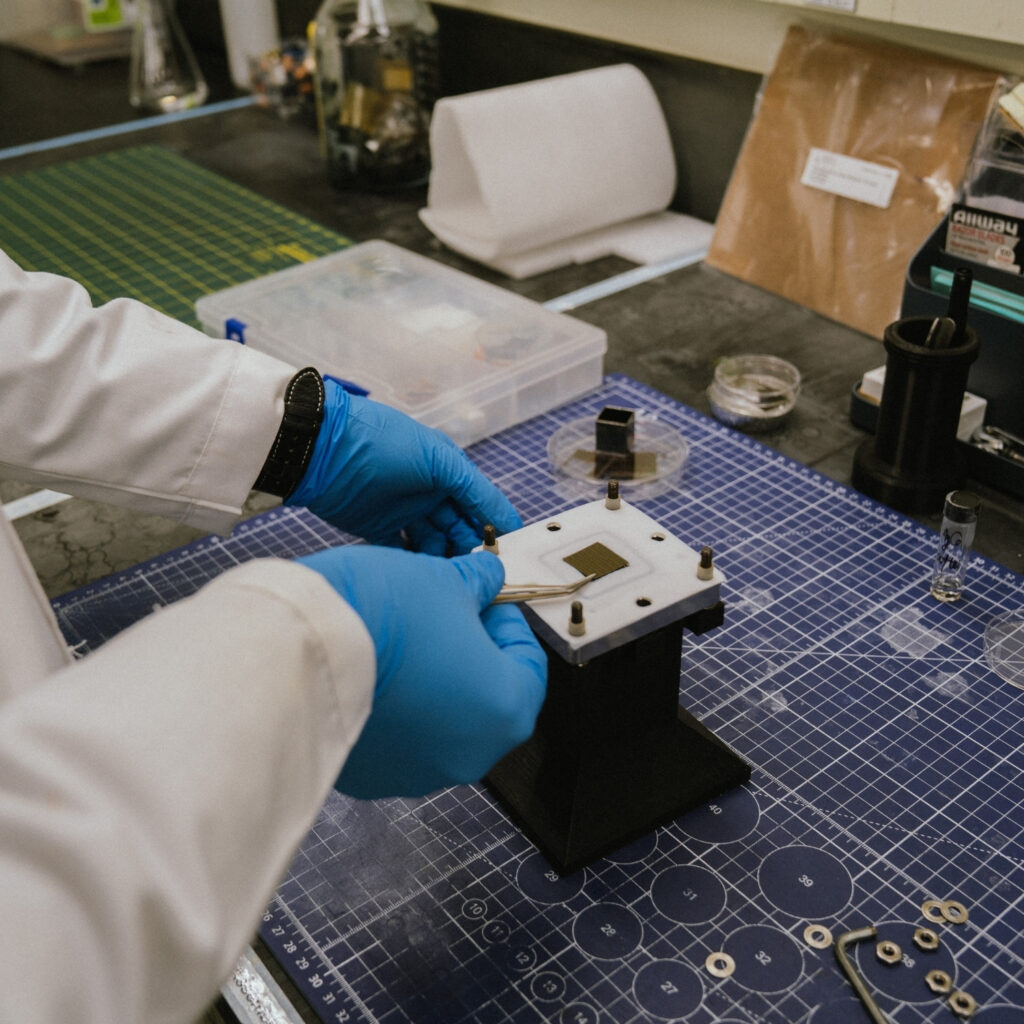
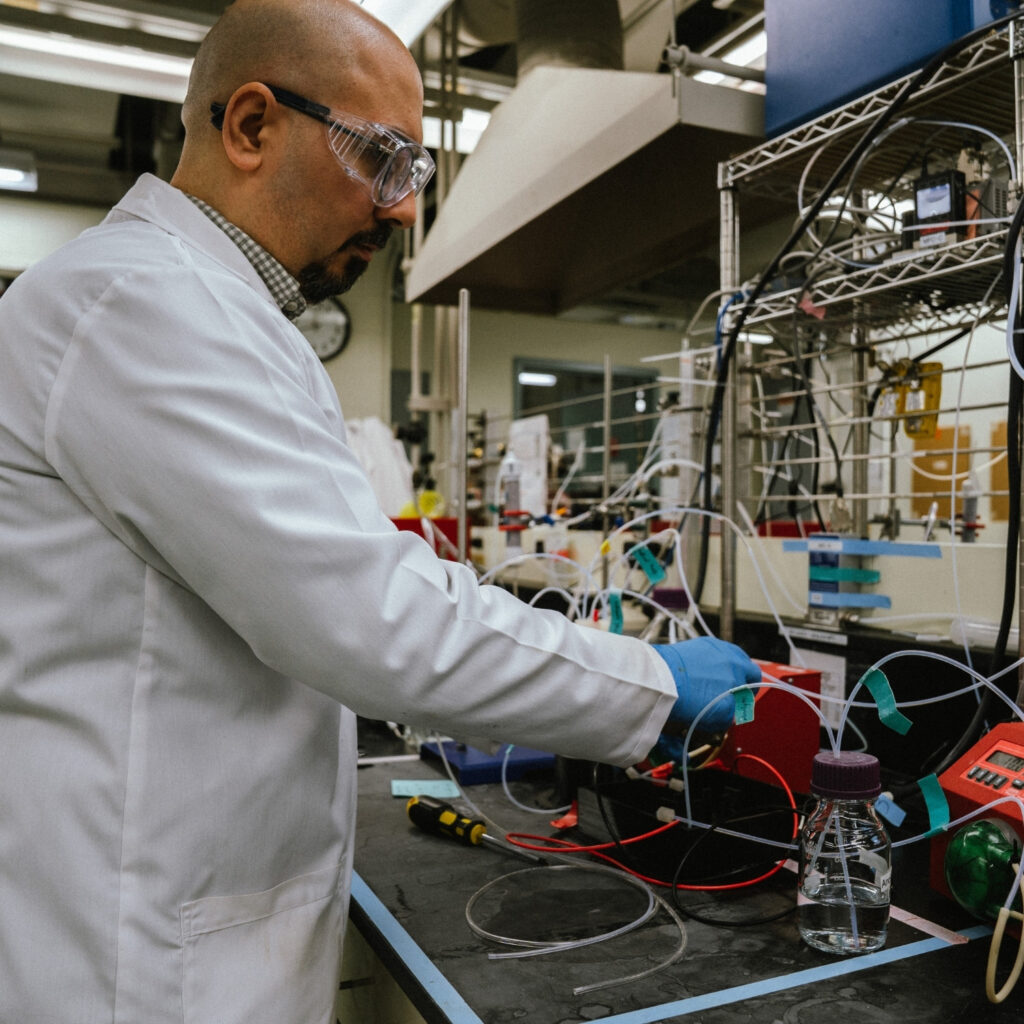
Working under mentor, principal investigator and associate professor of Chemical Engineering, Drew Higgins, Eslami is contributing to the fight against climate change by reducing CO2 emissions. In partnership with CERT Systems Inc. and funded by the NSERC Alliance-Mitacs Accelerate grant, his current research focuses on enhancing the efficiency of the electrochemical conversion of bicarbonate by designing and developing catalyst materials and engineering electrodes.
“Scientists have created devices called electrolyzers that can convert CO2 into useful products,” says Eslami. “But most of these devices need a steady supply of pure CO2 gas, and capturing, purifying and compressing CO2 from the air or factory exhaust is both energy- and cost-intensive.”
This is where a bicarbonate-fed electrolyzer comes in – to take a smarter shortcut.
“In existing CO2 capture technologies, when CO2 of atmosphere is absorbed into water, it naturally turns into bicarbonate,” explains Eslami. “Instead of taking extra steps to extract pure CO2 gas out of this captured solution, our technology directly uses the bicarbonate solution. With the help of renewable electricity, the electrolyzer transforms it into valuable chemicals, such as ethylene.”
Ethylene is a building block chemical used to make plastics, textiles and even medical supplies, says Eslami.
“Ethylene is used everywhere in our daily lives, but it is mostly made from fossil fuels,” he says. “By producing it from captured CO2 instead, we can reduce emissions while still providing the materials society depends on.”
“At the heart of this technology is the catalyst, the key component that drives the direct conversion of captured CO2 into ethylene,” Eslami adds. “I am designing next-generation catalysts that can perform efficiently under industry-relevant conditions, making this process scalable and commercially viable.”
Working with the best of the best
While at McMaster, Eslami has connected with other researchers, which fuels his drive for research and innovation.
“It’s like gathering top-notch chefs from the best restaurants around the world, and each brings their own twist to make the food delicious,” Eslami says. “At McMaster, I get to learn from these leading researchers and together we create stronger science for the community.”
Not only does Eslami learn from his mentors, but he also learns a great deal as a mentor himself.
“One of my favourite parts of the post-doctoral experience is being able to mentor students,” says Eslami.
It’s not a one-way learning experience. I’m always picking up new insights from the students. They bring fresh ideas and perspectives that keep me on my toes and show me a new way of seeing things.