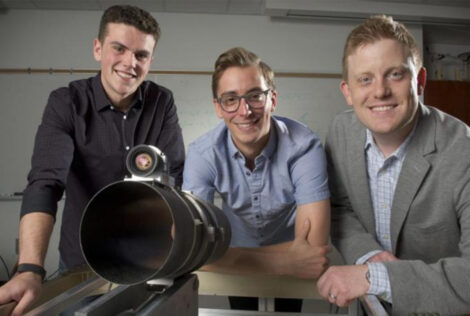

Alex McCafferty-Leroux is a second-year PhD candidate in the Department of Mechanical Engineering at McMaster University and a member of the Intelligent and Cognitive Engineering (ICE) lab. He spent two weeks in California working with National Aeronautics and Space Administration (NASA) and National Institute of Standards and Technology (NIST) scientists for the deployment of the air-LUSI instrument at Edwards Air Force Base.
Learn about Alex’s experience, background and upcoming projects in his own words.
My journey to graduate studies at McMaster Engineering
While completing my undergraduate degree in Mechanical Engineering at Carleton University, I became increasingly interested in all things robotics. For my capstone, I had the privilege of working under Mojitaba Ahmadi, where we designed and constructed a mobile manipulator. Though this proved to be an extremely challenging mechatronics project, it accelerated my learning in this field and solidified my desire to work in research and robotics.
Wanting to move closer to home, I decided to shop around southern Ontario for potential Masters supervisors. There were many professors with interesting work, but Andrew Gadsden’s work in aerospace and integrating artificial intelligence (AI) with control at McMaster was most exciting to me.
Since 2022, I’ve been a member of Gadsden’s Intelligent and Cognitive Engineering (ICE) lab, studying cognitive control systems for nanosatellite attitude control. Because of my prior knowledge with Robot Operating System (ROS) and robotics, I was also offered the opportunity to work on the airborne Lunar Spectral Irradiance (air-LUSI) project in partnership with NASA.
air-LUSI – A Collaboration Between NASA and McMaster
Earth-observing satellites are essential to climate change research, acquiring long-term and continuous observations of various Earth environmental variables such as atmospheric composition and ocean temperature. In space, though, factors like radiation and thermal cycling can cause satellite sensors to degrade over time, resulting in decreased measurement accuracy. As such, measurement deviations due to sensor drift and the dynamics of the target need to be separated. To precisely evaluate sensor drift, these satellites must be re-calibrated on-orbit and cross-calibrated for consistency over several instruments. Using the Moon as a calibration target is one of several options, but since its irradiance is a function of many factors, calibration due to the Moon requires a complex model for reference (specifically a radiometric lunar model, RLM).
The most accurate and widely accepted model we currently have for this type of work is the Robotic Lunary Observatory (ROLO). Developed by the United States Geological Survey (USGS), ROLO is accurate to approximately five per cent error. Since the lunar data used for building this model was obtained from a ground-based instrument, most of this error (approximately four per cent) can be attributed to light scattering or absorption from the atmosphere.
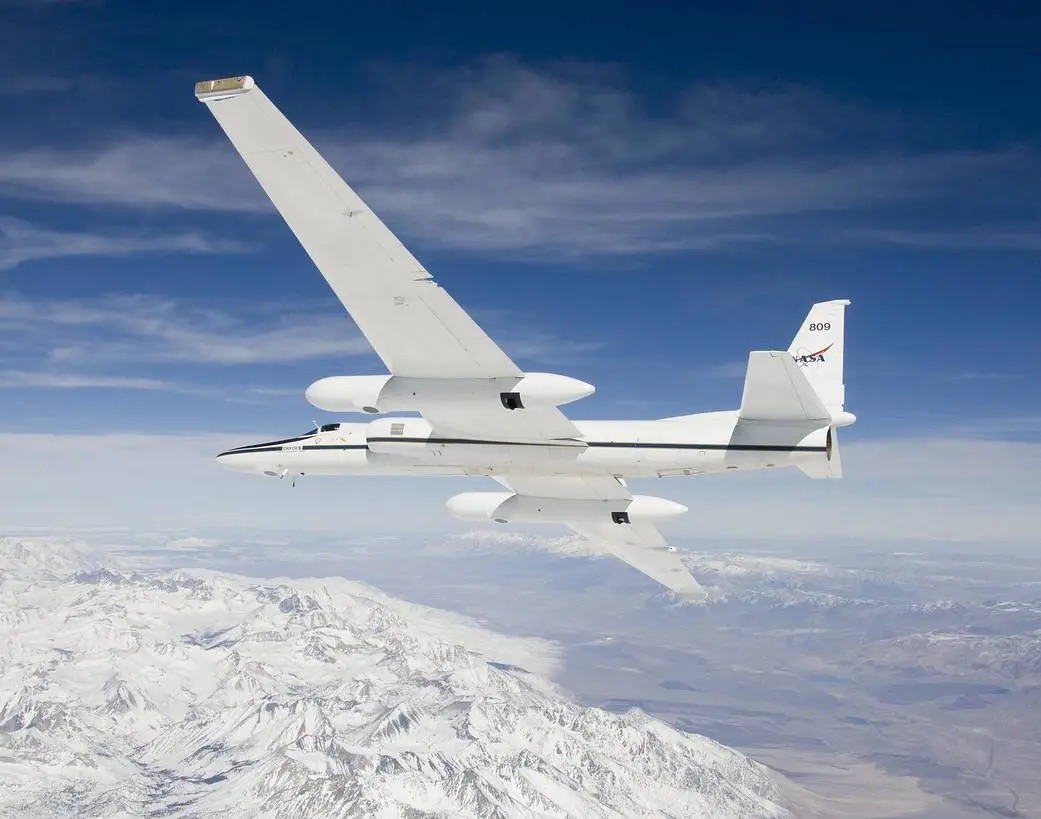
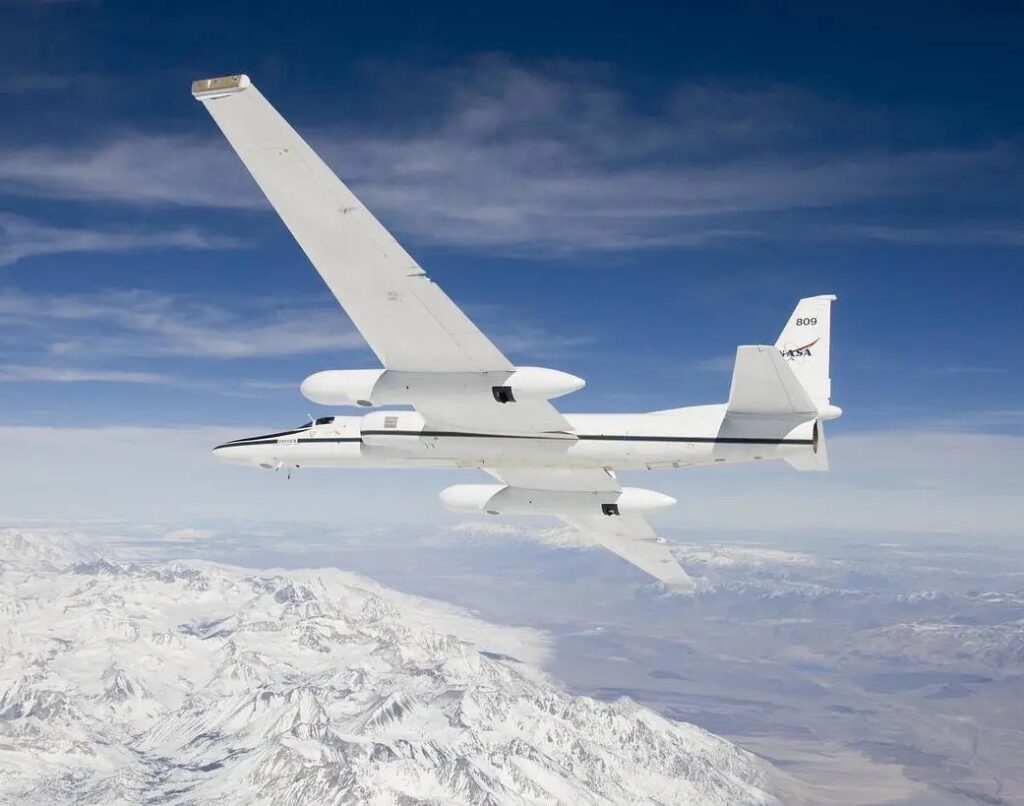
air-LUSI aims to minimize the error in the ROLO model to a projected one per cent, establishing the Moon as an in situ, absolute calibration target for remote sensing applications. To avoid atmospheric effects, the air-LUSI instrument is installed inside the wingpod of NASA’s high-altitude ER-2 aircraft, obtaining highly accurate and SI traceable measurements above 95% of the Earth’s atmosphere.
This international collaboration includes McMaster University, NASA, USGS, the University of Maryland Baltimore County (UMBC) and the National Institute of Standards and Technology (NIST).
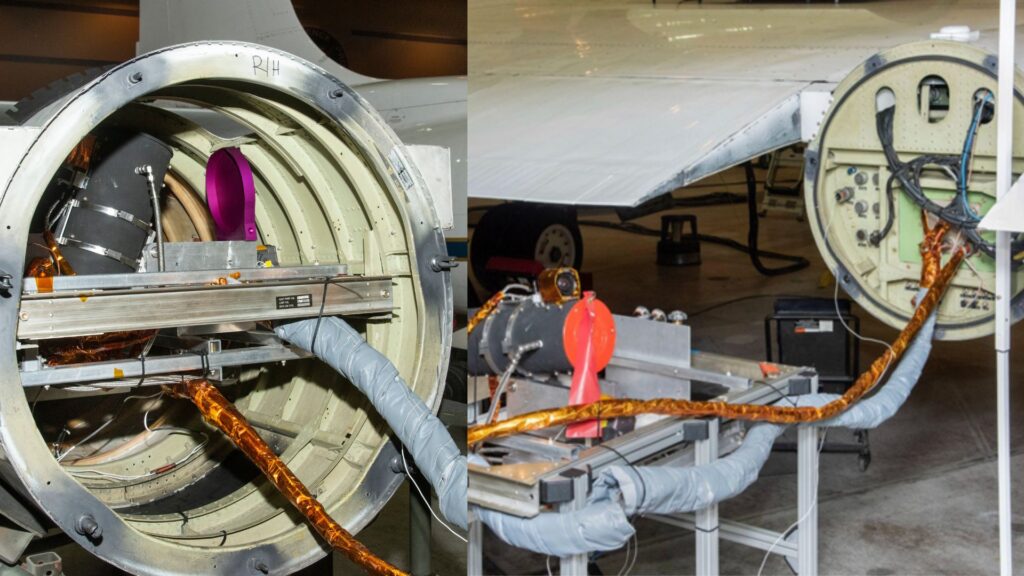
The IRadiance Instrument Subsystem instrument (IRIS) designed by NIST is essential to the mission. It is used for acquiring lunar irradiance data aboard the ER-2, including the nonimaging telescope, integrating sphere and onboard calibration monitor LED source. During night flights, the instrument must be pointed at the Moon with high accuracy, maximizing the utility of data collected. Due to turbulence and the natural motion of the aircraft, however, a robotic telescope mount is required to automatically compensate for its motion.
That’s where the Autonomous Robotic Telescope Mount Instrument Subsystem, or ARTEMIS for short, comes in.
Originally developed by one of Gadsden’s graduate students, Andrew Cataford, ARTEMIS includes the tracking computer, telescope mount and actuators, power supply, and tracking camera and has flown with the air-LUSI system in over 10 data acquisition flights with highly accurate tracking. Since its last flight, the task of redesigning the telescope mount to address various mechanical and robotic shortcomings was undertaken by Andrew Newton, a research engineer at McMaster. Joining the project at the start of my studies, the redesigned ARTEMIS was completed in Fall 2023 and dubbed the High-Altitude Aircraft Mounted Robotic (HAAMR) telescope mount as a little nod to Hamilton. Shortly after, I took the lead in its rigorous testing, software and mechanical redesign, documentation preparation, and the plethora of analyses essential for making sure it was ready for its next flight campaign in December 2024.
Testing the Instrument – NIST
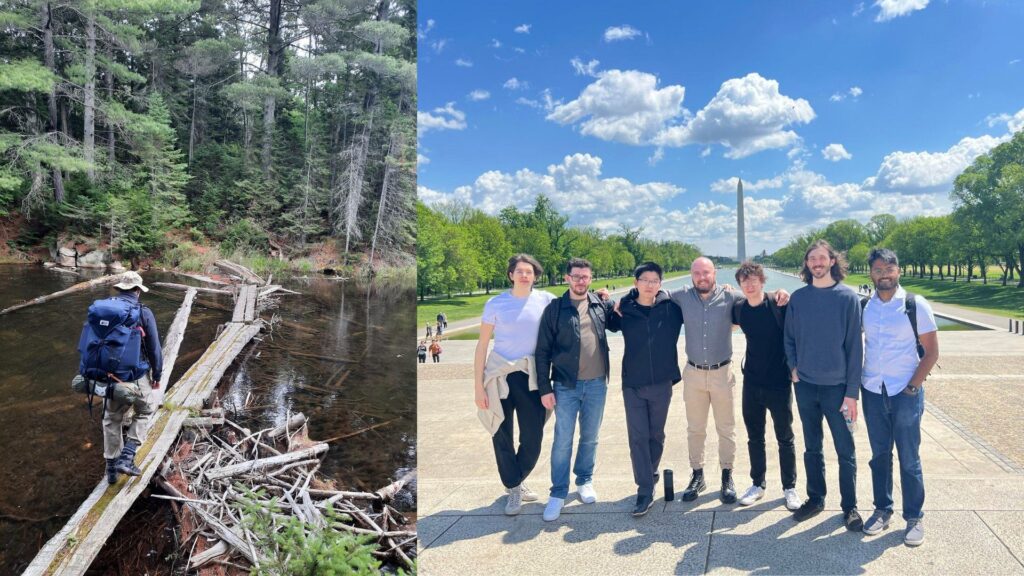
The entirety of the HAAMR robotic telescope mount was designed at McMaster, and a significant portion of it was manufactured in the machine shop in John Hodgins Engineering building on McMaster’s campus. After the construction of McMaster’s new robotic instrument was complete in Fall 2023, Andrew and I went to Gaithersburg, Maryland, a city about 40 minutes northwest of Washington D.C., to deliver it to NIST. At their lab, we re-assembled and tested its performance in tracking a moving target, brought it to the roof to calibrate its camera and found several mechanical and software issues. To address these problems, ensure functionality between other subsystems and familiarize myself with the system to operate and troubleshoot it during deployment, I have since returned to NIST in June, August, and September, the last time for two whole weeks.
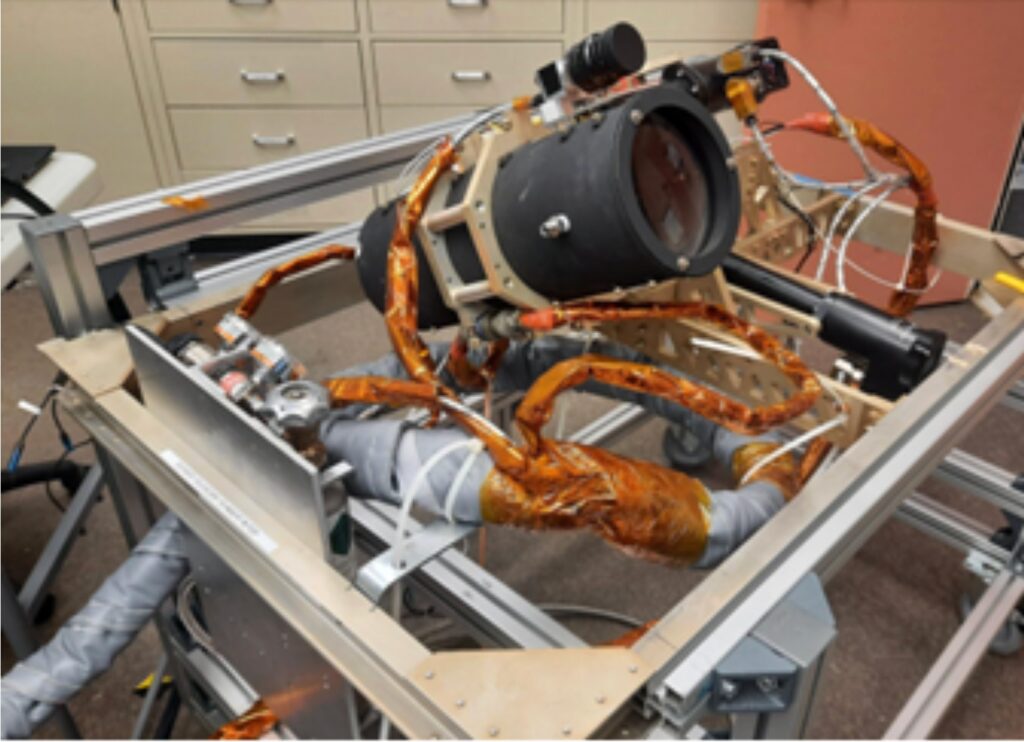
Testing the HAAMR was rigorous, requiring long hours spent in a basement, but working with experienced scientists and learning the system inside and out was very rewarding. Most of them are physicists that primarily deal with measurement and calibration, but the wealth of engineering and testing knowledge they provided me is nothing short of astonishing.
One aspect of testing the HAAMR involved ensuring its functionality with the IRIS system, requiring repeated simulations of calibrating, uploading and flying the instrument. Mostly, though, it was spent re-writing its tracking software, testing it and figuring out why it didn’t work. Tuning the tracking system and simulating failure modes so I can learn how to recover from them on the ground also took up a significant amount of time, as well as on-the-fly mechanical design.
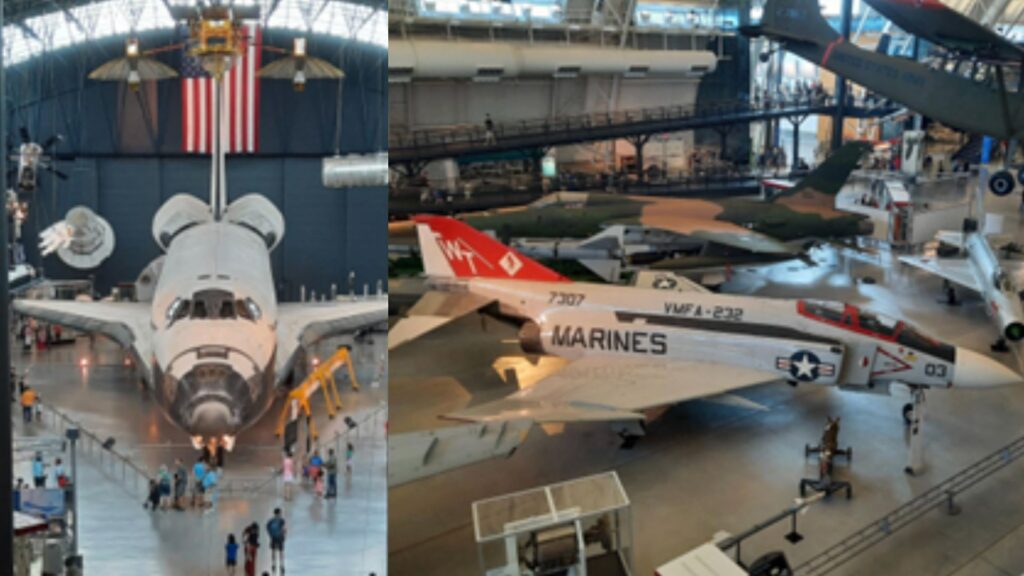
Amidst all the work, I managed to find some time to take a side trip to the Steven F. Udvar-Hazy Center. The scale of the museum was impressive, displaying thousands of space and aviation artifacts like the Space Shuttle Discovery, an SR-71 Blackbird and the Enola Gay. Walking through the hangar and experiencing a chronological history of humanity’s aerospace achievements was both humbling and inspiring.
Deploying the Instrument – Edwards Airforce Base
The construction of any lunar model first involves a large dataset of irradiance observations for various lunar phases and elevations. This is because the perceived brightness of the Moon is characteristic of its geometry relative to the Sun and Earth. When compiled, this model can be consulted for unique viewing and illumination conditions of the Moon under arbitrary observation, yielding exceptional accuracy. This is why the team targets different times of the year to fly—it helps us obtain different observation datasets. Since the first operational campaign took place in March 2022, the next was scheduled for the first three weeks of December 2024. For this double campaign, we planned to fly a total of ten nights.
The ER-2’s we use for air-LUSI are owned, maintained and operated by NASA Armstrong Flight Research Center (AFRC), located in Edwards Airforce Base, California. After the HAAMR system was verified to be functional with the rest of the air-LUSI instrument, our equipment was shipped from NIST to AFRC, and our team flew out to Los Angeles on December 1, 2024. We stayed in Lancaster, nestled in the Antelope Valley about 40 miles southwest of AFRC, and 20 miles away from the edge of the base. This made for a long commute, but it was worth it. The Mojave Desert has such beautiful landscapes, with clear skies, Joshua trees, and interesting rock formations and mountains as far as the eye can see. To the south, the snowy peaks of the San Gabriel mountains loom over the valley, and to the north the Tehachapi range can be admired. Working at NASA AFRC and Edwards was also a great privilege, as their joint history and contributions to aerospace technology is extensive, responsible for the flight of the Bell X-1 which first broke the sound barrier in 1947, the first purely digital fly-by-wire aircraft (F-8 DFBW), the first landings of the space shuttle and many other engineering feats.
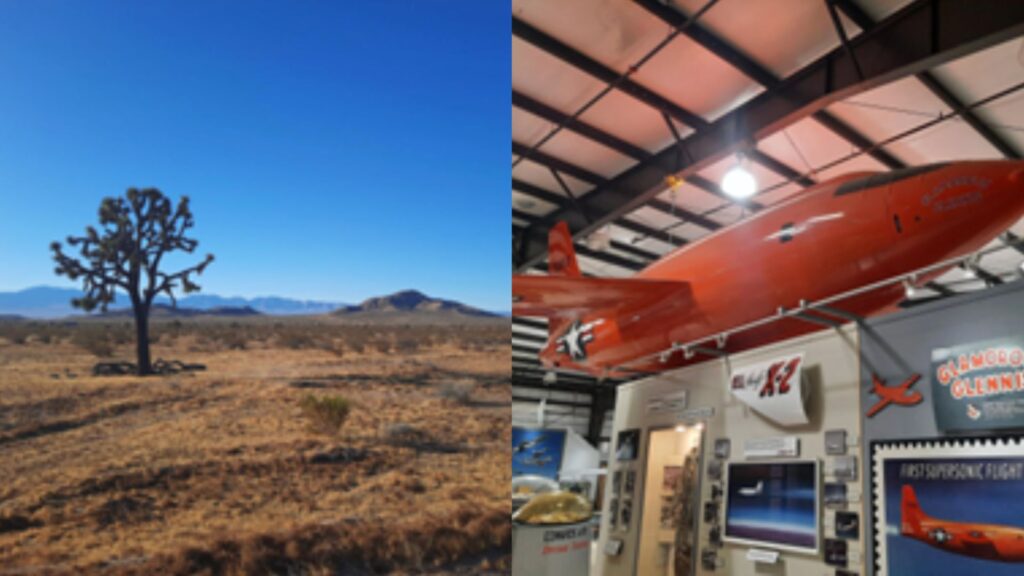
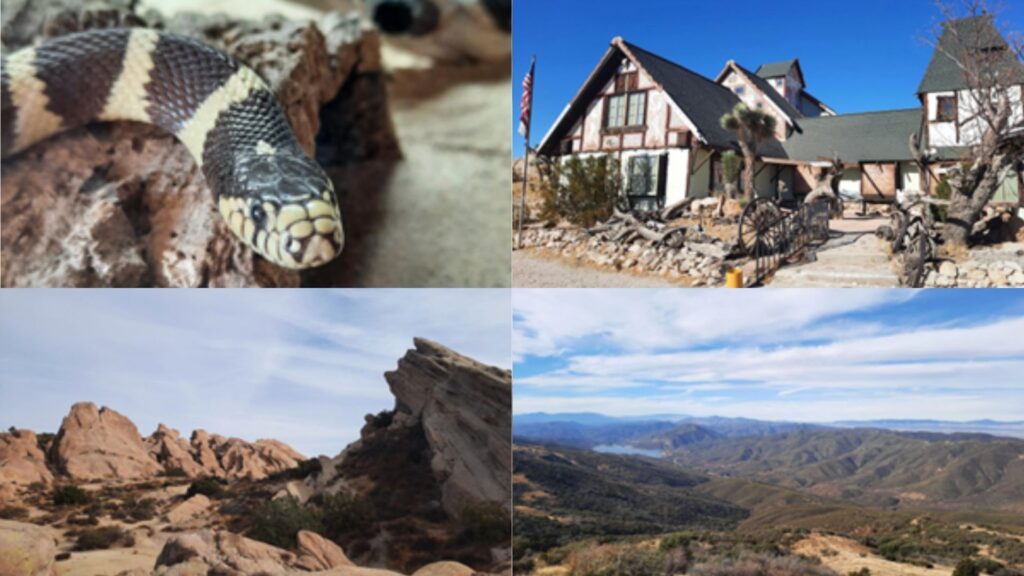
When I wasn’t working in the lab, I had the opportunity to sight-see across the Antelope Valley. On my first day off, I set out in the morning to hit a variety of destinations I wanted to see. Unfortunately, the Kill Bill Church was closed, but I still got to walk around Saddleback Butte State Park, hike the Devil’s Punchbowl Natural Area at the foot of the San Gabriel range, visit the beautiful Antelope Valley Native American Museum and go to the Lancaster Museum of Art and History, where they had an insightful exhibit concerning the endangerment of Joshua Trees. The next day, I drove west towards Santa Clarita to hike along the Pacific Crest Trail in the Sierra Pelona mountains, stopping to see Vasquez Rocks along the way. Loving the outdoors, and having never experienced desert or mountainous environments before, these outings were one of the most exciting parts of the trip.
After spending the first week of the campaign testing and solving the new problems that come with deploying a new instrument on a different plane in a different hangar for the first time, the team was ready for the first night of flights. Shortly after takeoff, however, we lost communication with our system, meaning power was not being properly supplied to the wing. To prevent damage to the instrument, the pilot landed immediately. This was later isolated by NASA technicians to be due to a short within one of their cable harnesses. Upon landing, however, they also realized there was an issue with the engine that required immediate repair before they could fly again, and unfortunately, this meant the cancellation of the December campaign.
The December cancellation was devastating to the project and the team, especially since it had been a few years since the last flight. We did learn a lot about system quirks and calibrating in a new environment, however, and quickly began rescheduling flights to March. Flights during this time would yield different observations than the ones planned for December, so these would need to be replicated sometime down the road.
In March 2025, we were back at AFRC, ready to deploy air-LUSI once again. This new flight gave us the opportunity to validate an earlier dataset from March 2022 and, since this is typically ‘windy season’ in the desert, it also gave us the chance to test the resilience of our tracking system.
The first week was once again spent testing, finding more issues and uploading our instrument to the aircraft.
On the night of the first flight, we were driven out to the pad to watch preflight checks, fueling and its impressive takeoff. The ER-2 can reach an altitude of 70,000 ft. in approximately 20 minutes, with a typical cruising speed of 410 knots. Once we were back in the lab, the 45-minute lunar tracking window started, and we were anxiously monitoring both the tracking and spectral data. For highly accurate measurements, the line-of-sight tracking error must not exceed a strict 0.5 degrees, and for all of our flights this campaign, the error stayed below this threshold, and on average we met the target by a factor of 20.
When the aircraft landed, the team was ecstatic in achieving these long-overdue observations. For the remainder of our flights, we experienced no failures and were blessed with relatively easy nights of monitoring telemetry data. Due to brake repairs and a harsh storm that was brewing over the Pacific, however, we only had the opportunity to fly 3 out of the 5 planned flights. Though we were disappointed, some data is much better than no data. For the final flight, NASA was unsure if we would be able to fly in the severe weather until the last minute, but in preparation the team developed a procedure for ensuring the safety of the instrument if it experienced severe ice buildup.
Following the success of the previous year, in February of 2026, we deployed our instrument for another round of flights. This time, we targeted positive phases of the Moon, achieved similar accuracy in our robotic tracking and were able to collect data for all five nights. The team is currently assessing the quality of this latest batch of data.
Looking Forward – MDA Space and Future Opportunities
Working on the air-LUSI project has opened my eyes to the larger impact that seemingly niche work can have on the world. The experience I’ve received and friendships I’ve made are extremely valuable to me. Improving the calibration of Earth-observing satellites has many implications for the betterment of society, and working on air-LUSI has been truly inspiring, reminding me time and time again that hard work always pays off, especially on global scales. Working on this project has also provided me with once-in-a-lifetime experiences, including travelling to beautiful areas and working with world-renowned scientific institutions.
Looking forward, my experience working on air-LUSI will extend to any engineering project I’m involved in, but it will be especially helpful in McMaster’s recent collaboration with MDA Space. Supervised by Gadsden and several MDA Space engineers, myself and three other graduate students will be developing virtual sensing, condition monitoring, control and physics-informed machine learning techniques for implementation on a multi-Degree of Freedom robotic arm. Though the project just started, we have learned a lot about working as a team, project management and the innumerable design and mathematical considerations of working with these robotic systems. It’s been a pleasure working with industry experts, and it’s really cool to get to work on cutting edge technology and contribute to continuing Canada’s long history as global leaders in space robotics. Though I’m not completely certain where my career will take me yet, my experiences as a graduate student at McMaster University have made it such that my options are endless.