Growing up in Hamilton, Ontario, Delina Mekonnen always felt a deep connection to McMaster University. After all, her older sister was enrolled at the university, and campus was right in her backyard.
Though she was initially drawn to medicine, Mekonnen discovered a love for math, science and problem-solving in high school.
“I wanted to be a doctor for a long time, but I kept coming back to my love of math and science,” says Mekonnen. “Joining my high school’s robotics team in grade 12 and competing in a FIRST Robotics event hosted at McMaster is what ultimately confirmed I wanted to study engineering.”
Today, Mekonnen is a third-year student in the Computer Engineering & Management program, where she combines her love for hardware, software and leadership on a daily basis.
Discovering research opportunities
Mekonnen’s first steps into the world of research came through the Engineering Research Experience Award (EREA), a summer research scholarship given to high-achieving first-year students at McMaster Engineering. Unsure about what research in computer engineering looked like, she decided to attend a faculty research night to learn more.
“I had no idea what computing research even was,” Mekonnen explains. “I thought research was mostly chemistry or lab work. Seeing professors from Electrical & Computer Engineering talk about high-performance computing, AI and machine learning opened my eyes. After that, I just had to get involved.”
With the support of the EREA award, Mekonnen joined Professor Kazem Cheshmi’s research group, immersing herself in machine learning projects aimed at tackling real-world challenges.
Using AI to combat ovarian cancer
Having a family history of cancer made Mekonnen keen to explore the intersection of medicine and engineering. Under Cheshmi’s guidance, she spent the summer investigating how machine learning could be used to detect ovarian cancer earlier and more accurately.
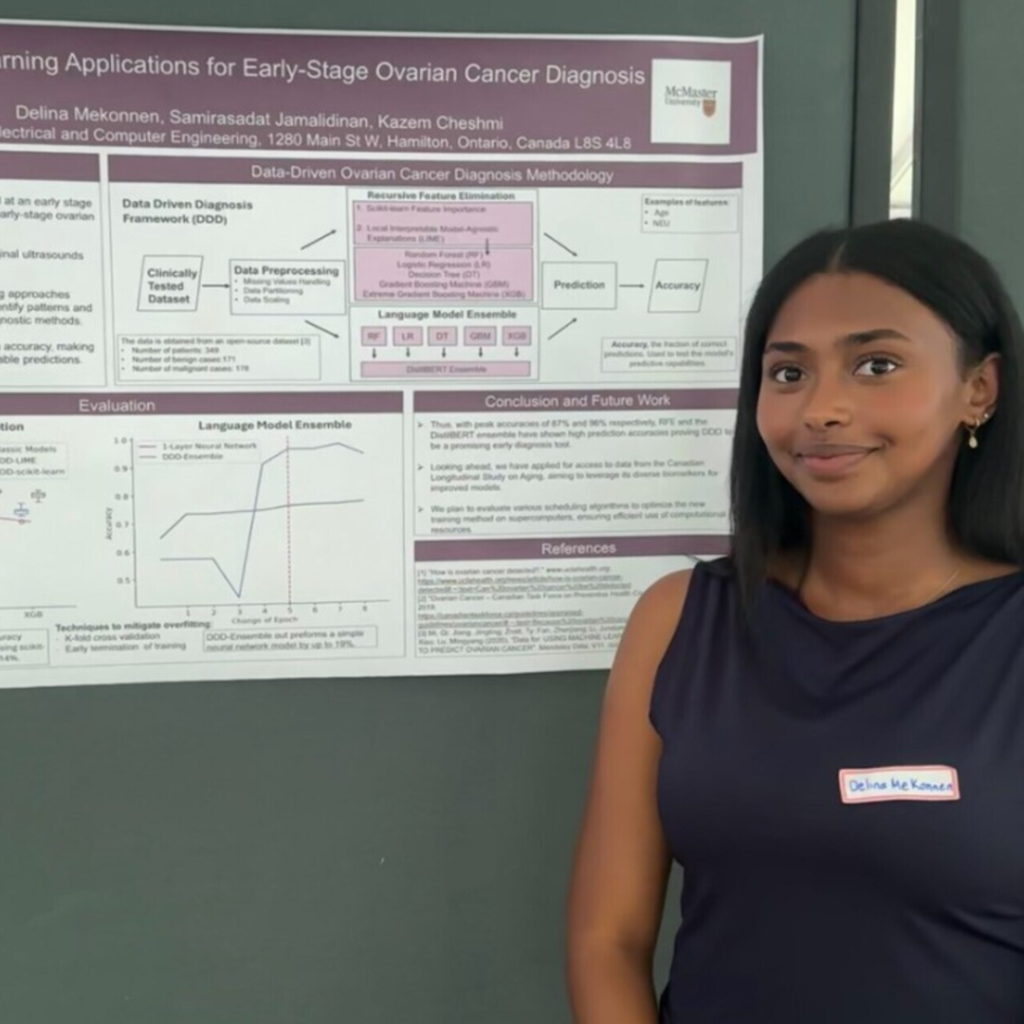
“Ovarian cancer is the eighth most common cancer in women worldwide, yet there isn’t a reliable universal screening test,” she explains. “My work focuses on leveraging high-performance computing and AI to analyze complex medical data and help physicians diagnose cases earlier, ultimately improving treatment outcomes.”
This summer project led Mekonnen to design a research poster that showcased her findings, one she would later submit to an international conference.
Spotlight on the global stage
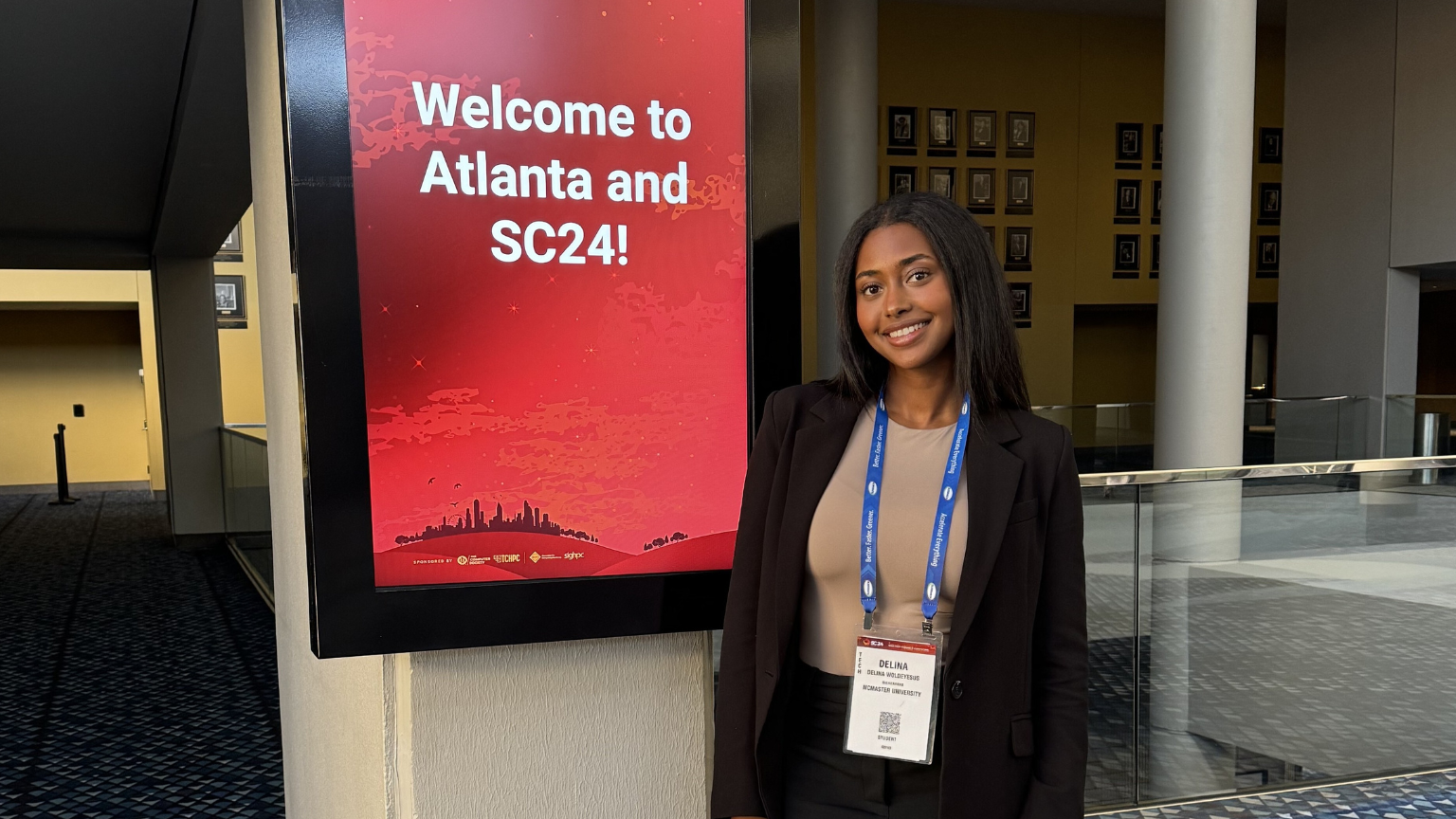
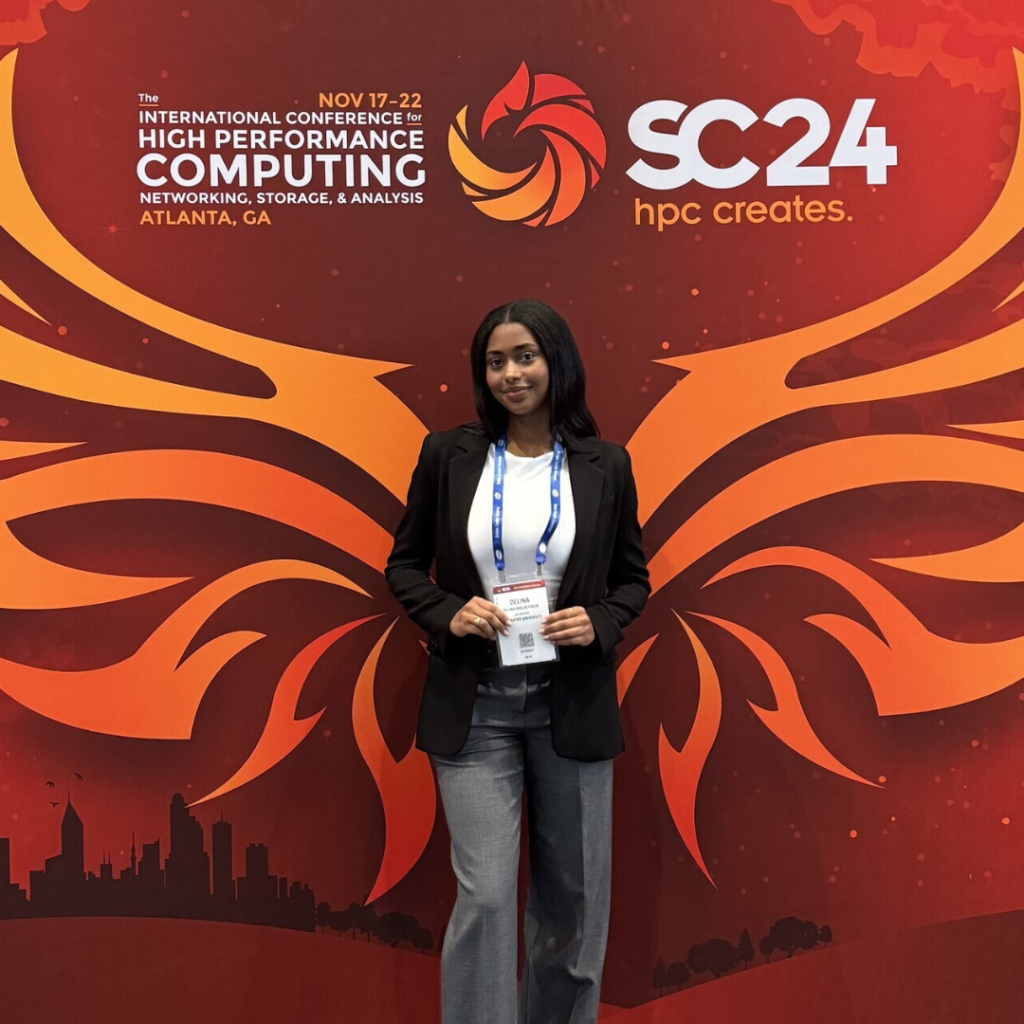
Encouraged by her research supervisor, Kazem Cheshmi, Mekonnen decided to submit her poster to SC (Supercomputing) 2024, one of the world’s largest gatherings for high-performance computing, networking, storage and analysis. She was astonished when her work was accepted, placing her among just 30 undergraduates invited to compete in the Student Research Competition in Atlanta, Georgia, and making her the only Canadian in attendance. In the end, Delina’s dedication and clear passion for her project led to a second-place finish
“I never imagined my first-year summer project could be recognized at such a prestigious event, and then I found out I was the only Canadian in the competition,” she recalls.
“Being among so many bright-minded peers from institutions like Caltech and other top universities was surreal. Winning second place made all the challenges feel worth it —it was validation that my research matters.”
Community and representation
As a third-year Black woman in computer engineering, Mekonnen also recognizes the importance of visibility in STEM and research.
I often notice there aren’t many students who look like me in my classes, and the same is true in research. But being out there, at this competition, at McMaster, shows other Black students that yes, we do belong here. I hope to inspire them to jump into research too.
Beyond research, Mekonnen is heavily involved in student life. She is currently serving as Co-VP Finance of the Women in Engineering Society, The Hunt Chair for the National Society of Black Engineers (NSBE) and actively participates in the McMaster Engineering Society (MES).
Looking ahead
With a successful summer of research and an international conference win under her belt, Mekonnen is eager to see what comes next. She hopes to continue bridging her interests in medicine, AI and high-performance computing, and she is open to pursuing graduate studies after her undergrad.
“I’d love to stay involved in research,” she says. “There’s still so much to learn and discover. If it helps even one patient get a more accurate or earlier diagnosis, then it’s worth it.”
She also hopes her story shows future and current students that sometimes the best opportunities arise by staying curious and seeking out challenges.
“I never saw myself in high performance computing (HPC) research, but taking that leap changed everything,” she adds. “If you’re open to new experiences, you just might find your passion in the most unexpected places.”