Engineering has always been part of Spring Fu’s family story.
Her grandmother was an aerospace engineer and her grandfather, a mathematician. Her mother, a civil engineer educated in China, helped pave the way for the family’s future in Canada, where she later earned her P.Eng.
It’s a legacy that influenced Spring’s decision to pursue a double major at McMaster University in Engineering Physics and Mathematical Sciences, alongside a minor in business.
“I’ve always been surrounded by people who love problem‑solving,” Spring says. “But McMaster helped me understand how I want to apply that mindset in the nuclear sector.”
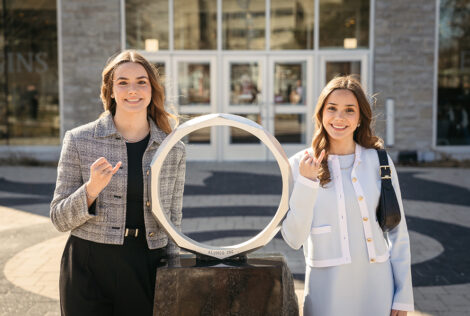
As Spring prepares to receive her Iron Ring at the Calling of an Engineer ceremony on March 27, she is both honouring a familial chapter and beginning a new one distinctly her own.
I’ve always been surrounded by people who love problem‑solving, but McMaster helped me understand how I want to apply that mindset in the nuclear sector.
Finding direction in the nuclear field
A pivotal moment in Spring’s academic journey came when she attended the Canadian Nuclear Association (CNA) Conference as a student — an opportunity she pursued following encouragement from Engineering Physics professor Dave Novog.
Over the course of just a few days, Spring was introduced to the breadth of the nuclear industry, from small modular reactors to emerging innovations in clean energy. Just as importantly, she connected directly with industry leaders, mentors and future colleagues through student-focused networking and mentorship events.
“That experience completely changed my perspective,” she says. “Being able to sit at the table with senior leaders and hear about their career paths made the industry feel much more accessible.”
It was also at the CNA Conference that Spring met members of the Ontario Power Generation (OPG) team she would later work with on co-op — connections that would help shape her future career.
Building a future through nuclear experiences
Following the conference, Spring sought hands-on opportunities to deepen her understanding of the field. She secured a summer research position with professor Adriaan Buijs through the Canadian Nuclear Laboratories Undergraduate Summer Research Experience (CNLUSRA), where she worked on computational fluid dynamics (CFD) modelling for heat pipes used in small modular reactor design. The opportunity was facilitated through McMaster’s largest-in-Canada undergraduate research program.
“It was my first real introduction to nuclear research,” she says. “Being able to learn about and contribute to work that’s shaping the future of clean energy was incredibly motivating.”
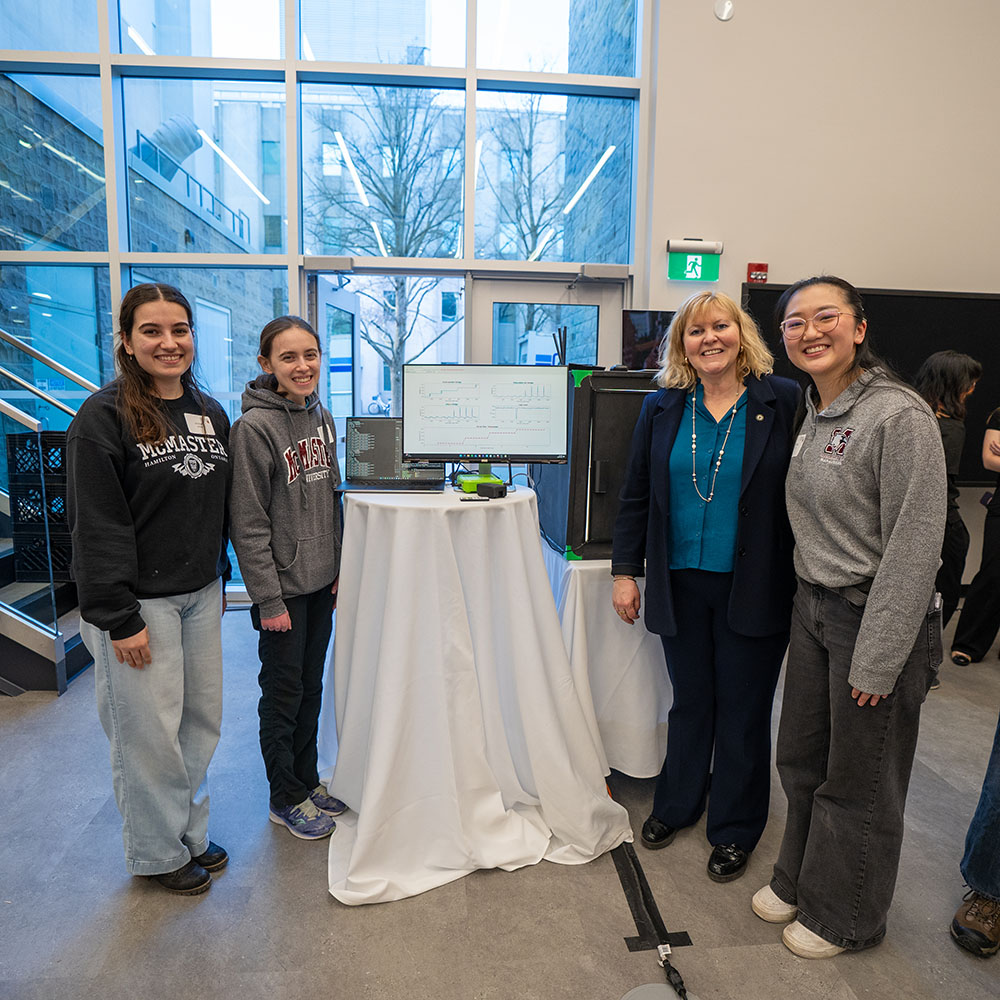
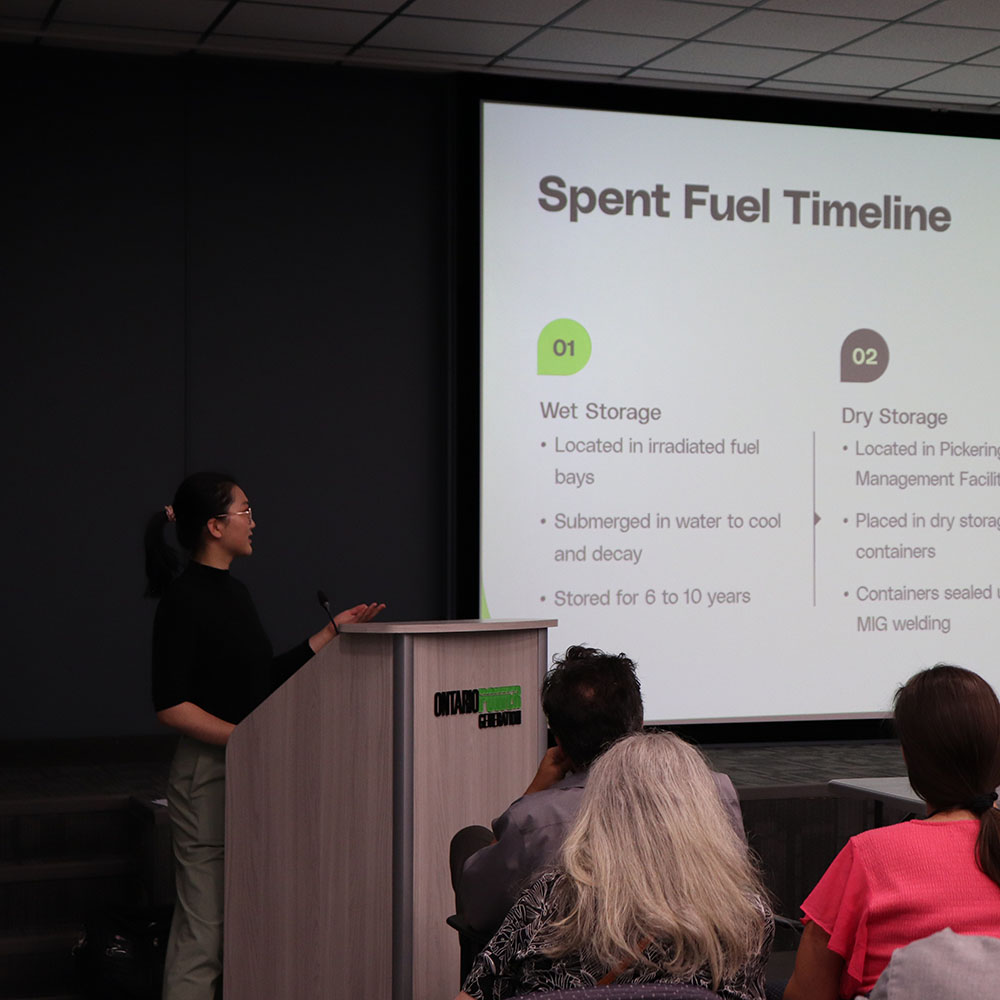
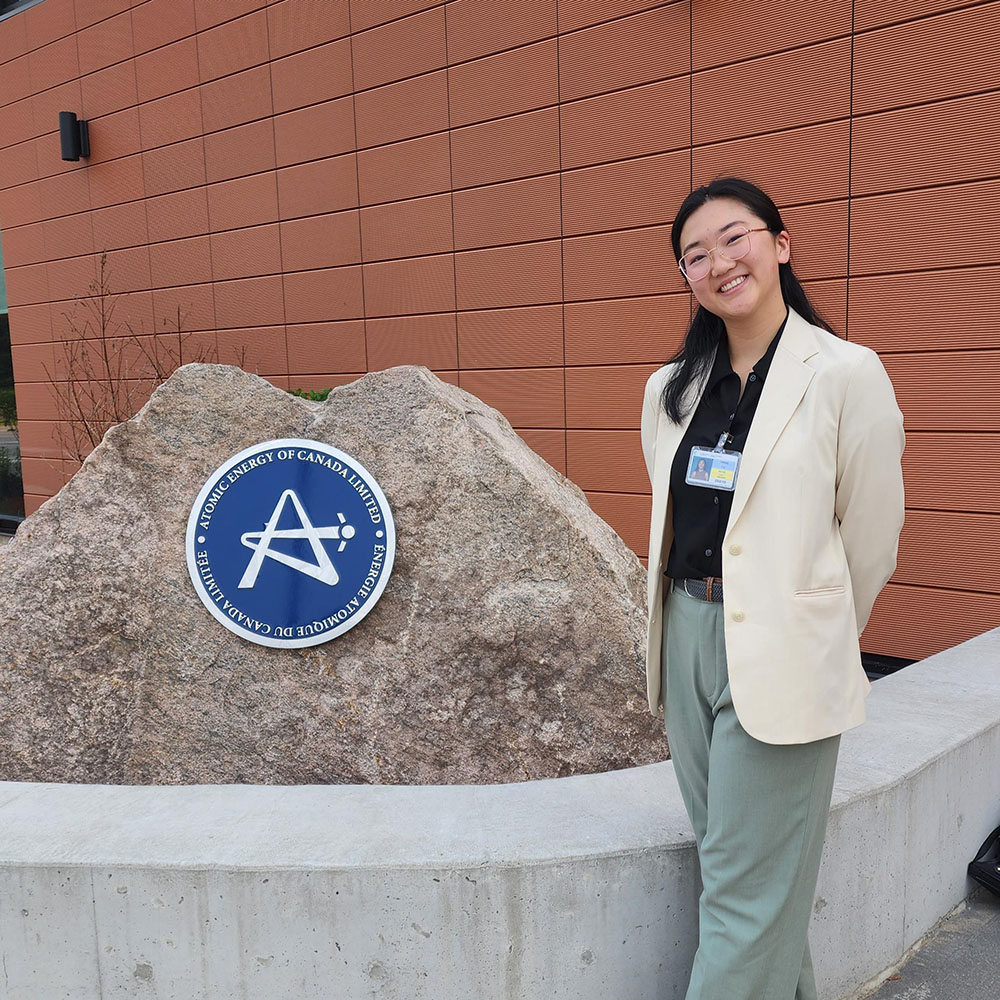
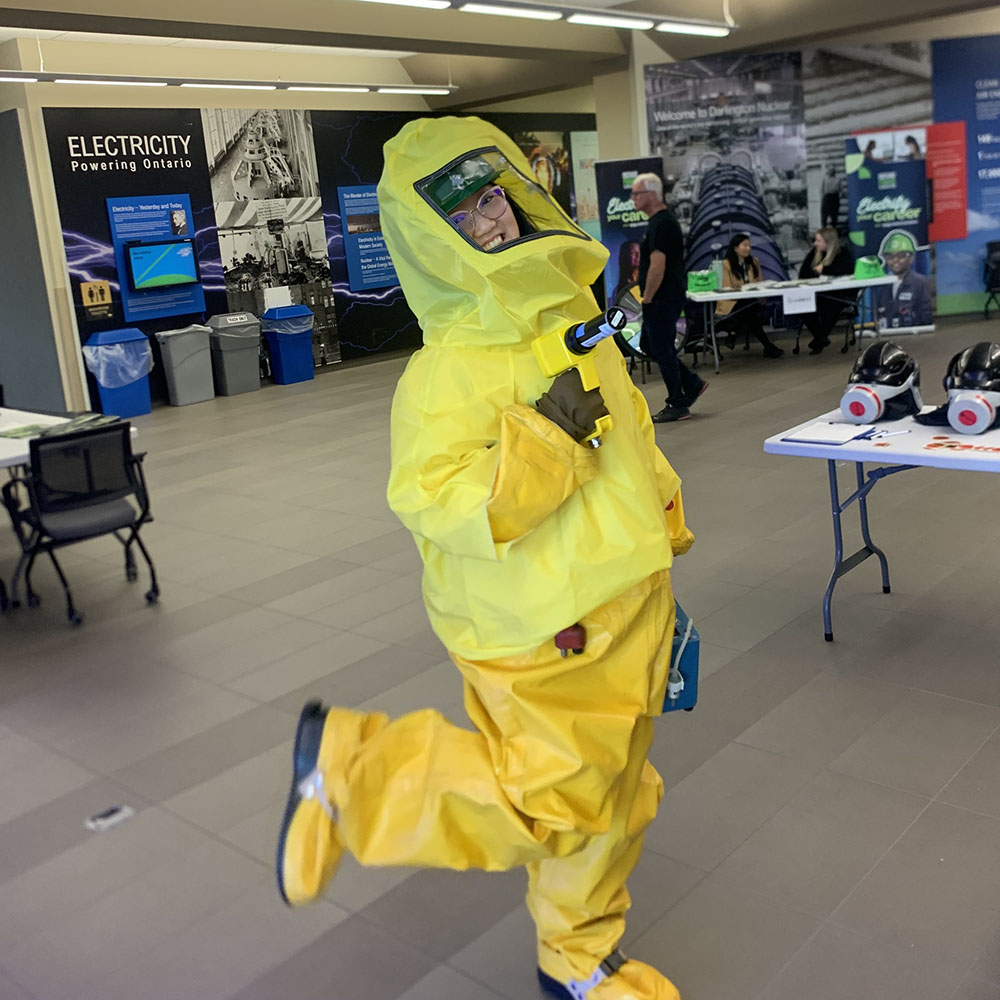
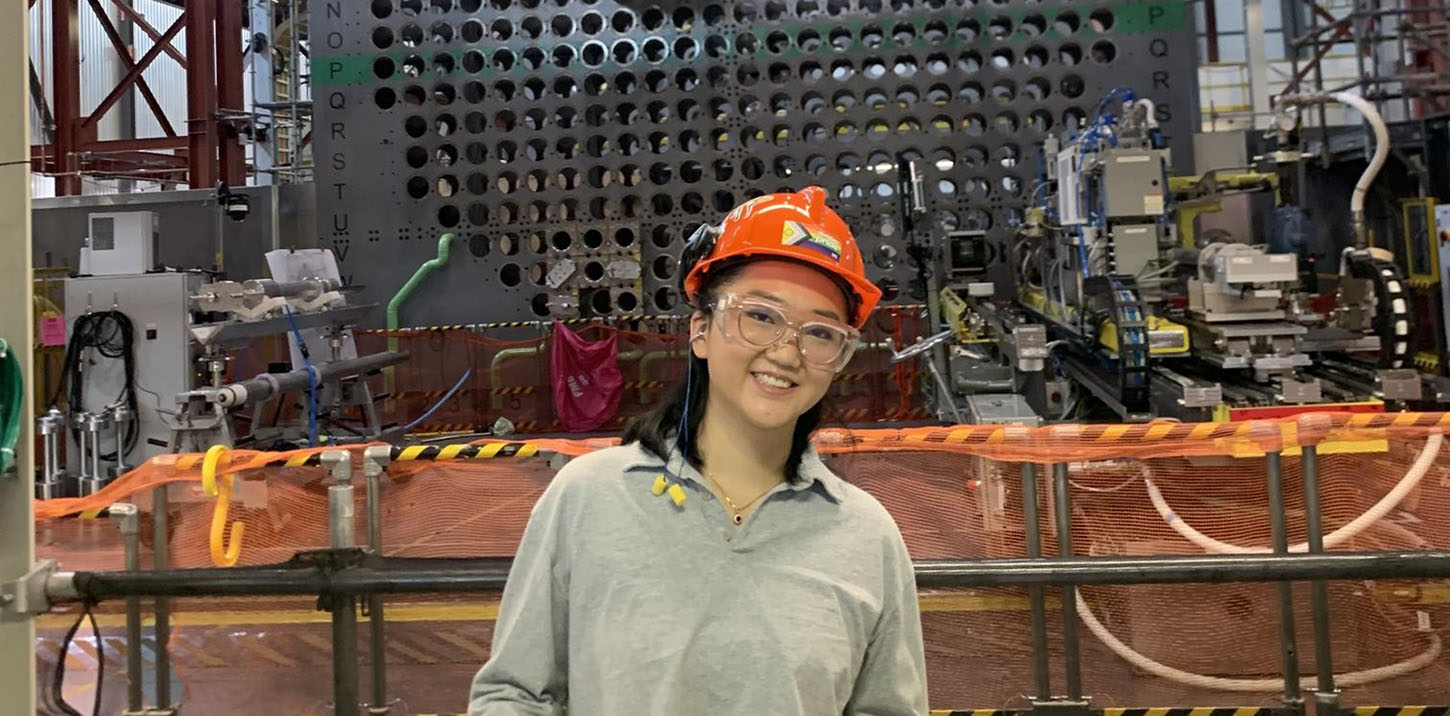
That momentum continued through a full-year co-op at OPG, where Spring joined XLAB, a team focused on introducing innovative technologies — such as wireless sensors — into existing nuclear infrastructure to improve safety and enable earlier detection of equipment failure.
“A lot of the systems in nuclear plants are decades old,” she explains. “Finding ways to integrate new technology safely and responsibly was challenging but really fulfilling.”
Her co-op experience ultimately came full circle when Spring’s Capstone project was funded and supported by the XLAB team, a division of OPG that specializes in using the latest technologies to improve training and make work processes more efficient, allowing her to directly connect academic work with real-world industry needs.
“Seeing that line from classroom learning to something that could actually be deployed was huge for me,” she says.
Where passion meets purpose
While Spring’s academic and professional journey has been shaped by opportunity, it has also become deeply personal. Her mother’s recent cancer diagnosis has prevented her from being able to present Spring with her Iron Ring; something they had both hoped for.
The experience, Spring says, has only strengthened her resolve to pursue nuclear engineering, particularly given the role nuclear technologies play in medicine and cancer treatment.
“Nuclear research isn’t just about power generation,” she says. “There’s such an important connection to nuclear medicine and cancer therapies. That perspective has made this path feel even more meaningful.”
After graduation, Spring will return to OPG full time, joining the organization’s safety group and continuing her involvement in professional development initiatives within the nuclear sector.
Try things. Get involved. Talk to people. Some of the most important learning happens outside the classroom, and it all adds up!
Reflecting on her time at McMaster, Spring credits the university’s project-based curriculum — particularly its Fundamental Skills in Engineering (FUSE) courses — along with a strong culture of mentorship and experiential learning, for helping her develop both technical and transferable skills while exploring broadly and building depth.
“Try things. Get involved. Talk to people,” she encourages students who are finding their footing. “Some of the most important learning happens outside the classroom, and it all adds up!”
On March 27, after she receives her Iron Ring, Spring says she’ll immediately call her family in China with her father to celebrate together – marking both an ending and a beginning in a family legacy that continues to blossom.