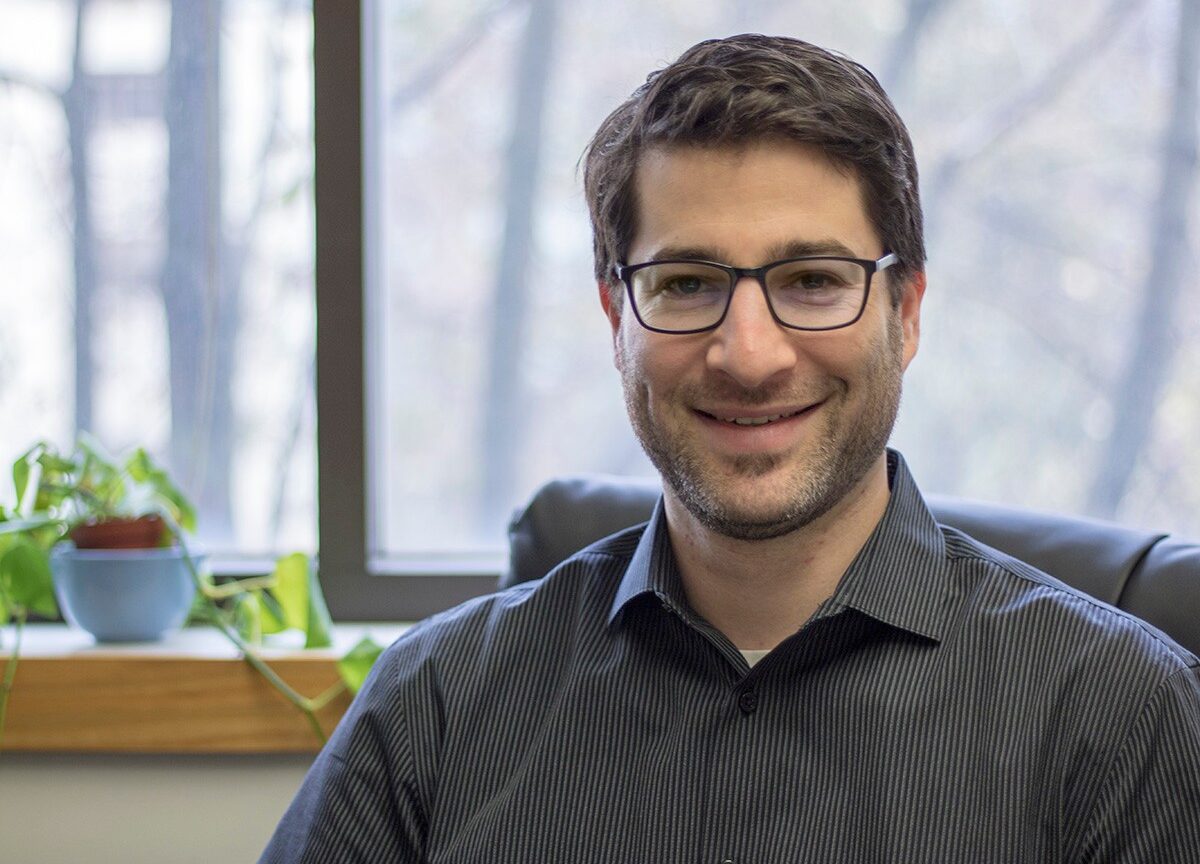
Seth Dworkin has built a remarkable career advancing clean and sustainable energy solutions. From his early fascination with thermofluids at McMaster as a Mechanical Engineering student to becoming a Canada Research Chair in Sustainable Energy Systems Modeling and Simulation, he has dedicated his work to exploring innovative approaches to renewable energy.
Now a professor of Mechanical Engineering at Toronto Metropolitan University, he leads groundbreaking research in geothermal technology — developing next-generation heat exchangers that make renewable heating and cooling systems more accessible and affordable.
In his Alumni Blueprints Q&A, Seth reflects on how his time at McMaster set the foundation for a career in sustainable energy, the lessons that have guided him along the way and his advice for new graduates starting out in their careers.
If you can find something that excites you on Monday mornings, your quality of life, your mental and physical health, and even your career success will all improve.
Here’s our Q&A with Seth:
Can you tell us more about the work that you do in sustainability and, more specifically, with geothermal energy technology?
I’m a professor of mechanical engineering, and the work that we’ve been doing in geothermal energy has gone on for about 10 or 15 years now. We’re focused on developing next-generation geothermal heat exchangers.
Geothermal energy, just for background, is a pretty expensive technology to install because it requires specialized drilling equipment to drill what are called boreholes deep into the ground. Those boreholes become heat exchangers — in the winter, heat is drawn up from the ground to heat buildings, and in the summer, heat is removed from the building and injected into the ground to provide cooling.
It’s more environmentally friendly than conventional systems because it doesn’t use natural gas — it’s a combustion-free technology that simply moves heat using electricity. In the summer, geothermal systems are also more efficient because the ground is much cooler than the air — around 10 to 15°C compared to 25 to 35°C — meaning it can absorb heat from buildings more easily.
The bad news is that it’s very expensive because of its installation process, so it’s really only installed in a small portion of buildings, usually large residential or institutional ones. The work that I’m doing is focused on developing smaller, more modular, and more efficient heat exchangers so we can bring the technology to medium-sized and even single-family homes.
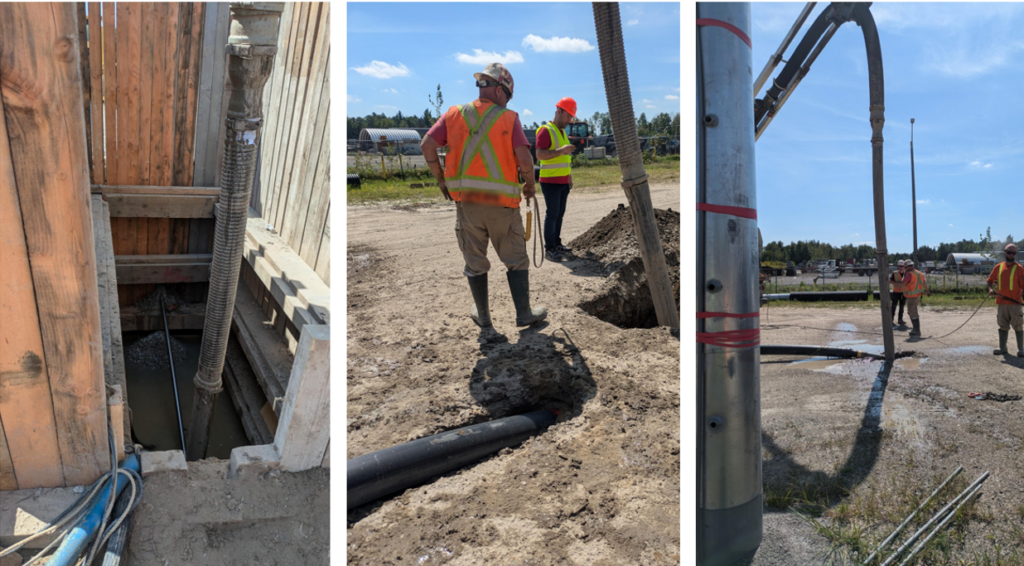
We work closely with industry partners, including Innovia GEO, to design and test these systems. Together, we’ve built three demonstration sites, where we’ve installed new types of heat exchangers, instrumented them with sensors to measure temperature and water flow, and monitored them remotely. We also develop detailed computer models of these systems so we can understand how they work and how to design them effectively. Ultimately, our goal is to create an industry with the know-how and capacity to install these systems in any type of building — at a reasonable cost and with accessible technology.
When do you think we’ll start to see this technology being used?
Within the next three years, we’ll start seeing early adopters bringing these systems on.
Our first demonstration site was with Enova Power, formerly Waterloo North Hydro, where we installed new helical steel pile heat exchangers that are still operating today.
When we have early-adopter partners who are interested in co-developing the technology, we can actually demonstrate that these systems work. So, I don’t think we’re far away from companies being able to design, sell, install, and commission these systems for a wide range of clients.
Has sustainability always been an area you were passionate about, even as a student?
When I was an undergraduate at McMaster in mechanical engineering, I was really interested in energy sciences — what we called the thermofluids stream — so thermodynamics and fluid mechanics. The applications of thermofluids at the time were largely in clean energy.
I did summer research work terms at McMaster, which sparked my interest in R&D. That led me to pursue my master’s and PhD in combustion. At the time, clean air and emissions reduction were big focuses, and that’s where I discovered my passion for developing technologies that reduce atmospheric emissions.
That’s what launched my career into the sustainable energy world.
A few years later, when I was a new assistant professor, I started exploring how the same principles of thermodynamics and heat transfer could apply to other sustainable technologies — which brought me into geothermal energy research. The first work I did in the area was on engineering economics. I realized the hesitation wasn’t mainly technical, it was financial. Over time, I focused on optimizing the engineering economics of geothermal systems and that research evolved into the work I do today: reducing barriers to adoption and creating more versatile heat exchanger options for different building types.
What are some of your most memorable experiences from your time at McMaster?
I have a lot of fond memories from McMaster. I spent countless hours in JHE and the Thode Library — often 12 or 16 hours at a time — studying with a group of like-minded friends who really wanted to challenge themselves and do well.
One of my biggest influences was Dr. Marilyn Lightstone, who later became department chair. I did two summer research assistantships in her group, where I was introduced to research methods and high-powered computer simulations — which was very new at the time. Through her mentorship, I developed a deep interest in research, and with her guidance, I went into the thermal-fluids and combustion field, which was one of her areas of expertise.
It’s been a pleasure to stay in touch with her since I graduated. In fact, I recently returned to McMaster as an external examiner for a PhD defense, and we had a great chance to catch up.
Other professors who stood out to me were Dr. Chan Ching, Dr. Samir Ziada, and Dr. David Weaver. They always took the time to talk, not just about coursework, but about careers, research, and life after graduation. Even though there were many students in each class, mechanical engineering felt like a small, close-knit community.
I also remember third year being the toughest academically but the most rewarding. It’s when we started translating all the science and math we’d learned into real engineering applications. That’s when I truly felt I was becoming an engineer.
Were you involved in any extracurriculars while at Mac?
I was on the Formula SAE Racing Team during my second and third years, although I didn’t have much time to contribute in fourth year since I was working as a teaching assistant for the first-year physics labs and applying to graduate schools.
Outside of that, I tried to stay active — a group of us would play Frisbee on the lawn in front of JHE whenever there wasn’t snow on the ground. I always had a Frisbee in my backpack. Ultimate Frisbee and Frisbee golf were just becoming popular back then.
And, of course, we had a social life too. We worked hard, but we knew how to relax on weekends. There was no social media, so we spent time together in person — studying, working on projects, or hanging out in the library or our off-campus houses.
If you could give your first-year self any advice, what would it be?
The first thing I’d say is that it’s OK to get something below an A — even a few B’s or C’s are fine. The person who graduates with a C average is still an engineer. Don’t let grades take away from your focus.
Learning from mistakes is part of becoming an engineer — if you know all the answers, you’re not making mistakes. So, take risks, and make some mistakes along the way.
I’d also say that the program is going to work you pretty hard. The 40-hour work week won’t exist for you — you’ll have a lot of deadlines and a lot of work. But make sure you still find time to relax, take care of your health, and recharge when you can.
And remember: professors don’t give you this much work to be mean. They do it because engineers need to learn time management and deliverables management, in addition to technical skills. If you put in genuine effort, it will get noticed.
What advice would you give to students who have just graduated?
The most important advice I can give is that most people in the world don’t actually enjoy their jobs — but you want to be one of the lucky ones who does.
If you can find something that excites you on Monday mornings, your quality of life, your mental and physical health, and even your career success will all improve.
Don’t take the job with the highest salary or the shortest commute just because it’s the easiest option. Take time to find the right fit — even if that means taking a risk, joining a startup, or sacrificing something short-term for long-term fulfillment.
And if you’re interested in research, go to graduate school. I’ve never heard anyone say they regret doing graduate research. If you want to find your passion, you’re going to have to keep learning — because a bachelor’s degree isn’t always enough anymore.
Finally, take your parents’ advice with a grain of salt. They have your best interests at heart, but they may not always understand what excites you. Trust yourself, and follow what makes you passionate.
Alumni Blueprints is a Q&A series that highlights the journeys of exceptional McMaster Engineering alumni. Discover how they built their careers, from joining student clubs and teams to seizing co-op opportunities that ignited their passions during their undergraduate years. Our alumni share their unique stories and insights, offering a blueprint for success in their respective fields. Want to share your blueprint for success? Contact the Alumni Team at engalum@mcmaster.ca.