Condition Monitoring System (Tier 1) Mechanical Engineering
Canada Research Chair Maximizing Information Extraction in Smart
Research Chair Tier 1 Research Chair
Overview
Specific Research Activities
State and Parameter Estimation, Fault Detection and Diagnosis, Variable Structure Systems Theory, Intelligent and Multivariable Control, Electric Battery Modeling, Automotive Tracking and Control, Actuation Systems, Design Optimization, Fluid Power and Hydraulics.
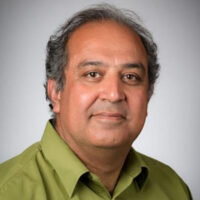
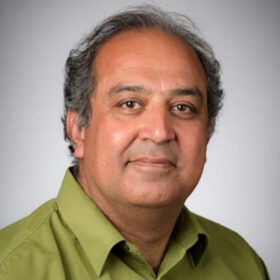
Dr. Saeid Habibi is a Tier I Canada Research Chair, a Senior NSERC Industrial Research Chair and a full Professor in the Department of Mechanical Engineering at McMaster University. Dr. Habibi joined McMaster in 2006, was promoted to the rank of full professor in 2008, and was the Chair of the Department of Mechanical Engineering from 2008 to 2013. He obtained his Ph.D. in Control Engineering from the University of Cambridge, U.K.in 1990. His academic background includes research into Artificial Intelligence, intelligent control, state and parameter estimation, fault diagnosis and prediction, Variable Structure Systems, actuation systems, mechatronics and fluid power. The application areas for his research have included autonomous vehicles, traffic monitoring, automotive powertrain, aerospace, and robotics.
Dr. Habibi is the founder and CEO of EECOMOBILITY Inc. EECOMOBILITY is a Canadian start up out of McMaster University, specializing in AI software and has developed unique prognostic and monitoring products. EECOMOBILITY’s products are applicable to the automotive sector, fleet operations, autonomous operability, conventional and electrified powertrains, industrial automation, and manufacturing operations.
Dr. Habibi has considerable managerial and industrial experience. He spent a number of years in industry as a Project Manager and Senior Consultant for Cambridge Control Ltd, U.K., where he was involved in automotive and aerospace related projects. In Canada, he worked at AlliedSignal Aerospace (presently part of Honeywell) where his last appointment was as a Senior Department Manager of Systems Engineering. He has received corporate training in both functional and program management.
Dr. Habibi has been a Senior NSERC Industrial Research Chair (IRC) since 2011 (renewed 2016), and until recently the only IRC sponsored by Ford in Canada. His research has received considerable publicity and has had scientific and commercial impact. He has developed his own theory related to fault detection and diagnosis referred to as the Smooth Variable Structure Filter (SVSF). He has been the recipient of a number of awards. He and his colleagues received the 2012 Best Paper Prize from IEEE Transportation Electrification Conference for the application of their SVSF theory to condition monitoring of battery cells. He received 2 corporate awards for his contributions to the AlliedSignal Systems Engineering Process. He was the recipient of the Institution of Electrical Engineers (IEE) F.C. Williams best paper award for his contribution to the Variable Structure Systems theory. He is a Fellow of the American Society of Mechanical Engineers (ASME) and a Fellow of the Canadian Society of Mechanical Engineers (CSME).
Dr. Habibi is the founder and the Director of the Centre for Mechatronics and Hybrid Technologies (CMHT) that is a research centre approved by McMaster University Senate. CHMT has created one of the most advanced and best equipped automotive research laboratories in Canada and internationally specializing in prognostics and diagnostics. CMHT researchers have collaborated with industrial partners to design and commercialize unique test equipment that are sold internationally and have created unique testing and characterization capabilities for CMHT. CMHT currently supports a number of large projects as well as being a resource to automotive companies and start-ups. CMHT research is supported by industry as well as by funding from Ontario Research Fund Research Excellence awards and NSERC.
Under an NSERC CREATE project, Dr. Habibi is leading an initiative for developing a web-based graduate course in vehicle electrification. He has one of the largest research groups in Canada and has supervised or co-supervised a large number of graduate students and highly qualified persons. Many of his graduate students have risen to senior positions in industry or have transitioned into faculty positions. He has filed a number of patents and has over 200 refereed publications.
B.Sc. Hons, University of Dundee, 1986; Ph.D., University of Cambridge, 1990
2023 Dean’s Doctoral Mentoring Honour RollMcMaster University
2024 Dean’s Doctoral Mentoring Honour Roll, McMaster University
Named an American Society of Mechanical Engineers (ASME) Fellow (2015). Read more.
2022 Dean’s Doctoral Mentoring Honour Roll, McMaster University
2021 Tier I Canada Research Chair, McMaster University
2021 Dean’s Doctoral Mentoring Honour Roll, McMaster University
2018 Canadian Society for Mechanical Engineering (CSME) Fellowship
2017, 2018 Dean’s Doctoral Mentoring Platinum Honour Roll, McMaster University
2016/22 Ford/NSERC Senior Industrial Research Chair – Renewal Research in Hybrid/Electric Vehicle (HEV) Powertrain Diagnostics
2015 American Society of Mechanical Engineers (ASME) Fellowship
Fundamentals of linear, continuous control systems. Control system performance in both time and frequency domains. Design and analysis of controllers. Three lectures
Pre-requisite(s): Registration in Level III Mechanical Engineering; or Level IV Mechanical Engineering and Management or Mechanical Engineering and Society Anti-requisite(s): ELECENG 3TP3, ELECENG 3TP4, IBEHS 4A03
This is a graduate course in mechatronics with an emphasis on actuation systems and control. The course begins by considering the industrial process that is followed for the design of large integrated systems. It then considers the necessity for a multidisciplinary approach to design and discusses the rational for mechatronics. Electrical and hydraulic actuation systems are considered, modeled and simulated. Electronic circuits, microcontrollers, real-time digital control, filtering, estimation and system identification are considered in the context of the control of actuation systems. The course heavily relies on experiential learning and includes a project.
TERM 2
Instructor
Dr. Saeid Habibi
The course covers key aspects of design and control of hybrid electric vehicles, plug-in hybrid electric vehicles and battery electric vehicles. The course provides a fundamental understanding of electric vehicles powertrain design, power flow management, system integration, propulsion system modelling, simulation and analysis. The course is geared towards Mechatronic systems design; starting from conceptual system-level requirements, followed by powertrain components design, system integration, and ending in verification and validation.