Software and Biomedical Engineering – Faculty of Engineering

Software and Biomedical Engineering

A unique integrated program delivered jointly by the Faculties of Engineering and Health Sciences, interlinking Software engineering with biomedical projects to advance digital control systems.

Length
5 years
Degree
Bachelor of Engineering & Biomedical Engineering (Co-op Available)
Program
Integrated Biomedical Engineering & Health Sciences (iBioMed)
Options

Co-op

Overview

Software & Biomedical Engineering combines software engineering with biomedical innovation to design the digital tools that power modern healthcare. Through hands-on labs, design projects, and software development experiences, you’ll learn to build safe and reliable applications, AI systems, and connected health technologies used in clinical and personal care settings. Graduates are prepared for careers in healthcare technology, medical software development, AI-driven diagnostics, and digital health innovation.  

Why study this program?

  1. Canada’s first program to integrate engineering, entrepreneurship and health sciences, preparing students to develop innovative solutions that improve health and technology  
  2. Access specialized learning environments including an elliptical computer-based tutorial lab, a dedicated $2 million GPU cluster for machine learning, and a drop-in support centre designed to support student success in software development  
  3. Develop in-demand skills for high-growth careers in healthcare technology, AI-driven diagnostics, medical software engineering, and digital health innovation, where secure and reliable systems directly impact patient care and outcomes  
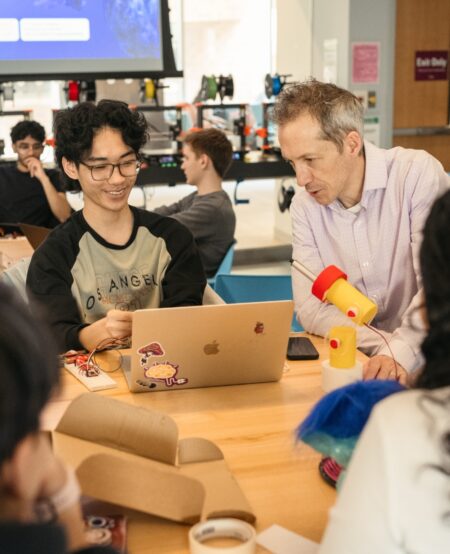
A professor leans over 3D printed components while a student works on a laptop.

What you'll learn

Study an interdisciplinary field that combines software engineering with biomedical engineering to design and develop software-driven systems for healthcare and medical applications.  

You’ll build a strong foundation in core areas such as programming, algorithms, data structures, software design, computer systems, and computer architecture, while also exploring biomedical domains including human physiology, biomedical signals, health systems, and medical technologies.  

All students in McMaster’s Integrated Biomedical Engineering & Health Sciences (iBioMed) program participate in a common first year — IBEHS 1. Build a solid base in the fundamentals of engineering, health and entrepreneurship and get exposed to design work at the start of your degree.

SFWREND 3A04 – Software Design III: Large System Design

Learn how to build and manage large-scale software systems used in real-world applications. You’ll work on complex team projects that emphasize architecture, scalability and professional software development practices.

SFWRENG 3RA3 – Software Requirements and Security Considerations

Explore how to design software that is not only functional, but also safe, secure, and reliable – critical for healthcare applications. You’ll analyze real-world systems and learn how to protect sensitiev data in high-stakes environments.

SFWRENG 4AL3 – Applications of Machine Learning

Discover how machine learning is applied to real-world problems, including healthcare and biomedical data. You’ll build predictive models to explore how AI can support diagnosis, monitoring, and decision-making.

IBEHS 4F04 – Biomedical Instrumentation & Measurement

Gain hands-on experience with the devices and systems used to measure and monitor the human body. You’l work with biomedical sensors and instrumentation used in hospitals and health technology development.

Get practical experience and grow your portfolio with interdisciplinary design courses. All students in Integrated Biomedical Engineering and Health Sciences take six project-based design courses:

1. IBEHS 1P10 A/B – Health Solutions Design Projects I: Introduction to Engineering Fundamentals and Design

2. IBEHS 2PA2 – Health Solutions Design Projects II-A: Lab Skills in Genetic Engineering

3. IBEHS 2PB2 – Health Solutions Design Projects II-B: Project in Genetic Engineering

3. IBEHS 3P04 – Health Solutions Design Projects III: Economic Analysis and Risk Management

4. IBEHS 4P03 – Health Solutions Design Projects IV: Decision Making and Project Management

5. Capstone project (year-long design project)

Potential career paths

Graduates will be career-ready for high-demand areas such as healthcare software development, medical systems design, AI-driven diagnostics, digital health applications, and secure, large-scale software engineering in healthcare and technology-focused organizations:  

  • Cloud Developer 
  • Data Analyst  
  • Data & Application Services Developer  
  • Full Stack Developer 
  • Process Engineer 
  • Product Designer  
  • Quality Engineer 
  • Research and Development Engineer 
  • Software Developer  
  • Technical Systems Analyst 

Explore Software Engineering and Biomedical Engineering in grad school

  • State-of-the-art labs

    The Faculty of Engineering houses innovative design studios, labs and spaces that allow students to develop hands-on learning from day one.

  • Clubs and teams

    McMaster has many clubs, teams and societies you can join to practice your engineering skills, get more hands-on experiences and explore new activities.
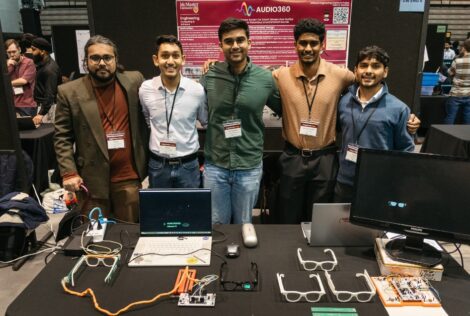
    Learn more about Mac Eng Experiences

More helpful links