
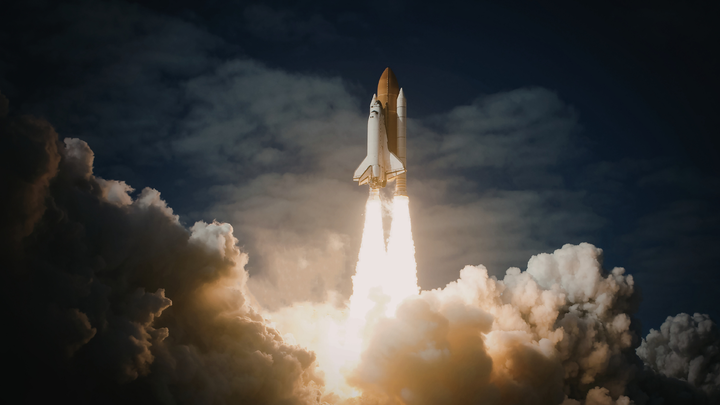
On Wednesday evening, more than 3 million people tuned in to NASA’s YouTube channel to watch as Artemis II took flight. This historic launch marked the beginning of a nearly 10-day lunar trip for the crew—and set the stage for humanity’s return to the Moon.
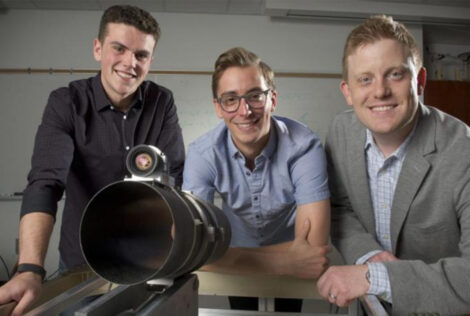
We reached out to Andrew Gadsden, Professor of Mechanical Engineering and Principal Investigator of the Intelligent and Cognitive Engineering Lab at McMaster University, to talk about the historic launch. Drawing on his research expertise and experience working with NASA, he offered an expert perspective on the launch, breaking down how mechanical engineers are key to rocket launches and why the Artemis II mission is so important to space travel.
Q: Why is the Artemis II launch so important?
It has been over 50 years since humans have visited the Moon. This launch is the first step towards getting back there. In fact, many more Artemis missions are planned, with the ultimate goal of establishing a lunar base which will be used to launch to Mars.
Closer to home, the Artemis II launch is so important because it’s a moment that has the potential to inspire the next generation of engineers and scientists.
Q: What role would mechanical engineers play in the launch?
Rockets scream mechanical engineering!
Mechanical engineers are involved in pretty much every stage of the launch. This includes the design, analysis, protection, propulsion, manufacturing and operation of the rocket.
Q: What projects have you worked on with NASA?
The main project I worked on with NASA was the Air-LUSI project, which was part of NASA’s Airborne Science Program.
The goal of this project was to collect light from 70,000 feet aboard an ER-2 aircraft. This light is used to build models that help NASA calibrate their earth observing satellites. Our team earned the 2022 NASA Robert H. Goddard Award in Science for our work!
Currently, my team is working with MDA Space to develop space-based autonomous robots that will be used in orbit and one day on the Moon.
Q: What about space interests you the most as an engineer?
The thing that interests me the most about space is having the opportunity to explore the unknown and learn more about our place in the universe. I find that endlessly fascinating.
Additionally, the challenges that come with space engineering keep things interesting. Space is unforgiving. That makes for fun engineering.
Q: What are your favourite space-related movies and TV shows?
If we’re talking movies, it has to be Robert Zemeckis’s Contact (1997), but you also can’t go wrong with Galaxy Quest (1999) and Spaceballs (1987).
But if we’re talking TV… Star Trek: The Next Generation all the way!