It’s the night of the Met Gala. Your social media feed is filled with memes and commentary on fashion. You have the idea to recreate the looks with equipment found in your research lab. You caption it the Chem Gala — and go viral.
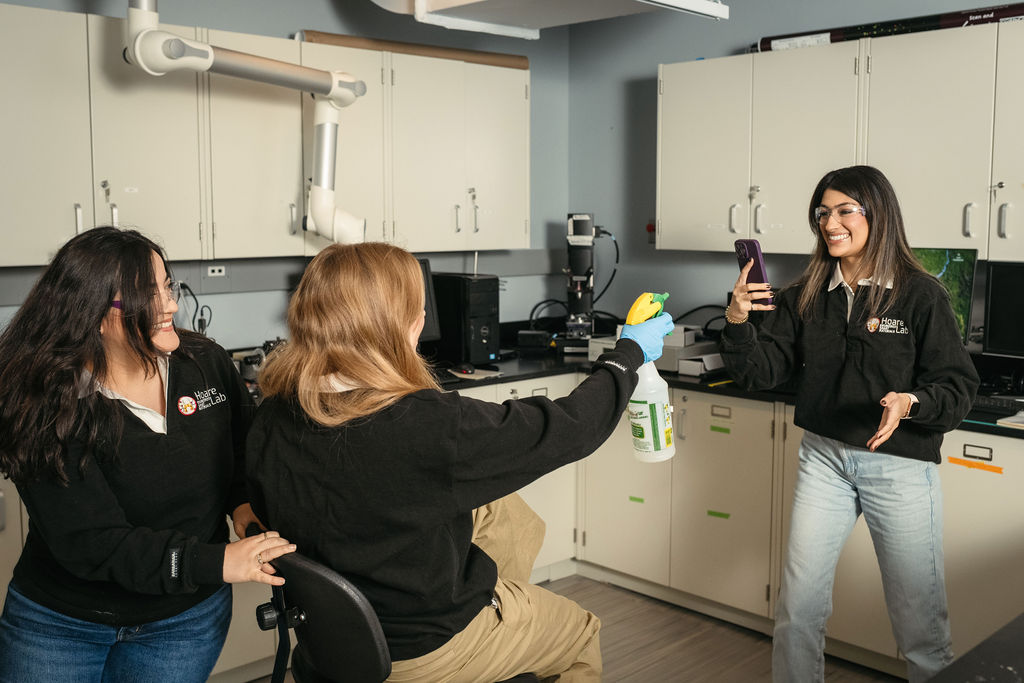
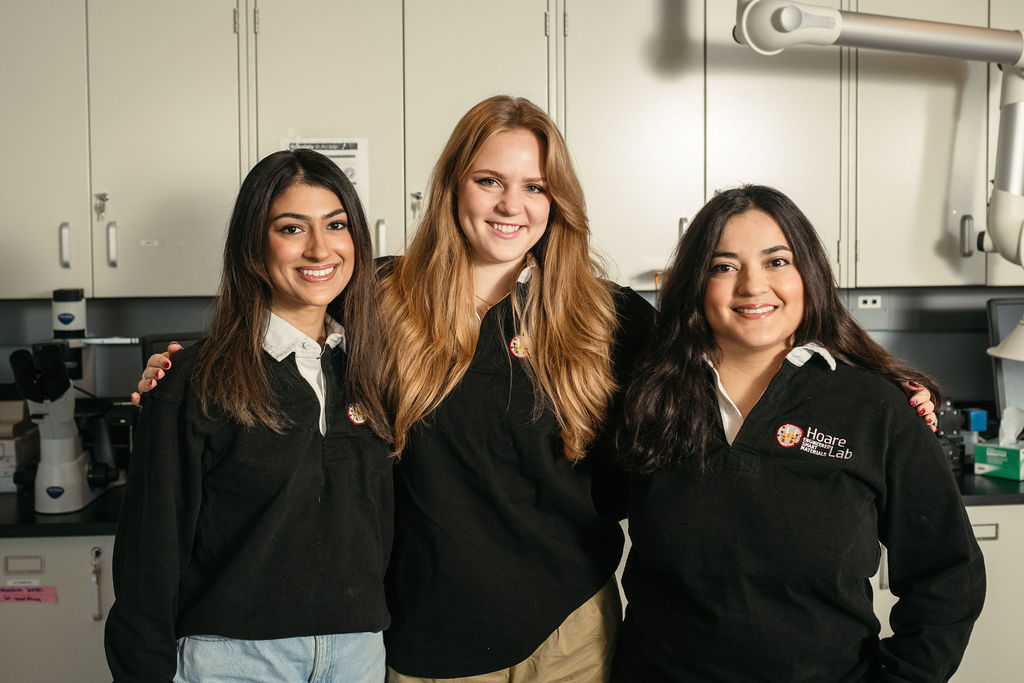
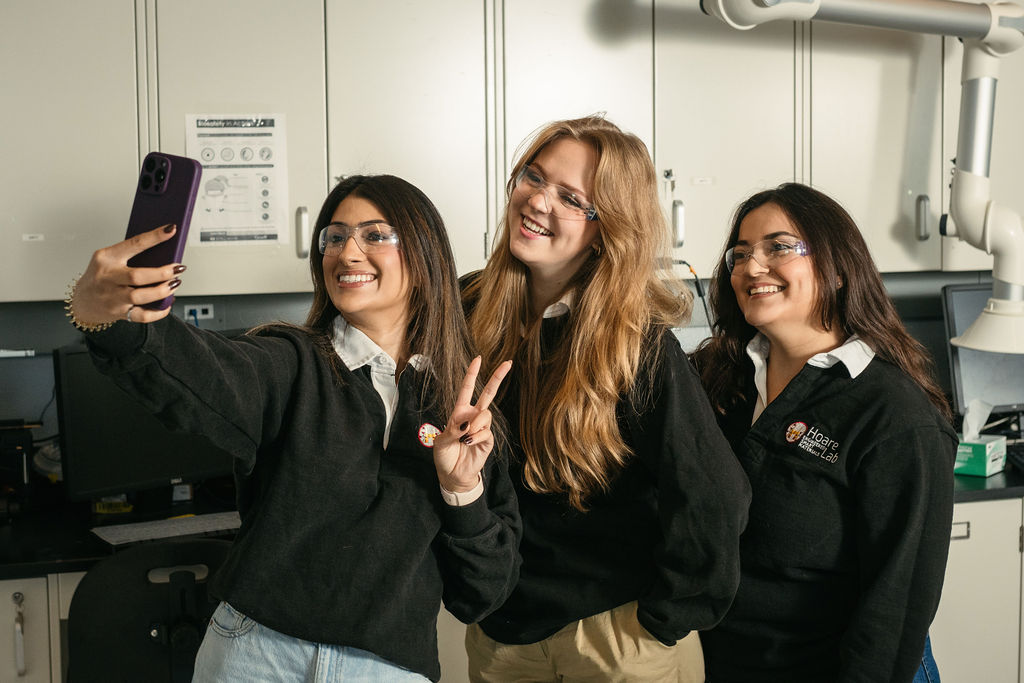
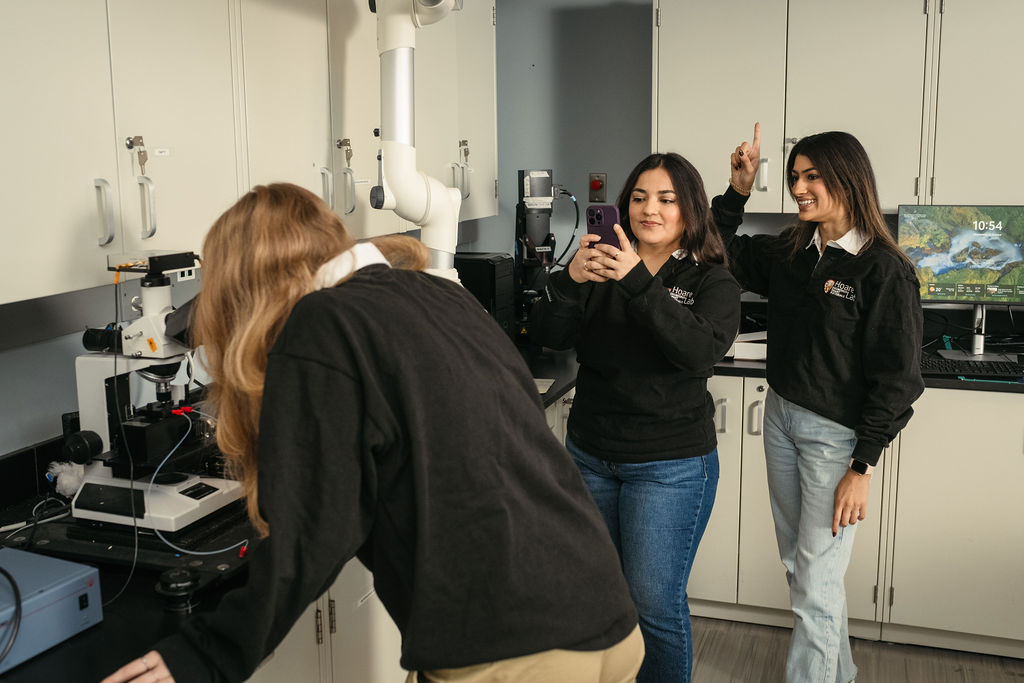
This was the recent experience for graduate students in the Hoare Lab in the Faculty of Engineering at McMaster University. Evelyn Cudmore, Gurpreet Randhawa and Nahieli Preciado Rivera are the masterminds behind Todd Hoare’s lab’s Instagram account, and they’re finding new ways to connect the public with their research.
“Creating content is a bit like doing research,” explains Rivera. “It doesn’t only require logic, but is also very creative. We’re trying to channel that creativity into other formats.”
The hook
The lab initially launched its Instagram account to advertise research opportunities and connect with the McMaster community. Their feed primarily featured group photos and research paper releases.
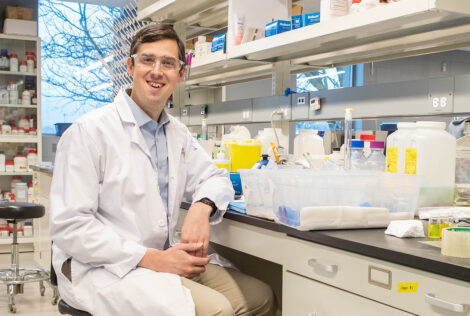
“I am not a big social media person,” says Hoare, professor of chemical engineering. “However, I appreciate how social media can promote science and our lab as a place that is doing good work and is a fun place to do that work; both these things can make a difference in recruiting great people to work with us, which is one of the big challenges of running an academic lab.”
A new lab member joined and had an idea to hop on a trend — “These are my minions” audio to be precise. The minions were the research areas of the lab and Hoare was Chanel number one, obviously.
“It’s not even funny, and it’s edited terribly because I was the one who edited it,” reflects Cudmore on their foray into trending content. But once that post started getting traction, they knew they were onto something.
The team now approaches content with a scientific lens. Rivera is the idea maker, Randhawa the editor and Cudmore the organizer. Each reel has its own thesis statement to ensure the content has meaning and a purpose behind it.
Curating the feed
It’s not all trending sounds and gala riffs on the Hoare Lab account. With more than 30 graduate students in the lab, the team produces a substantial volume of research papers. To reflect that, they make a deliberate effort to ensure that roughly one in every three posts highlights academic work and the lab’s core focus.
That focus? Polymers and polymer science.
At its essence, polymer science is about creating unique materials with properties that emerge from the complexity of polymeric structures. These aren’t just “big molecules”— they’re building blocks for innovation.
“For my work, we think in terms of a Lego brick approach,” explains Cudmore. “Imagine a continuous chain of polyethylene glycol. We strategically integrate antimicrobials into specific points along the polymer backbone. Then we ask: how does this change the material’s structure? The end result might be a gelatinous sheet or fine fibers, similar to tissue paper, produced using an electrospinning technique.”
Striking the right balance in content is key: not too technical, not overly simplified. Their posts aim to resonate with a niche audience of fellow graduate students, while still being accessible to anyone curious about science. “It’s a win for us when our content steps outside the boundaries of science communities,” says Cudmore.
Acing the algorithm
It was a unanimous answer to which reel is the team’s favourite so far.
“I remember watching the Met Gala and I saw so many outfits that could be recreated with things in the lab. I came in the next day with an idea and a dream,” shares Rivera, who had the idea behind the Chem Gala video.
It was a joint effort to get to the finished product, brainstorming with other grad students to concoct outfits using pipettes and PPE walking on spill kit carpets. And it paid off, as the reel currently has 435,000 views and 36,400 likes. “We were over the moon to have this reel seen by so many. And it really inspired us to create more types of these videos,” she says.
“People perceive STEM as being very serious and technical. So, demonstrating the day-to-day with humour and lightheartedness to showcase the community of science and grad school is a major goal of ours,” says Cudmore.
Creating content isn’t just about reaching people. Rivera reflects that venturing into content creation has really helped her hone her directing skills. “I enjoy guiding the people who are in the video so that the content feels comfortable and we can get the right idea that we want to portray.”
In her spare time, Randhawa has been a mentor for youth in the Punjabi Sikh community, which translates into her work in the lab. “We work really hard to ensure there’s a lot of inclusivity in our content and there are many different faces in our videos,” shares Randhawa.
“It’s important for future scientists and engineers to be able to see people having fun and not think of labs and universities as serious and daunting spaces. It helps make research more welcoming and accessible.”
And for Hoare, this account has turned into a recruitment tool for graduate students, showcasing the “vibes” which is an increasing consideration by graduate students. “I will be honest and say I didn’t think the account would get a lot of traction. However, I have been amazed at the reach of some of their posts. What this level of engagement means is that our “boring science” posts are also reaching more people who would otherwise never have seen what we are doing.”
Since the Hoare Lab has started creating more dynamic content, more lab accounts have started up at McMaster. “It’s really nice to see that they maybe were inspired by us,” shares Randhawa. “And the content is impressing our community. A lot of professors come up to us as say, ‘You are all doing a great job.”