Walter G. Booth, a McMaster Mechanical Engineering graduate, envisioned a school within the Faculty of Engineering that would empower students to pursue bold ambitions — just as his own were supported during times of adversity. He was eager to support future students gain hands-on experience and the tools to turn ideas into real-world solutions.
“Innovation and entrepreneurship were the driving engines of Canada’s prosperity,” says Catherine Booth, daughter of the late Walter G. Booth. “That was the blueprint for creating the W Booth School.”
Two decades later, that blueprint has become a hub for Master of Engineering degrees, and the addition of Bachelor of Technology programs. Today, W Booth School graduates are shaping industries and society, making an impact in public policy, manufacturing and biomanufacturing, entrepreneurship and innovation, systems technology and engineering design.
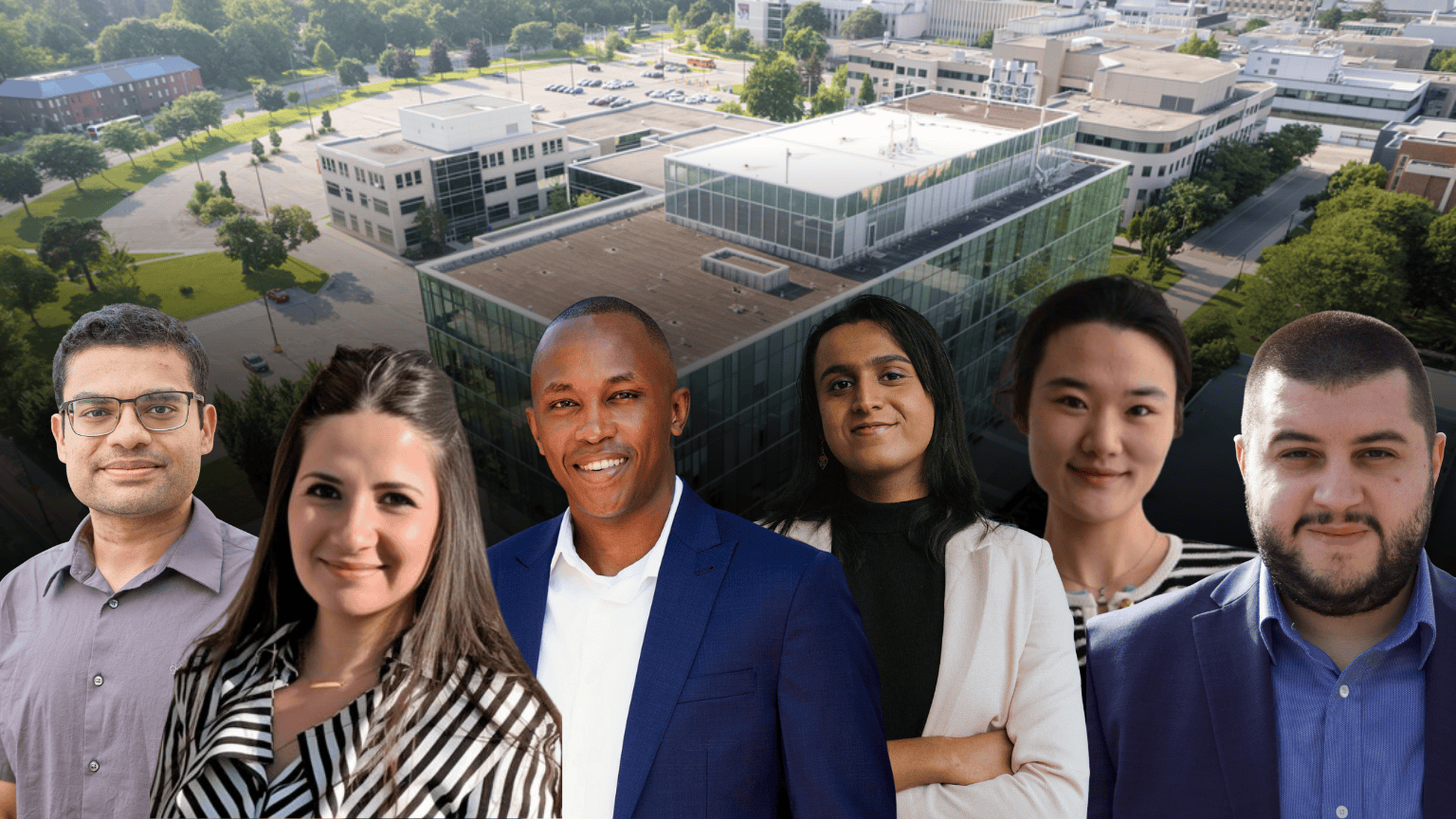
In celebration of 20 years of the W Booth School, learn about the person behind the name and check out the profiles of six Master of Engineering graduates and a current student who have benefited from a School where ambition meets opportunity.
Meet graduates and a current student of W Booth School grad programs
Bassel Kazzaz
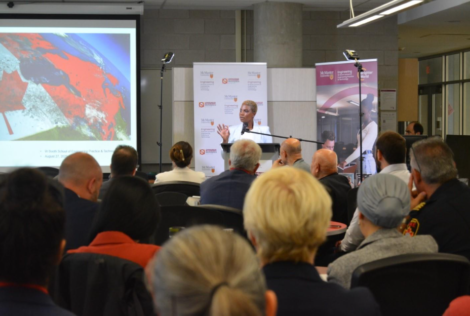
Bassel Kazzaz, a 2019 graduate of the Master of Engineering & Public Policy (MEPP) program, chose McMaster for its unique blend of technical engineering, policy, economics and societal impact. During his time in the program, Bassel built lasting connections, researched Canadian industrial policy, and co-founded an environmental sustainability society chapter in Hamilton. Today, as Director of Research & Market Intelligence at the Automotive Policy Research Centre and Canadian Skills, Training & Employment Coalition, he applies the interdisciplinary skills gained through MEPP to lead national projects supporting Canada’s economy, skilled workforce and the transition to technologies like electric vehicles.
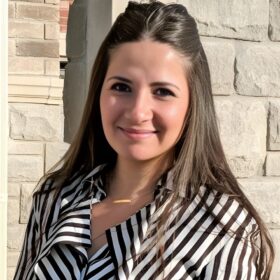
Xiru Wang, a 2024 graduate of the Master of Engineering in Systems and Technology (MEST), chose the program for its focus on emerging technologies like AI and machine learning. As an international student who completed her undergraduate degree at McMaster, Xiru was drawn to the program’s project-based structure, which offered hands-on experience applying AI in real-world settings. A highlight was working on healthcare-focused projects that pushed her beyond her comfort zone and led to interdisciplinary collaboration with the Department of Kinesiology. Today, Xiru is pursuing a PhD in Kinesiology at McMaster, continuing the path she discovered during her master’s program.
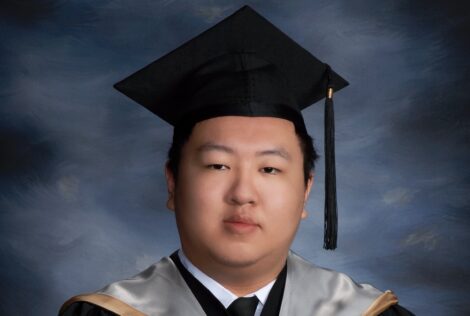
Joe Kagumba, a 2025 graduate of the Master of Engineering Design (MED) program, chose McMaster for its unique blend of engineering and human-centred design; a perfect match for his background in ergonomics. Through multi-phase design challenges with real stakeholders, Joe gained hands-on experience in communication, collaboration, and rapid iteration under constraints —skills that translate directly to industry.Now an Ergonomics Engineer at Ford Motor Company, Joe applies the interdisciplinary training he received at McMaster to bridge gaps between design, manufacturing, safety, and operations.
Daniel D’Souza, a 2024 graduate of the Master of Engineering in Biomanufacturing and Industrial Biotechnology program, chose McMaster for its flexibility and innovative approach to addressing gaps in Canada’s industry landscape. For Daniel, the highlight was the vibrant, collaborative community that fostered creativity and growth. Today, as an MD/PhD student at the University of Toronto, he applies skills gained in biomanufacturing such as project management, statistical modeling and case-based learning to excel in medicine and research.
Soura Anabtawi, a 2019 graduate of the Master of Engineering in Manufacturing Engineering (MEME) program, chose McMaster for its strong reputation in engineering and close ties to industry. One highlight was her project on optimizing 3D printing parameters for copper, which allowed her to tackle real-world challenges in additive manufacturing and develop expertise in process optimization. She was also motivated to pursue a PhD in Mechanical Engineering at McMaster. Today, as a part-time professor at Seneca Polytechnic, Soura draws on the technical and research skills she honed at McMaster to inspire the next generation of engineers.
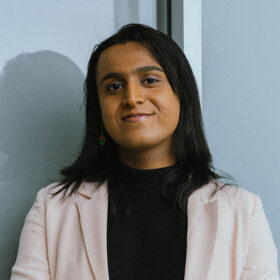
As a serial entrepreneur passionate about building ventures that improve quality of life for marginalized communities, the Master of Engineering Entrepreneurship and Innovation (MEEI) program at McMaster is the perfect fit for current student Shashvi Lokesh. The program offers an inclusive environment that combines real-world application-based learning, co-op opportunities and entrepreneurial support. With strong industry connections and a focus on emerging technologies like AI, augmented reality and health-tech, MEEI provides the ideal platform to collaborate with experts in their fields.