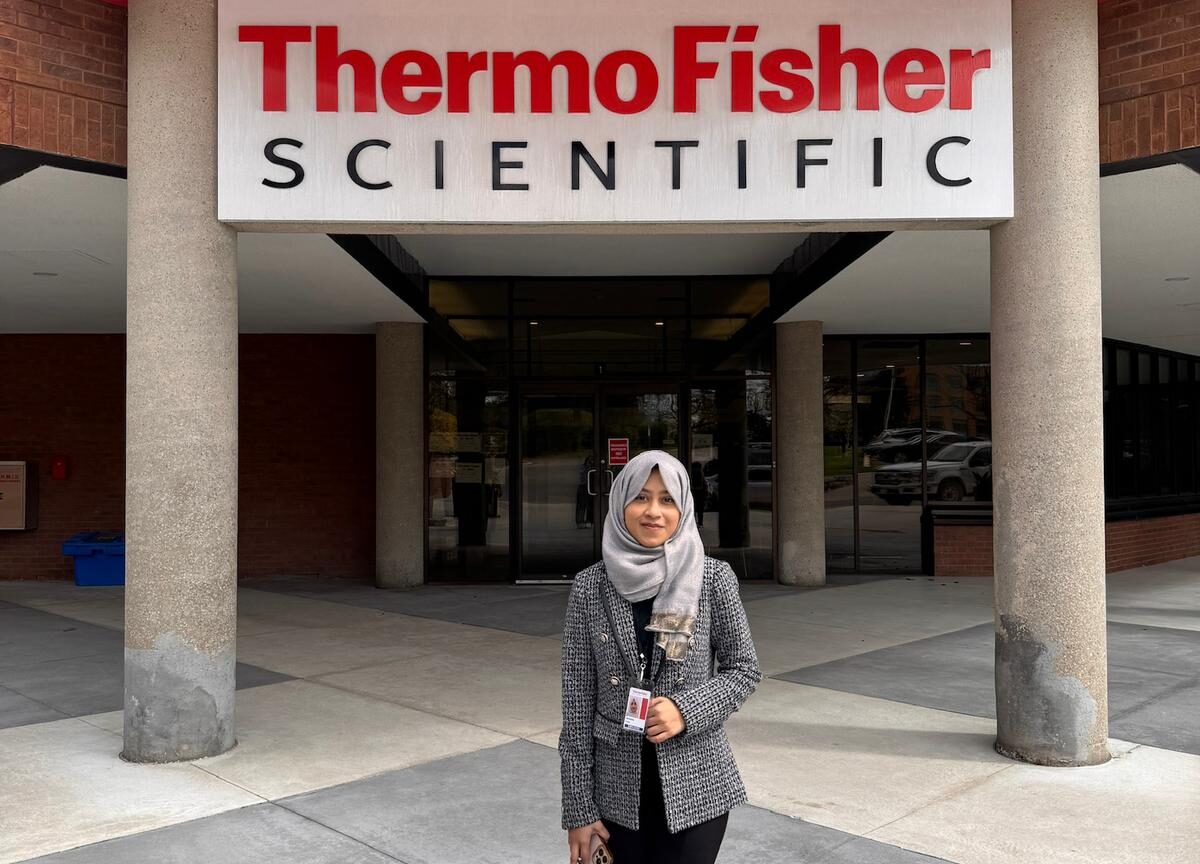
A curiosity about the intersection of science and technology led Nusaiba Yasin to an unexpected corner of the pharmaceutical industry.
Over the course of a 12-month co-op at Thermo Fisher Scientific, the Level III Biotechnology student worked as a Laboratory Execution System (LES) Project Assistant, helping digitize laboratory processes and support automation initiatives that improve efficiency and accuracy in the lab. From collaborating with scientists to tackling complex digitization projects, the experience gave Nusaiba valuable insight into how innovation is transforming modern laboratories.
In this Q&A, she shares how she landed the role, the challenges and accomplishments that shaped her experience, and the advice she would offer to students preparing for their first co-op placement.
Tell us about yourself
Hello! I am Nusaiba Yasin, and I am going into my third year of Biotechnology in the BTech program at McMaster university. When I’m not in class, you’ll often find me hopping from one bus route to the other in search of hidden gems that the Greater Toronto Area has to offer.
Where did you complete your co-op placement and what was your role?
I recently completed a 12-month co-op placement at Thermo Fisher Scientific as a Laboratory Execution System (LES) Project Assistant. I know the title can be a mouthful, but my role primarily involved supporting the Laboratory Digitization and Automation team.
My main responsibility entailed digitizing paper-based laboratory methods by developing standardized workflows in the SM-LES system. This proprietary software guides laboratory analysts through each step of a testing method, helping ensure consistency, accuracy, and compliance. Since the system is still in its evolutionary stage, I also got the opportunity to support its deployment, and provide operational and technical support to all affiliated teams and stakeholders. This allowed me to gain valuable insight into how digital transformation can reshape laboratory operations within the pharmaceutical industry.
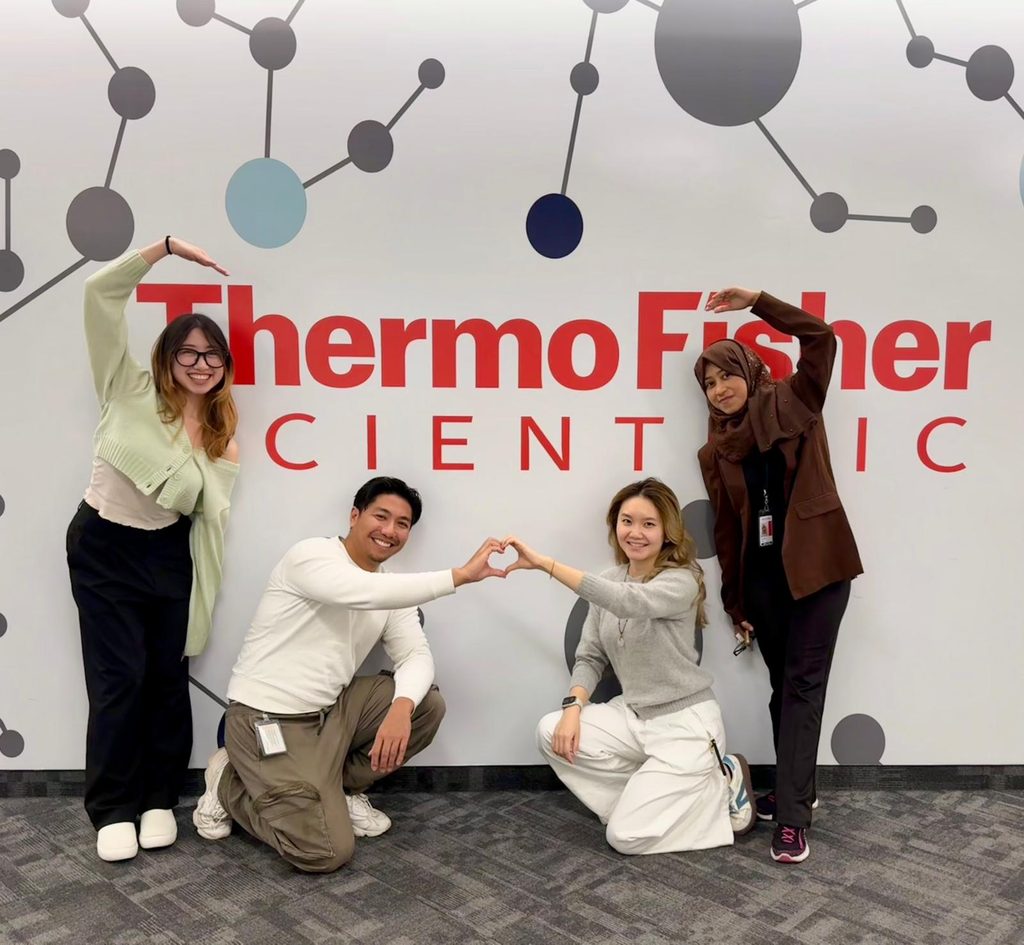
Describe your co-op placement in three words
Collaborative, Niche, Informative
How did you secure the position and prepare for the interview?
Like many students searching for their first co-op placement, I was nervous. At the time, I had little to none industry experience and wasn’t sure where to begin. Before starting my search for jobs, I reached out to an upper-year student asking for a comprehensive list of companies where a Biotechnology degree might be valuable. Once I had the list in hand, I started applying to various positions through company portals, LinkedIn, and various recruitment platforms. While applying to Thermo Fisher, I remembered that one of my first-year professors, Ms. Nicoleta Ladanyi, was working there. And so, I reached out to her, shared my resume, and expressed my interest in the position. She kindly advocated on my behalf with the hiring manager, and shortly afterward, I was invited to interview.
In order to prepare, I scheduled several mock interview sessions with my Career Educator. These sessions provided valuable guidance on interview best practices and helped me refine my responses. I carefully reviewed my resume and identified examples that highlighted both my technical and interpersonal skills. During the interview, I emphasized my laboratory experience, coursework in analytical chemistry and programming, and also extra-curricular activities that had helped develop strong communication, teamwork, and leadership skills.
What were your main responsibilities during your placement, and what project or accomplishment are you most proud of?
Whenever I was assigned a new project, my first step was to review notebook references and existing documentation in order to design a workflow that could accurately replicate laboratory processes in a digital environment. A typical day involved analyzing standard operating procedures (SOPs), reviewing laboratory records, and consulting subject matter experts to better understand the method being digitized. These conversations often revealed practical laboratory techniques and efficiencies that were not explicitly documented in the SOPs but were routinely followed in practice. Capturing these details was essential to creating an effective digital workflow. Once the research phase was complete, I would build the method within the SM-LES system. From there, the process became highly iterative, involving troubleshooting, presenting progress updates to the team, gathering feedback, and making refinements.
One of my proudest accomplishments was leading the digitization of the Microbiological Examination Method during the final months of my co-op. This was the most complex project I had worked on, largely due to the extensive number of procedural steps and the multiple incubation periods that needed to be represented in the system.The challenge was designing a workflow that accurately captured the process while remaining user-friendly and efficient for analysts. Although the project initially felt overwhelming, I broke it down into smaller, manageable components and systematically worked through each challenge. After developing a draft model, I presented it to the team and received very positive feedback. Successfully completing such a complex project was incredibly rewarding and taught me the value of perseverance and structured problem-solving.
How did your BTech experience prepare you for your role?
The BTech program’s combination of theoretical learning and hands-on laboratory experience played a significant role in preparing me for this position. My coursework in analytical chemistry enabled me to communicate effectively with scientists and understand the technical aspects of laboratory methods. At the same time, the programming skills I developed through my courses allowed me to translate those processes into digital workflows within the SM-LES platform.
In addition, the GENTECH courses helped strengthen my communication and presentation skills, which proved valuable when collaborating with stakeholders and presenting project updates.
Can you share a memorable moment, challenge or lesson from your placement that had a lasting impact on you?
One of the most unique experiences during my co-op was the opportunity to support the Metrology team as an Instrumentation Scientist alongside my regular responsibilities.
Due to staffing shortages, members of our team were asked to assist with various metrology projects. Through this experience, I was able to design, develop, and test instrumentation prototypes to validate and optimize their performance. I also helped troubleshoot instrumentation issues for laboratory staff and participated in operational qualification activities to ensure instruments were ready for laboratory use.It felt like I was receiving the benefit of two co-op experiences in one. Beyond expanding my technical skills, this opportunity gave me a deeper appreciation for the interconnected nature of different departments within a company and the important role each team plays in ensuring smooth operations.
How has this co-op experience influenced your career goals and what advice would you give to students preparing for their first co-op?
As my first experience in an industrial setting, this co-op demonstrated how real-world applications can differ from what we learn in the classroom. Working in such a specialized area of the pharmaceutical industry broadened my understanding of potential career paths and introduced me to opportunities I had never previously considered.The experience also encouraged me to reflect on my long-term interests. While I enjoyed working in industry, it prompted me to explore whether I might also enjoy a research-focused environment. As a result, I plan to pursue research opportunities this fall to further explore my interests and gain new perspectives.That, in many ways, is one of the greatest benefits of co-op: it encourages you to ask questions, challenge assumptions, and discover what truly aligns with your goals.
For students preparing for their first co-op, my advice is simple: be patient and keep an open mind. Apply for positions both within and outside your comfort zone. You never know which opportunity might spark a new passion, even if the job title initially seems intimidating. Don’t be afraid to reach out to others, whether they are fellow students, professors, mentors, or members of clubs and organizations you’re involved with. Build connections, engage in conversations, share your ideas, and let your unique strengths shine through.The co-op search process can be stressful, but remember that you are capable and deserving of meaningful opportunities. Stay confident, remain persistent, and trust the process. Your next opportunity may be closer than you think.
I wish you the very best in your co-op journey!
If you’re studying BTech at McMaster and you’re interested in learning more about co-op opportunities, visit McMaster Engineering’s official Co-op and career experience webpage for more information.