
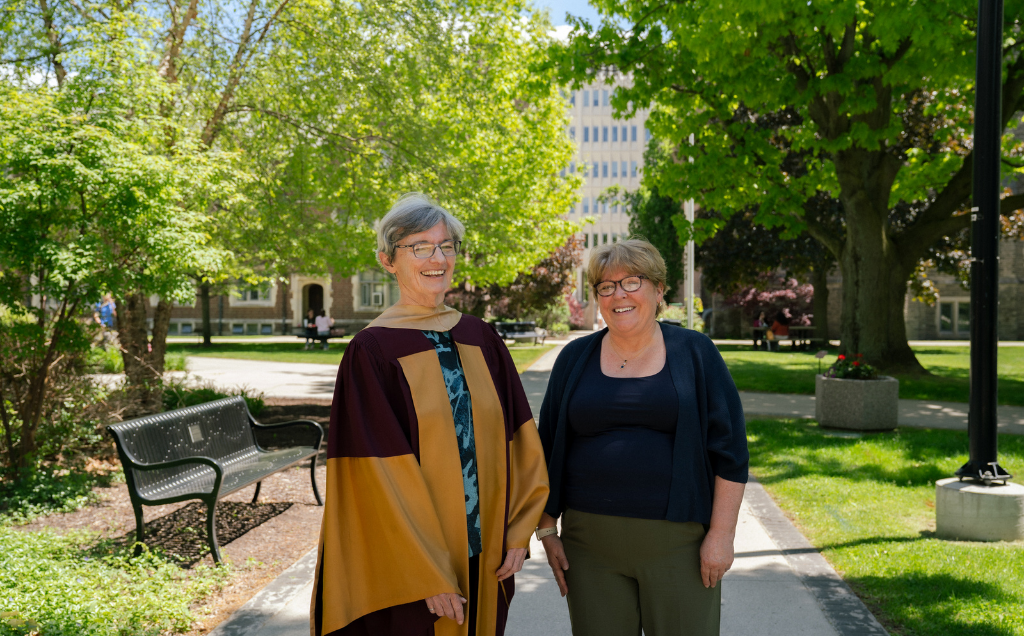
“Val was a bit of a legend in Chemical Engineering at McMaster,” said Dean of Engineering, Dr. Heather Sheardown. “She was a trailblazer and a role model and someone I looked up to before even meeting her.”
“Val” is Dr. Valerie Davidson, one of four women who enrolled in first-year Engineering at McMaster University in 1971. She is a member of the Chemical Engineering Class of ’75, a professor emerita at the University of Guelph and an iconic leader in the advancement of women in engineering. Davidson will return to McMaster and be awarded an honorary degree at the Faculty of Engineering Convocation on June 16, 2026.
Davidson knew from the start of her studies that, as a woman in engineering, she would face significant challenges. “I was going to be in a pretty isolated environment,” she acknowledged.
In fact, during her time as an undergraduate, the Faculty of Engineering announced proudly that it had achieved a five-fold increase in women’s enrollment to nine per cent of students. In 2024, 48% of first-year Engineering students were women.
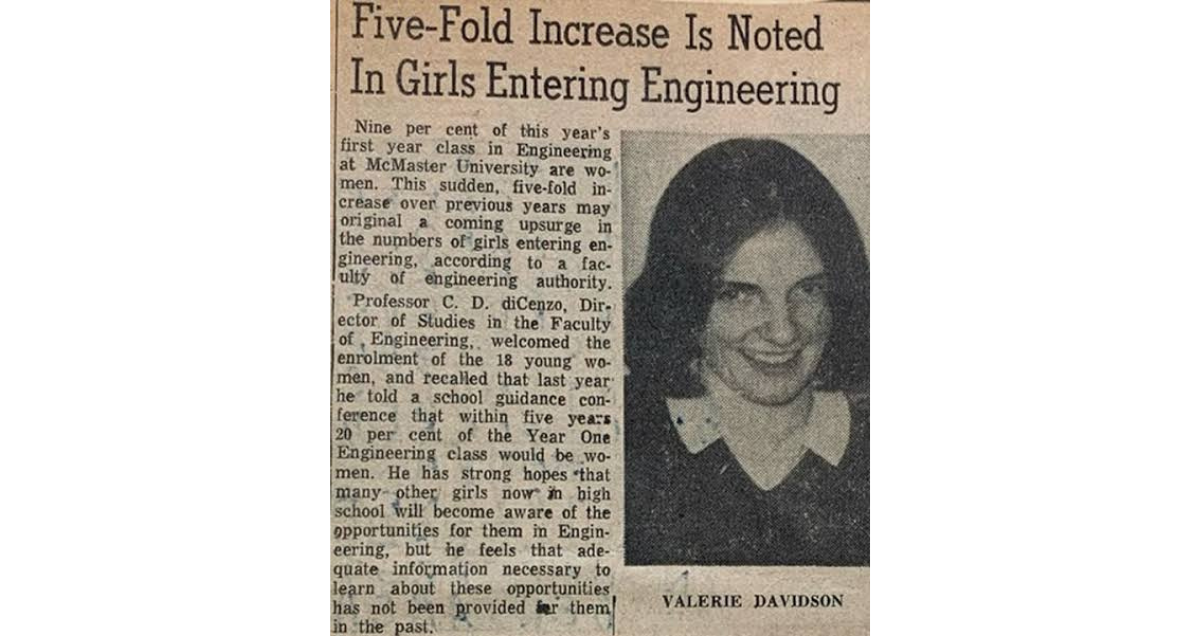
Today, the defining aspect of Davidson’s career is her 50 years of tireless advocacy and leadership that have inspired and facilitated improvements in representation and equality. She began her time as an engineer, however, simply trying to build a strong portfolio. After completing her BEng at McMaster, she was drawn to food engineering. “It was the concern that the world was running out of food,” she recounted, “so we wanted to find ways to produce foods that would be able to address that problem.”
Davidson pursued her Master of Food Science at the University of Guelph and then a PhD in chemical engineering at the University of Toronto. She soon returned to Guelph as an associate professor in the School of Engineering and an adjunct professor in the Department of Food Science.
As her career progressed, she served as director of the Food Research Program and held the NSERC Chair for Women in Science and Engineering which was co-sponsored first by HP Canada, then RIM. A long-time consultant to the Food and Agricultural Organization of the United Nations, she focused her research on developing engineering models of complex food processing systems while championing cross-disciplinary research, an approach that was relatively novel early in her career.
Davidson built her work on a belief in engineers’ ability to find solutions. “I really like the way engineers pose their design problems,” she said. “We have a very methodical process that takes you through questions that you create and answers that you look for. In the end, you work through the challenge and you solve the problem.”
Davidson has applied that approach to food engineering, but also to the challenge of making engineering itself more inclusive. She has been a member of the Canadian Committee on Women in Engineering and later the founding chair of the Ontario Network of Women in Engineering (ONWiE). She helped spearhead the creation of the organization’s flagship program, Go ENG Girl — an outreach event that has encouraged close to 10,000 girls in Grades 7 to 10 to explore engineering.
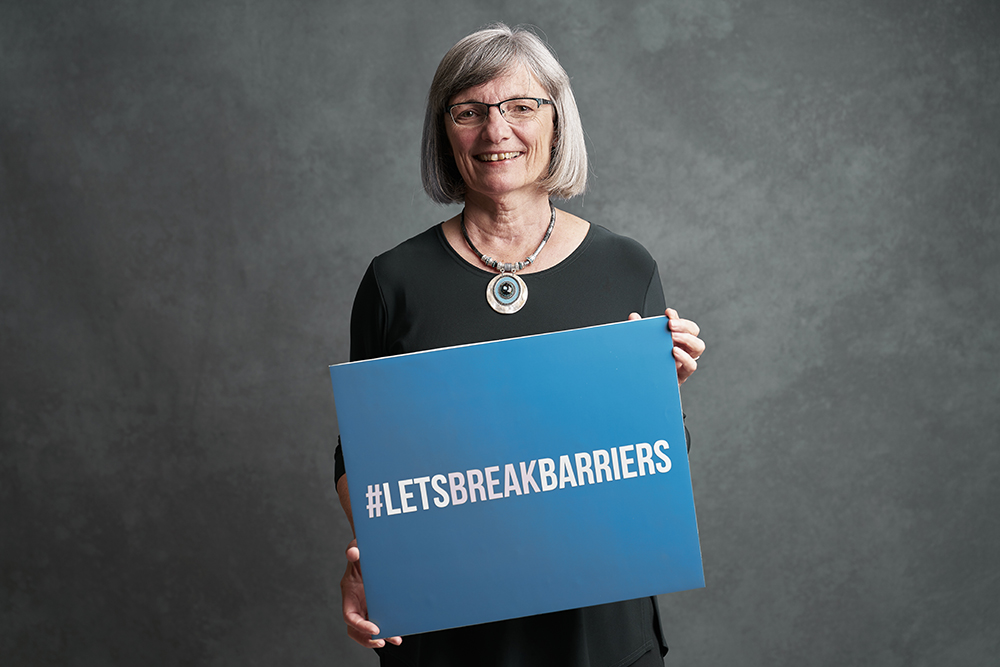
Dr. Kim Jones, an associate professor of Chemical Engineering at McMaster and the current ONWiE chair credits Davidson as a spark to change. “Val is a strong leader who had amazing vision,” Jones said, noting Davidson’s two decades of engagement with ONWiE. “Val used her excellent listening skills, facilitation and leadership to inspire us all to agree to work, not as competitors, but as collaborators to improve diversity in engineering.”
The keystone of that effort has been the combination of collaboration and hard work. Sheardown asserted, “Val is the hardest-working person I think I’ve met.” Jones added,
“Val brought people together to recognize that collaboration and intention could be really effective in moving the needle. The changes we’ve seen since the start of ONWiE are pretty incredible.”
Davidson’s success in enlisting peers across Ontario and Canada into the mission of attracting more women to engineering and supporting them in their careers has built a long resume of legacy-making impact. She was a founding member of the Women in Engineering Leadership Institute and frequent contributor to the International Journal on Gender, Science and Technology. She was a board member for the not-for-profit WinSETT Centre and advocated for diversity through the Ontario Society of Professional Engineers. She has been a member of the boards of the Canadian Engineering Memorial Foundation and Canadian Society of Professional Engineers while also playing a key role in the Engineering Professional Success mentorship project. To all of these programs and organizations, Davidson brought her characteristic approach.
“Val isn’t flashy,” Sheardown said, “but when she talks, people listen. She’s an amazing advocate.”
Davidson’s efforts in enhancing opportunities for women in engineering have created a legacy measured in the growing number of women passing through the doors she helped to open. One of those is Julia Pona, a former co-president of McMaster’s Women in Engineering Society who is entering her final year in Chemical Engineering.
“I’m just appreciative,” Pona said, “that women like Dr. Davidson have paved the way for the women today who are able to appreciate such an amazing community of women, to have that support system, that network, to no longer feel isolated or forgotten.”
Davidson has earned a list of accolades that includes the Canadian Council of Professional Engineers’ Award for Support of Women in the Engineering Profession and the Citizenship Award from the Ontario Professional Engineers Awards. Describing Davidson as “visionary and determined,” Jones said,
“When Val sees inequities, she responds with concrete actions and puts her considerable energy towards making the world a better place.”
Rhiannon Vu, who will collect her degree in Mechanical and Biomedical Engineering at the same convocation where Davidson receives her honorary degree, is a past co-president of the Women in Engineering Society. “Dr. Davidson was a trailblazer and a champion for women in engineering, so she’s really helped create this space for us,” Vu said. “I feel really grateful, recognizing how much more difficult that probably was for her in that time. It’s honestly inspiring.”