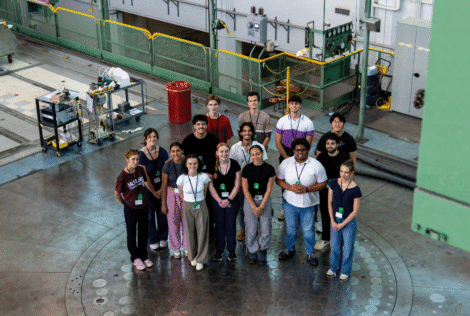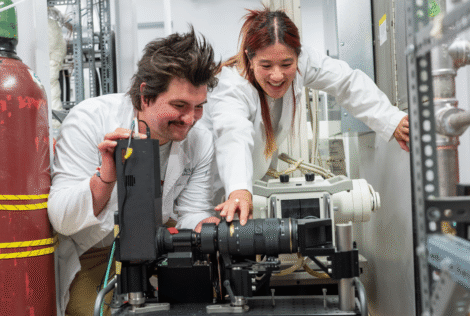
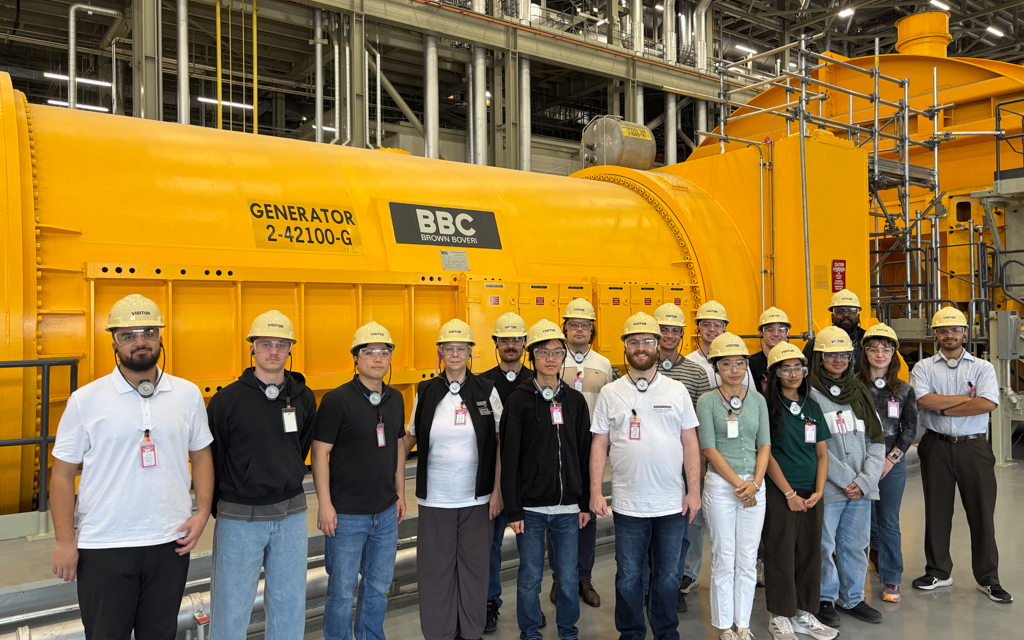
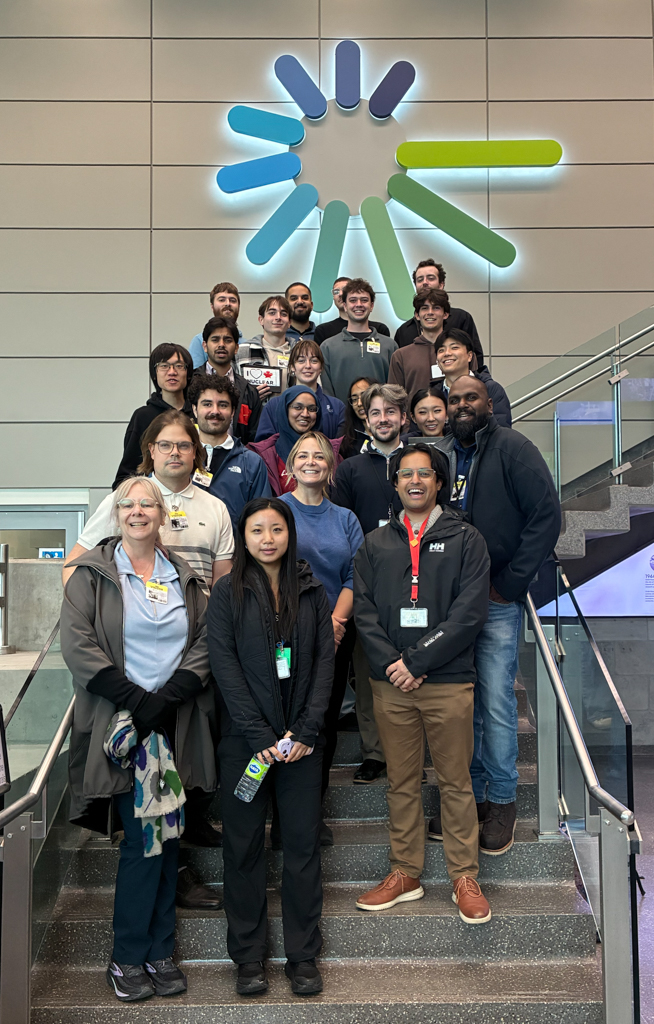
Over reading week, 15 McMaster students from the Nuclear Energy in Practice course (NUCLST 4NN3) travelled to four different nuclear facilities across Ontario to get an exclusive look inside Canada’s nuclear sector.
The course, which is part of McMaster’s Minor in Nuclear Studies & Society, provides students with the technical knowledge and first-hand experience they need to get involved in Canada’s growing nuclear sector.
“The global demand for nuclear energy in Canada and internationally is growing,” says Markus Piro, Associate Professor in Engineering Physics and Director of the Minor in Nuclear Studies & Society. “And at McMaster, through the Nuclear Minor and our new Nuclear Engineering bachelors program, we’re answering that demand by providing our students with hands-on, experiential learning opportunities like this to ensure we’re training the next generation of nuclear scientists and engineers to be well prepared to transition into the nuclear industry.”
From the Nuclear Waste Management Organization (NWMO) and Ontario Power Generation (OPG) to Cameco and Canadian Nuclear Laboratories (CNL), students had the opportunity to meet professionals working in the field and get an inside look at the facilities.
The trip was more than just observation—the students came prepared as three teams, each with inquiry questions they developed during the course. According to Mario Pieries, Sessional Instructor and Global Director at Hatch, “By the time they left Chalk River on day four, each team had gathered evidence from different vantage points including waste management, power generation, fuel supply and research to bring back into the classroom.”
We asked four students who took part in the trip to reflect on their experiences and what this opportunity meant to them.
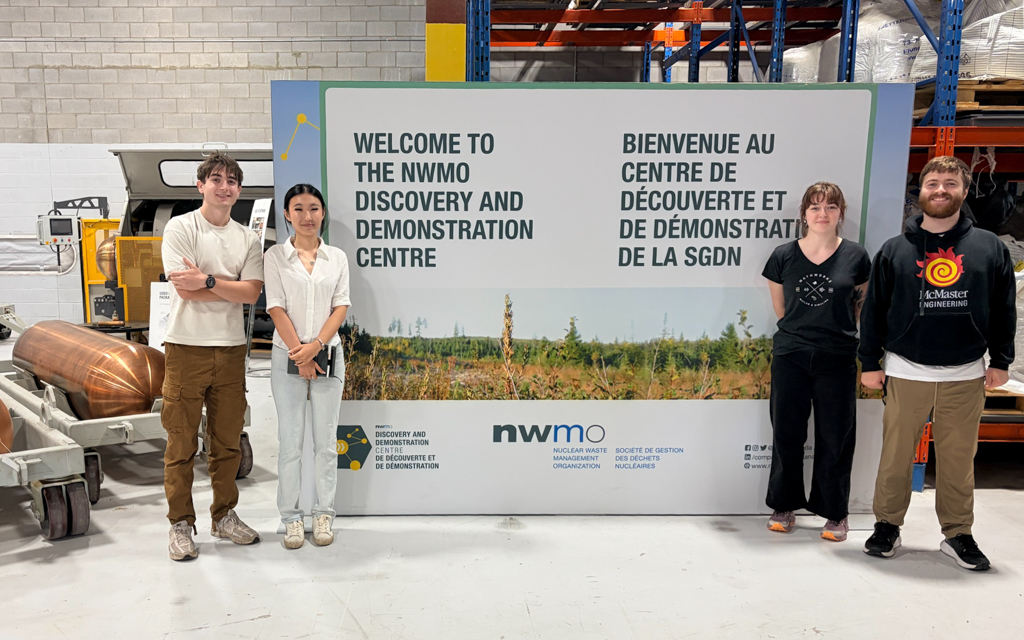
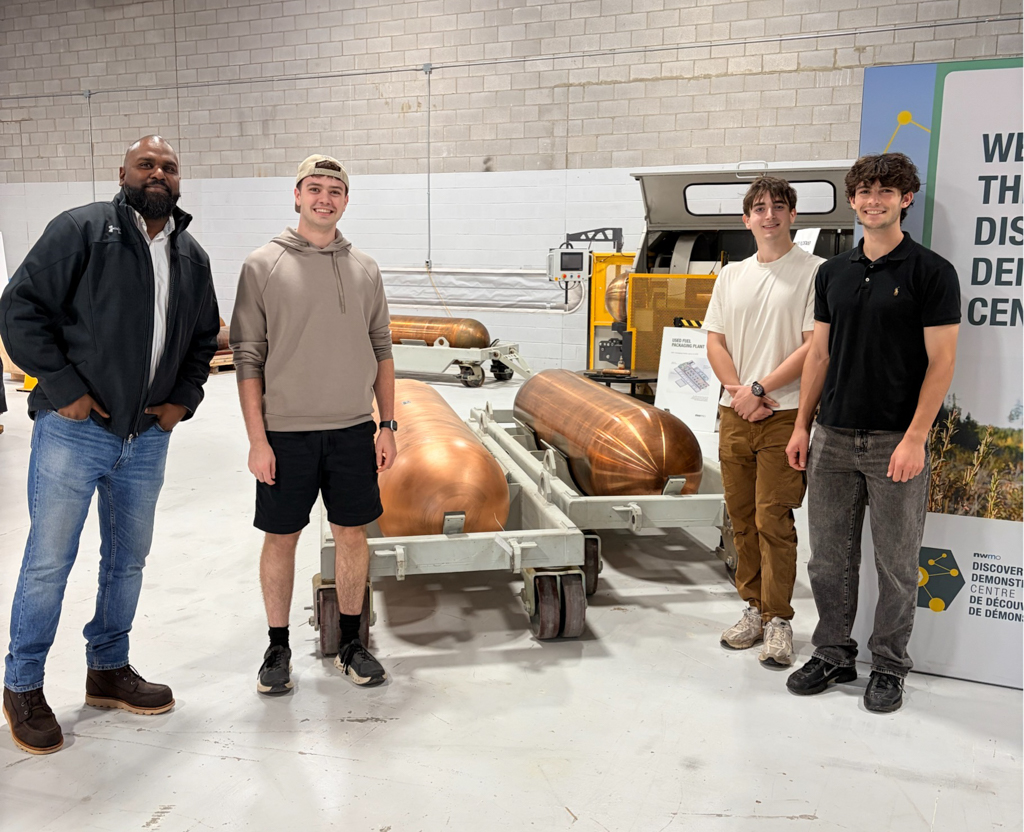
Aren Shahinian (pictured far left) is a Level III Electrical Engineering student and Yuri Chen (left middle), Camille Gillespie (right middle) and Cole Deroo (far right) are in Level IV of the Engineering Physics program.
What are your biggest takeaways?
“In lecture usually these are just images on a slide, it was awesome seeing it in person and making the connection.” – Aren
“I think the nuclear industry has a huge amount of variety, and you’re bound to find something that resonates with you. Reactor physics, waste management, isotope and fuel production, research and development, operation, there’s truly something for everyone here.” – Cole
What aspects of the visits stood out to you?
Day 1: Nuclear Waste Management Organization (NWMO)
“We covered a lot of content learned today in NUCENG 3D04: Principles of Nuclear Engineering and actually had a guest speaker give a similar talk about how the Deep Geological Repository is designed to work.” – Camille
“Today’s visit reinforced my understanding of long-term waste storage as a priority of engineering. Designing for the future in the nuclear industry means having confidence that waste is not only being handled safely now but will be safely handled in the long-term.” – Cole
Day 2: Ontario Power Generation (OPG)
“Today gave me a much better impression of the sheer scale of nuclear power plants. After only being involved with research reactors, I’ve come to appreciate how much labour and time must go into constructing something so huge.” – Camille
“The work from OPG helped me understand how necessary collaboration is for the nuclear industry to function. Proper communication with contractors and suppliers, along with meaningful consultation with Indigenous communities is needed to ensure the industry functions effectively.” – Cole
“Operating a nuclear power plant requires extensive coordination across different teams and disciplines. It was valuable to see how the systems we study in class come together in practice.” – Yuri
Day 3: Cameco
“The visit connected closely to my studies in reactor physics, particularly nuclear fuel and its role in reactor performance. It helped me better understand the engineering involved in the fuel cycle.” – Yuri
“My biggest takeaway from today’s trip is to keep an open mind when choosing technologies in the nuclear industry. Canada’s nuclear industry is in a state of opportunity, and deciding which reactor technology is best fit to handle expected energy needs will be an important process for the future.” – Cole
Day 4: Canadian Nuclear Laboratories (CNL)
“There’s a lot of research going on in every single sector of the nuclear industry. CNL is working to test and develop technologies I haven’t even thought of, and that’s just what they showed us on a short tour. This facility seems extremely well-prepared to keep up with whatever direction the industry takes. The visit reinforced how important research and development are to the future of the industry.” – Camille
“Standing on top of ZED-2 and looking down into the reactor helped me visualize what the internals of an actual reactor look like, which I had only seen in drawings.” – Aren
How has this experience shaped your future plans?
“The experience has reinforced my plans to pursue research rather than industry. I was definitely most excited and engaged while visiting CNL.” – Camille
“This trip gives me the incredible opportunity to see my studies in real-world application. By interacting with people working in industry, I’m able to make meaningful connections that will guide me in my engineering journey.” – Cole
“Seeing the different parts of the nuclear industry, from fuel supply and waste management to research, showed me that there are many ways to build a career in nuclear beyond designing and building reactors. I’m now open to roles across the full nuclear lifecycle.” – Aren