
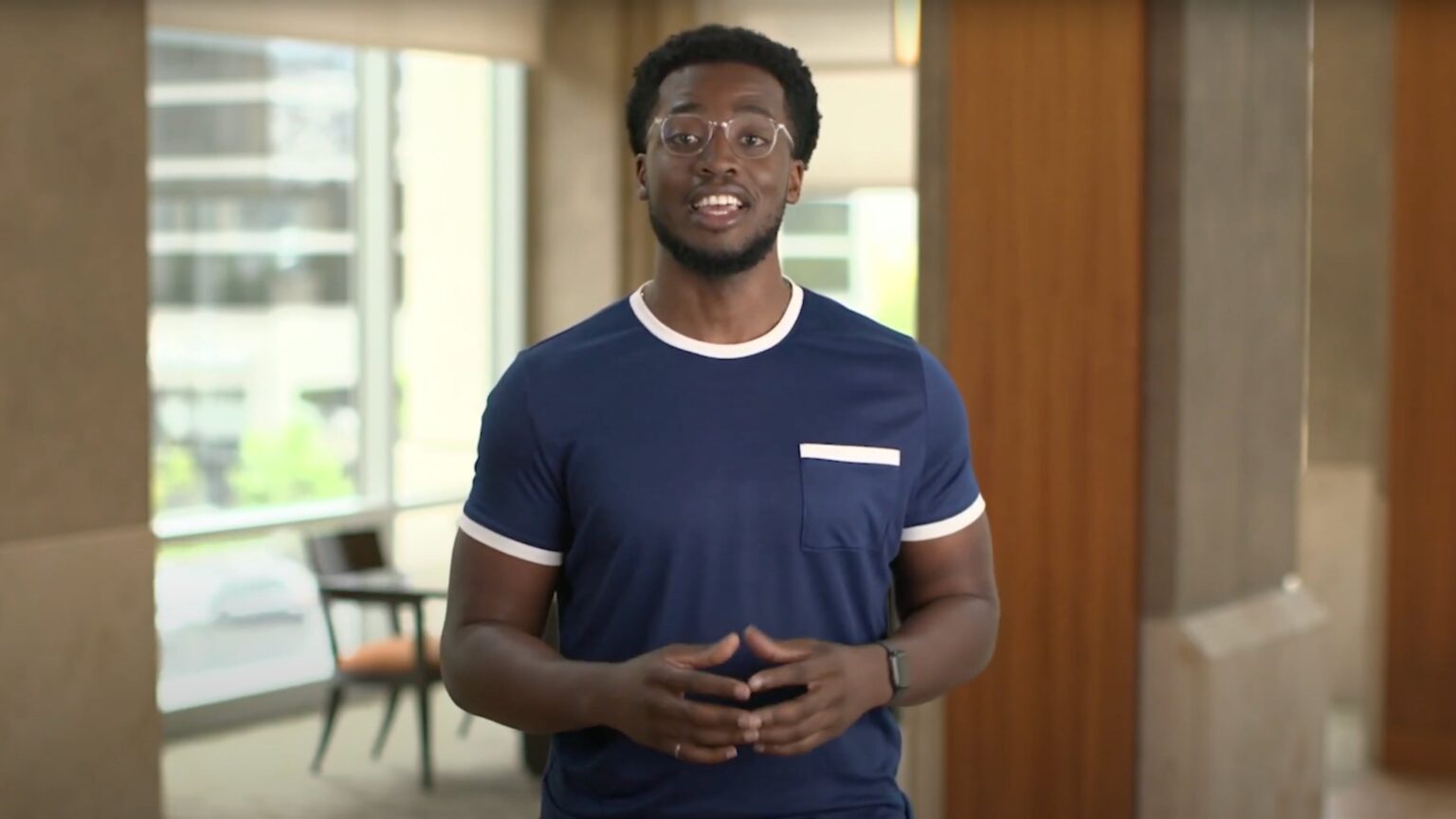
Since graduating from the software engineering and management program in 2019, Abe Omorogbe’s career has centered around building and scaling cutting-edge artificial intelligence products at Microsoft.
Now, as a Product Manager, Omorogbe is helping shape the future of AI by leading the development of platforms and tools that power everything from foundational AI models to next-generation databases. His work bridges deep technical problem-solving with strategic business thinking – skills that he credits to the unique dual-focus of his degree.
Omorogbe remains connected to McMaster Engineering through mentorship and advocacy. He also played a key role in helping launch the Faculty’s first Black student scholarship during his time as a leader in the National Society of Black Engineers (NSBE).
In his Alumni Blueprints Q&A, Omorogbe reflects on the future of AI, the value of creativity in tech, and the experiences at McMaster that continue to shape his career today.
Show that you’re learning, passionate, and creative. That’s how you stand out in a tough market.
Here’s our Q&A with Abe:
Can you tell us about the work you do as an AI Product Manager at Microsoft?
I’ve actually had two stints at Microsoft – four years when I first started my career and then when I came back last year.
My first stint, I worked on everything to do with the AI platform. I was an AI Product Manager who worked on building to infrastructure to train and deploy AI models. So, everything you see today from ChatGPT and on any kind of AI-powered application like Copilot or Windows, our team worked on the platform that enables that. That product was called AI Foundry.
What I do as a product manager is talk to a bunch of customers, understand their problems, work with the engineering team to solve those problems, and then meet with marketing, legal, finance, and sales to figure out how to bring the solution back into the customer’s hands. As a PM, you kind of own that end-to-end cycle.
Now, in my second stint at Microsoft, I’m working on infusing AI into Postgres, one of the biggest developer databases out there. So, same thing as before – figuring out what is needed, what are the gaps and then integrating AI into the product.
What are some accomplishments you’re proud of in this role?
One big one is that the product I worked directly on has been highlighted twice by Satya Nadella, Microsoft’s CEO, at our biggest conference last November. It was called DiskANN, something we built using Microsoft Research to make AI search faster in databases.
Then the second one happened a few months back, in May, when Satya called out another feature I worked on called Semantic Operators, which lets developers infuse AI directly into the database code. I worked on prepping the demo, working with the team on getting everything out, and making sure the feature was well-understood. I was pretty happy with that and also got recognized by Satya.
What excites you the most about AI?
One big thing in the industry right now is something called AI agents or autonomous agents. The base concept is being able to use AI to automate processes.
Specifically, there’s a concept Microsoft introduced not too long ago, called Agentic Web. The idea is that as we move into the future, websites will not just be read by humans, they’re going to be read by AI agents. For example, even on ChatGPT, there is a new feature where you can ask, “Hey can you go shopping for me?” and then it opens up a website and does shopping based on your preferences.
Right now, when you shop online, you have to search, filter, and know exactly what you’re looking for. But with this technology, you could say something like, “I’m going out tonight and want a comfortable shirt that fits me. I’m around 6’5″, and it’s the summer. Can you help me find something great?” Based on that, it would take the intent and what’s available on the website and give you the right outcome.
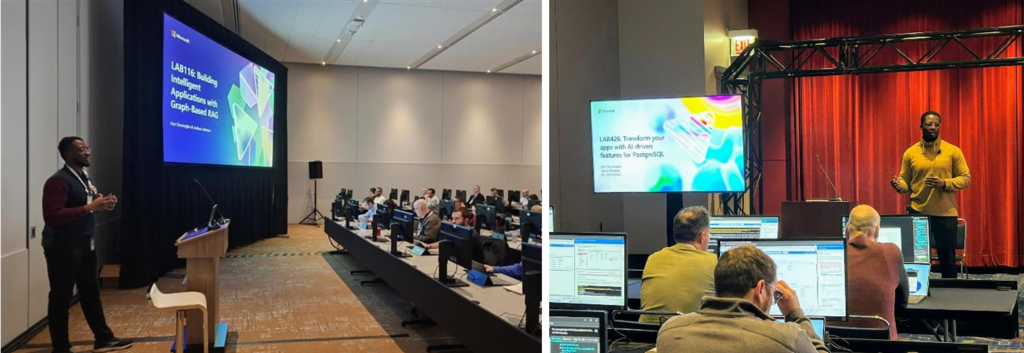
So, what I’m excited about is how AI is letting us break away from the Google-like search where you have to know what you want, to a more conversational search where you can talk to the website.
Can you tell us about your experience in the Software Engineering and Management program and how it prepared you for your career?
Every time anyone asks me this, I always say engineering and management was the best choice I made because software engineering plus management really led me into the PM field.
When I interviewed at Microsoft, it was for a software engineering internship. That’s all I knew – I didn’t even know what a PM was. But after I passed the interviews, they recommended product management. They felt my degree and experience were more aligned with that.
I don’t even know if Mac knew back in 2015/2016 that software and management would be the future, but it set me up really early. I didn’t go into pure software engineering, and I was offered something different based on my degree. And that’s how I’ve grown my career, and I’ve grown to really love it, because that’s where my passion lies.
It also helped me present and articulate my points a lot better. A lot of PMs come from either an MBA or software background, but I had both sides. I could tell the story—why the customer needs this, what the market size is. These are things I learned in my engineering management capstone. I used to go back to my capstone slides all the time. And because of that, I even got better pay and a slightly higher position—I was coming in with almost a double degree versus others.
Is there anything you’d like to share about the management side specifically?
The big thing about management that I love the most is it really pushes you to have that learning mindset. Engineering teaches you how to break down and solve problems. But management taught me how to learn different ways of doing stuff because you talk to econ folks, marketing folks, and take business classes.
You have to learn a different way of thinking sometimes, like how to pitch your business, understand finance and accounting, and explain the value of your product. Every management course made me think differently, and that helped me pick up new concepts quickly at work.
Can you tell us about your co-op experience and any advice you’d share with students?
The co-op experience for me was awesome, mainly because I loved how flexible Mac makes the co-op program. You could schedule 4 month blocks, pick 8, or 16 months.
I did 4 months at Microsoft, then an exchange in France, 4 months at IBM, and then another 4 at Microsoft. So, in that 16 month period, I worked for 12 months. That flexibility really helped. Before graduating, I had 20 months of work experience also including Hydro One and BlackBerry. Not many programs give you that.
As for advice – its hard for everyone right now. That job market’s not the hottest. But my advice would be to be creative, do your own projects, and learn how to use AI tools. Be curious. When something new comes up, interns are usually the ones who try it. That curiosity and energy really stands out.
When you interview, let that shine through. Show that you’re learning, passionate, and creative. That’s how you stand out in a tough market.
You were involved with NSBE and helped create McMaster’s first Black student scholarship in engineering. Can you tell us more about that?
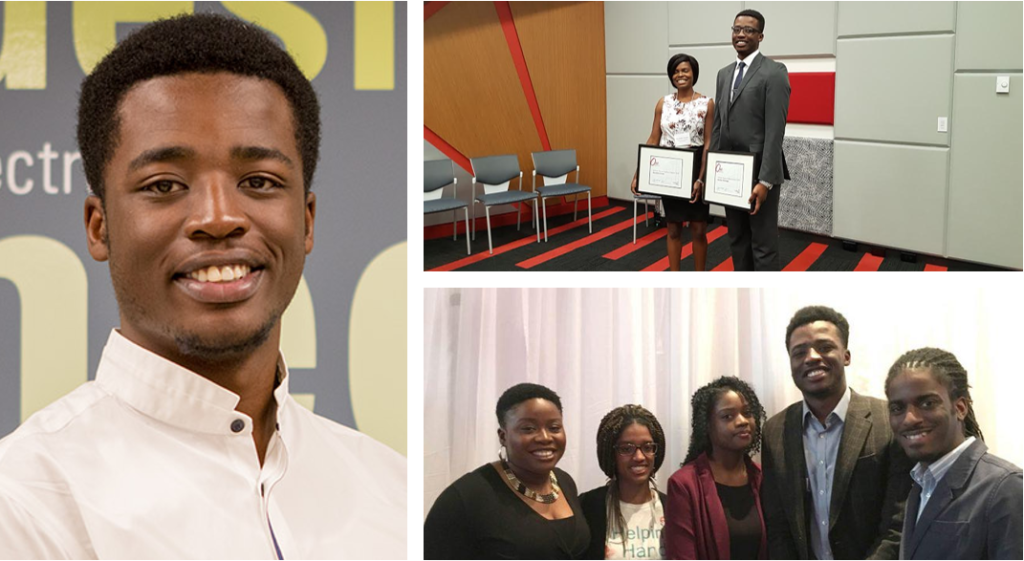
Yeah, me, the co-presidents, and the whole team were interested in giving back to NSBE, especially in Canada. In the US, NSBE is much bigger, but in 2014-2015 it was just starting to grow in Canada.
I remember I had won maybe seven or eight scholarships, and so had others on the team, but we noticed that McMaster wasn’t really doing anything specifically to reward or support Black students in engineering.
Before pushing for the scholarship, we really wanted to show excellence. We made events like The Hunt bigger, got funding from engineering, and attracted industry attention. Then we started pushing for a scholarship.
Every time we got close, the university said there wasn’t enough endowment. But we kept going, and in 2019/2020, it finally happened. It took five to six years, but I’m glad it happened. We had great support, from faculty, from the younger NSBE students, and people like Dr. Adams who helped us write the first proposal and Dr. Juliet Daniel who mentored us during the process.
Honestly, I would’ve never guessed it would grow the way it has, but I’m really happy it did.
Why do you like to stay connected to McMaster?
I feel like Mac let me be me.
McMaster wasn’t overly big where you get lost, and it wasn’t too small either. It had the perfect size and community. Everyone’s in this one area – not really Hamilton, not really just McMaster – but a place that’s yours.
The community and confidence Mac gave me carried into my career. I had 20 months of co-op, I was involved in NSBE and started businesses through student culture. I was super involved, and it helped me grow into an adult.
If I had a problem, I could talk to any prof in any faculty. It was just a really great community. That’s why I like to give back, so the students today can feel the same way I did.
What’s next for you in your career?
It’s hard to tell right now because I don’t know what I want to do, and I don’t know where the market’s going. I definitely want to stay in AI, get more technically and business savvy. But AI’s growing so fast, I honestly have no clue where it’s going.
So right now, it’s about hardening my skills. I want to feel like when someone calls me an expert, I actually am one. I’m in that mid-level stage, building up. A few years down the line, definitely the entrepreneurship route – taking everything I’ve learned and starting my own business.
Alumni Blueprints is a Q&A series that highlights the journeys of exceptional McMaster Engineering alumni. Discover how they built their careers, from joining student clubs and teams to seizing co-op opportunities that ignited their passions during their undergraduate years. Our alumni share their unique stories and insights, offering a blueprint for success in their respective fields. Want to share your blueprint for success? Contact the Alumni Team at engalum@mcmaster.ca.