
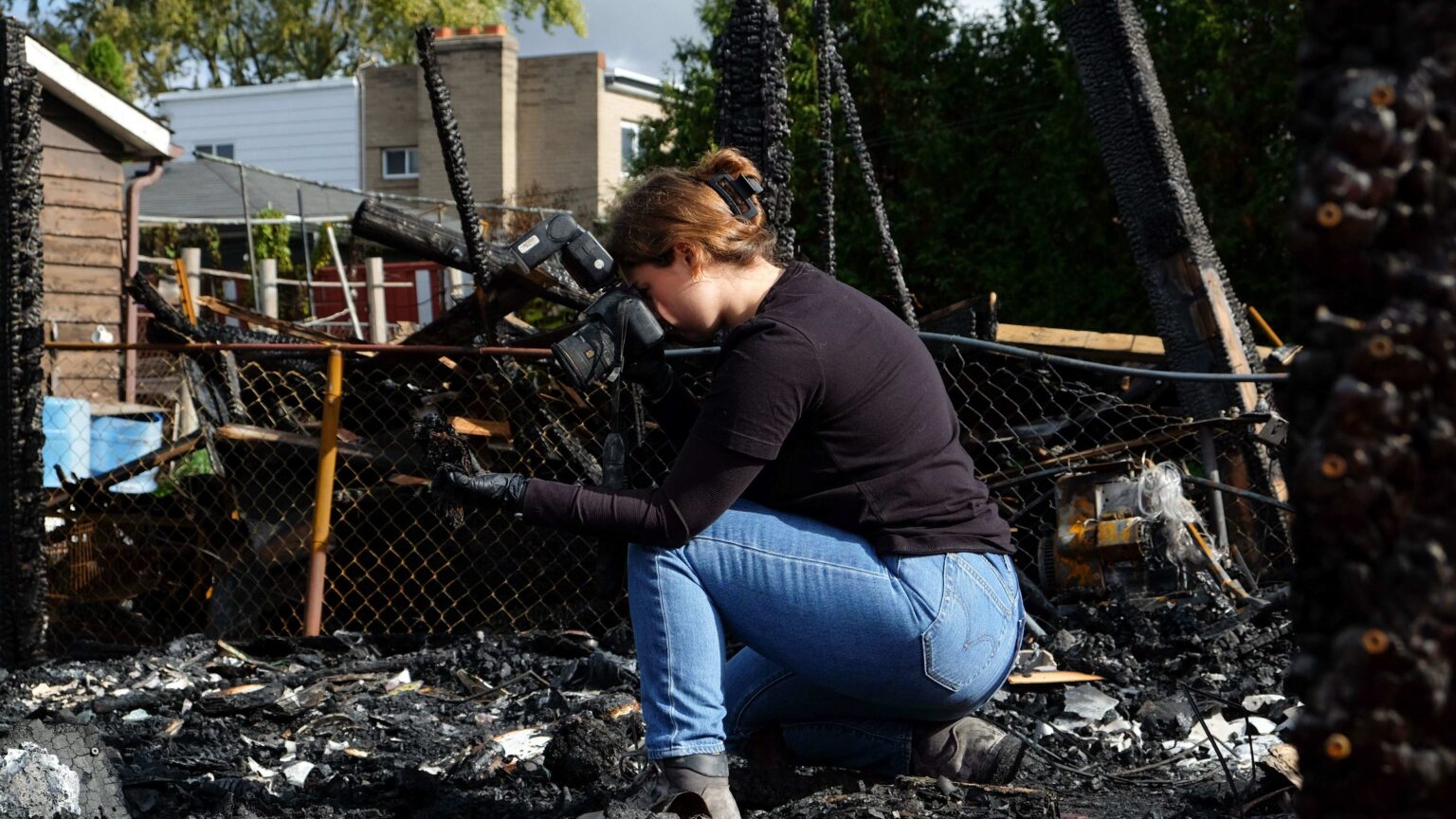
As a Fire Investigator with OCI Group, Amanda Lykos, a 2024 Mechanical Engineering graduate, applies her technical background to uncover the science behind the flames. Drawn to the fast-paced, hands-on work that challenges her both mentally and physically, she’s found a career in the world of forensic engineering.
In her Alumni Blueprints Q&A, Amanda reflects on how her time at McMaster shaped her path, the lessons that guide her career, and the rewarding realities of investigating the unexpected. She also shares her advice for current students and new grads starting out in their careers.
Here’s our Q&A with Amanda:
Can you tell us about the work you do as a fire investigator and why you decided to pursue this career path?
To start from the beginning, back in grade 12, when I was deciding on my program, one of the key reasons I chose McMaster was because of the general engineering first year. It really helps students explore before deciding what works best for them. Although I will say that I always knew I was going to go into mechanical engineering because of my background. I did some robotics in high school and was the mechanical lead of our robotics team. It wasn’t that interesting but it did give me a foot in the door and allowed me to believe that mechanical was the right choice for me.
What I loved about mechanical was how broad it is. Some of the big career paths that you always hear about in mechanical engineering is biomechanics, renewable energy, automotive, aerospace, and more. When I was searching for jobs in mechanical, I didn’t know what I wanted to do, but I had three major criteria: I didn’t want a stagnant job; I wanted to always be on my feet, in a fast paced, mentally stimulating role that would challenge me; and finally, I wanted to work in a team where I could learn from others and they could learn from me, but still have the independence because that’s important for self-growth.
So, when I was looking for co-ops, I literally typed into my search engine, “most interesting, unique mechanical engineering co-op options.” Some of the ones that came up were theme park ride designer for Disney, junior engineer at Lego, and forensic engineering.
When people think about forensic engineering, they think of CSI and how it’s portrayed on TV, but at the end of the day, it’s about applying engineering principles to investigate failures in structures, products, and components. The general aspect of my career is forensic engineering, but I focus primarily on fire investigations. My job is to determine the root cause of a fire or failure—whether it’s a design flaw, material defect, or something else.
I primarily work in the private sector, focusing on preserving fire scenes, gathering evidence, and preparing technical reports for the insurance industry, law firms, and construction companies. There’s also a lab aspect where I analyze evidence later.
I work for the OCI Group, which has specialists in structural, materials, mechanical, and fire investigations. I’m part of the fire and mechanical team. I actually did my first and third co-ops with the company before joining full-time.
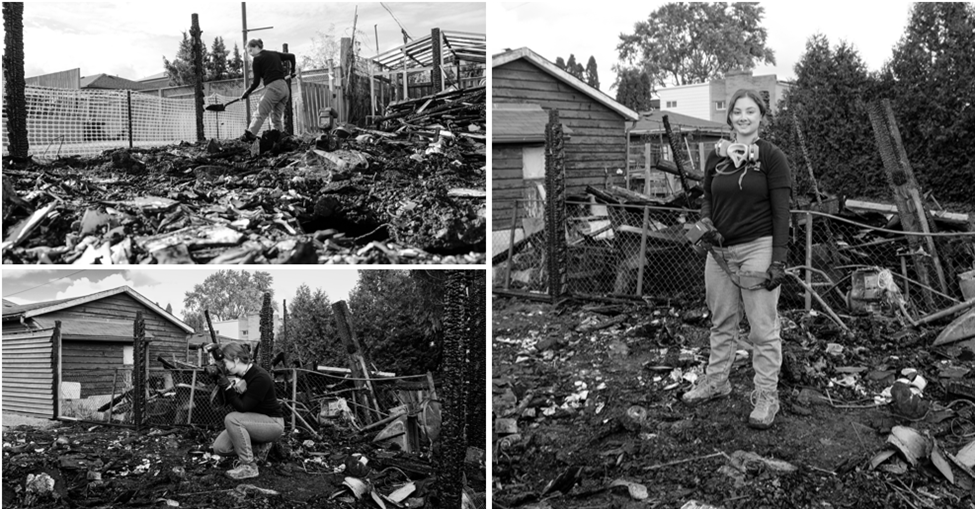
Amada onsite during a fire investigation, documenting evidence and analyzing debris at the scene.
What is it about this work that interests you the most?
Honestly, I get a bit of an adrenaline rush from going into a fire scene, not knowing what I’m going to find or see.
There’s that constant curiosity and no two scenes are ever the same. Some are pretty standard, like kitchen fires where someone forgot to turn off the stove, but others are interesting—an entire room destroyed and no clear cause. That’s where the real investigation comes in.
There’s a lot of digging, physical labour, and mental problem-solving. By the end of the day, I’m exhausted but I feel accomplished.
Do you work as part of a team on these investigations, or is it more independent?
When I first started as a co-op, I trained under a supervisor who’s now my manager. Within our GTA region, we have a manager, who is a mechanical engineer and he oversees fire investigators and vehicle specialists. Many of our mechanical engineers focus on vehicle fires, while others handle structural or materials analysis.
On site, investigations are typically done alone unless you’re training someone. But even then there’s a great sense of community. If I ever need to talk something through, I can call someone on the team for input. It’s a good balance between independent and collaborative work.
What are some of your most memorable experiences from your time at McMaster?
I’d say there are two sides to that—academic and social.
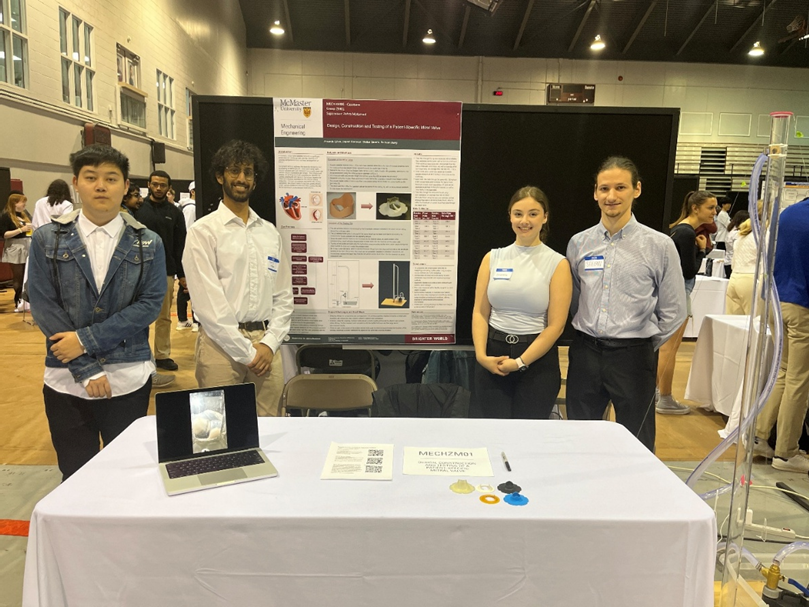
In terms of the academic side, my most memorable experience was the composite lab course in third and fourth year. The reason why I say this is because it took all the theoretical knowledge we learned in our courses—like fluid mechanics, heat transfer, biomechanics, and vibrations—and applied it to give us an opportunity for the hands-on learning aspect. It really answered that question of “When will I ever use this?” and also I think long term, that gave me a good sense of what I could do and what mechanical engineering really can be.
Socially, my best memories are of the late-night study sessions and project work—especially during capstone. Spending that much time together with others in my year of mechanical, really helped us build off of each other and really help each other out.
We helped each other through difficult courses like heat transfer, and working as a group made it much more manageable and memorable.
How did your mechanical engineering degree prepare you for your current work?
At first glance, mechanical engineering might not seem directly related to fire investigation and forensic engineering, but it’s actually a great background for this career. Mechanical gives you such a wide range of knowledge and all of it ties into failure analysis and understanding fires.
Beyond the technical side, the program emphasized documentation, teamwork, and communication. We were expected to write clear technical reports for our classes and collaborate with others, especially in courses like 1P13 where engineering students from different disciplines worked together.
Were there any clubs, teams, or extracurriculars that stood out for you during your time at Mac Eng?
I wasn’t heavily involved in clubs and teams, but I did participate in the Student Ambassador Program with the Engineering Faculty for about two years, starting in third year. As a student ambassador, I helped with external engagement—talking to prospective students and their families during open houses, Reading Week, and Welcome Week, and sometimes through virtual Q&As.
My favourite part was how it helped a lot of people feel comfortable about choosing McMaster and to share my own experience as a student. That role also helped strengthen my communication skills and empathy—qualities that I use constantly in my current job when talking to clients who’ve experienced loss. Many of them have gone through traumatic situations like house fires, so that ability to communicate compassionately is crucial.
What advice would you give to engineering students who are just starting their careers?
First, always be open to new experiences and new opportunities. Engineering students are naturally curious learners, so it’s not too difficult of a task.
Being close-minded to new things, even if it doesn’t sound super appealing at the time, can really limit your growth potential as an engineer.
I think those new experiences and opportunities should always be a yes, even if you don’t initially want to do it, because at the end of the day you’ll gain something—whether it’s, “Okay, I know I don’t want this,” or, “Oh, this sounds interesting,” or maybe you meet someone who opens another door for you.
Second, don’t settle for less. It’s a tough job market, and I know people often take whatever’s stable or convenient. But I think it’s important to find work that keeps you motivated and happy long-term. Don’t rush into something just for the sake of having a job—keep your options open, keep those new opportunities available, and never say no to new experiences.
If you could give advice to your first-year self, what would it be?
My first-year experience was a little different because I started during COVID and was studying alone at home. But to an average first-year student, I would say that engineering is tough, it’s not an easy undergrad program—and that’s okay. It’s meant to be challenging because it opens so many opportunities after you graduate.
As a first year student, it’s hard to see what’s possible going forward, especially when you’re overwhelmed by classes and exams, but just remember there’s an end goal. You’re learning skills that will carry you far.
It’s a good type of hard, even when it doesn’t feel like it at the time.

Are there ways you currently stay connected with McMaster Engineering?
This is actually my first time connecting with the alumni network, but I’d love to get more involved. I love the idea of wanting to stay connected to McMaster because I had such a great experience here!
Alumni Blueprints is a Q&A series that highlights the journeys of exceptional McMaster Engineering alumni. Discover how they built their careers, from joining student clubs and teams to seizing co-op opportunities that ignited their passions during their undergraduate years. Our alumni share their unique stories and insights, offering a blueprint for success in their respective fields. Want to share your blueprint for success? Contact the Alumni Team at engalum@mcmaster.ca.