Sara Imani, a postdoctoral fellow in mechanical engineering at McMaster University, has been recognized with a prestigious Mitacs Innovation Award for Outstanding Innovation. The honour is in recognition of her groundbreaking work in antimicrobial surface technology in partnership with FendX Technologies Inc.
The Mitacs Innovation Awards, now in their 15th year, spotlight exceptional students, professors, start-ups and industry partners, whose achievements are made possible through Mitacs-supported collaborations. The annual ceremony, held at the National Arts Centre in Ottawa, brings together leaders from government, academia and industry to celebrate contributions that strengthen Canada’s innovation ecosystem.
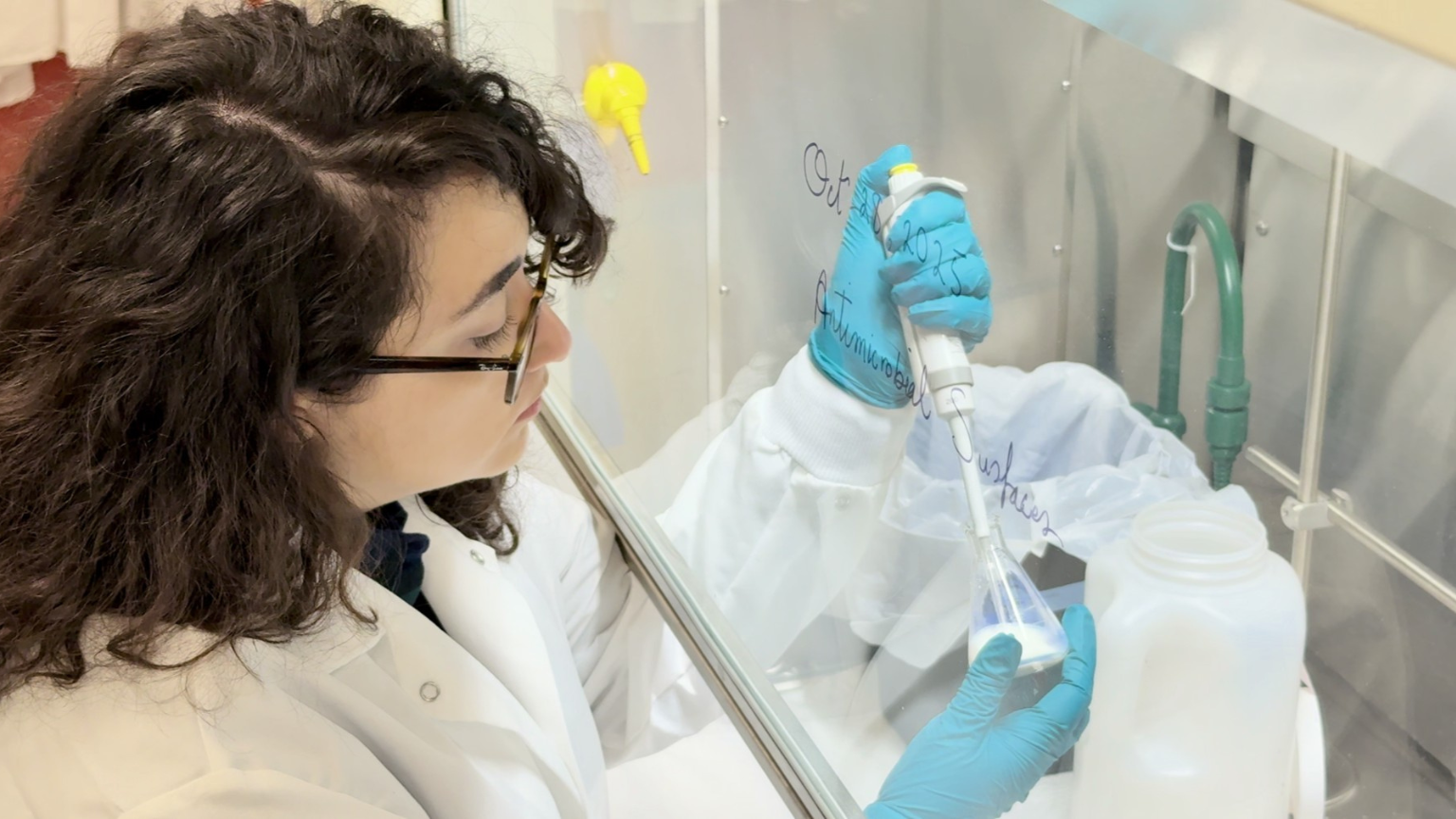
Imani’s research focuses on developing a long-lasting antimicrobial coating for high-touch surfaces in hospitals and public spaces. Applied like paint, the coating forms a thin, nearly invisible film that continuously inactivates pathogens, including drug-resistant bacteria such as MRSA. This work builds on her earlier success with REPELWRAP™ film, a pathogen-repellent surface that advanced from lab research to large-scale pilot manufacturing and demonstrated strong performance in real-world testing.

“Winning the Mitacs Innovation Award is incredibly meaningful to me,” says Imani, who graduated from McMaster with a PhD and master’s in biomedical engineering. “It reinforces the value of translating scientific discoveries into real-world impact, and it motivates me to continue developing technologies that directly improve public health.”
Imani credits McMaster’s collaborative research environment for enabling her interdisciplinary work bridging engineering, biology and applied innovation. “McMaster offers world-class facilities and a culture that encourages collaboration across disciplines,” she notes.
“We are incredibly proud of Sara for earning this prestigious Mitacs Innovation Award,” says Heather Sheardown, Dean of the Faculty of Engineering. “Her research exemplifies the power of engineering to improve lives, and it will have a profound impact on the health and safety of Canadians.”
Imani also acknowledges the mentorship of professors Tohid Didar and Leyla Soleymani, who have supported her growth since her graduate studies. “Their guidance, encouragement, and trust have been instrumental in shaping my development as a scientist and researcher.”