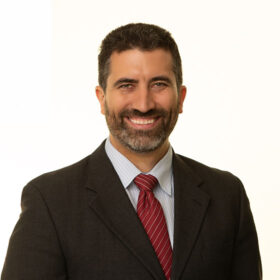
Prior to joining McMaster University, Dr. Welland was a Senior Research Scientist at Canadian Nuclear Laboratories where he served as Head of the Mesoscale and Transport Methods section and led award-winning projects on multiscale / multiphysics modelling of nuclear materials. Dr. Welland previously completed postdocs at Argonne National Laboratories in the field of microstructure of batteries and hydrogen, and the European Commission Joint Research Centre Karlsruhe modelling nuclear materials in extreme conditions. Dr. Welland is the author over 50 literature contributions through journal articles, conference papers, and book chapters, in addition to numerous industrial reports for the Canadian nuclear industry. He is an active participant in international collaborative initiatives and has represented Canada at the OECD NEA in working parties on fuel and material modelling. He is also passionate about scientific communication and has organized international collaborative workshops, founded several student events, and engaged in community outreach. Dr. Welland’s research centers around using computational tools to predict material behaviour from advance manufacturing techniques to their performance in demanding applications. His group works on interrelated topics of generalizable mesoscale tools, multiphysics transport models, and data-driven constitutive models for material properties. This work finds applications in nuclear fuels and materials, battery components, and the hydrogen industry. He is also dedicated to helping Canada meet our clean energy goals using nuclear power at the grid scale or in nuclear renewable hybrid energy systems.
Ph.D. Nuclear Engineering, Royal Military College of Canada, B.Sc. Engineering Physics, Queen’s University
4 unit(s) Applied numerical methods for engineering including solution of systems of algebraic equations; numerical integration and differentiation; finite difference and finite element methods; ODE solutions; Optimization; Partial differential equations; Monte Carlo simulation.
Three lectures, one lab (three hours); first term
Prerequisite(s): Registration in Level II or above of an Engineering program