
Overview
Advances in radar sensing, electromagnetics and artificial intelligence are opening new frontiers in healthcare innovation
particularly in regions with limited medical infrastructure. In this lecture, Dr. George Shaker will present practical, low-cost systems that use mmWave radar for contactless monitoring of glucose levels, vital signs, sleep patterns, falls and daily activity.
These privacy-preserving technologies are designed to scale across both rural clinics and urban homes, offering new possibilities for accessible and continuous care. The talk will also explore how antenna design and advanced signal processing play a critical role in interpreting radar signals to detect subtle health changes, from early signs of frailty to abnormal breathing.
Dr. Shaker will also introduce electromagnetics-based digital twins — models that simulate device placement, antenna integration and human interaction — helping accelerate the development and optimization of next-generation healthcare technologies.
- Meeting ID – 991 8297 2219
- Passcode – 498456
What you’ll explore
- How mmWave radar enables contactless health monitoring
- The role of antenna design and signal processing in detecting subtle changes
- Applications in remote healthcare, aging populations and smart environments
- How digital twins accelerate development of medical sensing technologies
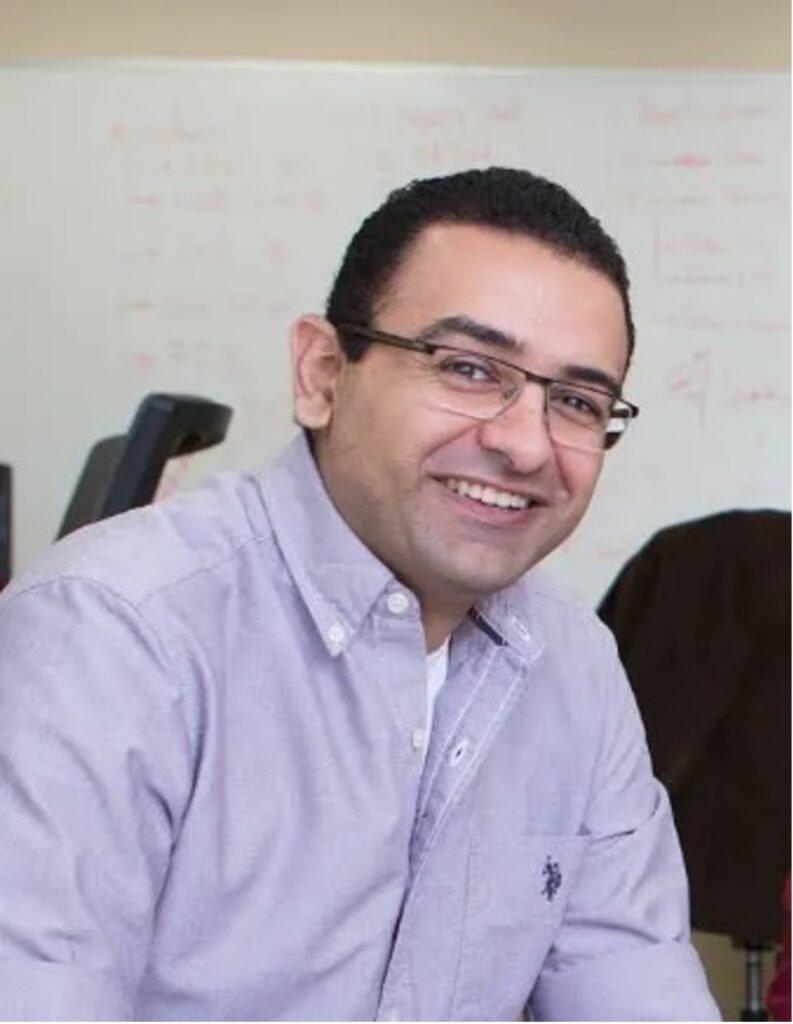
About the speaker
Dr. George Shaker
Research Scientist, Schlegel-UW Research Institute for Aging
Adjunct Associate Professor, Electrical and Computer Engineering, University of Waterloo
Dr. George Shaker leads research in advanced sensing technologies for healthcare and smart systems. He directs the MIRADA initiative, focused on improving healthcare for aging populations through innovative monitoring solutions. His work spans wireless sensors, applied electromagnetics and AI-driven systems, with over 200 publications and more than 35 patents.