
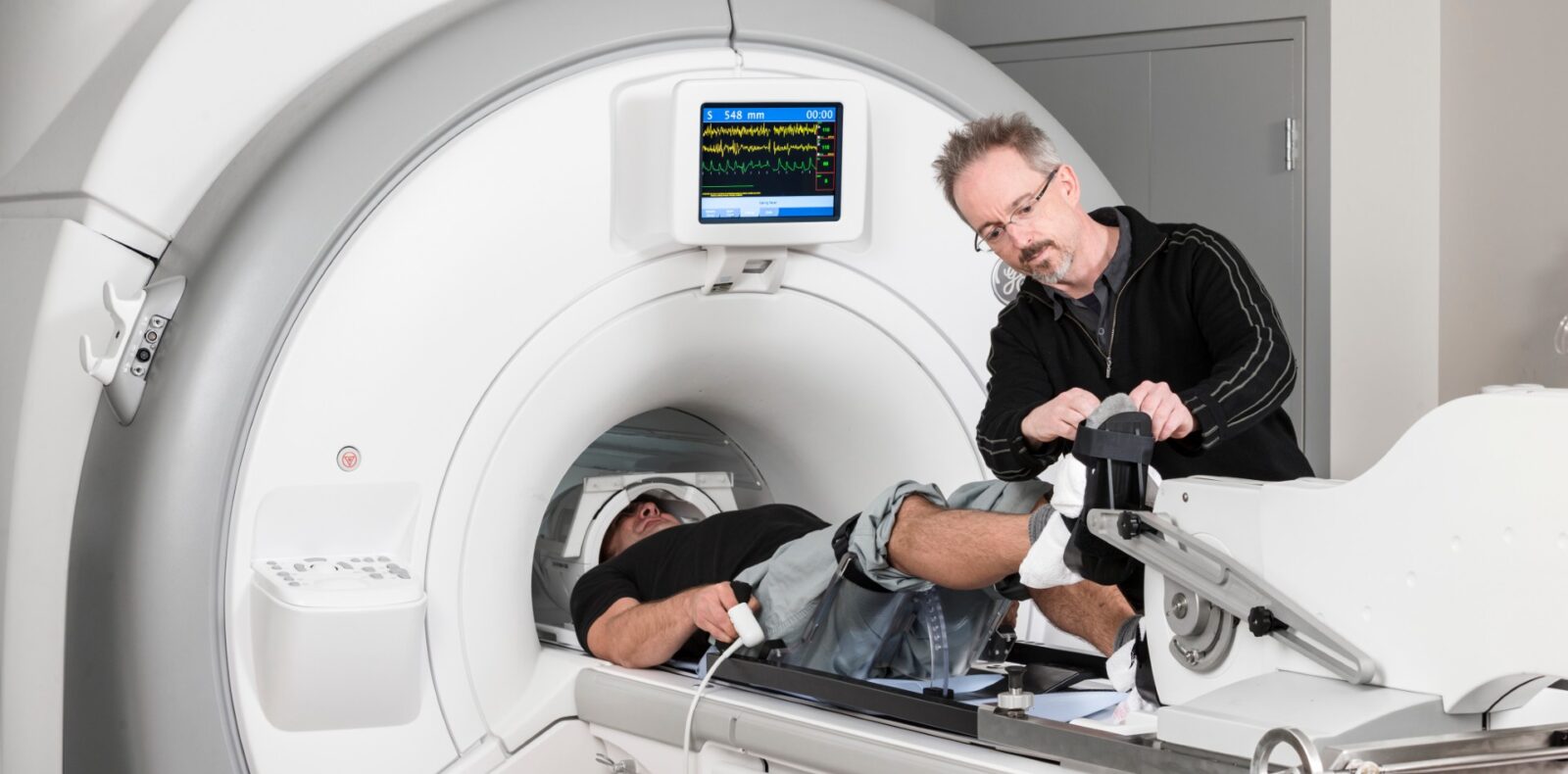
Overview
Magnetic resonance imaging (MRI) remains one of the most powerful diagnostic tools in medicine, yet acquisition speed continues to limit its effectiveness — particularly in cardiac and abdominal imaging, where physiological motion from the heart, breathing and gut motility can significantly degrade image quality.
In this lecture, Professor Michael D. Noseworthy will examine the evolution of accelerated MRI acquisition techniques. From early use of conjugate symmetry in k-space to acquisition triggering and parallel undersampled imaging, these developments have progressively reduced scan times while preserving diagnostic accuracy.
He will discuss how parallel imaging has been merged with compressed sensing to enable pseudorandom variable density undersampling and non-linear iterative reconstruction. More recently, deep learning methods have been integrated into multi-factor undersampled k-space reconstruction. Together, these strategies now permit cine imaging of the heart and abdomen during free breathing.
Professor Noseworthy will outline current acceleration methods and future directions in this rapidly advancing field.
Attend online via Zoom
This lecture will also be available online for those joining remotely.
Join the lecture on Zoom
Meeting ID: 973 0288 5718
Passcode: 663519
See MRI in motion
Professor Noseworthy has shared a real-time MRI of his own beating heart — demonstrating how advanced acquisition techniques capture motion in dynamic imaging environments.
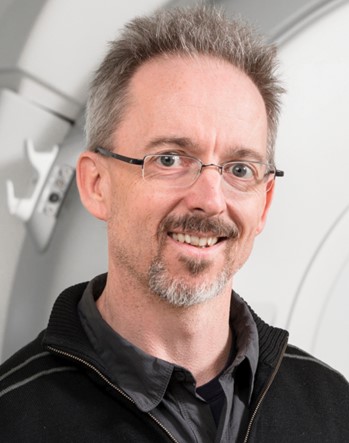
Speaker bio
Dr. Michael D. Noseworthy joined McMaster University in 2003 after serving as an MRI physicist at The Hospital for Sick Children and University Health Network in Toronto, and as an Assistant Professor in Medical Biophysics and Medical Imaging at the University of Toronto.
He is currently a Professor in the Department of Electrical and Computer Engineering at McMaster University and Associate Chair (Research) in the Department of Medical Imaging. He serves as Director of Imaging Physics and Engineering at the Imaging Research Centre at St. Joseph’s Healthcare Hamilton and helped found the Centre for Integrative and Advanced Medical Imaging (CIAMI) at McMaster University in 2024.
Dr. Noseworthy has trained more than 80 graduate students and postdoctoral fellows and has published over 530 refereed journal and conference papers and abstracts. He has delivered more than 170 invited lectures internationally. He is also co-founder and CEO of TBIFinder, Inc., a data analytics company focused on applying machine learning to localize and grade brain injury.