
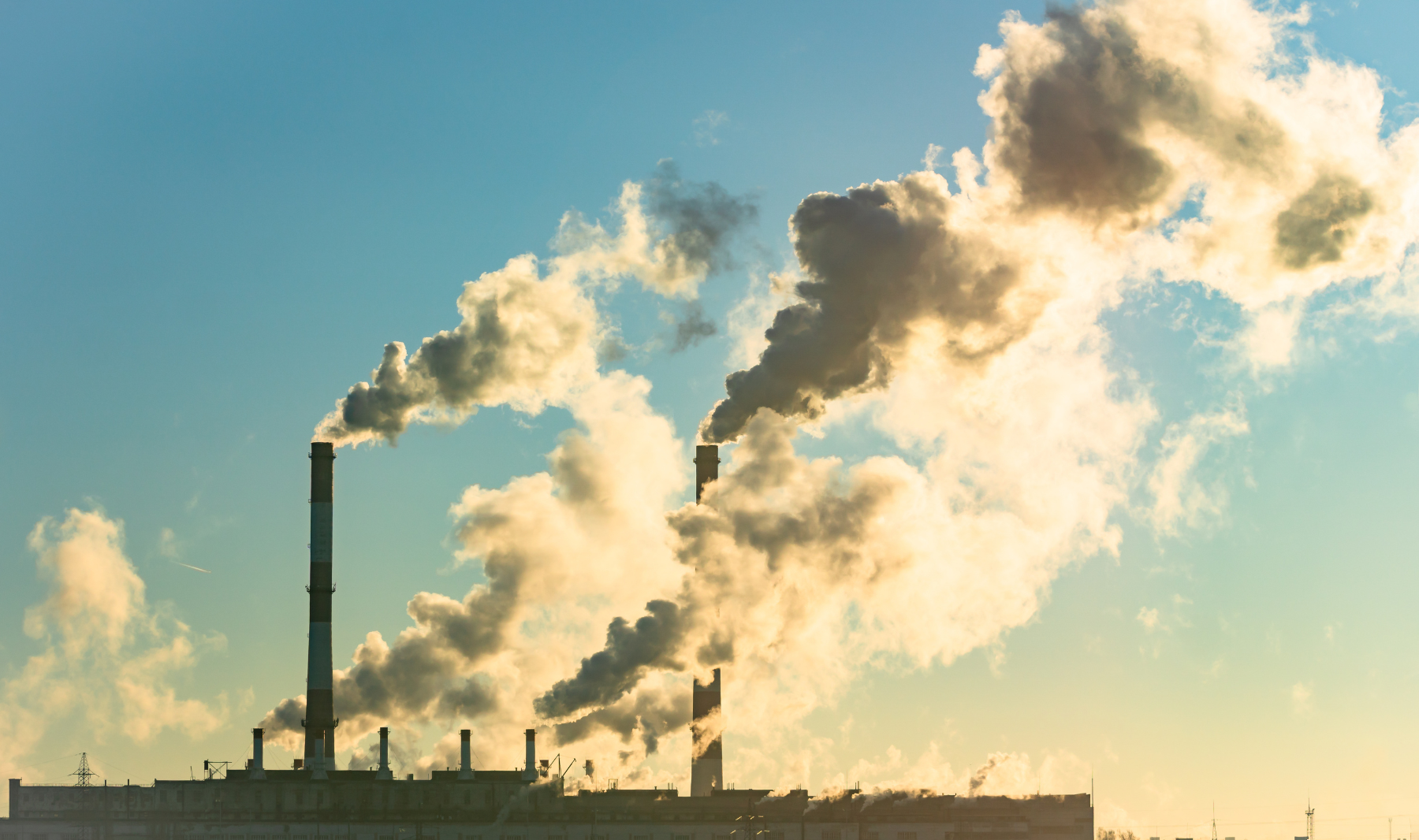
As Ashkan Irannezhad sees it, we have three options when it comes to climate change—and the first two are impossible to pull off.
The first option is to pretend climate change doesn’t exist, says Irannezhad, a former postdoctoral fellow in Drew Higgins’ lab at McMaster and research associate with Aimy Bazylak’s group at the University of Toronto.
But we’re already feeling the impacts of this option, he says, and we can’t afford to continue in this direction.
The second option, according to Irannezhad, is to immediately stop using everything and anything that emits harmful carbon dioxide (CO2) into the atmosphere. While enticing, this would mean no plastics and no more fossil fuels — two of the things that power modern life — and it would take a global effort, the likes of which we’ve never seen before, to overhaul industry and change our lifestyles overnight. “Again, impossible,” says Irannezhad.
The third option, he says, is to recognize that our lifestyle depends upon these carbon-emitting technologies and do something about it to make these processes more sustainable.
For Irannezhad, “doing something about it” means capturing waste carbon dioxide emissions, turning them into a useful chemical and storing it for future use — a concept called the carbon circular economy.
It’s the option that holds the most promise for a greener future, says Irannezhad. It just requires researchers to figure out the most efficient and sustainable way to capture CO2 emissions and convert them into a useful chemical like ethylene, which is used to manufacture plastics.
And he might’ve just figured out a way to do it more efficiently.
Setting the stage
The idea sounds simple enough: Take something that’s bad for us before it reaches the atmosphere and turn it into something that’s useful.
But how does that process actually happen?
To capture waste CO2, a liquid chemical that binds to the carbon dioxide molecules is brought into contact with the gas. This results in a mess of different solutions, including carbonate, bicarbonate and dissolved CO2.
“Traditionally — and by ‘traditionally,’ I mean the past seven to ten years, since this technology is still relatively new — your capture solution ends up being a mess of carbonate molecules, bicarbonate molecules, carbon dioxide in aqueous form and a lot of water,” says Irannezhad.
“This mess means that there needs to be a lengthy process to separate and refine the CO2 molecules before they can be converted, ultimately making this process inefficient, expensive and energy intensive.”
But what if you could bypass the costly purification and separation processes entirely?
That’s where Irannezhad’s work comes in. He’s found a way to efficiently convert the captured carbon into value-added chemicals without the need for lengthy, costly and energy-intensive purification steps.
Cleaning up a mess
Instead of searching for more efficient ways to refine and purify the captured carbon dioxide, Irannezhad looked at how the electrolyzer itself could work more effectively with the messy capture solution.
The key to the whole process is the cathode — the place where the “magic happens,” he says.
“A cathode is a porous electrode where the electrochemical reaction takes place,” explains Irannezhad. “In our studies, we noticed how important a porous structure and surface roughness was to the final efficiency of the system.”
With this in mind, Irannezhad found that using a porous, copper-based electrode whose surface was coated with copper-based nanowires gives researchers the best performance when converting the captured emissions into a useful chemical.
And copper itself has an important role to play in the chemistry: When CO? encounters a catalyst, it needs to bind to the catalyst surface long enough for the electrochemical reaction to take place.
If the bond is too strong, the molecules remain stuck. If it is too weak, they leave before the necessary reactions can occur.
Copper has just the right balance to make it possible for carbon-containing molecules to remain on the surface long enough to undergo the reactions required to form a molecule containing two carbon atoms. In fact, it’s the only material in the world that has “the perfect bonding force between the surface and the carbon dioxide molecule to selectively produce products that have more than just one carbon in them,” explains Irannezhad.
This ability to produce products with more than one carbon atom in them was especially important to Irannezhad, as he was trying to produce ethylene (C2H4).
A win-win-win situation
Traditionally used in packing, including plastic bags, bottles and cups, polyethylene is the most mass-produced plastic in the world.
Right now, it’s mainly produced through a petrochemical process that relies on fossil fuels and results in significant carbon emissions, explains Irannezhad.
By contrast, Irannezhad’s electrochemical process, which uses clean electricity to convert the captured carbon solution into ethylene, produces green ethylene without emitting carbon dioxide.
“Ethylene is extremely important for modern life, but its production is a major source of carbon emissions,” says Irannezhad. “Our process shows we can bypass that process and produce green ethylene without emitting carbon dioxide.”
The implications for the future of clean energy are enticing.
In Ontario, windmills and solar panels produce extra energy that we currently cannot store, explains Irannezhad. He envisions a world where we can merge excess renewable energy with these CO2 electrolyzers to capture carbon emissions and convert them into ethylene. This process would address energy storage challenges, reduce the amount of carbon in the atmosphere and produce a valuable chemical. “It’s a win-win-win situation.”
Engineering a greener future
This process has shown tremendous success in a lab environment, and the Higgins Lab is dedicated to making the process more efficient and scaling it up — because the world depends on it.
“More than a century ago, as the global population was growing and food production was struggling to keep pace, there were serious concerns about widespread famine,” says Irannezhad.
Then a process was developed that enabled the large-scale production of ammonia for fertilizers and transforming global food production, “ultimately helping support billions of lives.”
Today, the problem of a lifetime is climate change, he says. From his perspective, it’s the job of scientists and engineers to rise to the occasion and provide technological solutions to solve that challenge — and he wants to make sure he does just that.
“In the coming decades, we will solve climate change. I want to be a part of discovering that solution.”