
For Ryan Rogers, engineering has always been about more than solving technical challenges. It’s about creating meaningful change for the communities around him.
As Vice President of Corporate Development at Hamilton Community Enterprises (HCE), Ryan is helping shape the future of sustainable energy by exploring opportunities that bring together energy, telecommunications and infrastructure. His work focuses on supporting the transition toward more affordable, resilient and sustainable energy systems in Hamilton and beyond.
It’s a passion that began during his time at McMaster Engineering, where his involvement in student leadership, research and extracurricular activities introduced him to the possibilities of engineering with purpose.
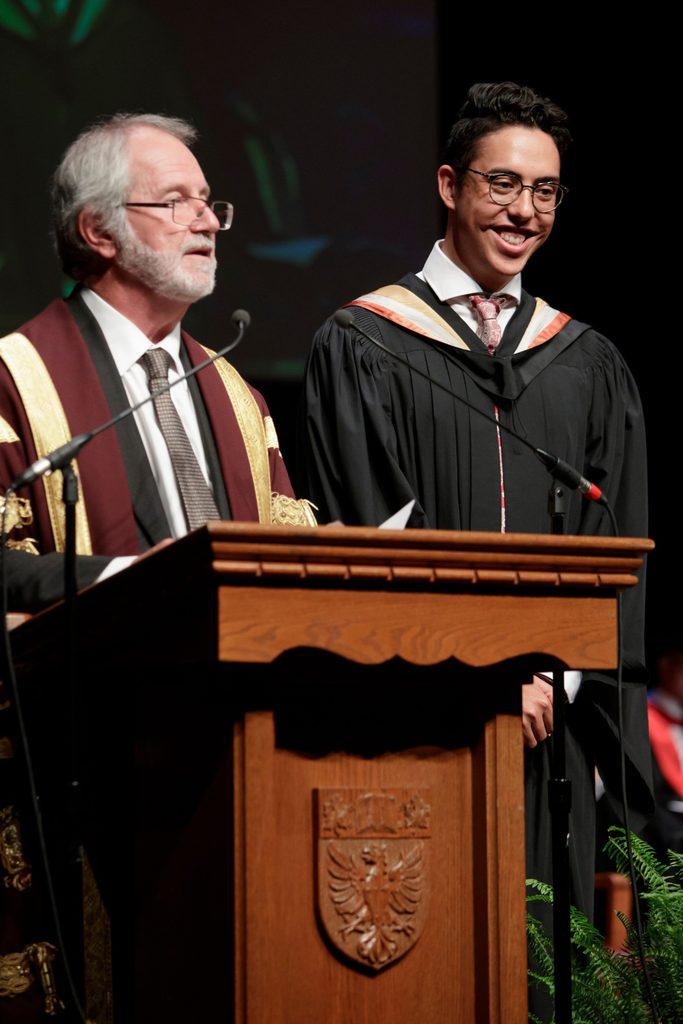
From serving as president of the McMaster Engineering Society to pursuing graduate research in sustainable energy systems under Dr. Jim Cotton, Ryan credits the people and experiences at McMaster with helping shape his career and approach to leadership.
Today, he continues that commitment to community by staying connected with McMaster Engineering, mentoring students and sharing the lessons he’s learned along the way.
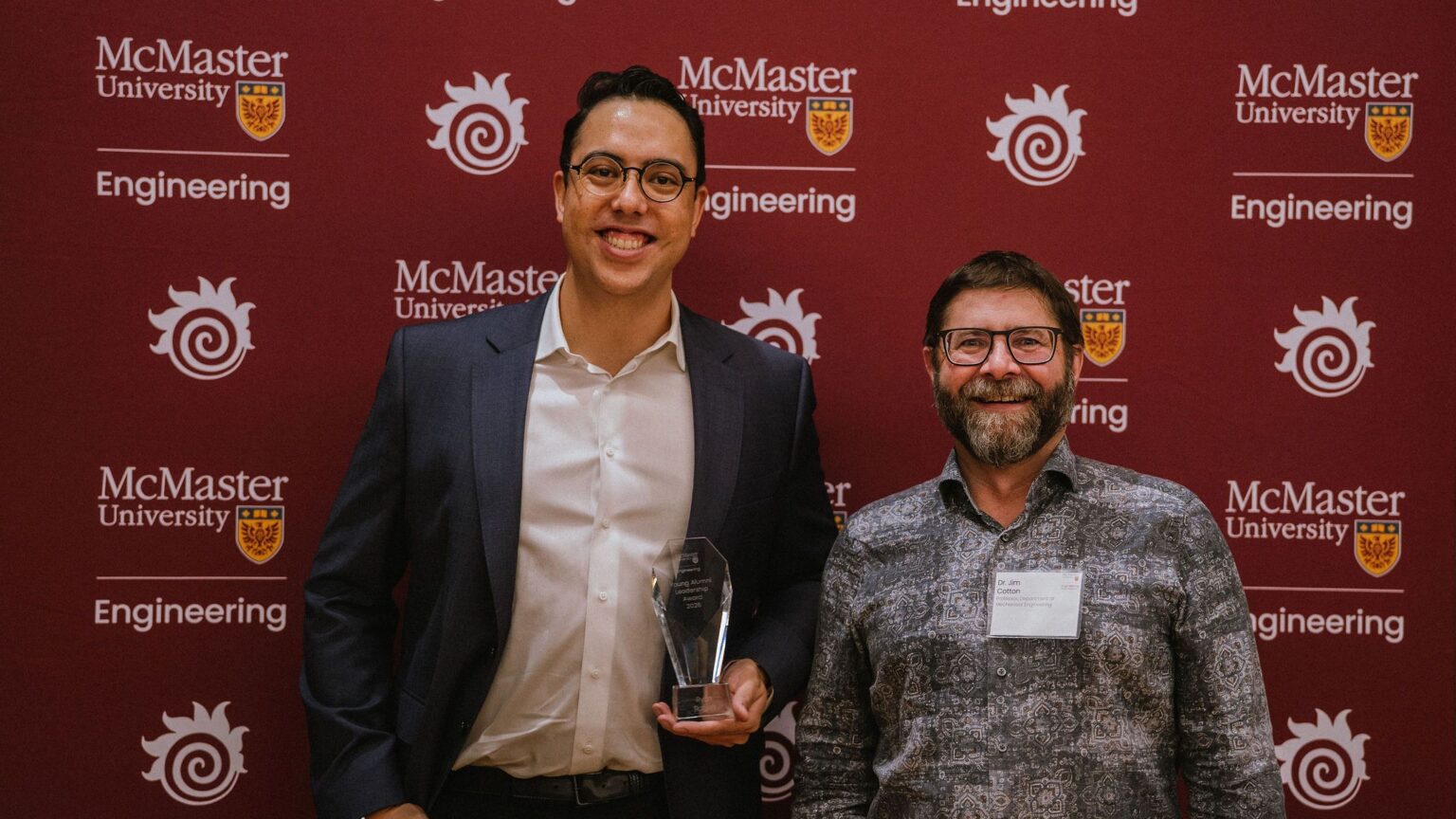
His leadership, mentorship and impact earned him the 2026 Young Alumni Leadership Award which Dr. Cotton presented to him on Nov. 5, 2026 at McMaster Engineering’s first Young Alumni Event.
Learn more about Ryan in his Q&A below:
“I was able to succeed and fail because this thriving community existed that allowed me to do that.”
Can you tell us about your current role at Hamilton Community Enterprises and what motivates you in your work?
As Vice President of Corporate Development, my role is focused on understanding where the business is going and helping prepare our business development, partnerships and operations for the future.
HCE is an interesting organization because we’re a private, for-profit company wholly owned by the City of Hamilton. We operate in both energy and telecommunications, and the intersection of those two areas creates exciting opportunities.
To me, that intersection is really about the energy transition. It’s about the future of decarbonization and sustainability, and how we can keep energy systems affordable and resilient, not just in Ontario but across Canada.
Having the opportunity to play a part in that is incredibly rewarding.
Where did your passion for sustainability begin, and how did your experiences at McMaster influence that direction?
It definitely started at McMaster.
When I first came to university, I was very focused on getting involved in the engineering community. Through student engagement and extracurricular activities, I met some amazing people, including students who were passionate about sustainability and environmental initiatives.
That exposure really sparked my interest. At the time, there was also a growing focus on climate goals and sustainable development, which helped me see how engineering could contribute to those priorities.
When I graduated, I knew I wanted to get involved in a career that was going to be rewarding. That wasn’t just engineering for engineering’s sake, but had a purpose behind it.
That ultimately led me to pursue my master’s at McMaster under Dr. Jim Cotton, whose research focused on sustainable energy systems, particularly thermal energy.
You mentioned Dr. Jim Cotton as an important mentor. How did that relationship shape your academic and professional journey?
I’ve been incredibly fortunate to have some fantastic mentors throughout my career, and Jim was definitely the first.
Interestingly, the first time I met him wasn’t in a classroom. It was around a boardroom table in the Hatch building during discussions about establishing a living sustainability lab for Integrated Energy Systems.
One thing I really appreciated was how he treated students. He viewed us as investments in the future and treated us as counterparts, rather than simply students.
That relationship developed over time. I started as a research student, completed my capstone project with him and eventually pursued my master’s under his supervision.
What made that mentorship valuable was the ability to challenge each other. He pushed me to become a better student, researcher and, ultimately, leader. At the same time, he was willing to listen when I had different ideas about my research, and ultimately my career.
For example, I ultimately decided not to pursue a PhD. We had conversations about that decision, and even though it wasn’t necessarily the direction he had envisioned, he respected it.
We’ve maintained that relationship well into my professional career, and I’m incredibly grateful for that.
You were heavily involved in student leadership and extracurricular activities at McMaster. What experiences stand out to you the most?
The biggest thing for me was the diversity of experiences McMaster offered.
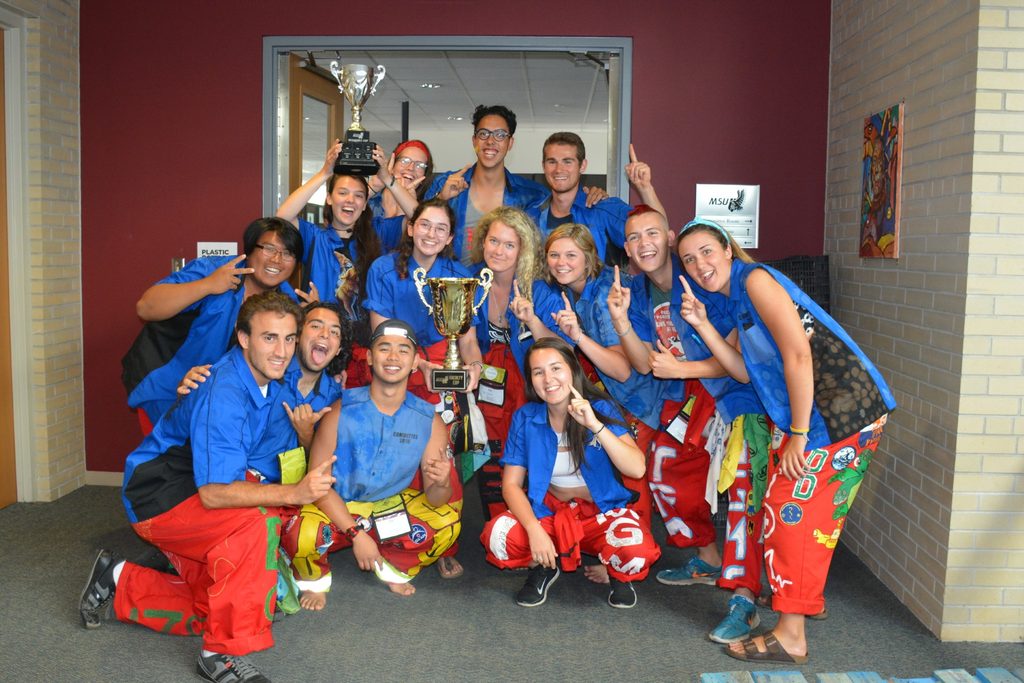
My research work gave me valuable hands-on technical experience, but I also learned so much from being involved in the McMaster Engineering Society, Welcome Week, being a Teachers Assistant for First Year Courses and working part-time at the Underground.
Each of those experiences taught me something different, and looking back, it’s really the combination of them that has made such a difference in my career.
“McMaster was also a place where I felt comfortable taking risks. Even when I tried something and failed, I knew there was a community of students, professors and mentors who would support me and encourage me to keep going.”
That environment helped me discover what I was capable of and gave me the confidence to carry those experiences into the workforce.
That’s something I really value, and in many ways, it’s not that different from the approach I took during my time at McMaster: looking at how I could contribute to the community around me.
As Ontario and Canada continue thinking about energy security, decarbonization and the need for reliable, affordable electricity, we hope to play an active role in supporting that transition.
It starts with opportunities here in Hamilton, but we’re also exploring how our expertise can help other municipalities and communities achieve their energy goals.
How do you stay connected to McMaster Engineering, and why is giving back important to you?
I really enjoy coming back to McMaster.
I’m involved with the McMaster Engineering Society’s Board of Advisors, and I also stay connected through events, conversations with students and opportunities involving HCE.
For me, giving back comes from a sense of gratitude.
When I think about my university experience, I realize that so much of what made it special was built by the alumni who came before me. They helped create a community where I could try new things, succeed, fail and grow.
I want to help create that same environment for today’s students.
Sometimes that means sharing advice or lessons from my own experiences. Other times, it can be as simple as listening to students and understanding what they’re going through.
You can have a huge positive impact on the student experience just by offering a couple quick ideas from your time at McMaster or even just being there to listen.
If I can contribute to maintaining that sense of community for the next generation, I’ll find that incredibly rewarding.
What advice would you give to your first-year self?
Don’t be afraid to change things up.
I came into McMaster having already been involved in student governance and extracurricular activities in high school, so I naturally continued down that path.
I don’t regret those experiences at all, but sometimes I look back and wish I’d explored more technical clubs and engineering teams.
There were so many opportunities available, whether it was Formula Electric, Baja or other design teams, and I think I could have benefited from trying something completely different.
I’d tell myself to approach university with a more open mind and not be afraid to redefine who I was or what I wanted to explore.
What advice would you give to your newly graduated self?
I’d remind myself to appreciate the flexibility that comes with being a student and a recent graduate.
When I graduated, I was very focused on getting a good job, paying off debt, saving money and doing all the things I thought I was supposed to do.
Looking back, I realize there were experiences I could have taken more time to enjoy, whether that was travelling or simply having more flexibility in my life.
As you progress in your career, responsibilities naturally grow, and it becomes harder to take time away for those experiences.
I don’t regret the path I took, but I’d encourage recent graduates to recognize that they have a whole career ahead of them.
Take advantage of the opportunities and flexibility you have while you can.
Alumni Blueprints is a Q&A series that highlights the journeys of exceptional McMaster Engineering alumni. Discover how they built their careers, from joining student clubs and teams to seizing co-op opportunities that ignited their passions during their undergraduate years. Our alumni share their unique stories and insights, offering a blueprint for success in their respective fields. Want to share your blueprint for success? Contact the Alumni Team at engalum@mcmaster.ca.