
It’s been a busy couple weeks for McMaster experts.
Last week, McMaster’s campus served as the studio for a four-hour CHCH morning live broadcast, featuring a live interview with Leyla Soleymani, Engineering Innovation Lead at McMaster’s NexusHealth initiative.
This week, Ravi Selvaganapathy’s work on artificial lungs for babies born prematurely and Zeinab Hosseinidoust’s work on a new treatment for irritable bowel disease were both featured in The Hamilton Spectator, while Mike Welland joined CBC’s The Current to talk about the use of artificial intelligence in university education.
You can check out these media features below.
Next generation wearable devices to detect disease
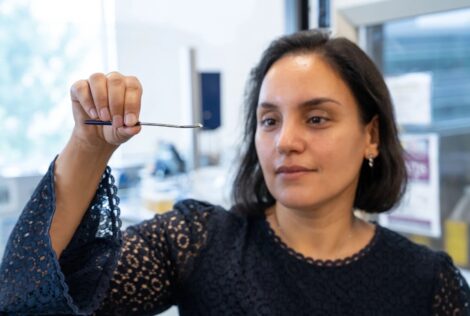
As part of CHCH’s special McMaster broadcast, Engineering Physics professor Leyla Soleymani was interviewed about the next-generation wearable sensors that she is building to help detect disease and monitor health in real time.
Watch Leyla’s segment on CHCH to learn more about this work.
These McMaster researchers are using 3D-printed sugar similar to cotton candy to help preemies breathe
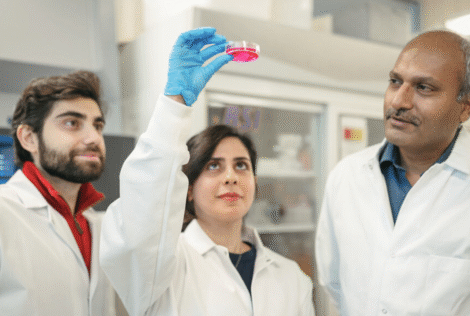
A team of researchers at McMaster University led by Ravi Selvaganapathy have outlined a new manufacturing process for microfluidic oxygenators, bringing improved artificial lungs for premature babies one step closer to reality.
Read more about the team’s work in The Hamilton Spectator.
Surprise discovery leads Hamilton researchers to develop new IBD treatment
Researchers from the Faculty of Engineering and the Faculty of Health Sciences, including Zeinab Hosseinidoust, worked together on a targeted approach using bacteriophages to disarm harmful microbes without disrupting the broader gut ecosystem.
Read more about this cross-faculty research in The Hamilton Spectator.
Artificial intelligence in universities
Mike Welland, associate professor of Engineering Physics, joined CBC’s The Current as an expert on artificial intelligence to discuss how AI is transforming university education.