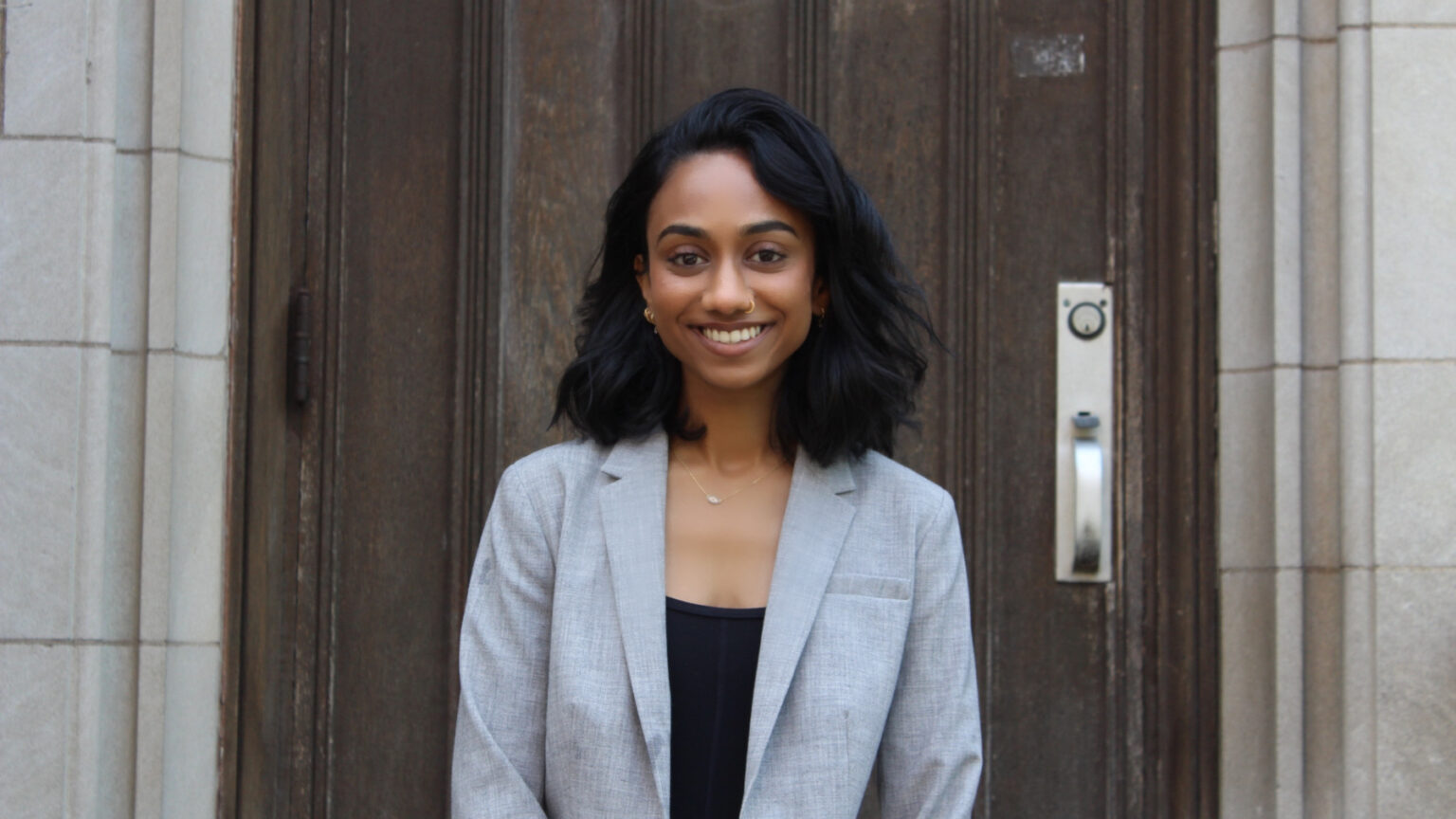
Thashmini Suthakaran ’24 never planned on a career in nuclear. She envisioned a fairly traditional path for herself until a co-op placement helping build one of the most ambitious infrastructure projects in the country changed everything.
A graduate of McMaster’s Civil Engineering program, Thashmini now works as an Assistant Technical Engineer at Ontario Power Generation (OPG), one of McMaster Engineering’s longtime co-op partners, where she’s part of the team bringing a Darlington SMR (small modular reactor) project to life an an Infrastructure Engineer. The Darlington SMR is the first new nuclear station in Canada in more than 30 years. The total output of this project would be 1,200 megawatts; enough electricity to reliably and safely power about 1.2 million homes. It’s the kind of project, she says, that most civil engineers only dream of being part of and she gets a front-row seat to it, just two years into her career.
But ask Thashmini what she’s most passionate about, and the answer isn’t just concrete and cranes — it’s people. Whether she’s mentoring first-year students or reflecting on the McMaster community that got her through her toughest years, she’s just as invested in giving back as she is in building what’s next.
It’s rewarding when someone succeeds because of something you shared or taught them. Any way I can help someone, I’m happy to do it.
Can you tell us about your current role at OPG and what your typical day looks like?
I’m an Infrastructure Engineer at OPG, working on the new SMR project — we’re building the G7’s first small modular reactor, with the possibility of three more units to follow.
I started in this role two years ago, right after graduating. We do a lot of oversight engineering and my role focuses on the infrastructure side of the project: I oversee the design of underground utilities for the reactor, supporting facilities like warehouses, fabrication shops and the administration building, and larger structures including the turbine, service and control buildings.
Day-to-day, that means a lot of meetings with designers and contractors, reviewing and releasing design packages for construction, and reviewing non-conformance reports — a lot of owner-side engineering work.
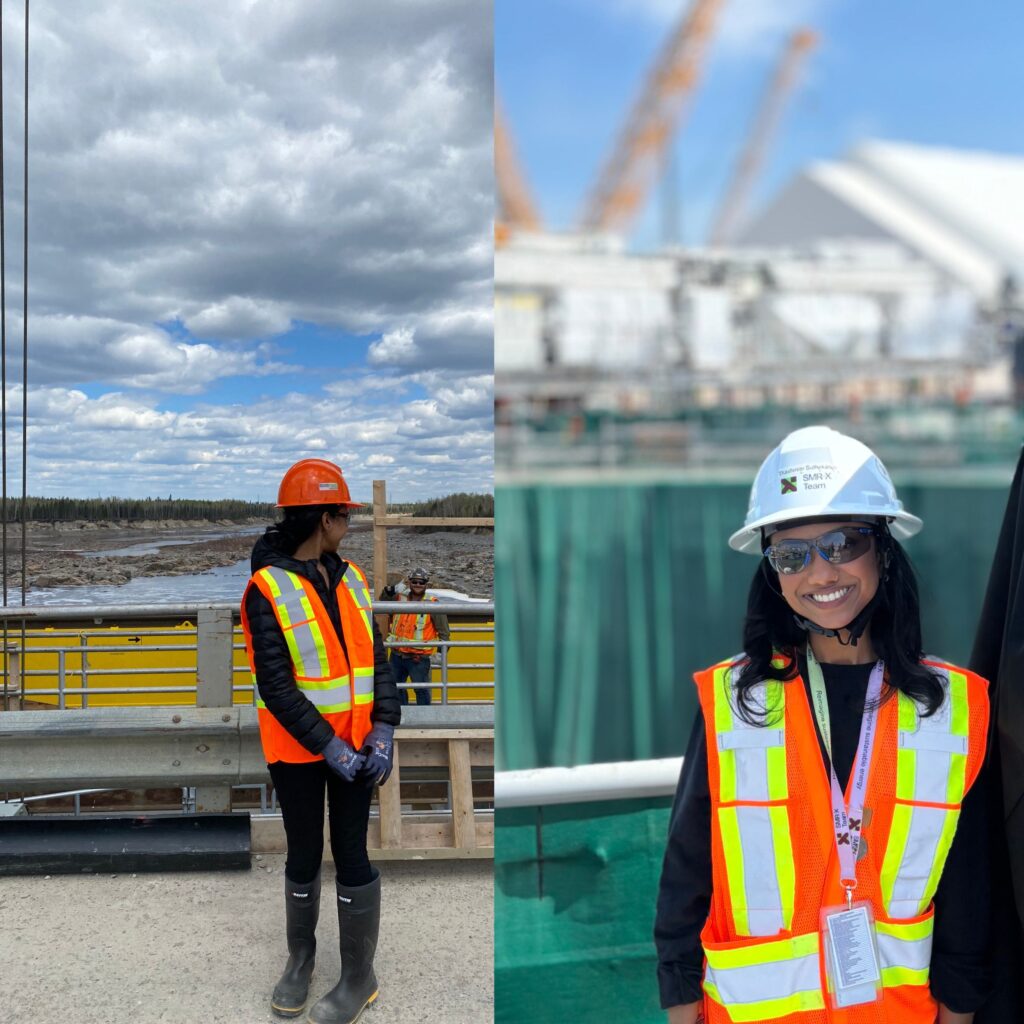
Thashmini at Darlington SMR project site
Can you tell us about your career journey and the experiences that led you to where you are today?
I never expected to end up in nuclear. I’ve always loved civil engineering and assumed that’s the direction my career would take.
I started at OPG during my internship in renewable energy, working on a dam refurbishment project north of Timmins — very civil-focused, lots of construction and site work. After that, I worked at CN Rail over a summer, focused on track engineering, including bridge refurbishments and railway infrastructure.
When I applied to return to OPG, I assumed I’d be going back into renewable energy. It wasn’t until the interview that I found out the role was actually for the Small Modular Reactor project. Nuclear engineering is incredibly safety-focused. Everything is done by the book.
I’m still doing civil engineering, but now it’s through a nuclear lens: it’s not just about building safe structures, it’s about protecting people and the environment.
I didn’t expect to be here, but I love it. It’s a huge project. People call it a civil engineer’s playground, and it’s true. There are massive cranes, large excavations — we’ve already moved the equivalent of about 25 football fields of soil, with more excavation still to come. It’s an amazing project to be part of.
How does it feel to be working on a project of this scale so early in your career?
It’s amazing — I get to see everything I want to see as a civil engineer. Concrete pours, caissons, so many aspects of construction that many engineers only experience over an entire career, and I get to see it all on one project. That’s really rewarding.
That’s also why, even two years in, I don’t want to leave. I’m happy here, and it’s been a great experience so far.
When you look back at your time at McMaster, what stands out to you the most?
The people, without a doubt. My friends, my professors, and the entire engineering community made McMaster such a welcoming place. I don’t think I would have made it through third and fourth year without the people around me. The professors were incredibly knowledgeable and always willing to help.
Engineering is challenging, so having people who support you makes all the difference. That’s what made McMaster such a great environment.
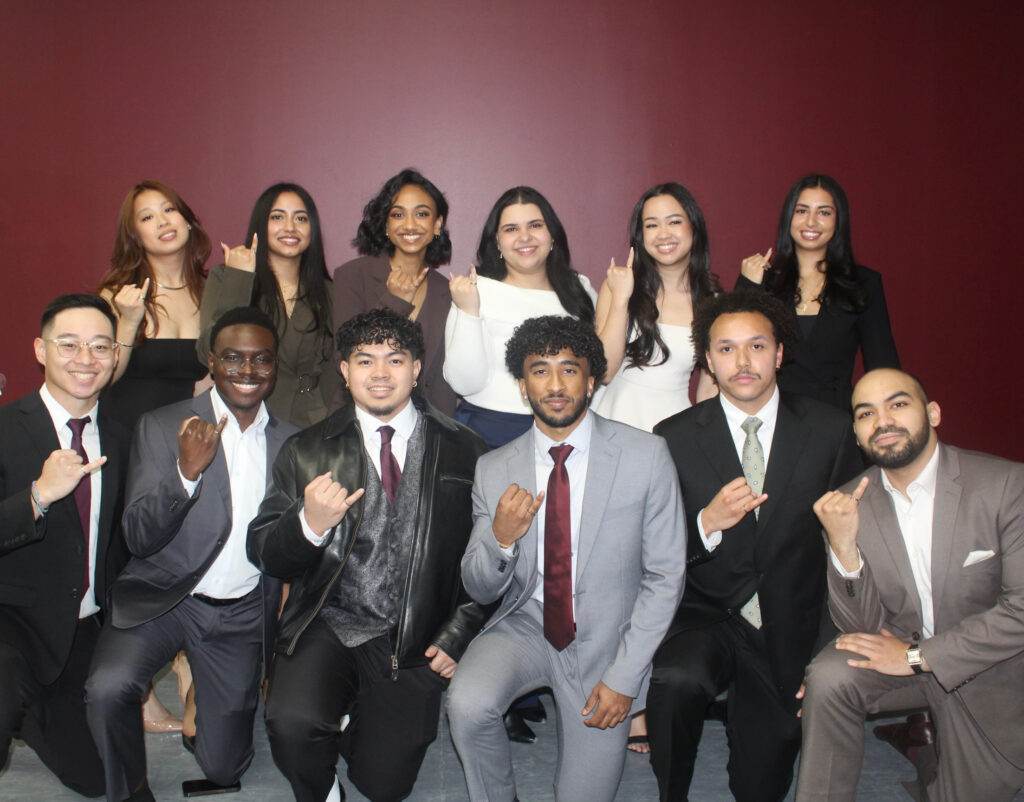
Thashmini with fellow McMaster Engineering graduates showing off their Iron Rings.
You were involved in ambassador and mentorship roles at McMaster. What inspired you to get involved outside the classroom?
I wanted to give back — that’s really all it was. When I first visited McMaster in Grade 11 for an open house, everyone was so welcoming. My cousin had gone there and encouraged me to visit, and I immediately noticed how much friendlier it felt compared to other campuses I’d toured. I had that same experience once I started engineering — everyone was willing to help, teach and support each other. Even though engineering is hard, everyone was going through it together.
By second year, I wanted new students to feel the way I had felt when I first arrived, so I took on mentorship roles to give that back.
What advice would you give your first-year self?
Join more clubs. I took on mentorship roles, but I never joined any design teams or technical clubs — I think I would have really enjoyed that, and it gives you valuable hands-on experience too.
I’d also tell myself not to stress so much about grades. First year is a lot — trying to get good grades, meet people, get involved and figure everything out all at once. It’s hard to get all of that right at once, so don’t put pressure on yourself to excel at everything.
Is there anything you wish you had known when you graduated and started your career?
I wish I’d been more open to opportunities. When you graduate, you’re mostly thinking, “just give me a job, any job is fine.” But being a civil engineer doesn’t mean you have to work at a structural engineering or consulting firm — you don’t have to choose the most stereotypical path. There are so many different paths available, and being open to the unexpected can lead you somewhere you never imagined.
As a recent alum still closely connected to McMaster, what advice would you give to current students or recent grads who want to stay engaged and give back?
If someone from McMaster reaches out to you, give back however you can. As a student, you’re mostly focused on your courses, finding a job and figuring out your future — but sharing your experience can really help someone else.
I’ve spoken on alumni panels about my role at OPG, and a lot of students have reached out afterward. I’m always happy to tell them exactly what I did to get here, because I want to see other McMaster students succeed. Keep networking, stay connected to the community, and share your experience whenever you can.
Is there anything else you’d like to share about your journey or time at McMaster?
Consider longer co-op placements. Completing a 12-month co-op was one of the biggest reasons I found success early in my career — a longer placement gives you so much more experience than a four-month term.
McMaster’s flexible co-op program made it easy for me to do a 12-month placement, come back for fourth year, and even do another summer co-op after that. It doesn’t matter if your degree takes an extra year — graduating with meaningful work experience is far more valuable than graduating with very little.
I’d also want engineering students to know there’s a whole world of opportunity in nuclear — even if you’re not studying nuclear engineering specifically.
There are roles for civil, mechanical and electrical engineers. It’s a growing industry entering a major building phase, so now is a great time to get involved.
My advice is to gain as much experience as you can during your degree — you’ll be much more prepared, and much more employable.
Alumni Blueprints is a Q&A series that highlights the journeys of exceptional McMaster Engineering alumni. Discover how they built their careers, from joining student clubs and teams to seizing co-op opportunities that ignited their passions during their undergraduate years. Our alumni share their unique stories and insights, offering a blueprint for success in their respective fields. Want to share your blueprint for success? Contact the Alumni Team at engalum@mcmaster.ca.