
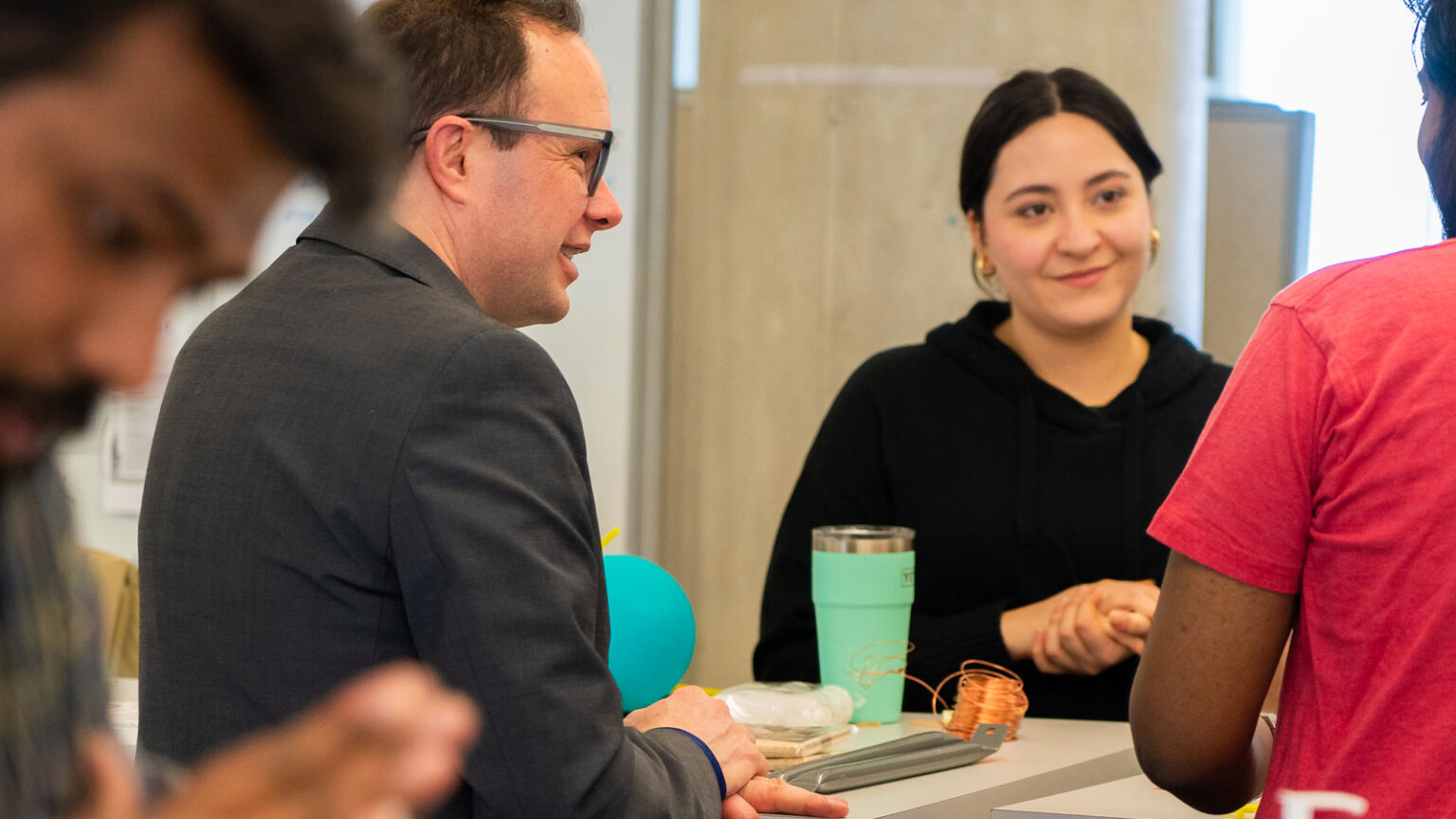
When Robert Fleisig took the stage as keynote speaker at the University of Guelph’s Teaching and Learning Innovations Conference this spring, he shared ideas that have been shaped by years of teaching McMaster Engineering students.
Fleisig, Program Lead for the Master of Engineering Design (MEng Design) program and Professor in the W Booth School, has spent his career exploring how students learn best — not by simply absorbing information, but by tackling complex challenges alongside community and industry partners. This model, which leverages community-engaged projects throughout a student’s education, is a central part of graduate programs within the W Booth School.
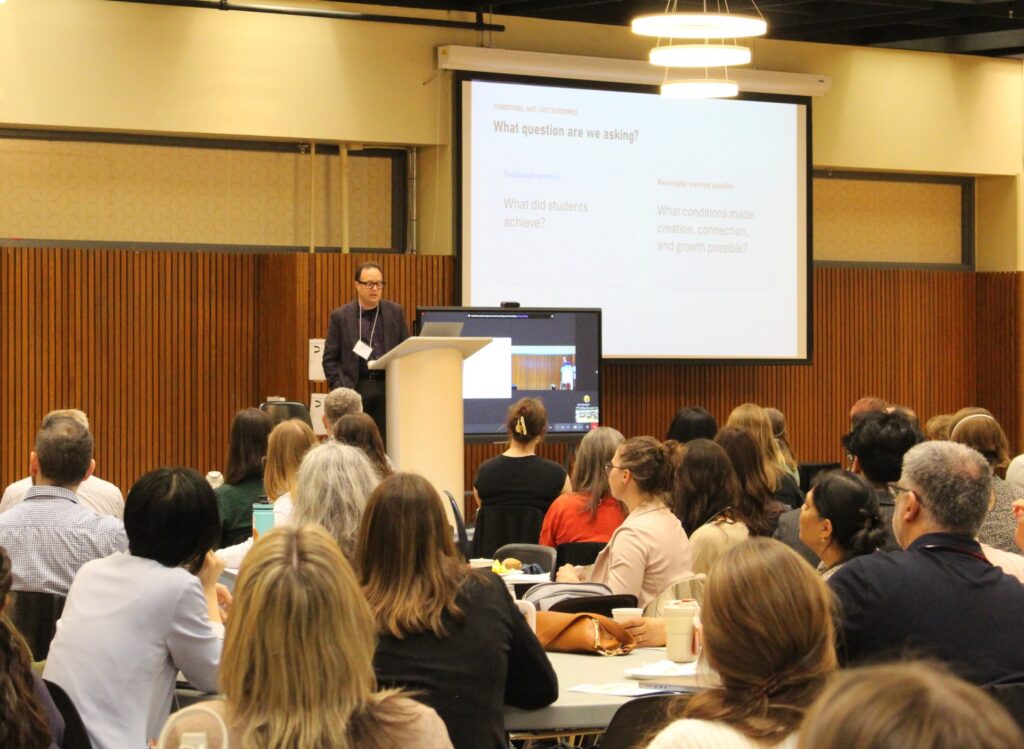
That’s why, in his keynote speech, Beyond Individual Achievement: Conditions for Meaningful Learning, he encouraged educators to think differently about how learning happens in collaborative environments.
“Being invited as the keynote speaker was a great honour and at the same time an exciting challenge,” says Fleisig. “I wanted to share the insights I’d gained over the years from teaching engineering design to first-year students, BTech students, MEng Design students, science graduates and health professionals. The central message was that the conditions instructors create for meaningful learning in complex settings are different from teaching for individual learning.”
Fleisig’s keynote explored how educators can create learning experiences that are meaningful, collaborative and lasting. “Meaningful learning in complex settings requires a shift from teaching for individual achievement to creating knowledge together through shared responsibility, multiple perspectives and real-world challenges,” he says.
A passion for helping others to learn
Helping students grow has always been at the heart of Fleisig’s work. That passion began long before he entered academia.
“I remember helping my sister succeed in her advanced math courses in high school,” he says. “She still tells me I was the only reason she passed those courses. I found that I liked helping people learn.”
Over the years, that early interest has evolved into an approach that encourages students to become independent thinkers by working through open-ended problems that rarely have a single right answer.
“Robert taught me that design thinking isn’t something you switch on for a project. He’d point at the most ordinary process, something I wouldn’t have otherwise called design, and show us the decisions buried inside it that someone made. After three courses with him I can’t stop seeing it.
“My understanding of what it means to teach students to think on their own has evolved,” he says. “It started with teaching tools, methods and processes to teaching ways of knowing. From heavy scaffolding of learning to leaving room for ambiguity in a measured way.”
How Fleisig perceives his students has also evolved. Rather than seeing them as the end users of a course, he now views them as active partners in the learning process. Similarly, community partners have evolved from serving as project clients to playing an important role in teaching, mentoring and coaching students throughout their learning journey.
Inspiring the next generation of engineers
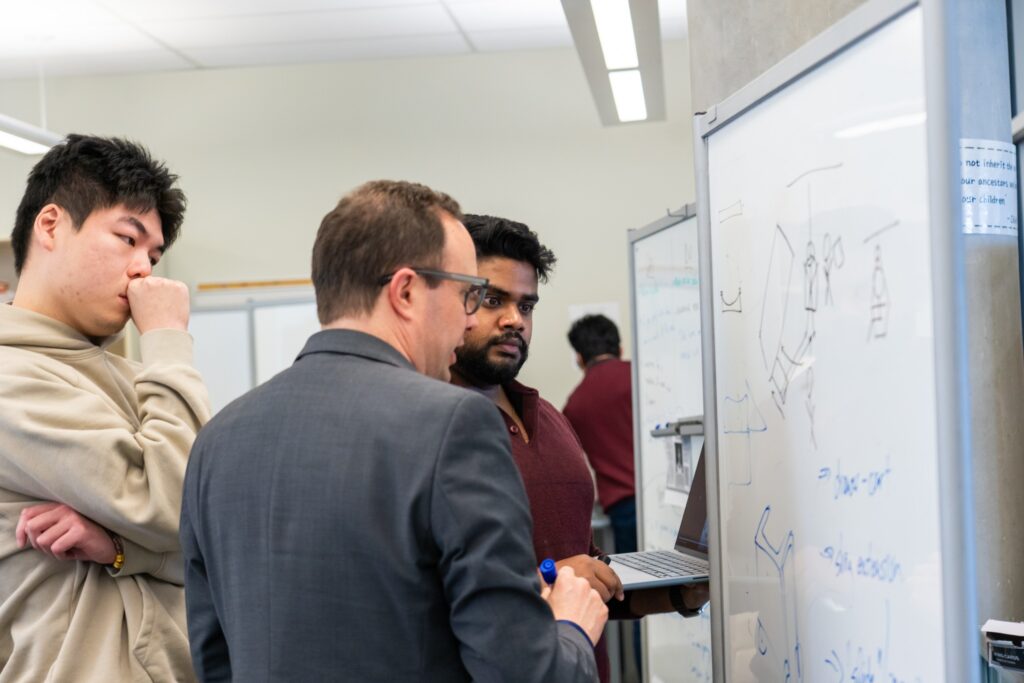
Fleisig’s passion for teaching and the effort he puts into his classes have not gone unnoticed by his students. Anthony Salahor, a 2024 graduate of the MEng Design program, describes Fleisig as a “passionate educator,” an “expert in design thinking” and a “profound influence” in his own professional journey.
“Robert consistently finds creative ways to teach the core principles to students from a wide range of backgrounds through intuitive, engaging and thought-provoking exercises that make complex concepts both accessible and impactful,” he says.
“I consider myself incredibly fortunate to have learned from him in multiple courses. He genuinely cares about his students’ growth, understanding and development as critical thinkers.”
Robert’s human-centred design perspective has genuinely changed the way I approach problems. Rather than giving answers directly, he works through problems with you, asks thoughtful questions, and provides the guidance you need to find the solution yourself.
Learning through real-life challenges
A cornerstone of the MEng Design program is an eight-month interdisciplinary community-engaged project, where teams of two or three students work with external partners to solve complex design challenges. Rather than following a prescribed path, students collaborate with community and industry partners who act as clients, coaches and co-designers throughout the project. Project partners have included St Joseph’s Healthcare Hamilton (SJHH), Invisible Care, a Hamilton based wellness company and The City of Hamilton.
According to Fleisig, the project is a “deeply collaborative effort” that spawns outcomes that are “surprising, exciting and always creative.”
The program also challenges students to think beyond technical solutions.
“People aren’t engineering problems and can’t be thought of as engineering problems,” he says. “We teach students how to empathize, how to learn what people really want and need, and how to put this knowledge into action by testing it with prototypes.”
One project that stands out to Fleisig involved a local long-term care home seeking to redesign a mechanical lift used to transfer residents between beds and wheelchairs.
Rather than jumping straight to redesigning the equipment, Fleisig and his students spent time observing staff, interviewing the workers and experiencing the lift themselves. By questioning the original assumptions behind the problem, the team uncovered a solution that didn’t require redesigning the lift at all.
“I still remember the COO’s surprise when she said, ‘Why didn’t we think of that?,” Fleisig recalls.
Looking ahead, Fleisig believes engineering education will continue to evolve alongside emerging technologies such as generative AI. While new tools will shape the profession, he believes creativity and human-centred design will become even more important.
“We have the opportunity at the W Booth School to be leaders at this intersection of technology, creativity and education,” he says.
Robert Fleisig was recently featured by the Office of the Provost & Vice- President (Academic) in its series highlighting the impact of teaching-stream faculty across McMaster University.
Whether you’re interested in pursuing a Master of Engineering Design degree or partnering with our students on a community-engaged project, we’d love to connect. Learn more about the Master of Engineering Design program or explore opportunities to partner with our students on a community-engaged project.
DIVE DEEPER
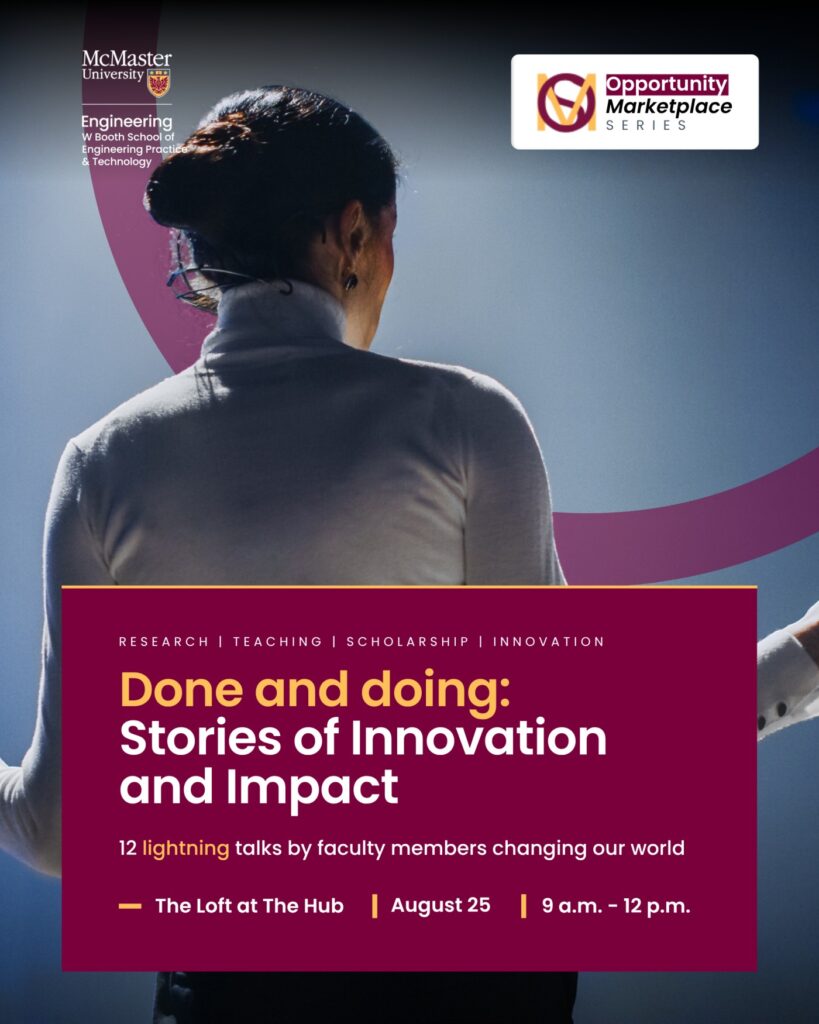
Learn how community-engaged projects are transforming teaching and learning at this year’s Opportunity Marketplace on August 25, 2026.