
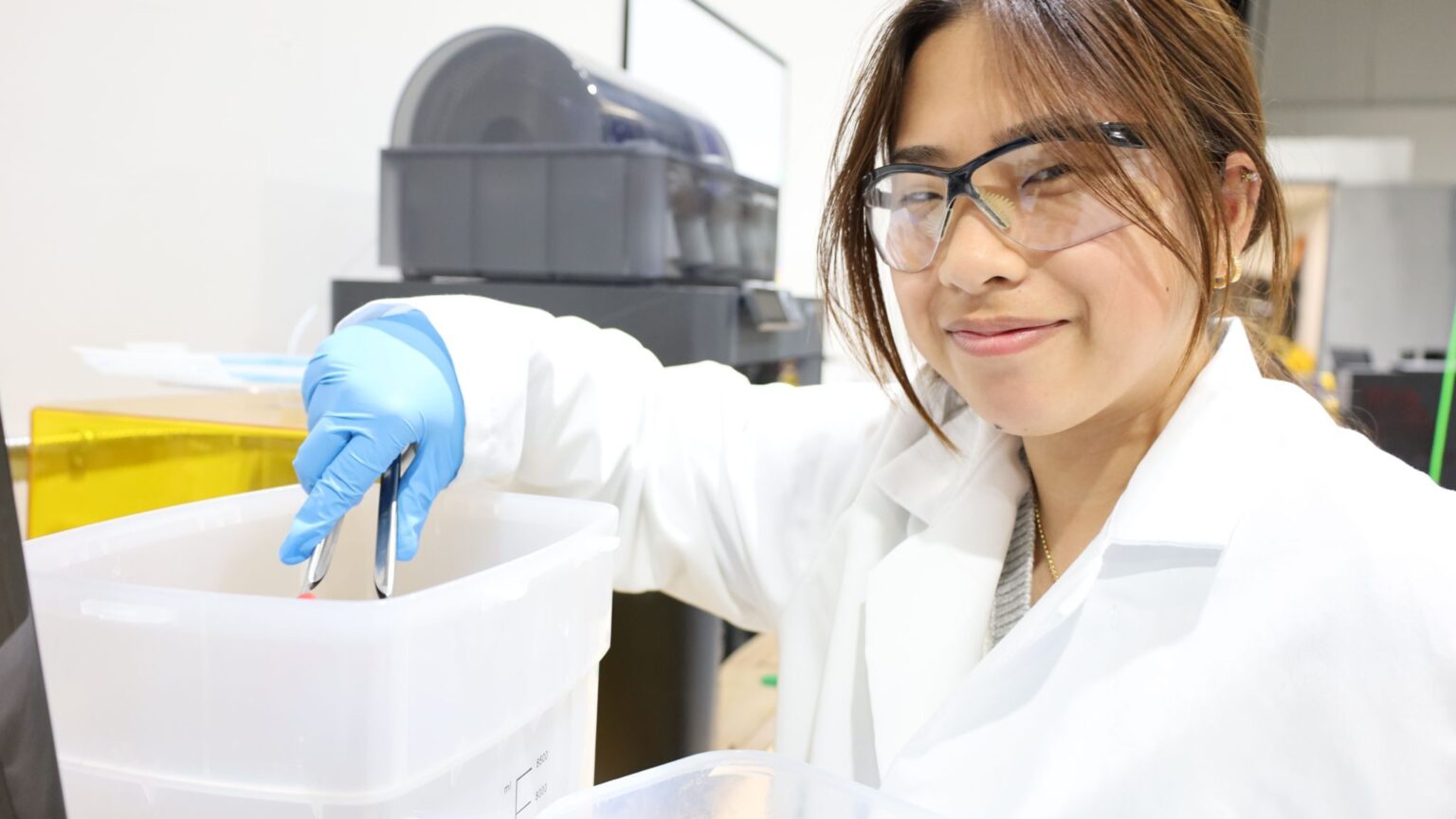
Mechanical Engineering graduate Sandy Diep ’25 works at Riganelli Engineering as a design engineer, where she contributes to product development projects spanning CAD design, prototyping, testing and full-cycle manufacturing. The role reflects a skill set built on hands-on problem solving and a strong interest in transforming ideas from conception to reality.
Her foundation at McMaster University was shaped by experiential learning and student communities. Diep spent much of her undergraduate years with the McMaster Solar Car Team, progressing from general member to sub-team lead and gaining experience in large-scale, multidisciplinary engineering work. She has remained involved post-graduation as an advisor, continuing to support the team.
Diep also worked as a teaching assistant for ENGINEER 1P13 and participated in mentorship initiatives through Women in Engineering and Women in STEM, reflecting a strong commitment to supporting other students.
From the outside, engineering can seem very technical, but a lot of the most meaningful parts of my journey have come from collaboration, mentorship and community and that’s something I still carry forward in my career today.
Can you tell us about your current role and the kind of work you do as a design engineer?
My work as a design engineer includes a wide range of product development and design projects. Depending on the client, the projects can range from simple injection-moulded parts to complex industrial systems.
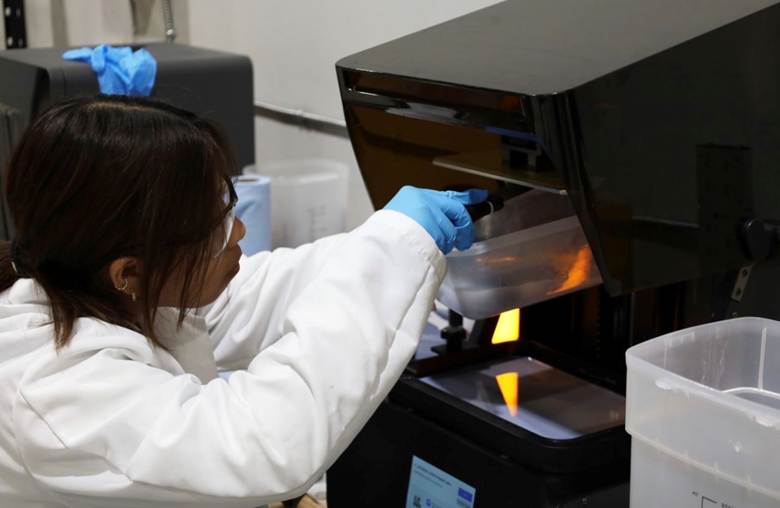
Sandy working on designs and prototypes at Riginelli Engineering.
I enjoy working at a smaller company as it gives me exposure to many different areas of engineering. While my role is primarily focused on mechanical design, I’m also involved with electrical integration and software-related work depending on the project. My work includes designing parts and assemblies, running Finite Element Analysis (FEA) simulations, creating manufacturing drawings, building and testing prototypes and maintaining project documentation.
One of my favourite parts of the role is being involved in the full project lifecycle, from early CAD concepts through fabrication, testing, troubleshooting and refinement. With strong in-house prototyping resources, the work is very hands-on and collaborative. I’ve also valued the mentorship at the company, especially working closely with founder Marcus Riganelli, another McMaster Engineering graduate, whose approach to engineering, leadership and problem-solving has been incredibly valuable early in my career.
Can you talk about your career journey and some of the experiences that led you to this role?
When I first started university, I was quite shy and hesitant to join clubs or teams, especially since my first year was online during the COVID-19 pandemic. Over time, I met people who really shaped my experience and encouraged me to step outside my comfort zone.
My first co-op was with the STEAM Project, where I worked as an instructor and project designer. That role combined creativity, teaching and hands-on fabrication and helped me realize how much I enjoyed design work and bringing ideas to life. After that, I completed a 16-month internship at L3Harris Technologies WESCAM as a project engineer, where I worked on fast-paced engineering projects in a large corporate environment. I also learned a lot from strong mentorship and developed my leadership and organizational skills.
Toward the end of that internship, I joined the McMaster Solar Car Team, which became a major turning point. It exposed me to large-scale engineering collaboration and hands-on problem solving beyond the classroom.
I think what fully solidified my interest in design engineering was my final-year capstone project, where my team designed a PET filament pre-processing system to turn recycled bottles into 3D-printing filament. Helping it come to life was incredibly rewarding and confirmed that this was the path I wanted to pursue.
When you look back at your time at McMaster, what stands out to you the most?
The biggest thing that stands out to me is the community. Some of my closest friends today are people I met through first-year labs, the Solar Car Team and co-op experiences.
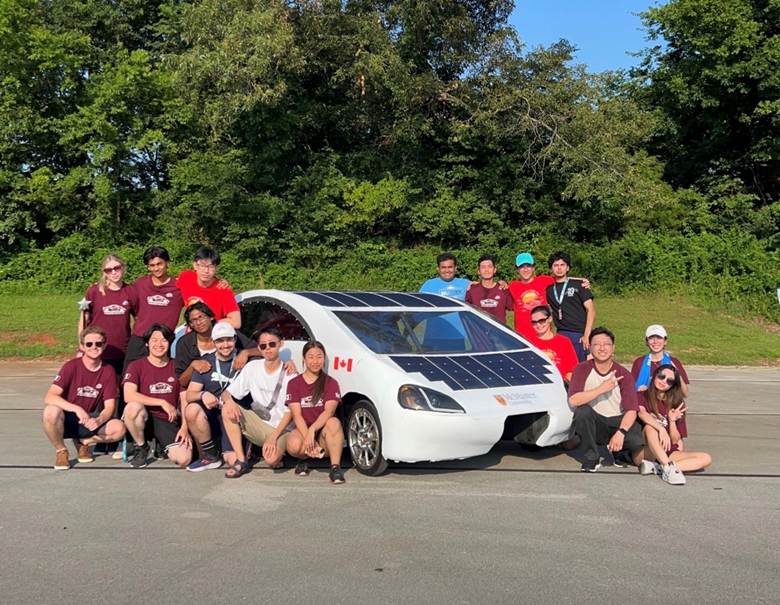
The McMaster Solar Car Team.
McMaster really has a collaborative environment and being surrounded by motivated and supportive people made a huge difference in my university experience. A lot of my best memories came from late nights working on projects, team meetings, preparing for competitions or even sitting on calls struggling through assignments together.
Beyond the technical skills, McMaster gave me a strong sense of community and introduced me to people who continue to influence both my professional and personal life.
You were heavily involved with the McMaster Solar Car Team during university. What was that experience like and what kinds of projects and roles were you involved in?
The Solar Car Team is easily one of the most memorable parts of my time at McMaster. I started as a general member on the solar cell sub-team, working on the electrical side of the project.
Even as a mechanical engineering student, that experience pushed me outside my comfort zone and gave me exposure to PCB integration, wiring and electrical systems. It also helped me understand how closely different disciplines work together on large-scale engineering projects.
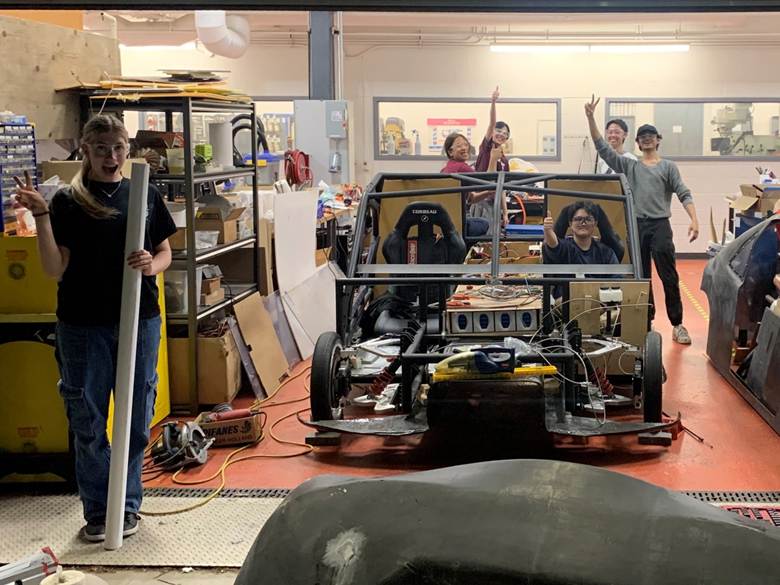
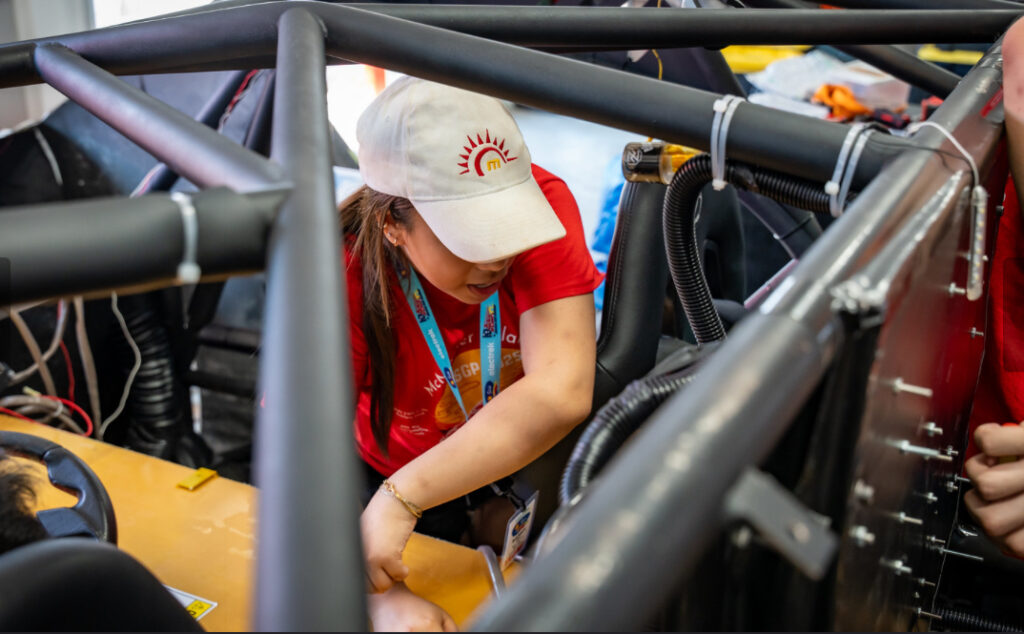
Late night solar car work session in the Gerald Hatch Centre.
Some of my early work included building curved panel prototypes, designing junction boxes, soldering and installing solar cells and helping with solar array layout using SolidWorks. Later, I became the sub-team lead, where I led meetings, coordinated work and supported integration and documentation. Beyond the technical work, it taught me a lot about communication, leadership and teamwork.
Even after graduating, I’ve stayed involved as an advisor, helping with recruitment, design input and documentation support.
Were there any other clubs and teams that you were a part of?
Solar Car was the biggest part of my university experience, but outside of that I was also heavily involved in mentorship and teaching roles.
I worked as a teaching assistant for ENGINEER 1P13 for most of my degree, supporting first-year students through CAD labs, project work and other introductory engineering activities.
I was also involved in mentorship initiatives through McMaster Women in STEM, Women in Engineering and the Engineering Society. Those experiences were meaningful because I got to see how much guidance and encouragement can shape students early in their academic journey.
I’ve benefited so much from people who took the time to support me, it is only right to do the same thing for others.
I often get messages from former mentees and even students I’ve never met, asking for advice on resumes, interviews or career paths. When I can, I try to help, because I’ve benefited so much from people who did the same for me and I always want to pass that forward.
Have you considered other ways of giving back to the community in the future, beyond mentorship or advising?
Mentorship has been the biggest part of it for me, through Women in STEM, Women in Engineering, the Engineering Society, TA roles and informal support. I’ve realized how impactful small acts of guidance can be for students and new graduates.
Moving forward, I want to continue focusing on that. I’m especially passionate about encouraging more women-identifying students to feel confident pursuing technical fields and leadership roles in engineering. I think representation and supportive environments make a big difference and I’ve been lucky to have mentors who reinforced that for me throughout my own journey.
What advice would you give to your first-year self?
I would tell myself not to worry so much about having everything planned out immediately. Some of my best experiences came from trying things I was initially unsure about, whether that was joining teams, meeting new people or applying to opportunities I didn’t feel fully qualified for. Those experiences ended up being far more valuable than sticking to a perfectly structured plan.
What would you say to students or new graduates who are unsure about their career path?
I’d remind myself that careers develop over time and not everything happens all at once. Early on, it’s easy to feel pressure to know exactly what kind of engineer you want to be and to compare yourself to others who seem like they have it all figured out.
But every experience builds different skills and perspectives and those tend to become valuable later. Everyone’s path looks different and things do eventually fall into place. I’d also say it’s important to keep investing in relationships and mentorship, because the people you meet in university and early in your career end up shaping your growth in meaningful ways.
Alumni Blueprints is a Q&A series that highlights the journeys of exceptional McMaster Engineering alumni. Discover how they built their careers, from joining student clubs and teams to seizing co-op opportunities that ignited their passions during their undergraduate years. Our alumni share their unique stories and insights, offering a blueprint for success in their respective fields. Want to share your blueprint for success? Contact the Alumni Team at engalum@mcmaster.ca.