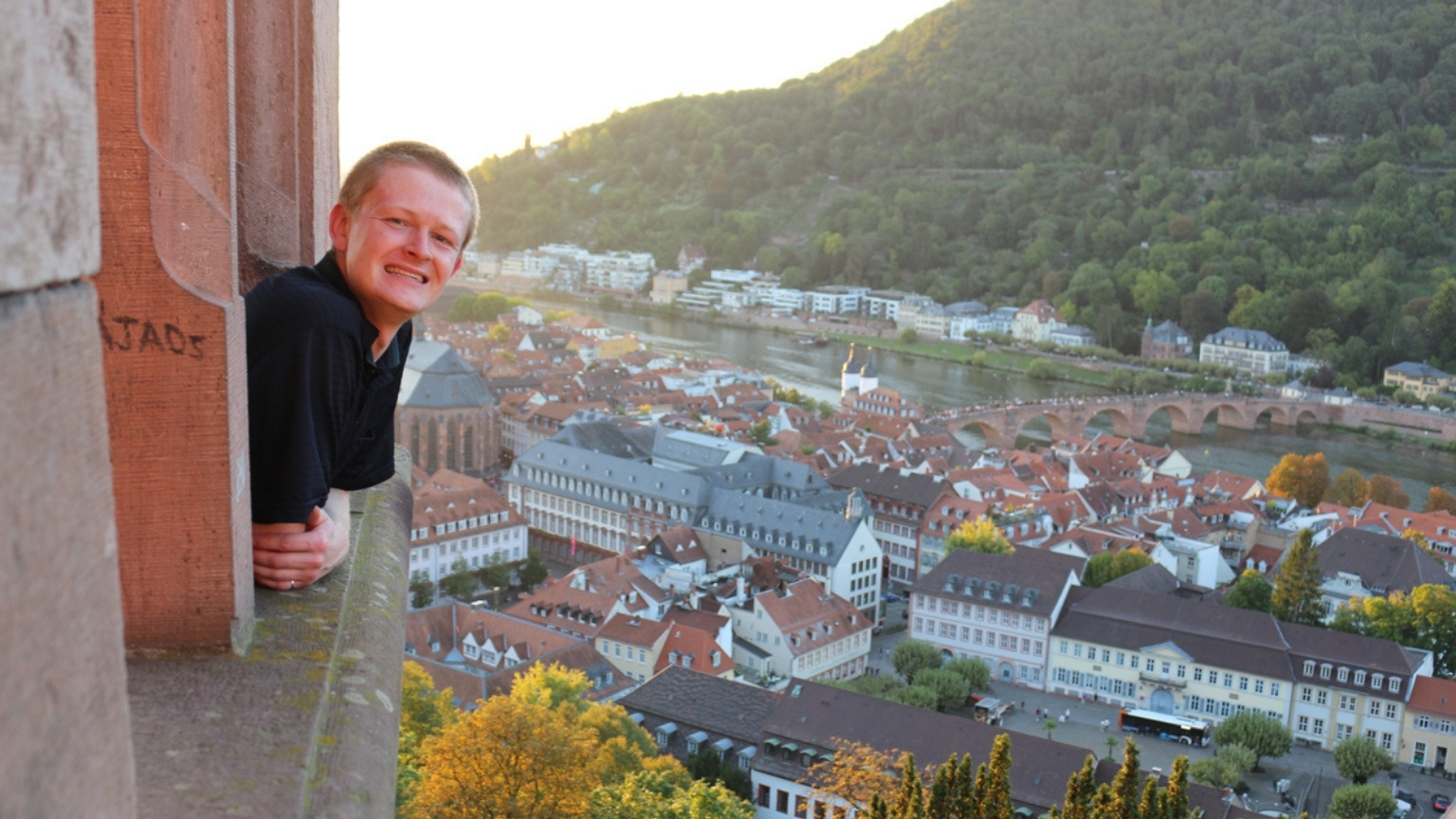
Hi everyone! My name is Chris Schankula. I am a second-year PhD student in computer science here at McMaster, as well as a graduate of the Software Engineering & Society Class of ‘22 here at Mac! I am so grateful to have the opportunity to share more about the prestigious Heidelberg Laureate Forum in Heidelberg, Germany that I attended.
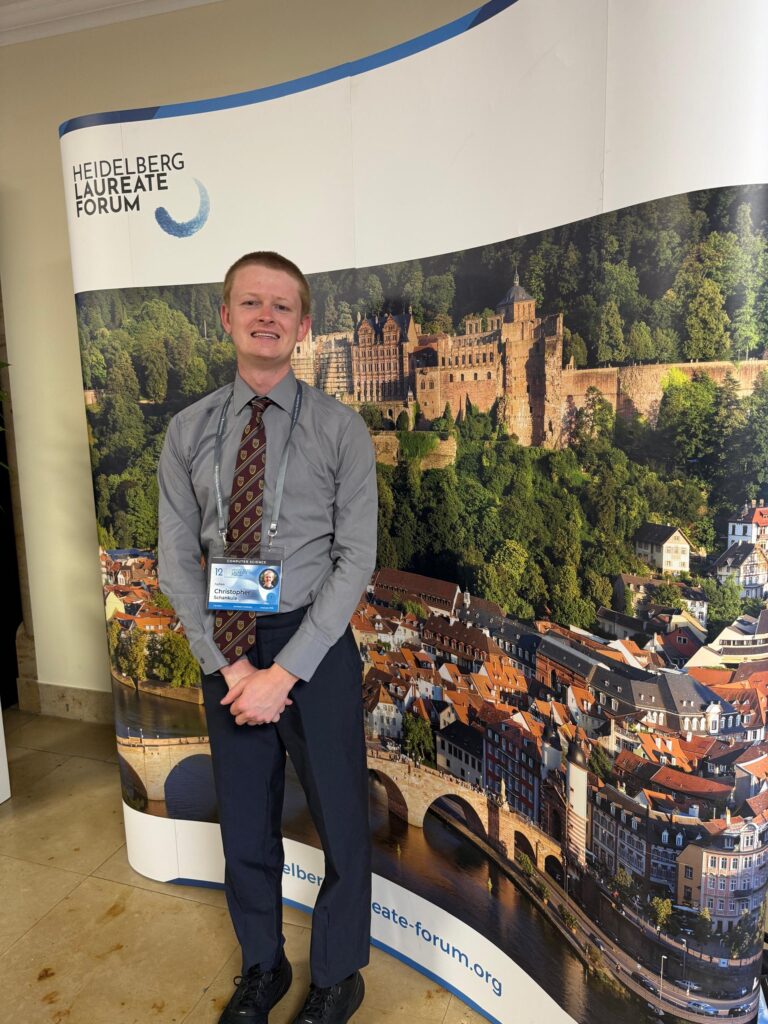
What is the Heidelberg Laureate Forum?
Firstly, I think it’s useful to define what a laureate is. A type of laureate most people have probably heard of is a Nobel Laureate. These are people who have won the Nobel Prize before in some discipline. In a similar fashion, Heidelberg laureates are winners of top prizes in the computer science and mathematics fields, including awards like the Association for Computing Machinery (ACM) Turing Award, the ACM Prize in Computing, and the Fields Medal in the mathematics field.
The Heidelberg Laureate Forum (HLF) is a yearly gathering of these laureates and a group of selected young researchers, which consists of mostly PhD and master’s students, but also early-career faculty and even some early-career software professionals working in the private sector. This past year, 208 young researchers were selected from over 50 countries, including myself and one other student from Mac! Each of us was invited to travel to Heidelberg, Germany, a city of about 163,000 people, or about 1/3rd the size of Hamilton. The Forum is hosted annually at Universität Heidelberg (Heidelberg University), the oldest university in Germany, having been founded in 1386! This past year 28 Laureates joined the conference, along with family members or other guests of the laureates, as well as media and dignitaries.
How I got involved
I got involved because I am an Association for Computing Machinery (ACM) Student Member, and one of their newsletter emails advertised the upcoming Forum and encouraged young researchers to apply. Though I knew it would not be easy to be accepted at such a prestigious event, I applied anyway knowing I definitely wouldn’t be accepted if I didn’t try!
Applications run from mid-November until early February each year. The application process is pretty straightforward, and involved telling them about you, your research and leadership interests, and what you hope to get out of the Forum, among other questions. They also require at least one letter of reference from someone who can knowledgeably compliment your application, your research, and your character.
To my great pleasure, in late April, I found out that I had been accepted to go! All successful applicants are provided with a one-week’s accommodation and food during the conference. For those requiring travel support and who are unable to get it from a local funding agency, they can also apply to the Heidelberg Laureate Forum Foundation (HLFF) for support. This means that the HLF is accessible to anyone, regardless of their walk of life, which I think is the true power of the Forum. I was fortunate to receive travel funding through the HLFF and to be chosen to receive the basic HLF funding through the Abbe Grant from the Carl Zeiss Foundation. The Carl Zeiss Foundation is the non-profit set up by Ernst Abbe in Zeiss’s memory and is sole shareholder of the Carl Zeiss and Schott companies. The non-profit invests a portion of the profits from the companies into scientific research every year through research grants and grants like this one.
My week in Heidelberg
The HLF, being a forum, is unlike other conferences I have been to. Though there were the usual lectures and talks you’d expect from a conference, the focus was on networking. Every day was full of coffee breaks, lunches, dinners, small group sessions, and parties, all aimed at giving the young researchers and laureates time to network and impart knowledge and experiences, in both directions.
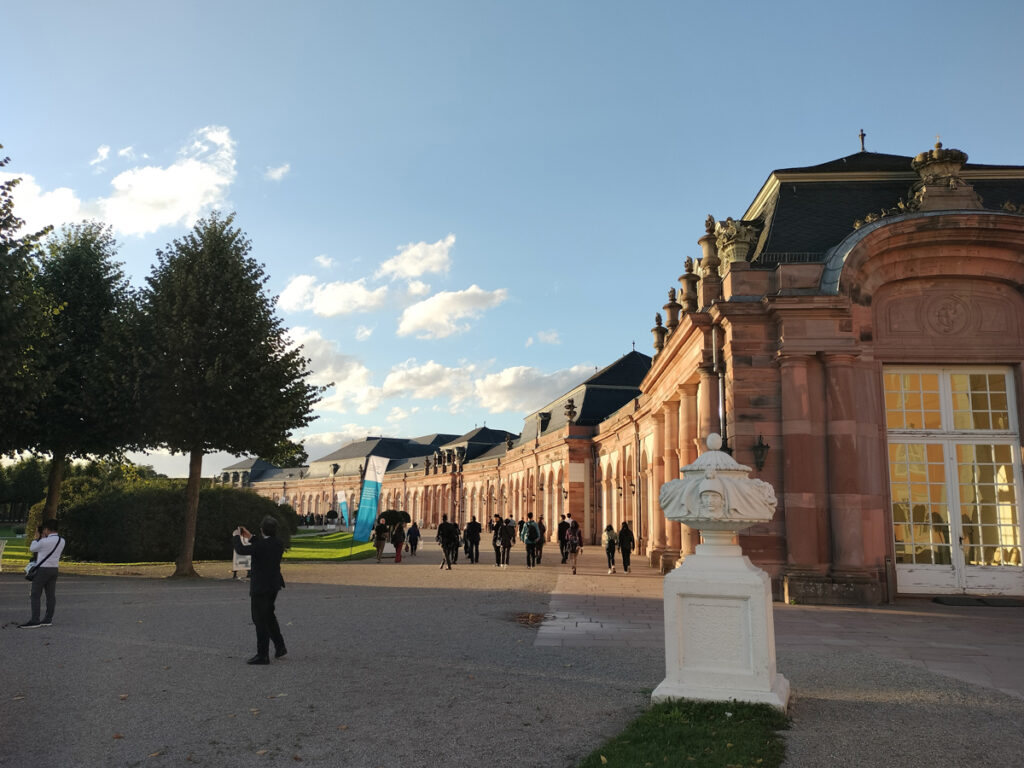
The first night was a Welcome Dinner at the beautiful Schwetzingen Palace, not far from Heidelberg. The palace itself had large sprawling gardens and beautiful fountains, having been home to many kings and queens over the centuries. It was the first example of some of the beautiful events in which we would partake throughout the week, events that would let us explore the history of Germany and Europe.
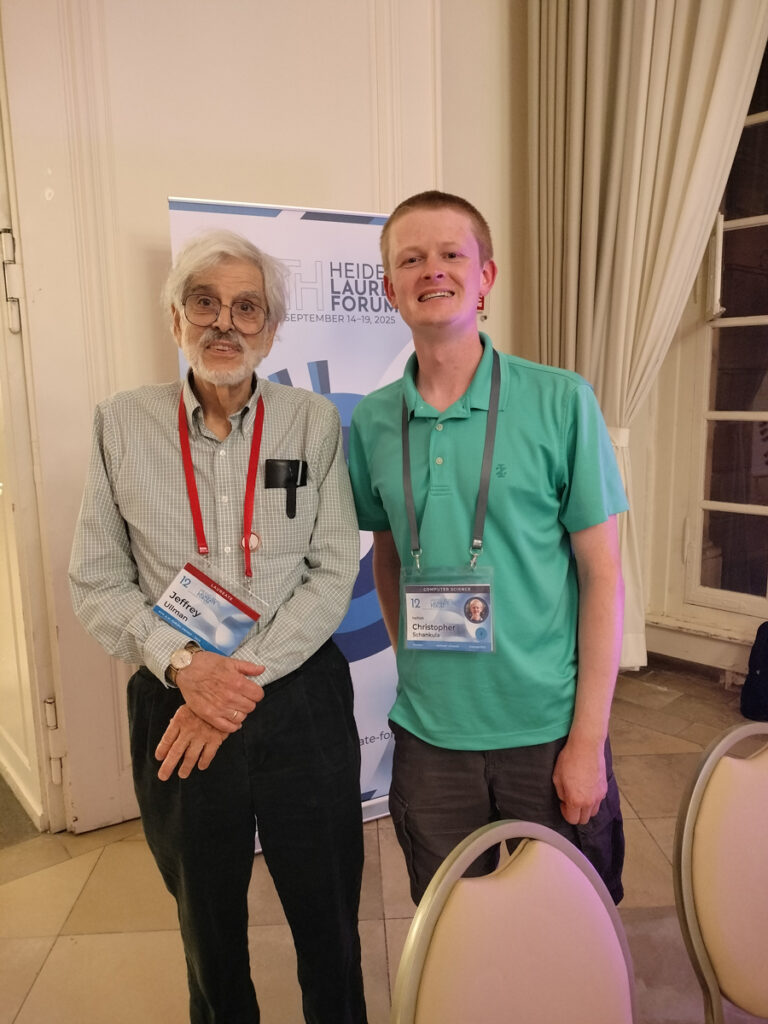
Each table at the dinner had a Laureate who was there to meet and talk to throughout the night. I had the pleasure of sitting beside Dr. Jeffrey Ullman, the 2020 Turing Award winner for his work in pioneering elements of algorithms, formal languages, compilers and databases. He spent the evening answering questions and giving us math riddles, which took my table group of young researchers embarrassingly long to solve!
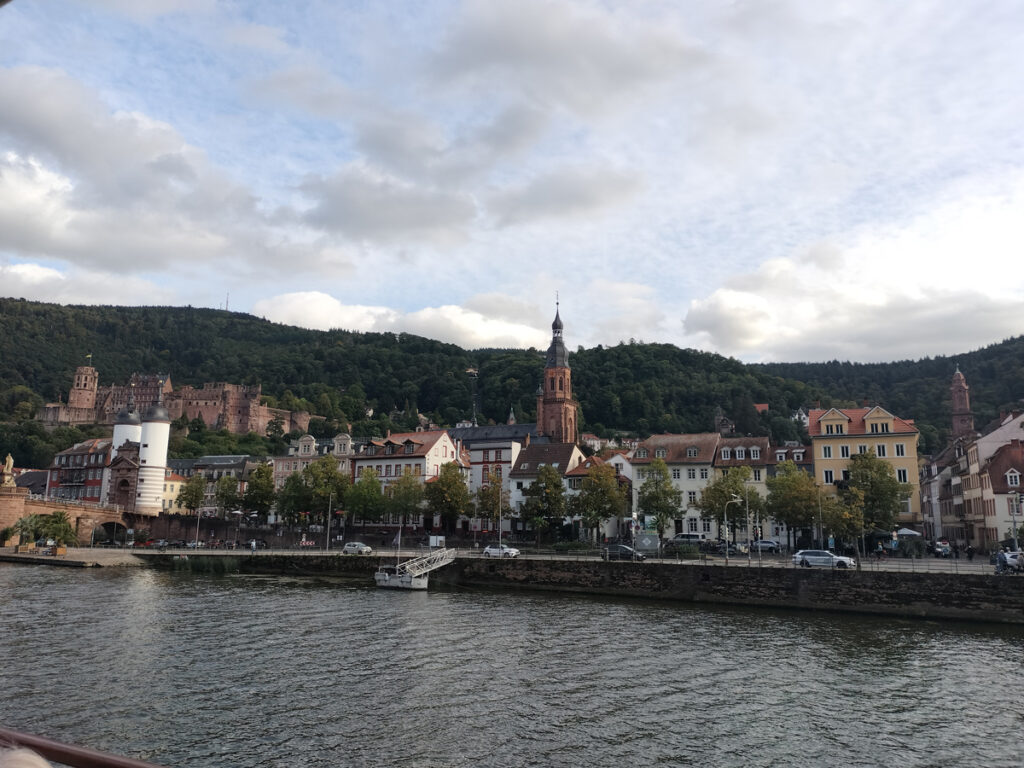
On the third day, we were taken on a beautiful boat trip up and down the Neckar River which runs through the heart of Heidelberg. This was an opportunity to network with the laureates and other young researchers, since, as one of the MCs put it, “no one can run very far on the boat!” During this time, and throughout the week, I made it my personal goal to talk to as many of the laureates as possible. In one of the many examples of how well-organized and well-thought-out the Forum was, we were given at the start of the week a copy of Masters of Abstraction, a photo book containing beautiful black-and-white images of each of the laureates. Myself and the other young researchers were encouraged to use this photo book to gather signatures from the laureates. In total, I was able to gather 22 signatures in the book! While I fell shy of my goal of talking to and getting the signature of every laureate in attendance, I still consider this a great achievement. I hope to keep adding to my book of signatures in the future!
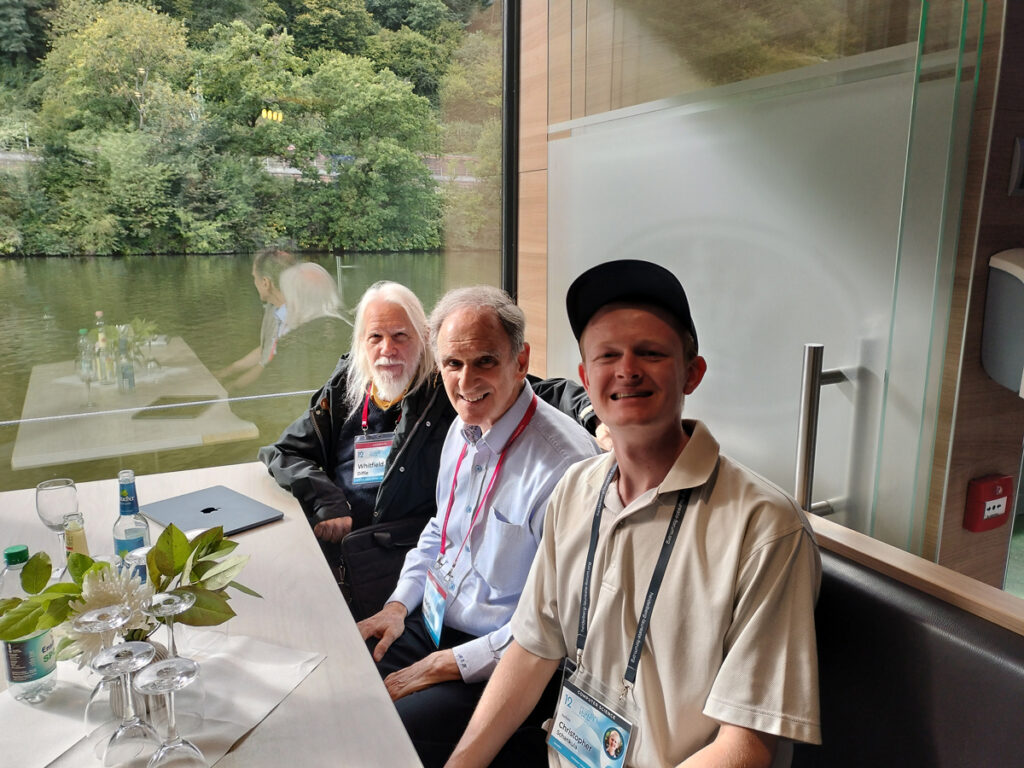
While I consider myself sociable, it is still not necessarily very natural for me to walk up to people cold and begin talking to them, but this is exactly what the Forum is all about! Each of the laurates was very gracious and willing to spend time with the young researchers. Some of the highlights were conversations I had with Drs. Martin Hellman and Whitfield Diffie, the inventors of Diffie-Hellman cryptographic key exchange, the algorithm that every device uses to store and transmit data safely; Dr. Madhu Sudan, the 2002 Nevanlinna Prize winner for his work in checkable proofs; and Dr. Leslie Valiant, the 2010 Turing Award winner for his work in the theories behind machine learning. In the case of Dr. Valiant I was able to go to a lecture by him in a small tutorial room with only about 10 people. His talk about the idea of educability in machine learning was extremely informative, and I reflected on how lucky I was to be in such a small session with a world-renowned Harvard professor.
Each of these conversations was very enlightening and they went way beyond simple theory. The topic of how our society may move forward given the advent of AI was an almost ubiquitous conversation everywhere you turned throughout the week. It was also interesting to see how these laureates are spending their time now. Some of them are still working in the fields for which they received the awards, but others are using their influence to help solve larger social issues like limiting nuclear proliferation.
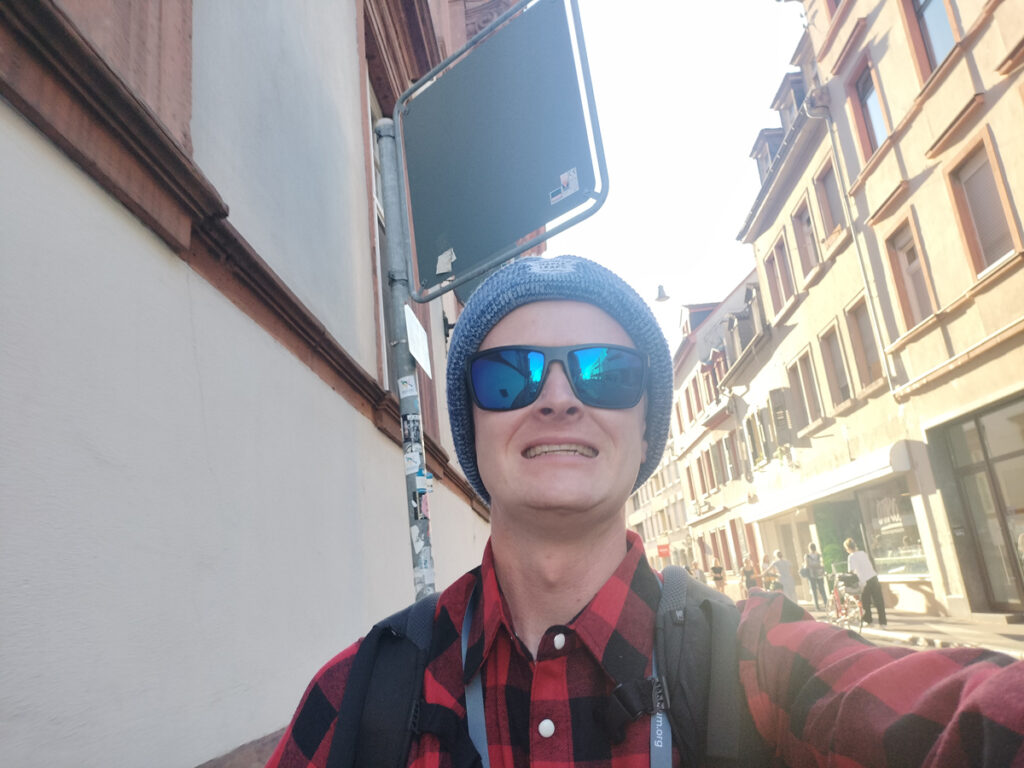
There were several other highlights, and I’ll just share a few. The first one was the Baravian dinner, where everyone is invited to dress in traditional clothes from their countries. During this, I had some fun, dressing as a stereotypical Canadian lumberjack complete with red buffalo plaid, jeans, and a Maple Leafs toque! This outfit was very hot on what was unluckily the hottest day of the Forum (26ºC!).
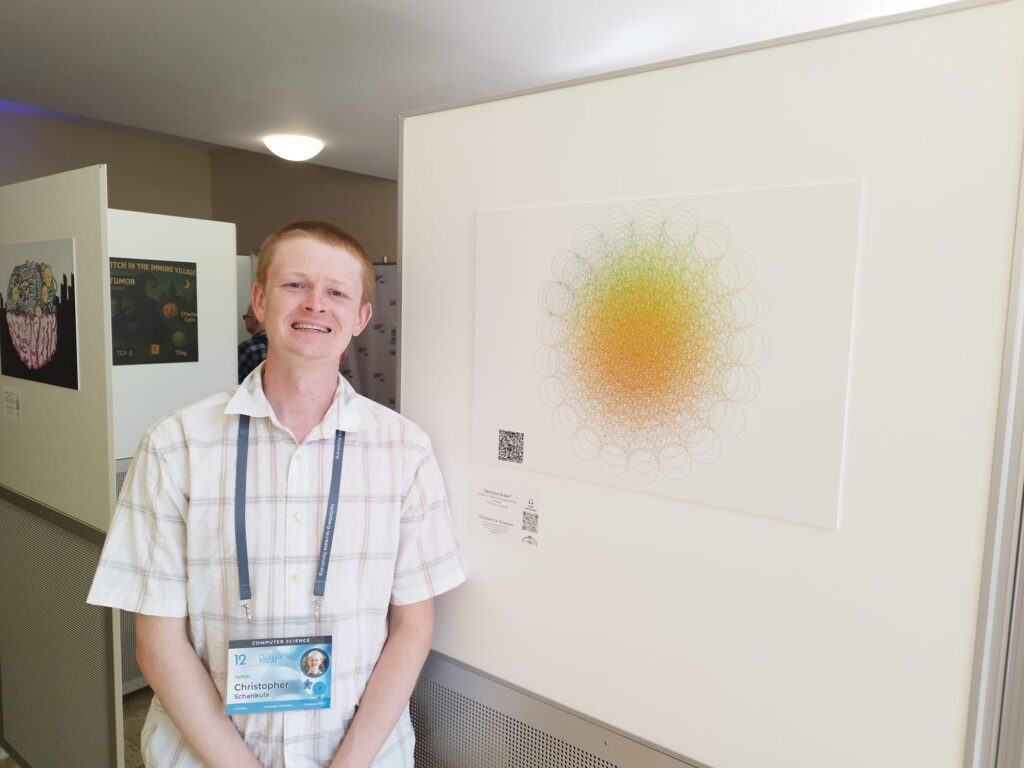
Created using recursive functions in the Elm programming language.
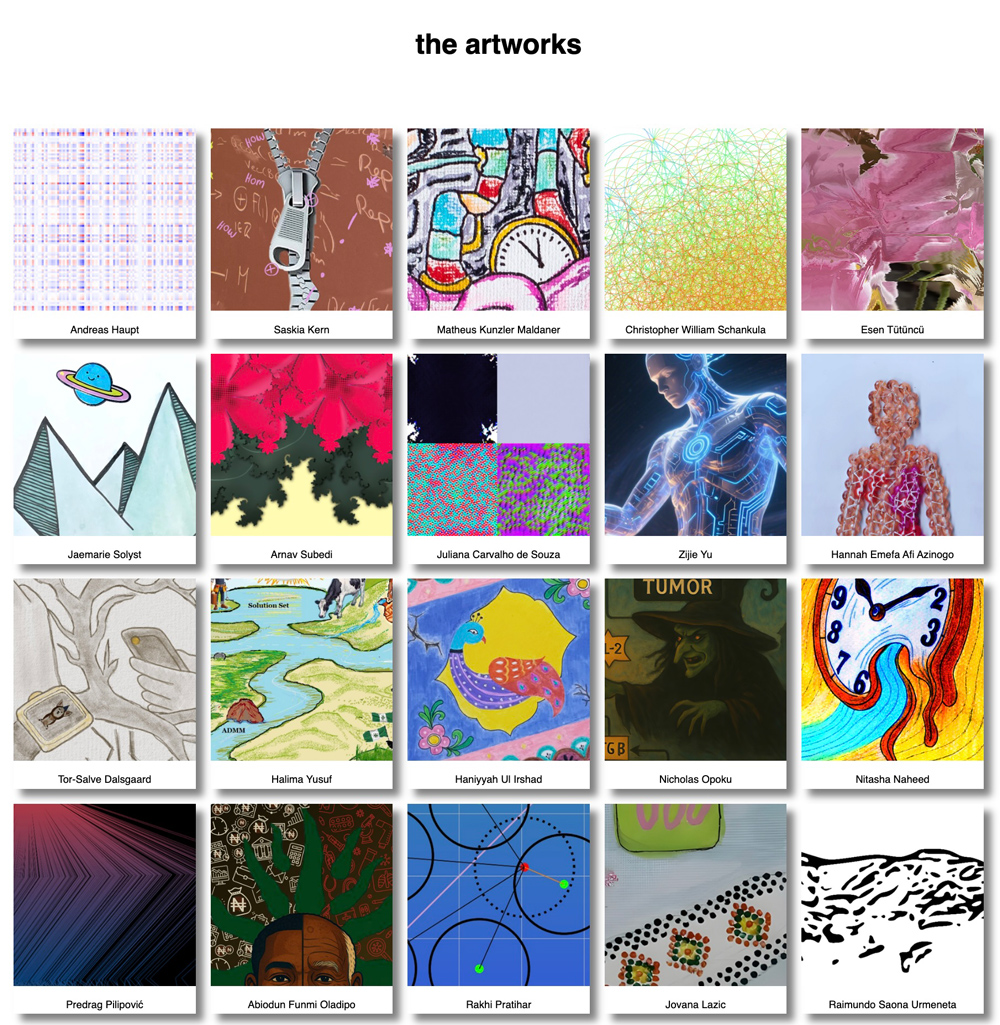
Secondly, I participated in the Intercultural Science Art Exhibition. In total, 29 young researchers submitted artwork having to do with their research. While I don’t consider myself very artistic in the traditional sense, I used a programming language called Elm with a graphics library created by our group here at McMaster, to create a recursive drawing for my submission! It was a unique experience to meet people from all over the world and explore their culture and their research in a way unlike any other, through artwork. You can explore the virtual exhibition here!
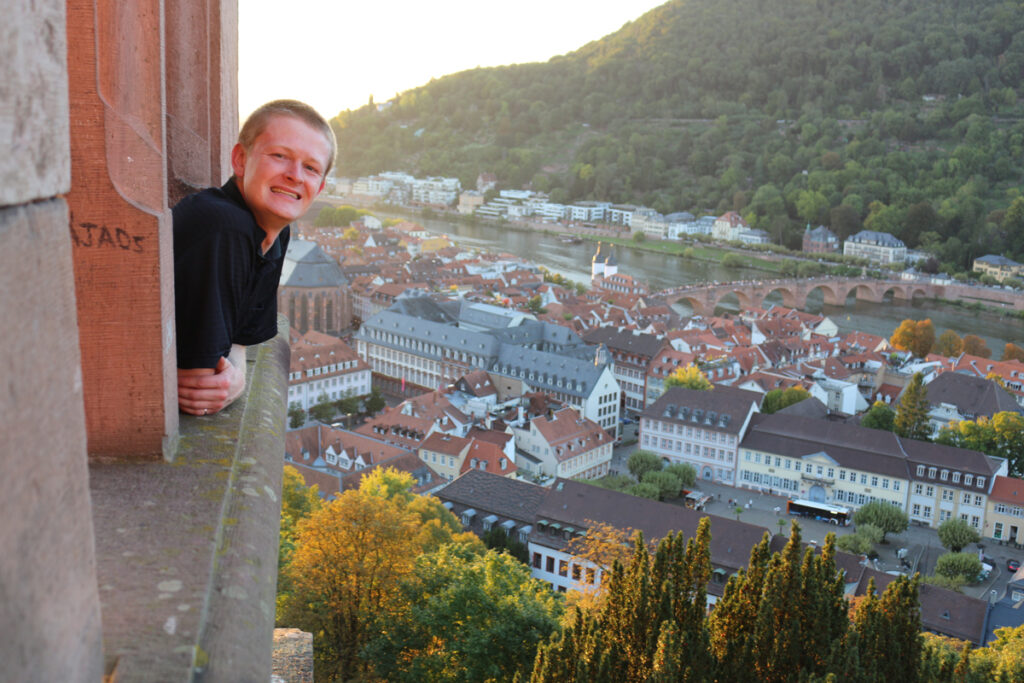
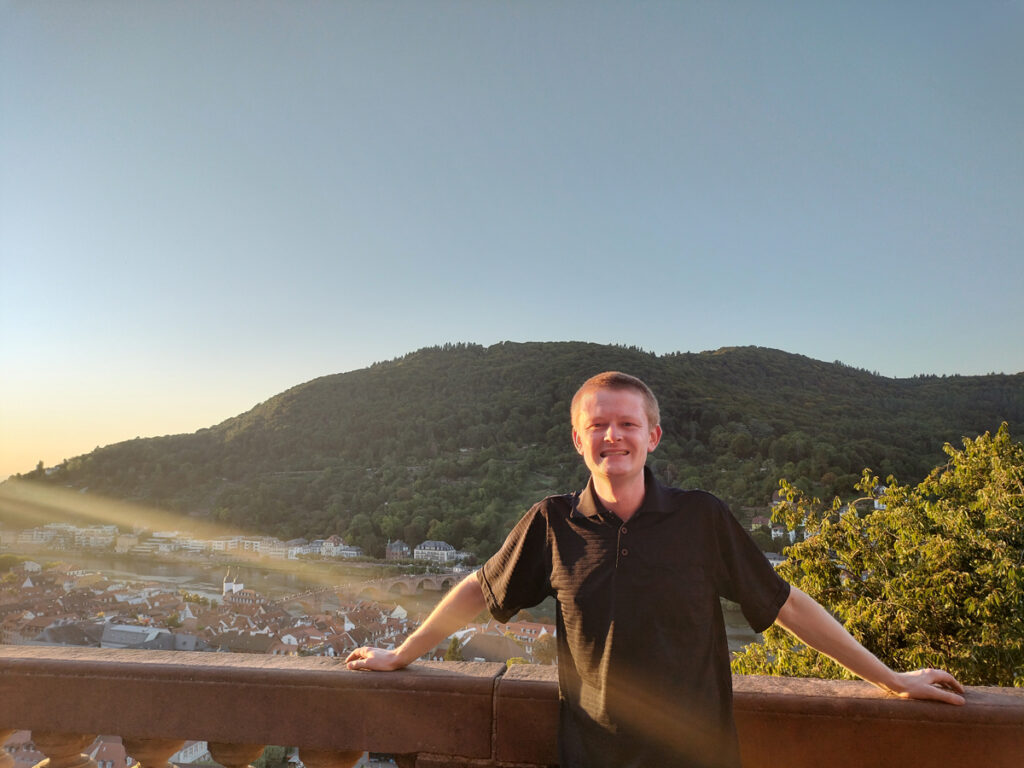
Thirdly was a highlight from the final night dinner at Heidelberg Castle, overlooking the city below, where I met a former chairman of ACM Europe. He gave me a plethora of information about funding opportunities for new partnerships between Canadian and European Union (EU) researchers as well as postdoctoral opportunities for Canadians in Europe. This is the type of conversation that happened naturally by just introducing myself and letting the conversation happen naturally.
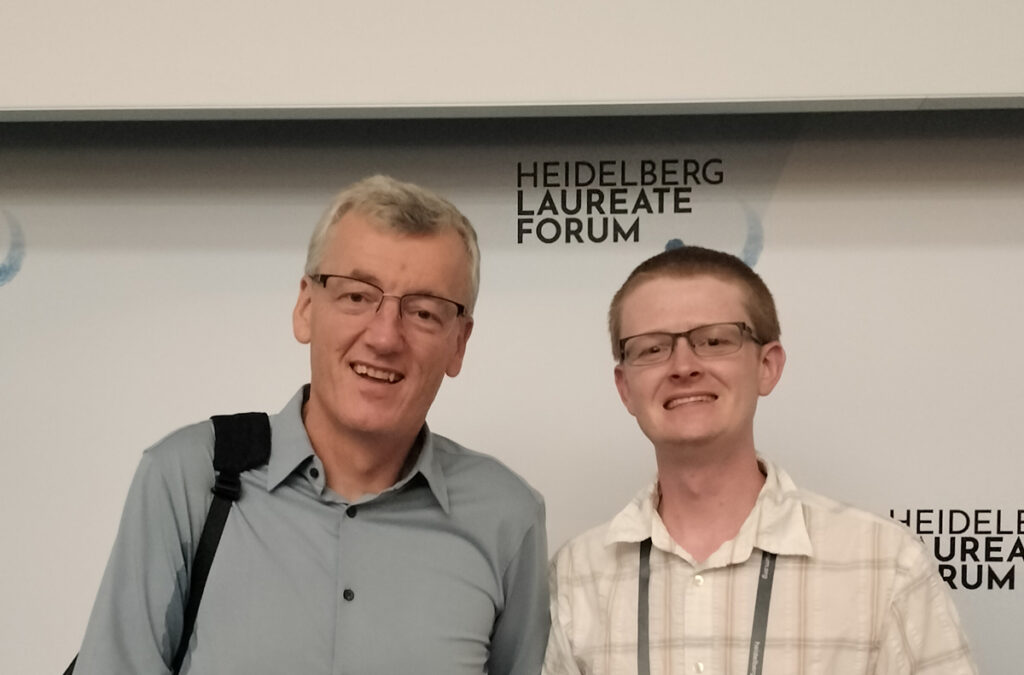
One final highlight was meeting Sir David MacMillan, the 2021 Nobel Prize in Chemistry winner, which was a great honour. His work has implications for cancer treatments, drug delivery, and climate change. His talk was very engaging and he was so personable and willing to spend time with a group of us young researchers after his talk, giving us advice on how to deliver a great talk.
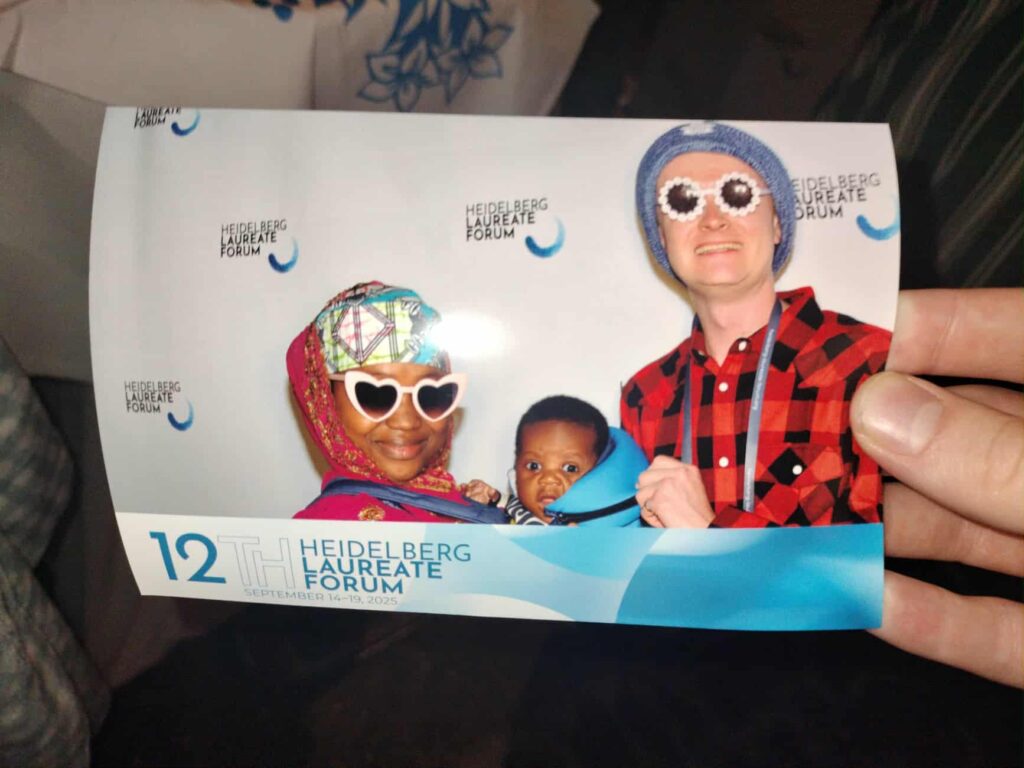
us all a healthy dose of imposter syndrome! (Photo and story shared with permission).
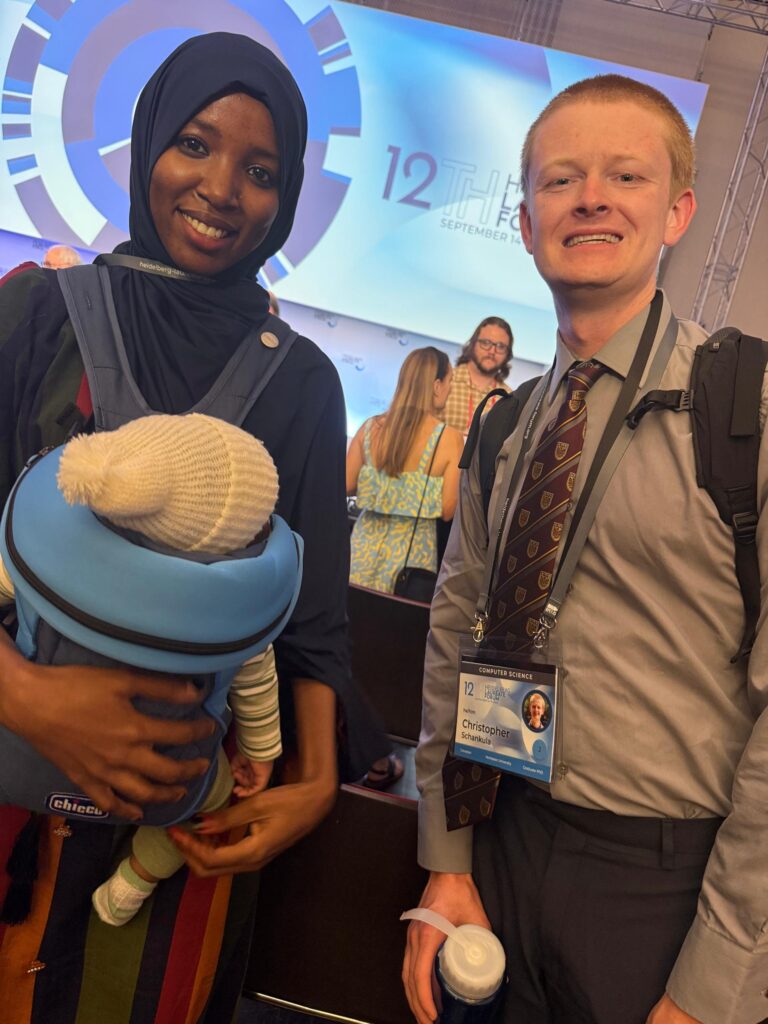
But my favourite moments were the small interactions I had with my fellow young researchers. The true power of the HLF was that it was designed to encourage and support students from all backgrounds. I met young researchers from all over the world, including others from Canada (including one other McMaster student in the math department!), and those from Germany, Ghana, Nigeria, the US, Australia, New Zealand, and Nepal, just to name a few. I was truly inspired hearing from these diverse people doing computer science and mathematics research all over the world, each one doing their part in search of new findings in myriad subfields of computer science and mathematics. One particularly amazing person I met was Aisha, from Nigeria, who brought her 2-month-old son Muhammad with her. In what was a tiring week for everyone, seeing her carry around and take care of him was very inspirational. A bunch of us took turns being his “nannies”, taking him in shifts, trying to take a literal and metaphorical load off her shoulders. Many of the people I met I have since kept in touch with and have become great long-distance friends I hope to go visit again someday.
I also got to hear firsthand some of the topics that are important to them. For instance, to many, the topic of the downsides of AI wasn’t just an academic topic. For many of my new friends, the environmental and wealth accumulation effects of AI were very real worries for them. In contrast to many of the talks throughout the week that took a positive view on AI and its ability to reshape our future, these more critical conversations with fellow young researchers added so much depth to my experience. The HLF was a place where these critical conversations were encouraged, even if it met disagreeing with some of the view presented at the Forum. Overall though, we just had a ton of fun together and supported each other through what was an amazing yet tiring week!
Conclusions
More than anything, the Heidelberg Laureate Forum made me feel connected to a bigger research community in a way I had never felt to that extent before. I was so grateful to have the opportunity to represent McMaster at the Forum, and I met several people, including laureates, who talked about having a direct connection to McMaster and our department in the past or present.
The HLF also helped me to reflect on how fortunate I am to live in an amazing country like Canada and to have supportive graduate advisors who want me to succeed. I am very grateful to have been selected, despite feeling like it was a “moonshot” application. Speaking to many of the other young researchers there, this feeling was extremely common: many others also expressed feeling surprised that they had been accepted – a healthy dose of imposter syndrome if I’ve ever seen one! I think the most important thing the HLF was looking for in applicants was people who are passionate about their field and making their community and the world a better place through their research. I would encourage anyone who is in the computer science/software engineering/mathematics to apply. Only one thing is for certain: if you don’t apply, you definitely won’t be able to go!
Thanks for reading about my experience at the Heidelberg Laureate Forum. It truly was an experience unlike any other. There are a million more things I could say about it, but I don’t want to make this post any longer than it already is. If you’d like to chat more about the experience or to talk about the application process, please feel free to reach out to me on Microsoft Teams or LinkedIn!