
From engineering labs to the fast-moving world of data centre innovation, Christie Condron ’20 has built a career rooted in curiosity and hands-on experience tackling complex engineering challenges.
Currently working as a Program Manager at Parker, she leads initiatives within the Fluid Connectors Group focused on liquid cooling solutions for data centres, a technology that underpins modern cloud computing.
Her career has taken her through a range of roles across manufacturing, operations and engineering leadership, each deepening her understanding of how technical decisions translate into real-world impact.
During her time at McMaster, Christie was deeply involved in campus life. She competed as a student athlete on the figure skating team for four years, balancing early morning practices and late-night training with a demanding engineering schedule. She also played an active role in the Engineering and Management Society, eventually serving as its president and helping grow student engagement and event participation while building a strong sense of community.
Your career is a marathon, not a sprint—for most people, anyway. It’s about building a strong foundation and staying curious so you can discover what you enjoy long term
Can you tell us about your current role and responsibilities?
I’m currently a Program Manager with Parker’s Fluid Connectors Group, focused on data centre liquid cooling.
My top priority is managing customer programs during the new product introduction (NPI) phase, which includes supporting prototype builds and validation testing. I work with a global, cross-functional team to ensure we have the right product in the right place at the right time.
How did you get into this field?
Choosing engineering felt like a natural choice as I was strong in math and science. That foundation eventually led me to the data centre industry through my time as a Value Stream Manager at one of Parker’s hose manufacturing facilities.
During my tenure in that plant, we began supporting cloud service providers developing liquid cooling solutions, including server blade hoses designed to deliver coolant directly to chips via cold plate technology. I led the manufacturing pilot of this product, which gave me early exposure to the data centre liquid cooling market.
From that point on, I knew I’d like to continue working in this emerging space.
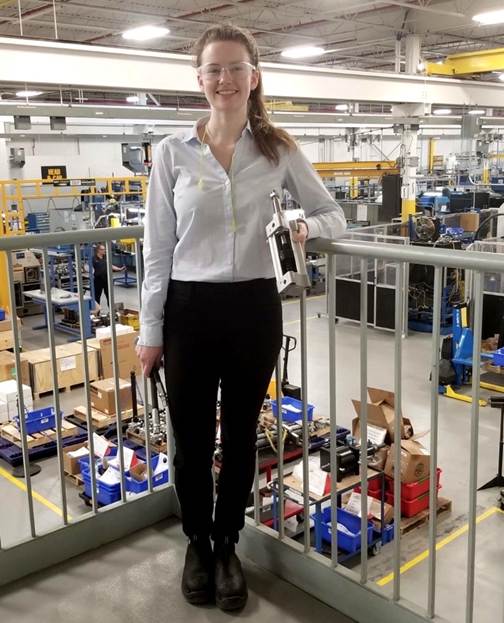
Condron working on productivity improvements in cylinder manufacturing
Can you take us through your career journey?
I started as a Manufacturing Engineer at Parker, focused on automation while gaining exposure to all aspects of manufacturing. From there, I was promoted to a Supervisor role where I managed the day-to-day operations of a small team, building hydraulic equipment for the construction and agricultural industries. After that, I joined Parker’s rotational leadership program which gave me exposure to a range of roles across the U.S.
My final project in the program was deployment of a semi-automated hose assembly cell. That experience stood out because, while I worked with a team of engineers to design the system, I was the only engineer on site during deployment. I worked directly with operators and the plant leadership, which required me to communicate technical concepts clearly, write effective work instructions, and adapt based on real-time feedback.
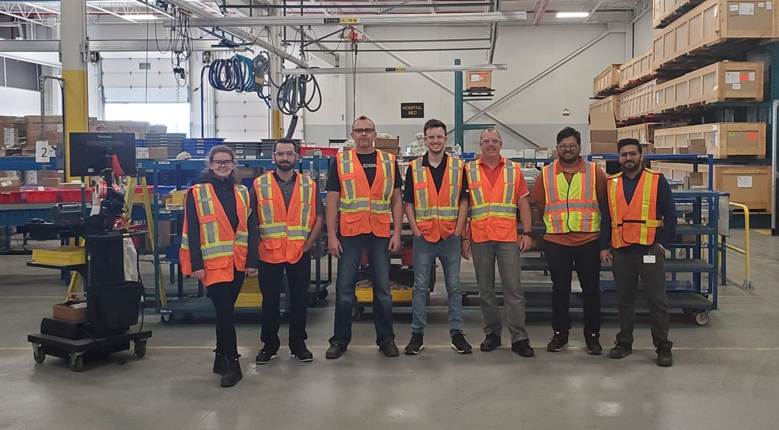
Condron working with a Kaizen team on warehouse optimization.
After the program, I became a Value Stream Manager at a hose manufacturing plant overseeing the low pressure product lines. I then transitioned into an Engineering Manager role at an Innovation Centre focused on robotics and automation, which included managing budgets and ensuring projects delivered on time and with strong return on investment.
Most recently, I moved into my current Program Manager role to build commercial experience and work directly with customers, a natural next step in developing as a well-rounded leader.
How did your educational journey compare to your career journey?
One thing I understood early on was that undergrad is meant to be experienced, not something to rush through. I was already set to be in school for five years because of the extra year in the engineering and management program, so I chose to take my time. I ended up completing 20 months of internships and co-ops to really figure out what I was interested in, and I even considered staying in academia at one point.
During my undergrad, I also took courses during evenings while on internship, which gave me a more flexible, slower-paced final year. I was fortunate to have several job offers coming out of school, so the transition into industry felt like a logical next step. The first few years in industry felt like an extension of undergrad – continuing to learn, absorb, and pick up things from the more experienced engineers.
At the same time, I realized early that I didn’t want to stay purely technical for my entire career. I didn’t see myself as an individual contributor long term, and knew I wanted to lead. That direction felt natural and I had already started building toward it during my undergrad. Even during internships, I was able to lead initiatives on the shop floor, which helped me develop those skills.
What were some of your most memorable experiences at McMaster?
I was very involved during undergrad, and I wouldn’t have had it any other way, even though it was challenging at times.
One of the biggest highlights was being a student athlete on the figure skating team. I had always been more of an individual skater, so transitioning into a team environment was a completely new experience.
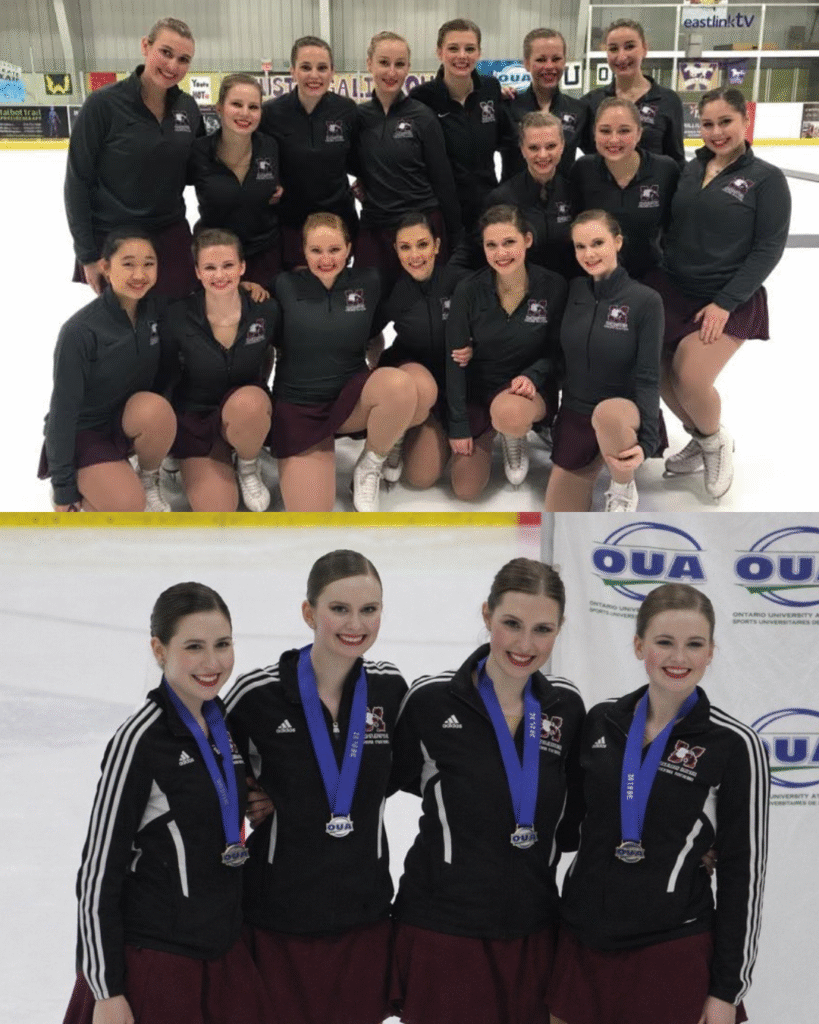
Bottom: Mac Figure Skating Ice Dance Team, OUA Silver (2015); Top: Mac Figure Skating Team (2018)
We had early morning and late night practices, and balancing everything with an engineering schedule was demanding. I’d have labs in the earliest class slot, and my teammates would have to drop me off on campus with my skating bag because that was the only way to make it work. It taught me a lot about time management and dedication.
I was also heavily involved in the Engineering and Management Society. I started as a representative, then moved into leadership roles in finance, and eventually became president.
That was a meaningful experience because I was able to help grow the society from around 20 people at events to closer to 100, and see the impact it was creating for students.
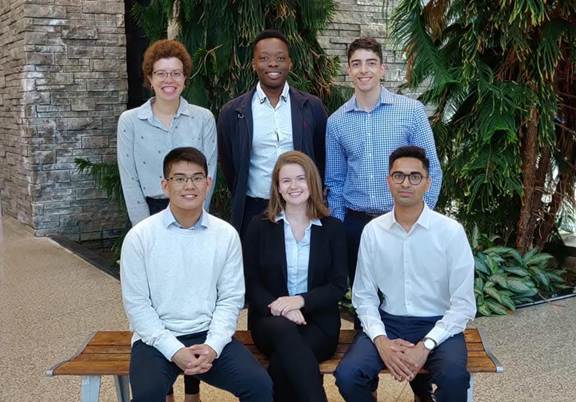
Condron with the Engineering and Management Society Executive Team (2019-20)
How do you stay connected to McMaster?
I stay connected to the Industrial Advisory Council (IAC) for the Engineering and Management program, which includes both alumni and professors. I also try to stay connected more informally. When students reach out to me on LinkedIn, I like to take the time to talk to them and share my experience. That was something I really valued when I was a student, so I try to give that back.
Mentorship is also a big part of staying connected, but not everyone is comfortable reaching out on their own. I’ve always been comfortable reaching out on LinkedIn or engaging deeply during networking sessions, but that’s not the case for everyone. I’d love to see more structured ways for students to connect with alumni (alongside the current, in-person events), so there are multiple options and a lower barrier to starting those conversations.
What advice would you give your first-year and just-graduated self?
I would remind myself to stay curious and focus on learning. Every class and every experience is a tool in your toolbox—it doesn’t define you, but it gives you something to draw from.
The same applies now with AI. It’s not going to solve everything, and it’s not something to fear; it’s just another tool. Learn how to use it and leverage it based on the skills you want to build.
There’s always some noise in the mix, but don’t take it too seriously. Enjoy the ride, stay open and trust that things will click in time.
Alumni Blueprints is a Q&A series that highlights the journeys of exceptional McMaster Engineering alumni. Discover how they built their careers, from joining student clubs and teams to seizing co-op opportunities that ignited their passions during their undergraduate years. Our alumni share their unique stories and insights, offering a blueprint for success in their respective fields. Want to share your blueprint for success? Contact the Alumni Team at engalum@mcmaster.ca.