
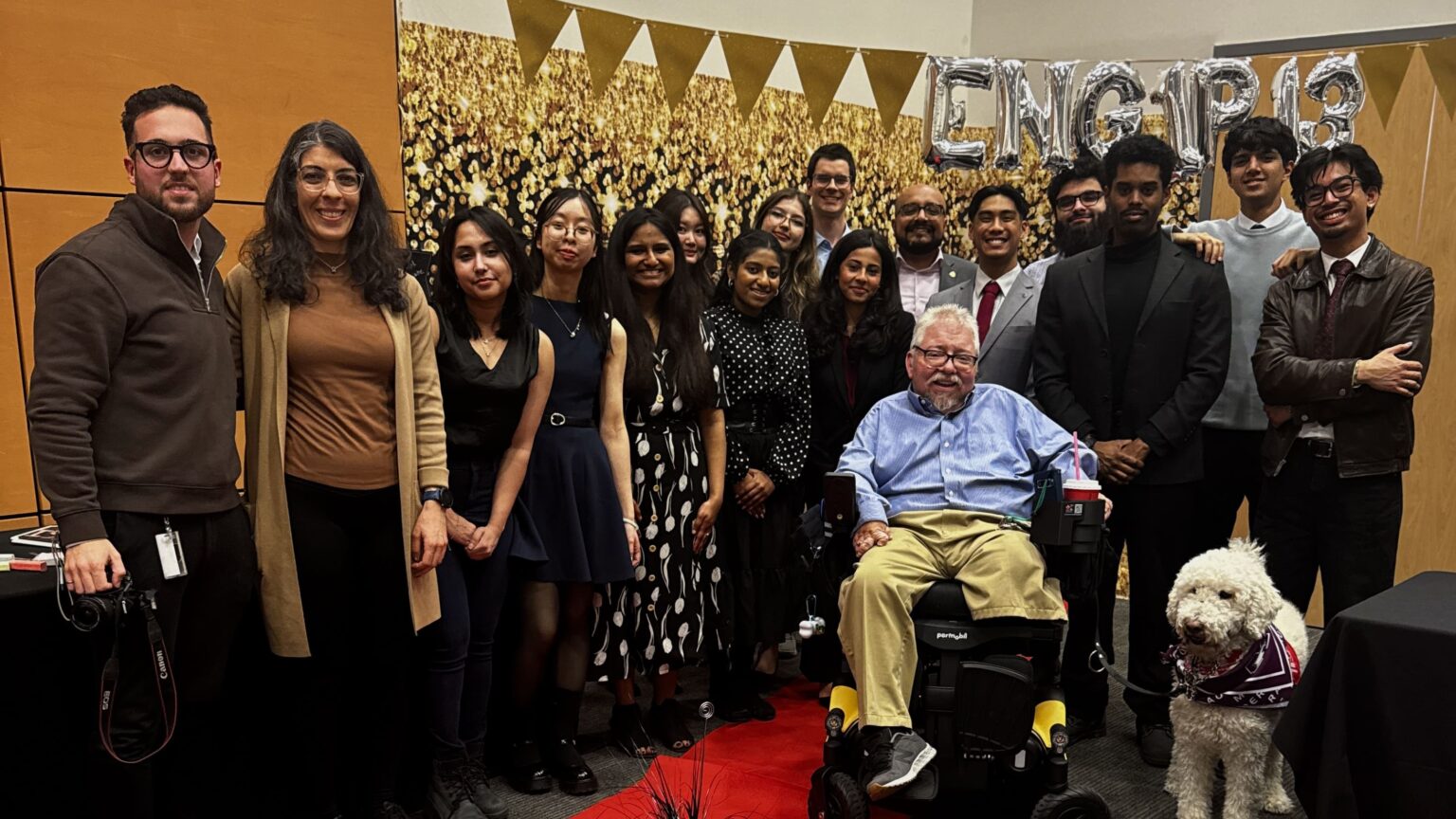
Mark McNeil has spent a lifetime navigating environments that weren’t engineered with accessibility in mind. Diagnosed with juvenile idiopathic arthritis in childhood, a condition which causes persistent joint pain and inflammation, Mark uses a range of assistive technologies to support his daily routine, but gaps in everyday accessibility still remain.
His lived experiences led him to dedicate his post-retirement life to working in community-based service for individuals living with disabilities, including programs such as serving on the Accessibility Committee for Persons with Disabilities and the Accessibility Hamilton alliance.
This year, students in the Integrated Cornerstone Design Projects in Engineering course — or Engineering 1P13 — had the opportunity to work closely with Mark to design accessible products that he could use in his day-to-day life.
And under the close guidance of their instructors, these students learned what engineering was truly capable of—with accessibility, Mark and his service dog Rosie at the heart of their learning.
An education grounded in reality
Engineering 1P13 is a foundational part of McMaster’s engineering curriculum. Designed around project-based, interdisciplinary learning, the course introduces first-year students to the realities of engineering by asking them to tackle complex challenges from day one.
Over the course of the year, explains Shelir Ebrahimi, Assistant Professor of Chemical Engineering and Engineering 1P13 project lead, students build their technical skills through a series of projects that grow in scope and complexity. This learning culminates in a final project where students work directly with a client to design accessible solutions that address their needs. Through this project, faculty members from the Faculty of Science and the Faculty of Health Sciences also introduce students to the concepts of universal design and human-centred design, which helps them design their products with accessibility front and centre.
Working in teams, students collaborated closely with Mark to better understand his daily routines and challenges with the goal to not just design assistive tools, but to create solutions that support independence and usability.
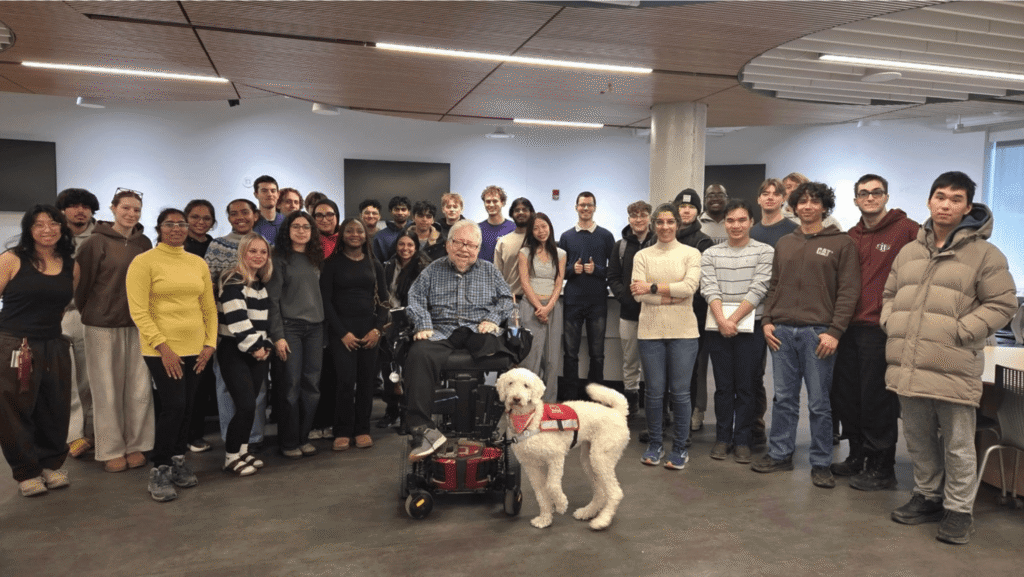
The results were wide-ranging. Some teams focused on practical, everyday challenges, developing tools to assist with feeding Rosie and devices to make taking daily medication easier, while others explored ways to support Mark’s various hobbies, like painting.
For Mark, this collaboration offered an opportunity to contribute to the next generation of future engineers and help them understand the importance of accessible design.
“I’m surprised that there are so many young students who are interested in engaging in this work,” he says. “I’m blown away with the depth and level of their interest in solving these types of problems.”
This experience offered students an early introduction to what it means to be an engineer that collaborates across disciplines, iterates on ideas and designs with people and their needs in mind.
For Krina Patel, an Engineering 1P13 student who helped create The Brush Buddy, this experience helped make what she was learning in the classroom tangible and real. “This idea that you’re designing based off of a human’s needs is an interesting way to apply the engineering process.”
Aaron Wang, a member of the Storage Savants who helped build the Slid’in Storage, agreed. “We had our goal in mind of the project we wanted to create, but then we also had that other aspect of making Mark proud of what we accomplished.”
And for Alan Gabriel, a member of the team who helped bring DigiCare to life, the applications of this work go far beyond the classroom. “By working with a client, you learn a lot about their lives, and so we were able to connect this work with various different factors that maybe several different patients may experience as well.”
From classroom to showcase
Across the more than 200 projects designed in this course, students balanced creativity with real-world constraints, incorporating user feedback, technical feasibility and thoughtful design.
At the end of the year, the top six groups were invited to present their projects to their peers, family members, friends and a jury that included Mark and professors from outside the program. Here, they pitched why their product was so important, shared their prototype designs and allowed Mark to interact with them.
Learn about the winning projects below.
1st place: Slid’in Storage
Team members: Joshua Ainsworth, Somdara Chhom, Aaron Wang, and Oscar Zhao
The Slid’in Storage is an accessible storage system for persons in wheelchairs. It is a combination of hinges, slides and rails to allow the user to access their storage system easily by rotating it in front of them and being able to quickly access their items.
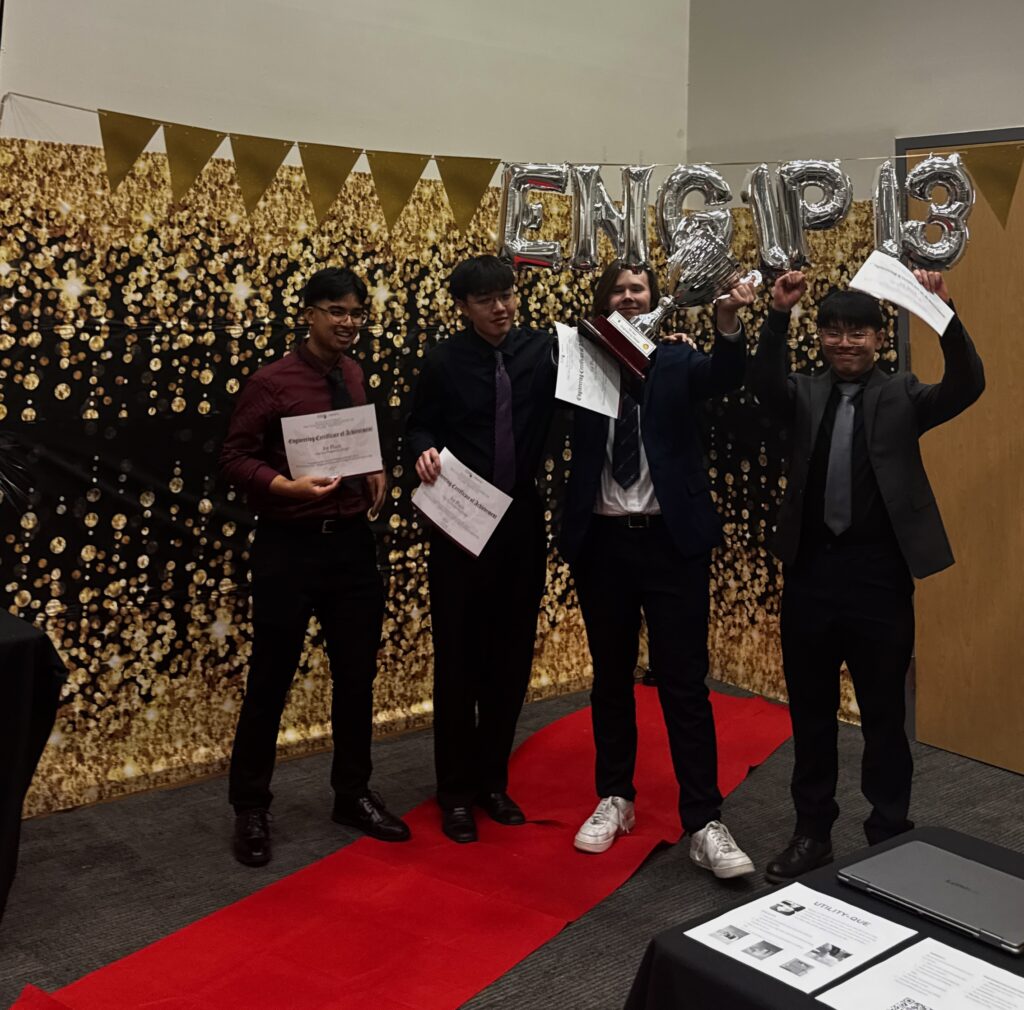
The Storage Savants pose with their first-place certificates and trophy. (Photo credit: Aboud Al-Fadhli)
2nd place: The Brush Buddy
Team members: Krina Patel, Simon Pires, Haripriya Radhakrishnan, Fakhri Shaat, Riddhima Rathore
The Brush Buddy is a modular paint brush where you can use one ergonomical handle and have multiple paint brush heads of different sizes. This way, the user can get comfortable with the fit of the paint brush in their hand and switch out the brush heads with ease. Using magnets to hold the brushes in place, the Brush Buddy is easy to use for users with limited hand and muscle dexterity.
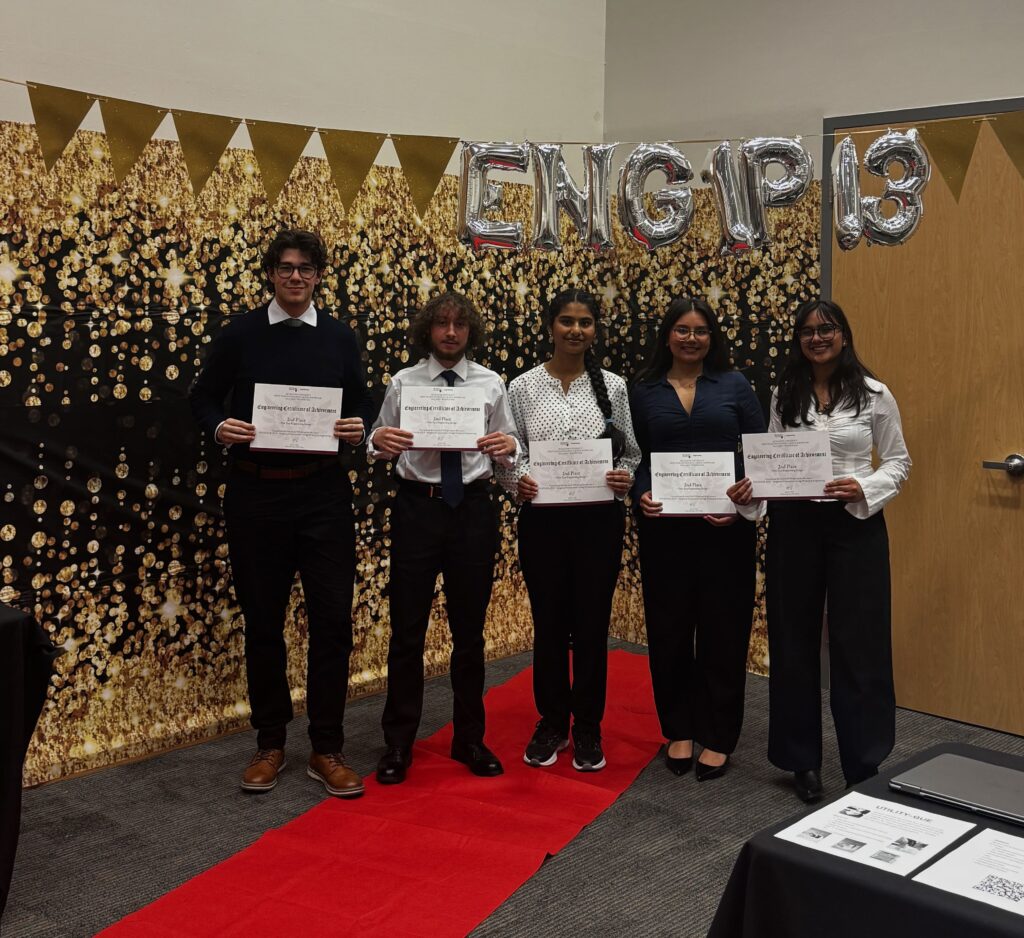
The Brush Buddies pose with their second-place certificates. (Photo credit: Aboud Al-Fadhli)
3rd place: DigiCare
Team members: Alan Gabriel, Hawraa Gangardiwala, Joseph Iannotta, Evangel Leong and Donald Poon
DigiCare is a web app that allows patients to input their personal care preferences that go beyond their medical condition, including things like dietary needs or anything that is really for their comfort. Currently, hospitals use a similar database, but are only concerned with medical information, whereas DigiCare prioritizes the patient’s comfort.
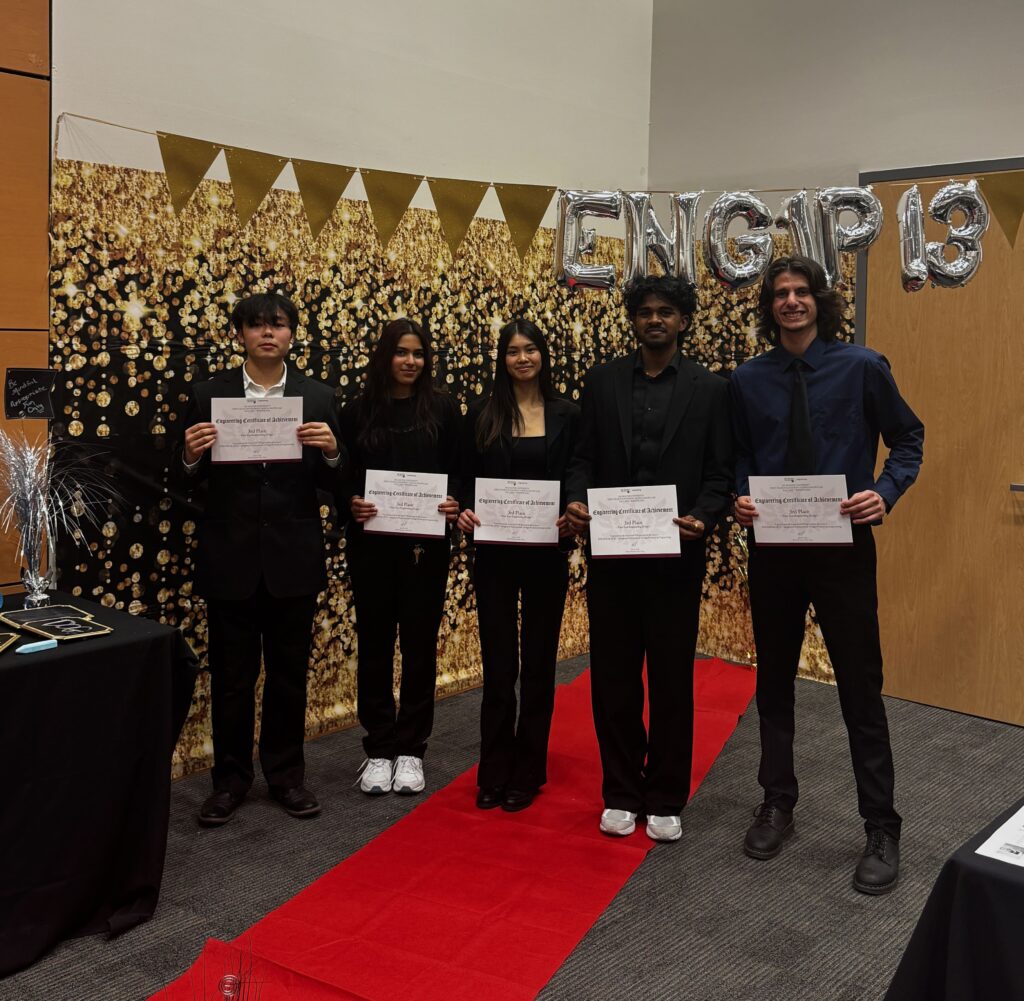
DigiCare pose with their third-place certificates. (Photo credit: Aboud Al-Fadhli)
Other teams that presented at the showcase include:
Top Dog (Enya Keppo, Bella Le, Sifft Sidhu, Hilary Tse)
Pilpal (Basel Alkolak, Leila Lew, Anna Stewart, Jack Vanderkaden, Kara Wiese)
Painter’s Pal (Leen Elwasila, Zeel Punjabi, Abdullah Saleem, Avneet Sandhawalia, Zaiba Zakiyyah)
And runners-up that were invited to display their products at the showcase include:
Plant Sense (Yusuf Eldarieby, Tonios Mehanna, Gabriel Walker, Anthony Wiegand)
The M.A.R.K (Magbe Abe, Matthew Alongi, Mahuammad Mansoor, Sabina Hur, Elizabeth Skinner)
F E T C H (Ryan Clemente, Saad Kugasia, David Lui, Zachary O’Mara, Evan Pichora)
The Slide N’Store (Ved Bhowmik, Owen Bungard, Maaz Hasnat, Hugh Meyer, Daniel Ortiz Rendon)
Nautilauncher (Aedan Lai, Coby Lipovitch, Akash Tikkisetty, Tyler Visser, Tristan Vo)
Utility-Que (Myyar Abualhayja’a, Emilia Bogdanovich, Ali Ashmal Molwani, Shikha Ranjit, Sophia Webster)