Developing luminescent tools for bioimaging and biomedical diagnostics. That’s the goal for Dr. Lucie Haye, postdoctoral fellow in McMaster’s Department of Engineering Physics.
“There are lots of things we don’t know about the diseases we want to fight,” says Haye. “To be able to fight them, we first need to understand them. The tools we’re developing will help researchers understand sick cells better so in the future we can treat them.”
For example, a biologist who is researching biomarkers or studying how a disease progresses and its impact on an organ, would be able to use these tools to look directly inside of cells, says Haye.
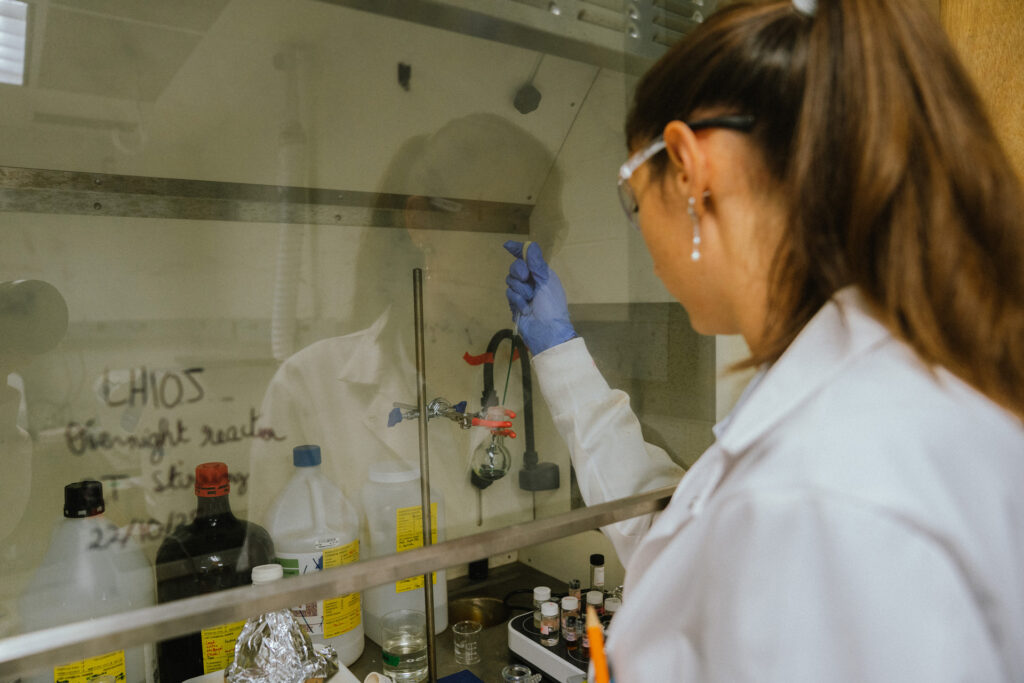
One such tool is a luminescent nanoprobe that can go inside of a cell. “I’m developing a probe that can look in the cells and quantify how much glucose they have – it’s a probe that will change colour depending on how much glucose is in a cell,” explains Haye. Once the probe works for glucose, the hope is it can be adapted easily to detect another analyte of interest, such as calcium or potassium, which would widen the range of potential users.
Research at the Niko Hildebrandt Lab
Haye performs most of her research within the Niko Hildebrandt Lab at McMaster. Haye met Dr. Niko Hildebrandt, her mentor and principal investigator, in 2021 while completing her PhD in France.
“It just happened that Dr. Hildebrandt was recruited by McMaster the year I was finishing my PhD in France, and we had been working on some projects together,” explains Haye.
Haye was seeking an international experience and decided Canada would be the best place to grow her skillset.
“I wanted to live abroad, not just for career development, but on a personal level as well,” says Haye. “Canada is one of the best countries for research. There is lots of funding opportunities, and there are lots of possibilities for work.”
Now at McMaster, they are both developing luminescent nanoprobes and testing them inside of cells. Lucie was able to bring her chemistry background to the large, interdisciplinary team at the Niko Hildebrandt Lab that includes more than 30 physicists, biologists, chemists and biomedical students.
Part of Haye’s role is to serve as a mentor to graduate and undergraduate students.
“Each student has a different skillset and a unique way of working,” explains Haye. “I’ve learned to adjust my mentoring approach for each student, and I enjoy helping students identify their skills.”
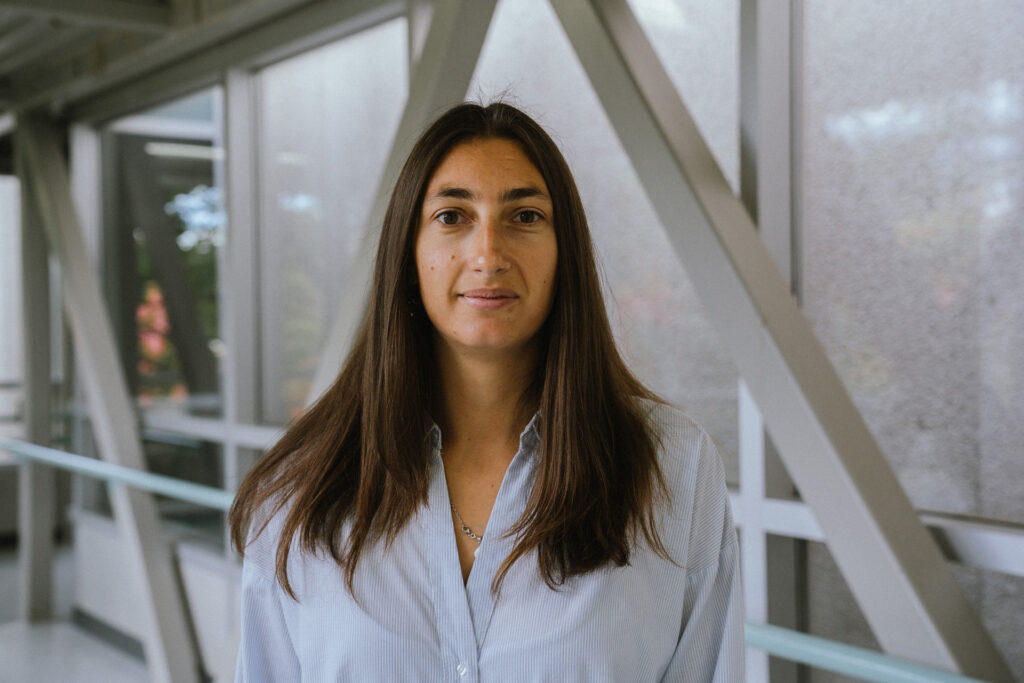
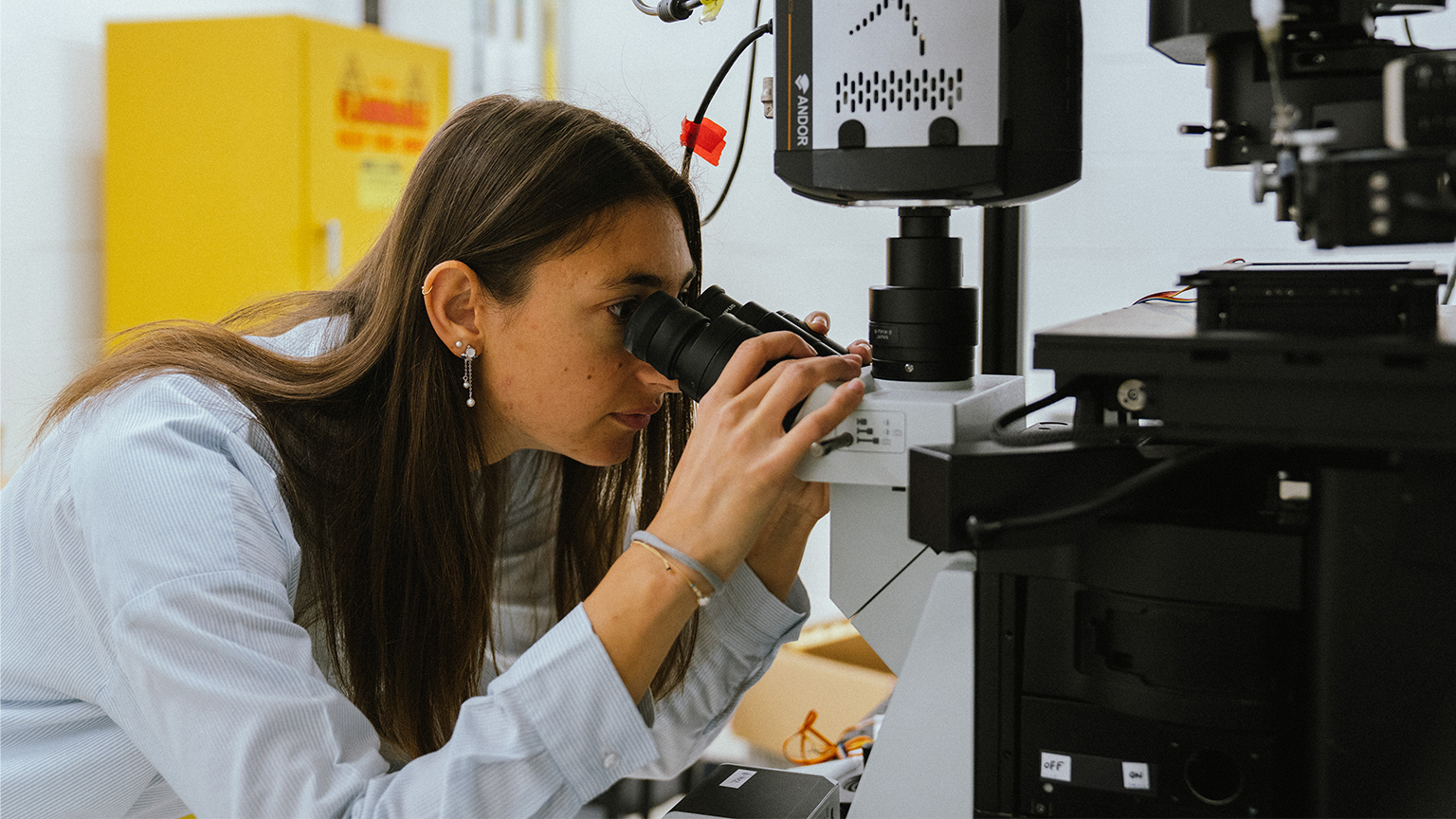
While at McMaster, Haye is also working to implement a new microscopy lab in partnership with the Centre for Advanced Light Microscopy (CALM) facility at McMaster.
“This will help ensure users of the CALM facility will also have access to our equipment, such as optical microscopes,” says Haye. The probe Haye is developing is used in samples that are observed with these microscopes.
Enriching environment at McMaster
For Haye, collaboration is at the core of her McMaster experience. “We can connect with researchers from across different labs and use the many facilities, which help us all come together to put forth an excellent research quality,” she says.
“What I love about McMaster is the chance to be part of an international team,” adds Haye. “Students and researchers here are from many different nationalities with a wide array of backgrounds, so it’s a very enriching experience to be in such a diverse environment.”