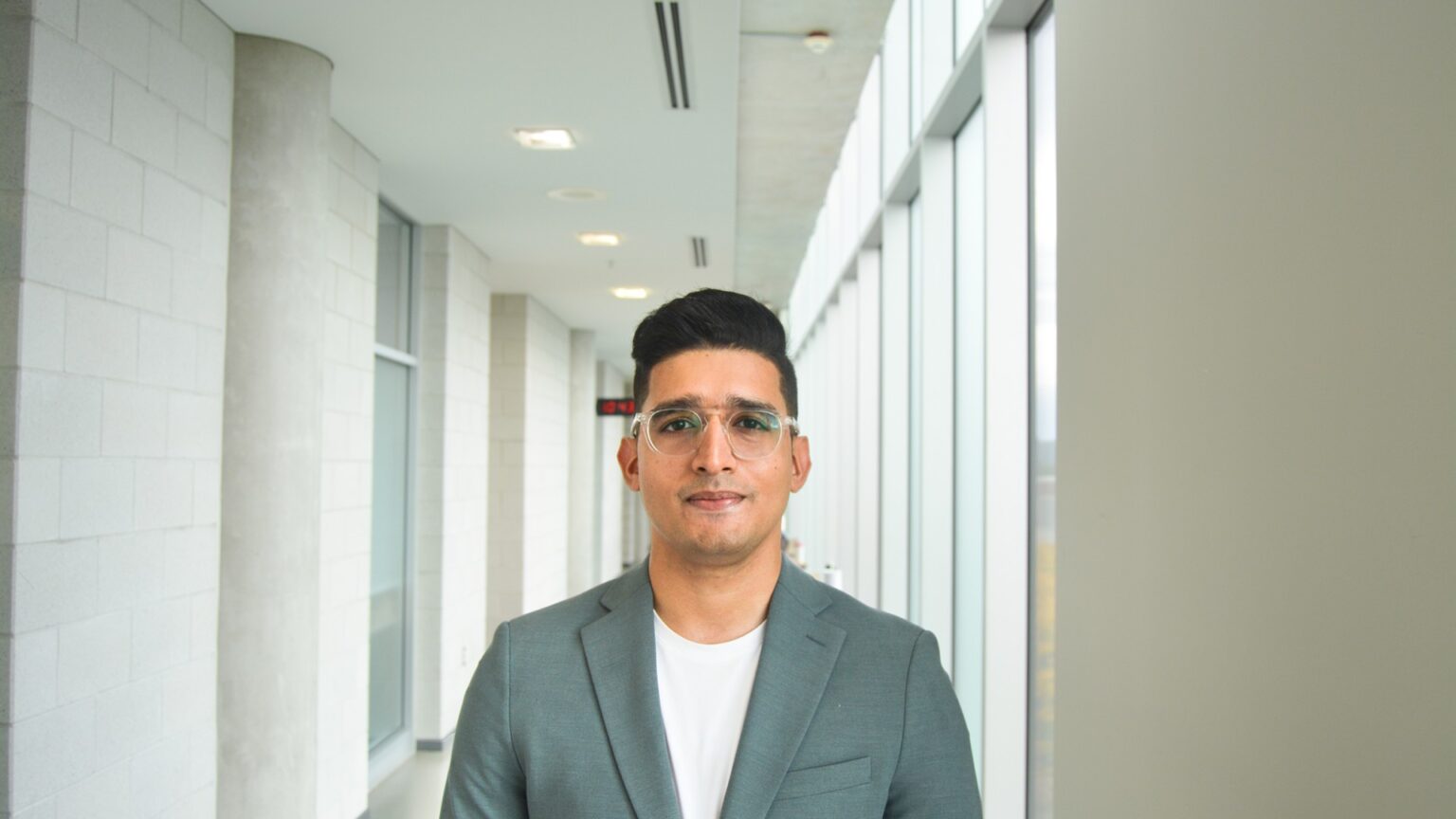
Every designer has a story. For Rahul Saxena, that story began with crayons and evolved into a passion for using design to create impact. In his own words, the Master of Engineering Design student shares his journey through McMaster’s Master of Engineering Design program and what “design is magic” means to him.
My journey began long before I could even spell the word design. At barely three years old, while filling basic shapes with crayons, what I believe I first felt was the quiet joy of bringing blank spaces to life. That instinct stayed with me through my school years, and during my undergraduate studies in engineering, I discovered it was more than a hobby. I began designing posters and communication materials for college events, and that’s when I realized this wasn’t just something I was good at; it was something I wanted to build a life around. That was the moment I decided to become a designer.
I began my design career as a Brand and Visual Communication Designer, working across fintech, architecture, IT and packaging industries. Over time, I realized that design is most impactful not when it is merely seen, but when it is understood, felt and used. To me, design is magic, perhaps because it carries a sense of excitement and wonder, constantly leaving us in “wow” at what we see or feel and urging us to think about the “how” behind it.
That belief inspired me to pursue the Master of Engineering Design (Product Design) program at McMaster University, a uniquely positioned program at the intersection of design thinking and technical innovation.
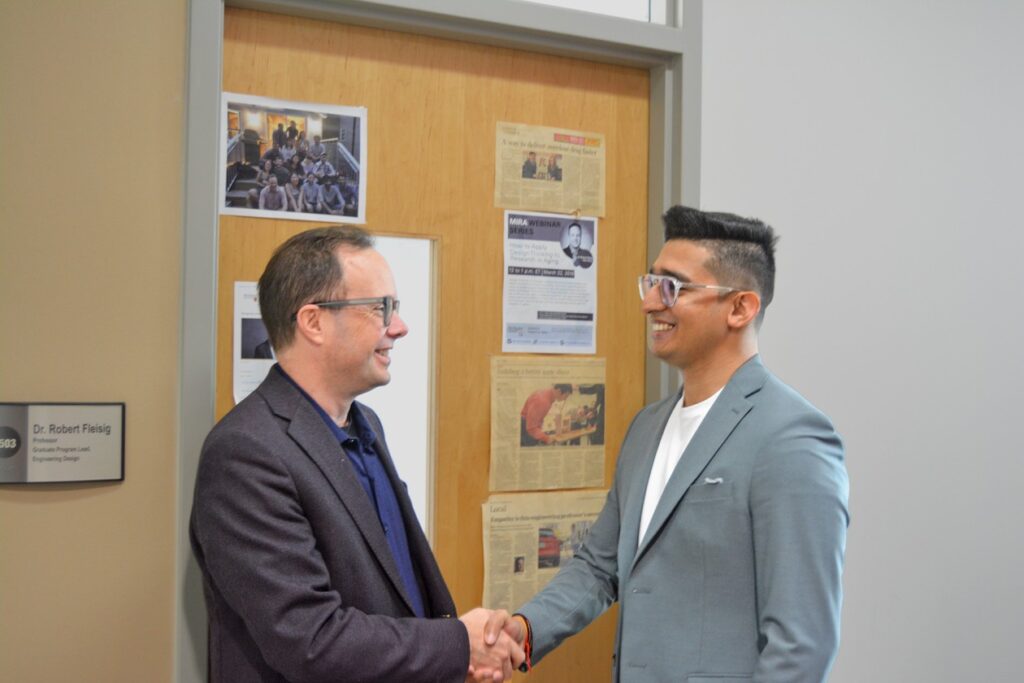
My experience at McMaster has been both rewarding and transformative. I was honoured to receive an Academic Excellence Award, and I had the opportunity to work on an eight-month Design Thinking project with St. Joseph’s Healthcare Hamilton, focused on Reimagining the Future of Hospital Rounds. The goal was to integrate the patient’s voice into a structured, one-hour meeting where clinicians discuss up to 60 patients in 60 minutes. This project allowed me to empathize, research, co-design and prototype in a real-world healthcare setting, reinforcing my belief in design as both a creative and systemic tool for change.
Over time, I realized that design is most impactful not when it is merely seen, but when it is understood, felt and used.
Following this, I was fortunate to secure a one-year full-time co-op with IBM Canada. I joined IBM Technology Zone (Global Sales) as a UX Researcher, where I connected with users to understand their needs and pain points. IBM TechZone is the single destination for all of IBM’s go-to-market teams and the IBM Business Partner ecosystem to provision and customize live demo environments. My role involved translating user insights into actionable improvements that enhance customer experience and platform engagement. In recognition of my contributions, I continued part-time to build on the project’s impact and support ongoing UX and user engagement initiatives.
What’s next?
As I complete my program this fall, I intend to continue advancing my work in product design, brand design, storytelling and experience research, ideally within an environment where design, technology, and business intersect to create meaningful solutions.
I’ve always believed that great design is built on clarity, persuasion and empathy, and I intend to keep learning and evolving at the pace of the industry and, eventually, to help move it forward. In the long term, I aspire to grow as a design leader who not only crafts solutions but helps organizations see design not as a finishing touch or marketing tool, but as a foundational force for growth, change, and social impact.
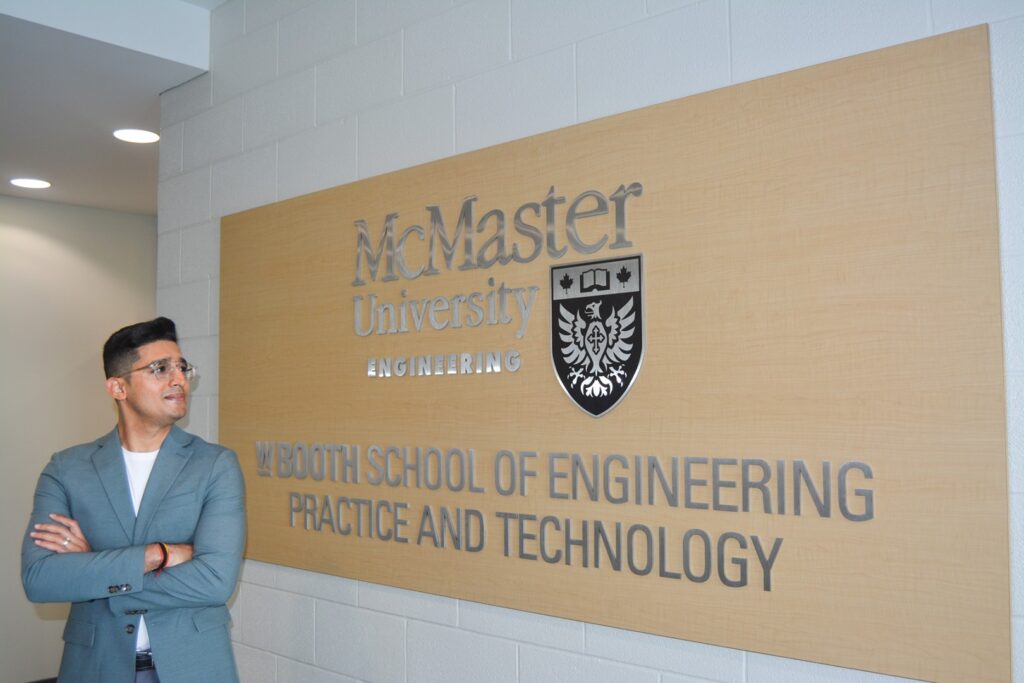
In many ways, I often go back to that three-year-old with crayons, endlessly curious, unafraid to experiment, creating simply for the joy of it. That spirit, I believe, is something every designer must always carry within them.
As Pablo Picasso once said, “Every child is an artist. The problem is how to remain an artist once he grows up.”
Learn more about McMaster’s Master of Engineering Design program.