
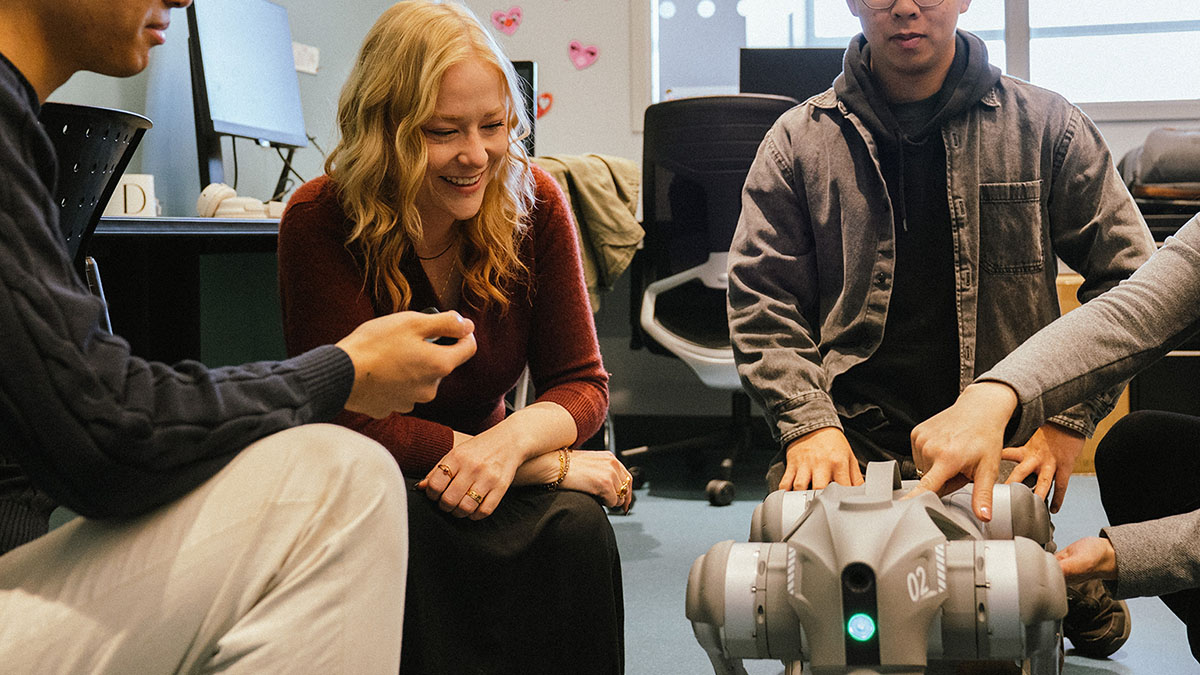
Fascinating. Creepy. Scary. These are just some of the words that may come to mind when interacting with robots.
“Everyone has an opinion about robots, which shows the expectations people have,” says Julia Rosén, postdoctoral fellow in McMaster Engineering’s Department of Computing and Software. “People have many pre-conceived notions about what robots should do. When we see social robots with human-like characteristics, there are certain expectations of how they should act.”
Rosén’s background in psychology and cognitive science led her from her native country of Sweden to Hamilton, Ont., where she met her mentor and principal investigator, assistant professor Denise Geiskkovitch.
“I fell in love with studying humans through their use of technology,” Rosén says.
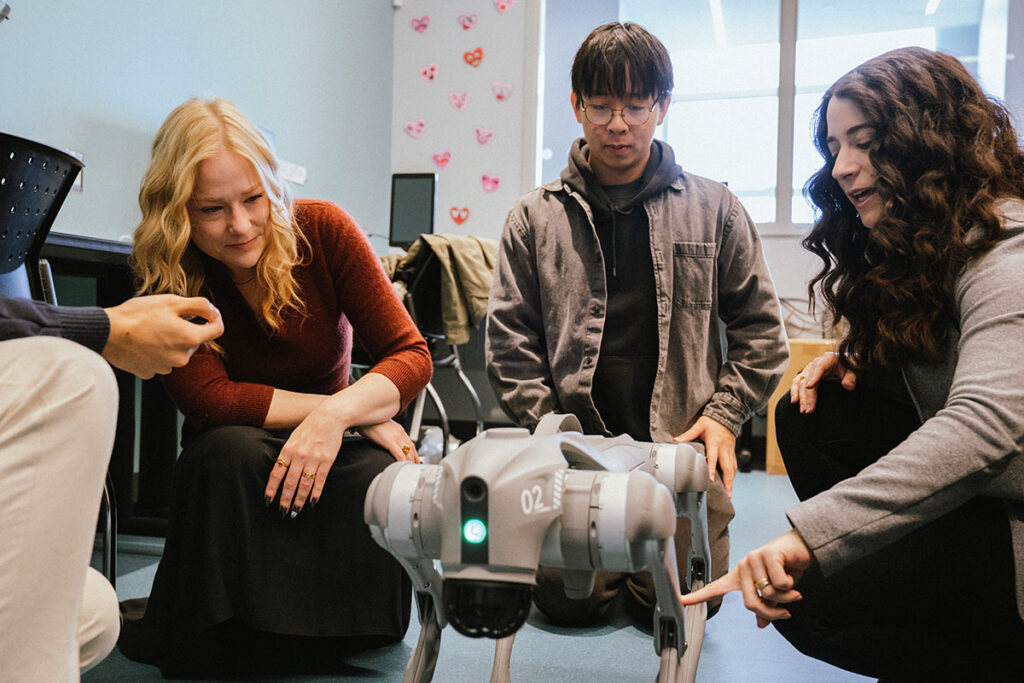
In McMaster’s human-robot interaction (HURON) lab, Rosén is exploring how informed consent can be meaningfully obtained in human-robot interaction.
“How can we obtain informed consent when interacting with robots if users don’t know what robots are capable of or how the robots work?” asks Rosén.

Human-robot interaction: A framework for informed consent
Rosén recently created the RoboConsent Framework, which supports more user-centered, transparent and ethically robust consent processes. Rosén is applying the framework in empirical settings to explore how informed consent can be designed and evaluated in real-world human-robot interaction contexts.
“My main goal is to always advocate for the users and to ensure that our interactions with technology are ethical and conducted in a responsible way,” says Rosén. “Users must have full autonomy and feel empowered during their interactions with technology.”
Looking ahead
Rosén says we must address our expectations to ensure ethical interactions and integration into society.
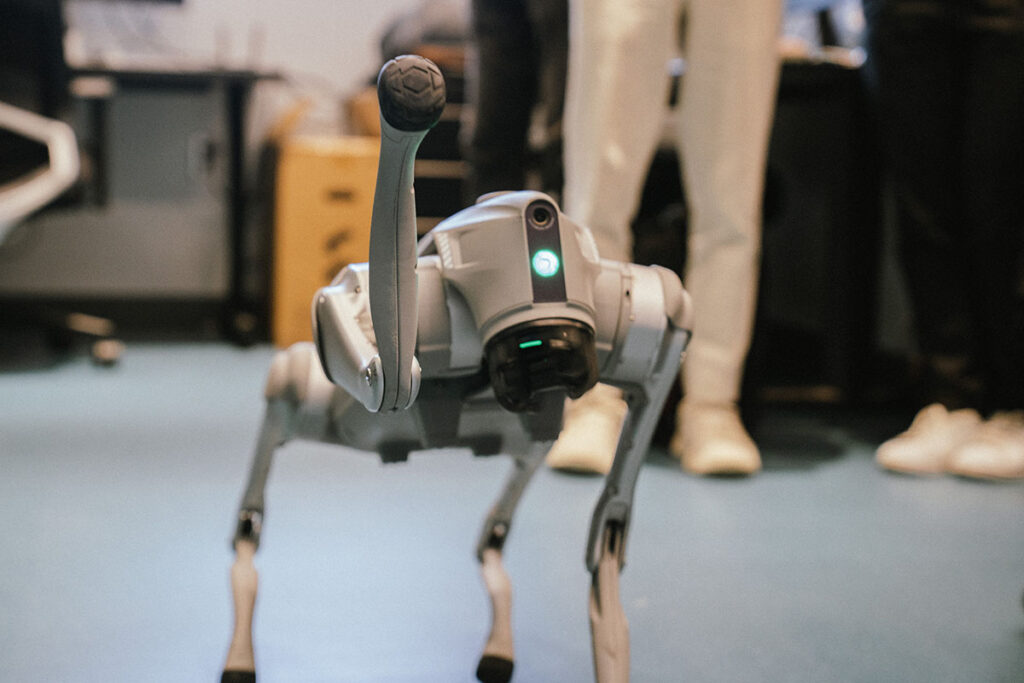
Because social robots are not part of everyday life, people base their knowledge on robots seen in sci-fi films or media coverage, Rosén says. But what happens when you expect a robot to act a certain way, like a human?
As long as we have mismatched expectations, it will be a challenge to integrate robots into society.
“As long as we have mismatched expectations, it will be a challenge to integrate robots into society,” Rosén says.
Making connections with other postdoctoral fellows
When Rosén isn’t researching in the lab, she has another task: spearheading the new society for post-doctoral fellows, Postdocs in Engineering Socials, which is still in its early stages of development.
During a McMaster Engineering holiday lunch last year, Rosén had a chance encounter with associate dean of graduate studies, Kathryn Grandfield, who encouraged her to create the group after Rosén had expressed an interest in meeting other post-doctoral fellows.
“We’ve had one event so far,” says Rosén. “It’s currently an informal group but I’m working to create some structure so it’s sustainable going forward. It will focus on social opportunities and support for post-doctoral fellows, as well as encourage collaboration and networking opportunities.”
Postdoc Fellows in Focus is a story series that highlights the impactful contributions of postdoctoral fellows within McMaster’s Faculty of Engineering. Through their research, mentorship of undergraduate and graduate students and contributions to research culture, these fellows play a vital role in advancing innovation and supporting the next generation of engineers.