
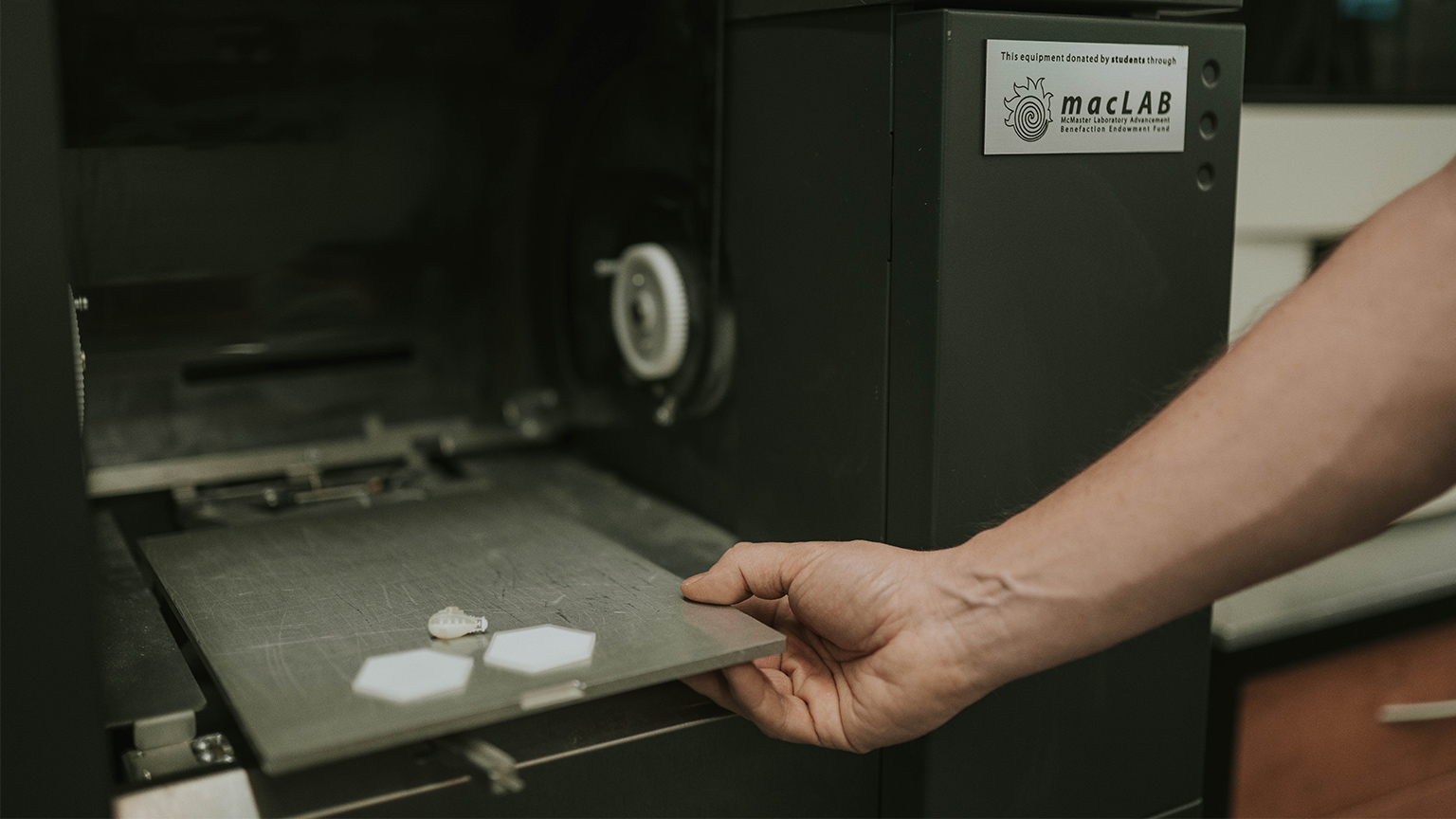
Every year, thousands of students in McMaster University Faculty of Engineering programs enter labs filled with cutting-edge equipment. 3D printers, compound microscopes, concrete mixers and even robotic processors are just some of the industry-standard equipment they’ll encounter. What many may not realize is that behind much of this equipment is a quiet but powerful force: the macLAB Endowment Fund.
Launched in 1997 by a group of forward-thinking students and faculty, the McMaster Laboratory Advancement Benefaction Endowment Fund (macLAB) was created to ensure that undergraduate Engineering labs remain modern, innovative and aligned with the evolving demands of the profession. The fund is unique in its structure – entirely student-driven and voluntarily funded.
Each year, Engineering students are asked to contribute $50 as part of their tuition. While the contribution is optional, most students choose to give.
“Last year, 98% of our undergraduate population of around 7,000 students contributed,” says Shar Cai, outgoing macLAB chair on the McMaster Engineering Society. “That means the vast majority are choosing to invest in something bigger than themselves.”
That investment adds up. Each year, macLAB disperses approximately $250,000, funding everything from new lab equipment to special projects like the Hatch capstone project room or reflow ovens for electronics labs. Departments and programs across the Faculty of Engineering submit proposals, often written collaboratively by lab instructors and student reps, and the macLAB board – composed of elected student representatives – votes on which projects to fund.
“It’s incredibly rewarding to see how seriously students take this process,” Cai adds. “They’re not just thinking about their own needs, but about what will benefit future students too.”
It’s incredibly rewarding to see how seriously students take this process. They’re not just thinking about their own needs, but about what will benefit future students too.
The impact is tangible. In the Integrated Biomedical Engineering and Health Sciences (iBioMed) program, students now use advanced compound microscopes funded by macLAB. Civil Engineering students mix concrete with state-of-the-art mixers. In Electrical and Computer Engineering, new processors and robotics kits are helping students stay ahead in a rapidly evolving field.
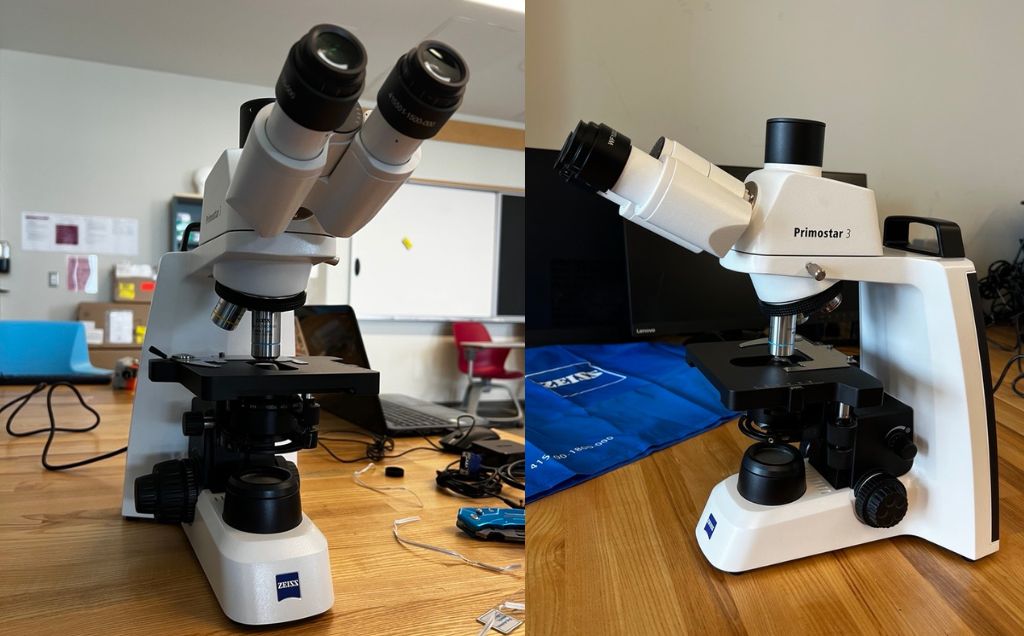
And it’s not just about replacing old equipment. “We’re funding innovation,” says Cai. “New courses need new tools. If we want to be at the forefront of engineering education, we need to support that with the right infrastructure.”
The fund is also a testament to McMaster’s commitment to experiential learning. By giving students a direct role in shaping their educational environment, macLAB fosters a sense of ownership and pride.
“There’s something really special about walking into a lab and knowing that a piece of equipment you’re using was funded by students; by people like you,” Cai remarks. “It’s a cycle of giving back that doesn’t require a huge sacrifice but makes a huge difference.”
In the latest round of funding disbursement, equipment for studying Faraday’s Law, a cross-program drug discovery platform and a portable scanning electron microscope is just some of the equipment getting the macLAB green light.
Looking ahead, the hope is to increase awareness of the fund and its impact. While some labs feature plaques acknowledging macLAB’s contributions, many students still don’t realize how deeply the fund is woven into their daily learning experience.
“It’s not just about funding equipment,” Cai says. “It’s about empowering students to shape their own education.”