

Event information
Projects include developing antifouling zwitterionic materials, teaching algebra through animation, and analyzing atmospheric distortions with infrared laser transmissions, and so much more.
Hosted by McMaster Engineering, The Centre for Career Growth and Experience and the McMaster Society for Engineering Research (MacSER), this free event brings together students, faculty, staff, industry and the public to celebrate curiosity, creativity and discovery.
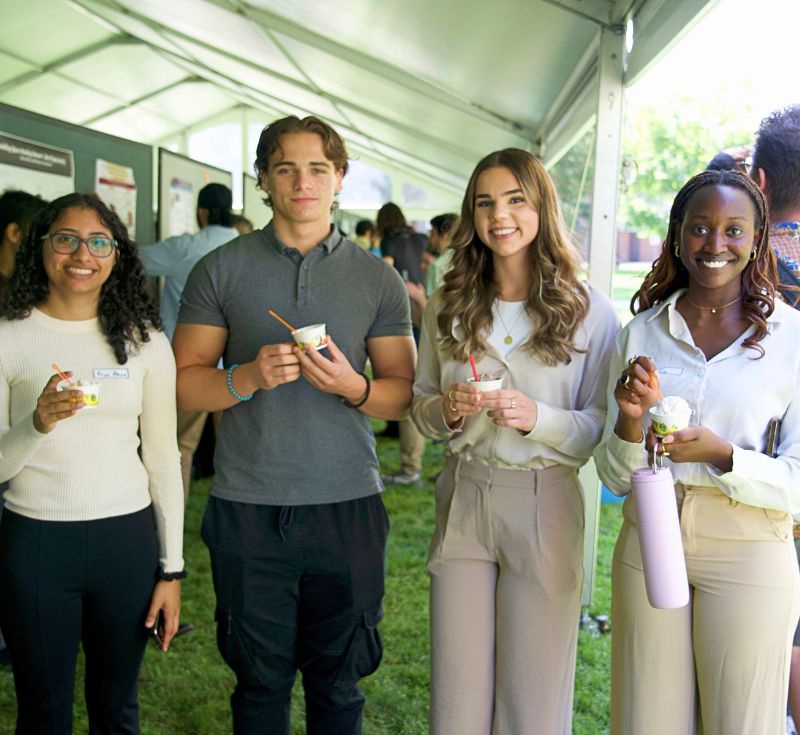
Oh, and did we mention free ice cream*?
Details:
- Tuesday, August 19 from 11 a.m. to 3 p.m. – Drop-in style
- JHE field (outside of the John Hodgins Engineering building on McMaster University’s campus – look for the tent)
- Paid parking on campus – more information on Parking Services
*Ice cream while supplies last. We will do our best to ensure a variety of flavours but we can’t guarantee we’ll be able to accommodate all dietary needs.
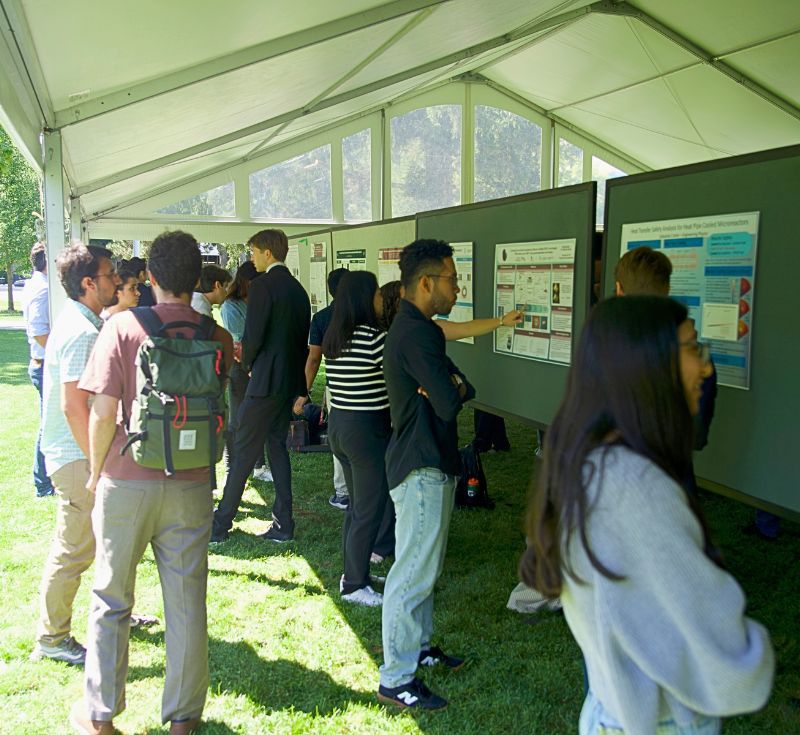
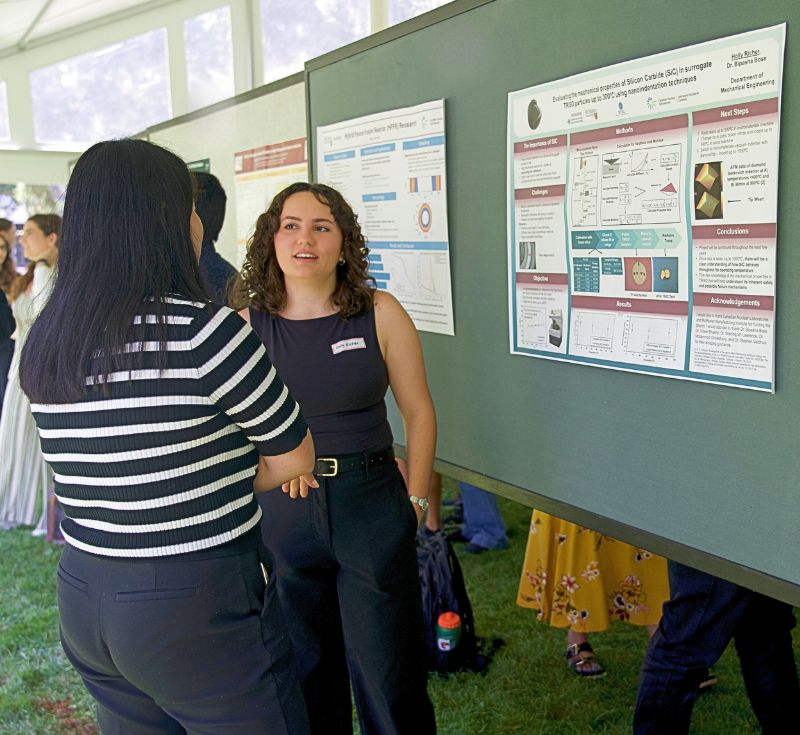
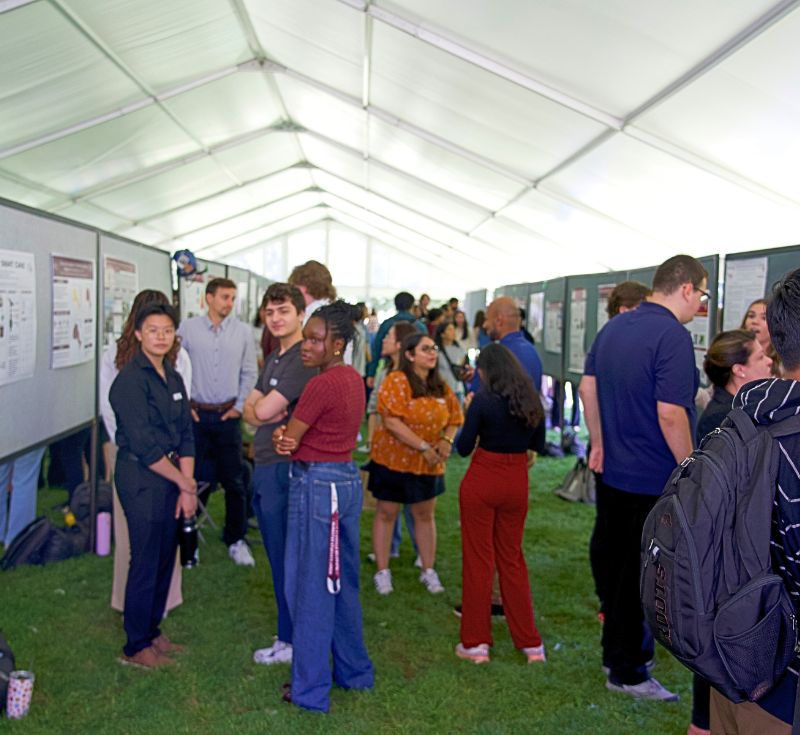
Photos from 2024 Showcase:
Dendritic fibrous nanosilica (DFNS) offers significant potential for biomedical applications due to their favourable physiochemical properties, including good biocompatibility, high specific surface area, tunable pore size and volume, and ease of surface modification. In our lab, we have synthesized amine-functionalized DFNS particles ~2000 nm in diameter. By also exploring carboxylic acid functionalizations, we can further enhance the loading and retention of cationic drugs into these particles, making DFNS well-suited for tunable pH-sensitive drug delivery. This will allow for either crosslinking within POEGMA-Ald/POEGMA-Hzd hydrogels or preferential loading of antibiotics and protein therapeutics for controlled release under varying pH conditions. Material properties such as rheological behavior, degradation, stiffness, and drug loading and release will be characterized and optimized. The resultant hydrogels have a wide range of potential applications, particularly in controlled drug release for wound dressing and healing applications.
ABSTRACT COMING SOON
Quaternary ammonium (QA) is a widely used anti-infective compound found in many surface disinfectants. Its antibacterial activity comes from its positive charge and long alkyl chain, which induce death in bacterial cells by disrupting the cell membrane through direct contact. Recent work from the Hoare lab involved incorporating QA into poly(oligo ethylene glycol) methacrylate (POEGMA) polymers to synthesize antibacterial materials for applications in wound dressings and surface coatings. However, the antibacterial potency of QA, measured by its minimum inhibitory concentration (MIC), tends to diminish once it is polymerized, likely due to steric hindrance and reduced mobility of the QA groups within the bulky POEGMA structure. To address this, this project aimed to synthesize POEGMA-QA polymers with QA groups tethered farther from the polymer backbone using extended OEGMA chains, minimizing interference from the surrounding structure. First, the cytocompatibility of the monomer was assessed against C2C12 mouse myoblast cells, and the tethered polymer showed improved viability to the original. In terms of antibacterial properties, the tethered monomer and polymer were tested against gram-positive and gram-negative bacteria and compared in their efficacy to the original, non-tethered, QA. The newly synthesized monomer demonstrated 8-fold higher antibacterial potency against Pseudomonas aeruginosa compared to the original monomer, and both demonstrated similar antibacterial activity against Staphylococcus aureus. However, upon polymerization, the tethered polymer showed a 32-fold decrease in potency against S. aureus relative to the untethered polymer, although this may be attributed to contamination of the polymer. In order to improve the antibacterial properties of the tethered polymer, future work for this project will focus on optimizing sterilization techniques and synthesizing new formulations varying concentrations of QA. Ultimately, this work will contribute to the development of more effective and cytocompatible antibacterial materials for use in wound care and surface disinfectants.
Authors: Alina Asad, Evelyn Cudmore, Mya Sharma, Todd Hoare
Paper cups are widely perceived as environmentally friendly; however, their common polyethylene (plastic) coating hinders biodegradability and complicates recycling. This project aims to address this issue by eliminating the plastic layer and replacing it with a biodegradable, cellulose-based coating. By utilizing cellulose, a naturally occurring and renewable polymer, the proposed design ensures full biodegradability without compromising the cup’s functionality. This innovation offers a sustainable alternative to conventional paper cups, reducing landfill waste and environmental pollution.
Authors: Angel La, Akhilesh Pal, Roozbeh Mafi, Kushal Panchal
| Drug delivery vehicles are often hindered by low loading capacities, insufficient penetration, low targeting efficiency, and difficult scalability. The use of these complex vehicles in agriculture specifically remains untapped due to the combination of these factors alongside the added necessity for low cost. The Hoare Lab previously developed a low-cost biodegradable starch nanoparticle (SNP)-based Pickering emulsion which can hold hydrophobic drugs in its oil core. Penetration of the emulsion into the chloroplasts of Nicotiana benthamiana leaves was visualized with confocal microscopy. Antibacterial activity of the emulsion was assessed in vitro and demonstrated complete kill against Pseudomonas syringae. Cytotoxicity of the leading emulsion was assessed on 3T3 and C2C12 cell lines. Average cell viability remained above 70% after treatment with 1% emulsion or less. In planta studies were conducted to further assess the efficacy of the antibacterial action and penetration of the emulsion. Preliminary results suggest effective in planta antibacterial activity of the emulsion, however future experimental procedures should refine the procedure. These recent experimental efforts demonstrated the capacity of this starch-based drug delivery system to stably contain hydrophobic antibacterial compounds and demonstrate a strong foundation by which they can help defend plants against unwanted infections. Authors: Asha Bouwmeester, Cameron Macdonald, Dr. Todd Hoare |
The electrochemical reduction of carbon dioxide (CO2R) offers an approach to reducing the emissions of industrial processes through the utilization and conversion of CO2 into various products, such as carbon monoxide (CO)—a key feedstock for synthesis gas . State-of-the-art CO2R systems are commonly performed in alkaline and neutral conditions to steer the reaction kinetics towards CO2R over the parasitic hydrogen evolution reaction (HER). However, these conditions lead to carbonate formation and salt precipitation, disrupting CO2 gas diffusion and product formation. Here, we thought to tackle this challenge by performing CO2R in modified acidic conditions to impede carbon loss into carbonates, as well as salt formation. Nevertheless, with a pure acid electrolyte (0.05 M H2SO4), the HER selectivity increases due to the increased concentration of hydrogen ions. Studies show alkali cations provided in neutral solutions (i.e. Li+, K+, Cs+) are necessary to supresses HER and stabilize CO2R intermediates. Electrolyte engineering with alkali cations was investigated in this research to demonstrate the effectiveness in acidic systems. Therefore, Cs+ has successfully proven improved CO selectivity (>85%) while minimally reintroducing salt formation.
Authors: Emilee Brown, Rem Jalab, Drew Higgins
As the world moves away from fossil fuels that contribute to global warming, the use of biofuels is rising. The rapid expansion of biodiesel has resulted in an oversupply of glycerol byproduct (10-16% w/w), causing industries to burn it as waste and release more greenhouse gases. It is crucial to find a cost-effective and efficient way to convert glycerol into its many byproducts that are high in demand and have use in various industries. We demonstrate a pulsed electrochemical system that converts glycerol into its value-added products with high selectivity and stability. Glycerol oxidation was carried out in a 3M KOH + 1M glycerol solution for 1.5 hours using a bifunctional nickel-gold catalyst with varying pulse conditions. Compared to pulse conditions of 1 V vs RHE and 1.25 V vs RHE, adding a surface cleaning pulse potential (0.55 V vs RHE) reduced activity decay from 42% to 19%. Oxidation with a Au electrode favoured glycolic acid (68%) at 1.25 V vs RHE, while the NiF/Au catalyst increased selectivity of lactic acid (19%) and glyceric acid (26%). Periodic pulses allow for removal of AuOx and refresh Ni(OH)₂ active sites, allowing for sustained and tunable production of high-value acids. Here we demonstrate a durable, low-energy route to high-value acids from glycerol waste.
Authors: Hermione French, Mahdis Nankali
Utilizing corn stover for electricity using biogas generation is a promising method for rural communities. This research focuses on optimizing the biogas generation through a twin screw extrusion pretreatment. Corn stover samples with different moisture content were extruded at varying temperatures, speeds, and feed rates. Torque and exit temperatures were recorded during extrusion. After the extrusion moisture, water retention, specific surface area and particle size were all measured. Microscopy was also conducted. Lower screw speed, higher moisture and a higher feed rate correlated with a smaller particle size. Higher screw speed and lower moisture showed improved water retention. Feed rate displayed no correlation with water retention. Low moisture content and high screw speed samples showed higher specific surface area. These results suggest that samples that had too much shear force were going through an irreversible drying process called hornification which would prevent water from penetrating the fibers and enzymes from reaching active sites. This research suggests that in the future more testing should be conducted to minimise particle size while avoiding hornification of the material.
Authors: Isaac Khan, Michael Thompson, Heera Marway
Photocatalysis presents a sustainable method for environmental remediation and hydrogen production by utilizing solar energy to drive otherwise unfavorable reactions. Titanium dioxide (TiO₂) is a well-established photocatalyst due to its chemical stability and oxidative power. However, traditional slurry-based TiO₂ systems face limitations including poor recyclability, difficulty in recovery, and reduced operational lifetime. To address these challenges, this study focuses on fabricating floating TiO₂-polypropylene (PP) composites through thermal adhesion. TiO₂ nanoparticles (P25) are mechanically embedded onto PP particles by heating the polymer near its melting point, enabling adhesion without chemical binders. Composites are produced in three mass ratios of PP to TiO₂: 9:1, 2:1, and 2:3. These materials are characterized through scanning electron microscopy (SEM), thermogravimetric analysis (TGA), floating percentage measurements, and dye degradation assays using methyl orange (MO) as a model contaminant. The most promising composition, based on preliminary robustness and photocatalytic performance, is intended for further evaluation in hydrogen evolution reaction (HER) testing. This work aims to develop a simple, scalable, and reusable floating photocatalyst platform for use in water purification and green hydrogen generation.
Authors: Jasper Hopkins, Alibek Kurbanov, Julie Liu, Stuart Linley
When assembling biocompatible drug delivery vehicles, challenges such as maintaining controlled drug release and increasing vehicle structural integrity after bodily integration must be considered. The aim of this project is to construct a POEGMA-based interpenetrating network hydrogel, containing covalent and physical crosslinks, for reduced degradation and ultrasound-triggered pulsatile drug release. Of the two interpenetrating hydrogel networks, one would be ultrasound-labile, degrading under ultrasound application to release a portion of the stored drug. The other network would be ultrasound-stable to maintain suitable mechanical properties over longer periods of time for repeated drug delivery. The current double network is composed of POEGMA-Ald and POEGMA-Hzd (covalent, ultrasound-stable) with the addition of sodium alginate and calcium chloride (ionic, ultrasound-labile). Preliminary swelling and degradation testing of the double network hydrogels have shown increased structural integrity, while exploration of mechanical and rheological properties have contributed to further optimization of the hydrogel composition. Initial drug release testing finds higher rates of release at times of ultrasound application, though further composition alterations must be made to optimize drug-release timing during the application of ultrasound. The goal of this project is to develop a less invasive means of administering repeated, personalized medication doses for improved patient quality of life.
Authors: Julia Sulug, Kayla Baker, Todd Hoare
Glycosylation of recombinant therapeutic proteins is a critical quality attribute that varies greatly during production. Monitoring glycosylation during production is essential for ensuring product quality; however, many current analytical techniques are time- and labour-intensive, costly, and performed only after production is complete. We explore biolayer interferometry (BLI), a label-free optical technique, as a real-time process analytical technology (PAT) for glycosylation analysis. Using lectin-based biosensors with high specificity towards certain mannose-containing glycans (GlyM), we assess the glycosylation status of a protein-based SARS-CoV-2 vaccine antigen by comparing native and enzymatically deglycosylated samples. Deglycosylation was achieved using PNGase F, with reaction conditions optimized for maximal cleavage efficiency. BLI measurements with GlyM biosensors and SDS-PAGE gels confirmed the removal of targeted glycans, validating the method’s sensitivity and potential utility in bioprocess monitoring. These results support the application of lectin-based BLI for real-time glycosylation tracking in therapeutic protein production.
Authors: Juliana Brank, Nardine Abd Elmaseh, Avian Yuen, Trina Racine, Kyla Sask, David Latulippe
In recent decades, extensive use of polymer resins and fibers has led to an accumulation of waste polymers in landfills and the natural environment that threatens human health, promotes ecosystem degradation, and contributes to climate change. Of these, polypropylene (PP) is one of the most highly produced thermoplastics, with a global production of 56 million metric tons (tonnes) in 2018, projected to reach 88 million tonnes by 2026. Due to their high melt flow index and carbon-rich composition, thermoplastic wastes are an attractive material for recycling. To mitigate the detrimental environmental effects of waste polymers, it is desirable to identify opportunities to upcycle these materials into useful products, fuels, and chemicals. Here, we propose a floating heterogeneous waste polymer composite with embedded photocatalyst for sunlight-driven hydrogen production over wastewater, coined solar reforming. Floating PP with graphitic carbon nitride (g-C3N4, CNx) composites were synthesized while evaluating the effects of material composition and synthesis temperature on photocatalytic performance measured through methyl orange dye degradation and hydrogen production during solar reforming. It was hypothesized that decreasing the ratio of PP to g-C3N4 would increase its photocatalytic activity, while an optimal synthesis temperature would maximize activity by maximizing the photocatalyst surface availability. Similarly, it was theorized that the degree of photocatalytic activity was reflective of the amount of hydrogen produced during solar reforming. Findings based on these hypotheses would establish efficient synthesis of floating PP/CNx composites for future research into their solar reforming capabilities.
Authors: Julie Liu, Alibek Kurbanov, Jasper Hopkins, Stuart Linley
Biofouling is a significant challenge when designing materials for biomedical applications, as protein and cell adsorption can hinder medical device function and induce unwanted immune responses. Poly(oligo(ethylene glycol) methacrylate) (pOEGMA) and zwitterionic-based materials are non-antigenic and have been used in the field for their tunable mechanics and high antifouling capabilities, respectively. Copolymer formulations of OEGMA and zwitterionic monomers have been explored in the past, though further advancements are required to enhance their functionality and effectiveness. This study explores the synthesis of two novel pOEGMA-based zwitterionic monomers, Sulfobetaine-OEGMA (SO) and OEGMA-Sulfobetaine (OS). These new materials aim to leverage both the tunability of pOEGMA and the enhanced antifouling nature of zwitterions with a single monomer unit that contains both functionalities. The SO monomer is synthesized via a 3-step pathway involving two substitution reactions, followed by a sultone ring-opening to form a quaternary ammonium and sulfo group. The OS monomer is also synthesized via a 3-step pathway, first with the formation of a succinic acid derivative of OEGMA, followed by a Steglich esterification and a sultone ring-opening reaction. Monomer products and precursors were characterized using ¹H NMR, and gel permeation chromatography (GPC). Once large-scale amounts of the SO and OS monomers are obtained, they will be further polymerized with functional aldehyde and hydrazide groups to form pSOA30 and pSOH30, as well as pOSA30 and pOSH30. These polymer systems will be combined to form hydrogels, which will then be characterized for their gelation time, rheological properties, swelling and degradation profiles. In addition, hydrogels formed from pOEGMA, pSulfobetaine and pOEGMA-pSulfobetaine copolymers will be tested to compare with the new pSO and pOS materials. This work provides a foundational step in developing a novel class of antifouling materials for biomedical applications, with the potential to improve performance and longevity of implantable devices and biosensors by minimizing biofouling-induced complications.
Authors: Kaci Kuang, Nahieli Perciado Rivera, Norma Garza Flores, Todd Hoare
| The Haber process, used to convert nitrogen to ammonia for agricultural and commercial use, is causing widespread nitrate accumulation in water systems. Nitrate accumulation is harmful to aquatic life, and unsafe for human consumption. In mitigating nitrate accumulation, and reducing the reliance in the Haber process, the electrochemical conversion of nitrates to ammonia is being explored. Among the metal-based electrocatalysts being studied, Cu shows promise for its high selectively towards ammonia. Although Cu shows high performance, its merit as an electrocatalyst suffers from its low stability. Recently, studies for CO2RR and ORR have found that adding Ag to Cu reduces its mobility. These studies further found that the hydrogen evolution reaction (HER) was suppressed in the CuAg bimetallic system. In this work, we explored CuAg as an electrocatalyst for nitrate reduction to ammonia reactions. We prepared and optimized a bimetallic CuAg system through galvanic exchange and compared its performance for ammonia production against a pure Cu catalyst. Here, we found an overall increase in ammonia faradaic efficiency at potentials between -0.2 and -0.6 V vs RHE. We postulate that the higher performance for the NO3RR system with the bimetallic foil is due to its HER suppression, and decreased Cu mobility. Authors: Leah Pare, Navid Noor, Drew Higgins |
| Canola meal is a protein rich byproduct of Canada’s highest earning crop –canola, represents not only an underutilized source of plant-based protein, but with the involvement of the twin screw extruder it has the potential to open new markets and economic opportunities for Canadian agriculture. This study explores twin-screw extrusion as a value-added process to permeate maximum vesticles and extract proteins in addition to downstream filtering. However, protein entrapment within complex fiber structures and the presence of anti-nutritional factors limit both yield and functionality. Authors: Manpreet Mahi |
| Municipal solid waste (MSW) and related low-carbon fuel sources may be used as a feedstock for syngas production. The steelmaking industry accounts for about 8% of human carbon emissions annually. Syngas can be used to directly reduce iron ore, lowering the carbon intensity of steel if the syngas is produced from low-carbon fuel sources. This work focuses on the design of a gasification-based syngas production method of MSW for steelmaking. The gasification process was modeled using Aspen Plus and tailored to the steelmaking use case which generally favours a higher CO:H2 ratio compared to typical syngas production methods. A carbon-capture process was modeled in ProMax to account for the stringent limits of CO2 in DRI shaft furnaces and to further reduce the carbon footprint of the process. Results indicate that the syngas produced from gasification of MSW and its derivatives produces a syngas with a CO:H2 ratio ranging from 1:2 to 2:1, depending on the feedstock. The higher ratios would be appropriate for the steel use case. Further research will conduct a eco-techno-economic analysis to determine if MSW gasification is a promising technology to economically decarbonize the steel industry. Authors: Max Tomlinson, Mashroor Rahman, Yumna Ahmed, Giancarlo Dalle Ave, James Rose |
| Oceans are natural carbon sinks, regulating the amount of anthropogenic carbon dioxide (CO₂) emissions in the air. However, rising emissions are disturbing the oceans capacity to absorb CO₂ resulting in ocean acidification. To mitigate this and to support the removal of CO₂ in the atmosphere, ocean-based carbon capture offers a promising solution. This study explores a method for extracting CO₂ from electrochemically treated seawater, contributing to the development of ocean-based carbon capture technologies. To simulate the acidic conditions produced from seawater electrolysis, solutions of 0.2 M HCl and 4 mM KHCO₃ were continuously mixed in a PTFE bead-packed reactor. The generated CO₂ from the reaction was captured and stored in a gas chromatography bag for analysis. Throughout the experiments, parameters such as the flow rate and the overall system setup were varied to reduce oxygen contamination and increase CO₂ extraction efficiency. System modifications included sealing the reactor and adding a vacuum pump to the waste container. Initial trials showed high levels of oxygen alongside CO₂ indicating leakages. Sealing and improving the overall setup contributed to a drop in oxygen and an increase in CO₂ extraction efficiency to 64%. This work supports the advancement of scalable CO₂ capture methods that can feed into downstream utilization processes, such as electrochemical conversion to valuable products, thus contributing to a circular carbon economy and negative-emissions technologies. Authors: Natalie Peluchon-De La Garza, Mahtab Masouminia, Ashkan Irannezhad, Drew Higgins |
| Biotherapeutics, including engineered viruses, represent a rapidly growing sector of medical advancement in oncology and vaccine therapy. However, water usage in production of these biologics is over 100-fold of that for small molecule drugs such as Aspirin, making biomanufacturing a resource-intensive process [1]. Downstream chromatography, a process that removes harmful impurities, represents 62% of the overall water usage in typical facilities [2]. As biotherapeutics become more widely used, manufacturing modes that conserve water will become increasingly important for sustainable production. One key buffer type required for chromatography are caustic cleaning agents, used for clean-in-place (CIP) procedures between chromatography cycles. Buffer recycling of these caustic agents had been previously unexplored within literature, despite their increased hazardous nature and disposal risks in comparison to salt-based buffers. Our group’s previous work has shown that purified DNA has a similar ionic elution profile to viruses, making it a suitable surrogate feed for preliminary research into recycling opportunities. Sartobind Q AEX membranes were used on the ÄKTA avant 150 system to perform 10 sequential bind-and-elute experiments. Three conditions were tested to evaluate the impact on membrane binding capacity: zero-recycling, partial recycling, and full recycling of the caustic agent (1 M NaOH). Across the three degrees of recycling, a comparable UV chromatogram was observed in all experiments with no significant change in binding capacity. A 90% reduction in caustic agent volume and a 13-15% reduction in overall buffer consumption was achieved. Overall, this work demonstrated a method for significant water reduction in the downstream biotherapeutic purification train. [1] A. Jungbauer and N. Walch, “Buffer recycling in downstream processing of biologics,” Current Opinion in Chemical Engineering, vol. 10, pp. 1–7, Nov. 2015, doi: 10.1016/j.coche.2015.06.001. [2] K. Budzinski et al., “Introduction of a process mass intensity metric for biologics,” New Biotechnology, vol. 49, pp. 37–42, Mar. 2019, doi: 10.1016/j.nbt.2018.07.005. Authors: Nora Rassenberg, Claire Velikonja, Kaitlin Campagna, Cindy Shu, Brandon Corbett, Giancarlo Dalle Ave, David Latulippe |
Canola protein isolate (CPI) is a promising biopolymer for the development of sustainable materials, owing to its inherent hydrophobicity and potential for functional surface coatings. This study focuses on the development of biodegradable, antimicrobial coatings by enhancing CPI films through the grafting of essential oil-derived monomers via a Michael addition reaction. Initial efforts centred on optimizing CPI film formation using various plasticizers and essential oil sources. The resulting films were evaluated for mechanical properties, hydrophobicity (via water contact angle measurements), and antimicrobial activity. A notable increase in contact angle compared to control films confirmed enhanced hydrophobicity, supporting the potential of CPI-based coatings in sustainable and functional material applications. The antimicrobial efficacy of these films against E. coli and S. aureus is currently under investigation. These findings underscore the potential of CPI films for sustainable packaging applications, particularly in the agricultural sector.
Authors: Olivia Pino, Ava Ettehadolhagh, Todd Hoare
| Advances in tissue regeneration and transplant therapies have been limited due to conventional cell-sheet harvesting methods, which often apply harsh enzymes that may cause damage to the extracellular matrix and cell-cell junctions. To overcome these issues, enzyme-free cell harvesting technologies are being explored. This project investigates the application of thermoresponsive poly(oligoethylene glycol methacrylate) (POEGMA)-based coatings as an alternative to enzymatic cell sheet harvesting, aiming to develop membranes that can both support cell growth and facilitate thermally triggered delamination. POEGMA polymers are promising for this application due to their inherent cytocompatibility, low protein adsorption, and thermoresponsive properties. The coatings are fabricated using the POEGMA polymers through a simple dip-coating procedure, forming thin-film hydrogels onto the surface of cellulose acetate membranes. The POEGMA hydrogels support the growth of weakly adhesive cells by providing a hydrated, anti-fouling surface, while the porous cellulose acetate membrane beneath ensures the transport of nutrients to sustain cell viability. GFP-labelled 3T3 fibroblast cells were used to monitor adhesion and delamination behaviour across different coating formulations by incubating cells on the coated surfaces and then using the thermoresponsive nature of the polymers to trigger cell delamination at 4°C. Through confocal microscopy, the coatings demonstrate their ability to support cell adhesion and proliferation. However, while some delamination of the cells has been observed at 4°C, it was inconsistent, and many of the cells remained adhered to the membrane. In order to optimize cell delamination, future studies will examine alternative coating methods and materials. Ultimately, this work establishes the potential for a scalable and customizable platform for engineering tissue constructs, in an attempt to offer a gentle, enzyme-free alternative to conventional delamination methods, and holds promise for broad application in wound healing, grafting, and tissue engineering. Authors: Prabhnoor Kaur, Mya Sharma, Todd Hoare |
| Wound dressings often adhere to the wound bed due to lack of consistent moisture, resulting in wound damage during dressing changes. The aim of this project is to develop and examine components of a wound dressing that can provide antibacterial activity and be seamlessly removed without causing wound damage in order to accelerate healing and prevent wound pain. Modified guar gum was hydrolyzed to achieve a hydrogel to leverage its high-moisture properties. Nano emulsions were prepared with probe sonication and characterized using Dynamic Light Scattering (DLS) and Zeta potential measurement to optimize nanoparticle size and stability over 30 days, thus optimizing for antibacterial activity. Two nanofiber formulations were investigated with Zeta potential measurement to compare stability of zwitterionic and deacylated nanofibers for structural integrity. Nano silica particles were functionalized and loaded with the antibacterial agent thymol, with release kinetics assessed over 24 hours using high-performance liquid chromatography (HPLC). Under Lab2Market, 40+ interviews with wound care experts were conducted to validate a market need. Nano emulsion studies showed that higher sonication amplitudes and shorter sonication times produced smaller nanoparticles. Aminated nano silica particles achieved 41% thymol release in 24 hours, though the observed initial burst and plateau deviated from typical release curves seen in literature, indicating the need for further investigation. Interview insights validated that infection control and low adherence are important design priorities for an innovative smart wound dressing to help accelerate healing and relieve pain in chronic wound patients. Authors: Syed Umair, Parizad Katila, Hugo Lopes, Todd Hoare |
Poly[oligo(ethylene glycol) methyl ether methacrylate] (POEGMA) hydrogels are extensively researched in biomedical applications for their tunable properties and biocompatibility. This research focuses on optimizing and characterizing hydrogels from a novel type of POEGMA polymer, tethered hydrazide-functionalized POEGMA. This material was prepared by directly tethering hydrazide functional groups to the OEGMA brushes situated along the polymer backbone. Through this synthetic approach, the tunability from the OEGMA brushes and the reactivity from the hydrazide group were simultaneously enhanced, thus allowing the material to self-gel in aqueous environments. Optimized hydrogel formulations demonstrated rheological and mechanical properties that were particularly suitable for 3D printing applications. Leveraging the material’s self-gelling properties, the compatibility of the material with electrospinning, another fabrication technique, was also explored. Thin mats of uniform, continuous fibers with minimal beadings were achieved when electrospun with the tethered POEGMA. Anti-fouling properties of this material are currently of interest for further investigation, given its long brush structure and self-gelling characteristics.
Authors: Tracy Nguyen, Nahieli Preciado Rivera, Maham Munir, Norma Garza Flores, Todd Hoare
The internal structure of asphalt pavement is crucial for its mechanical performance and long-term durability. Understanding these microstructural characteristics is essential for optimizing pavement design.
This study utilized X-ray Computed Tomography (XCT) to investigate the internal microstructural features of asphalt mixtures, specifically focusing on air void distribution, aggregate packing, and binder continuity. High-resolution XCT scans of compacted asphalt specimens were analyzed to quantitatively and qualitatively assess air void content, aggregate orientation, and binder distribution.
Our findings demonstrate that XCT provides valuable insights into how mixture design and compaction quality impact the internal structure of asphalt. This research highlights XCT as a powerful tool for microstructural analysis, contributing to a better understanding of asphalt performance. Future work will explore failure modes, failure location and the effect of alternative filler materials to enhance pavement sustainability.
Structural fire engineering is increasingly adopting performance-based and probabilistic approaches to account for uncertainties associated with fire events and construction. The FIRESURE module enables uncertainty quantification in structural fire scenarios, supporting the development of risk-informed, fire-resilient designs. However, access to such tools is often limited by steep technical learning curves and confusing interfaces.
This project focuses on the development of a graphical user interface (GUI) for FIRESURE, with the goal of making advanced fire modelling and uncertainty analysis more accessible to industry professionals. The interface is being designed to simplify the user experience by allowing users to define fire scenarios, input probabilistic parameters (e.g., room size, ventilation, material properties), and visualize simulation outputs with a probability of failure/fuel load density curve; all without requiring in-depth coding knowledge. Built with an emphasis on usability and functionality, the GUI connects directly to the underlying FIRESURE engine, which was created by my supervisor.
By translating probabilistic modelling into a GUI, this work aims to bridge the gap between advanced fire research tools and practical engineering applications. Ultimately, the GUI enhances the impact of FIRESURE by promoting uncertainty-based fire design methods to a broader audience, allowing industry professionals to better assess and manage structural fire risks in any context.
| Hydrogen has emerged as a promising energy alternative in global decarbonization efforts. To enable widespread hydrogen use, it must be stored securely in large commercial volumes for extended periods. Underground Hydrogen Storage (UHS) addresses these challenges by allowing significant volumes of hydrogen to be safely stored in deep geological formations such as depleted oil and gas reservoirs, saline aquifers, and salt caverns. These formations are highly stable and have the capacity needed to create a reliable hydrogen supply for large-scale use. However, for UHS to be feasible, microbial impacts on these reservoirs must be thoroughly assessed. Microorganisms that naturally reside in these reservoirs can create challenges and affect reservoir quality. Commonly found microorganisms include sulfate-reducing bacteria (SRB), methanogens, and acetogens. While SRB and methanogens have been greatly studied, the impacts of acetogens remain largely unexplored. Acetogenic biochemical processes can induce mineral dissolution and alter reservoir properties, particularly porosity and permeability. To investigate these effects and characterize reservoir rock, we employ X-ray Diffraction (XRD), Fourier Transform Infrared Spectroscopy (FTIR), and X-ray Computed Tomography (XCT). These analyses allow the monitoring of mineralogical and morphological changes to reservoir samples. Fluid flow experiments are used to quantify saturation, permeability, and porosity. Additionally, aging experiments are conducted using formation fluid containing acetic acid, a metabolite of acetogens. Aging in this fluid induces biogeochemical transformations, allowing the quantification of mineral dissolution and porosity and permeability changes over time. Preliminary results indicate that aging in acetic acid causes mineral dissolution and resultant increases in pH and conductivity. By filling this gap of knowledge on acetogens, this work can contribute important insights on maintaining reservoir integrity and protecting stored hydrogen. These findings are crucial for ensuring UHS remains secure and efficient in the long-term, and establishing its role as a cornerstone in the transition to renewable energy systems. |
I evaluated North Mountain Basalt’s suitability for subsurface CO₂ storage by characterizing its pore network from the micrometer down to the nanometer scale. Three-dimensional image volumes were captured using X-ray computed tomography (XCT) for larger pores and focused ion beam–scanning electron microscopy (FIB-SEM) for nanopores. Raw image stacks were pre-processed in Dragonfly and Fiji, then segmented using thresholding and machine learning to classify pore and mineral structures.
From the segmented volumes, I calculated bulk porosity and applied pore-network analysis to extract pore-size distributions. XCT imaging captured and plotted the larger pores in the rock, while FIB-SEM revealed the nanopores. Further processing could quantify accessible versus inaccessible pore networks to better predict the basalt’s characteristics for CO₂ injection and storage.
These findings indicate that North Mountain Basalt has strong potential for carbon storage due to its large pore volume and surface area. This research represents an early step toward preparing the formation for future CO₂ injection.
| PyGeochemCalc (PyGCC) is an open-source Python package that performs various thermodynamic calculations from ambient to deep Earth conditions. PyGCC was developed to address the limited availability of accessible geochemical data and computational tools within the geochemical community. This project expands PyGCC’s functionality by enabling the generation of PHREEQC-compatible thermodynamic databases, which will enhance geochemical modelling capabilities across a variety of terrestrial planetary environments. The integration involved implementing data extraction from PHREEQC-formatted databases into PyGCC’s existing data structures and developing the first iteration of PHREEQC database-writing functionality. The runtime of database generation for all formats will be reduced by approximately 50% by reusing a data structure from the reading function in the writing function. Preliminary testing confirms successful reading of PHREEQC-formatted data within PyGCC. Further validation is required to ensure accuracy across multiple source databases and to verify full compatibility with PHREEQC. Once complete, this integration will streamline thermodynamic database preparation, improve computational efficiency, and expand the range of geochemical simulations supported by PyGCC. |
Digital twins play an important role in systems in which computing is to be off-loaded to a cloud infrastructure, e.g., due to resource constraints of the physical system. Pertinent examples are autonomous vehicles which require substantial computing power to perform advanced tasks, such as AI-enabled object detection. However, the architectural preferences, technological choices, task off-loading strategies, and safety mechanisms in automotive digital twins are currently not well understood. To investigate such issues, in this work, we develop a digital twin of an autonomous scale vehicle, capable of AI-enabled object detection, path computation, and the subsequent control of the vehicle along the computed path. We rely on state-of-the-art technology, including the lightweight ZeroMQ communication middleware and the YOLO convolutional neural network-based real-time object detection system. This project contributes to the rapidly growing field of safety-critical digital twins, and serves as a case study for multiple research projects in the host lab.
McMaster Start Coding and STaBL Foundation have introduced over 30,000 children to coding. One of our tools, MusicCreator, allows children to drag and drop notes to create a measure as a way of learning how to programmatically create melodies in ElmMusic, our music library. This is great for children who can use drag-and-drop, but is not accessible to children with visual impairments. MusicCreator 2.0 will be a more powerful version of MusicCreator, capable of creating multi-voice scores, and doing it without any visual interaction. The music, the code, and the state of the editor are all voiced using speech synthesis (standard on every modern web browser), and all input actions are keyboard-based. Our design incorporates lessons learned by analyzing existing music creation and accessible coding tools, as well as recent academic research. MusicCreator 2.0 is still being prototyped, but when complete will be the most accessible coding tool for children, which also happens to double as a nifty groove creator and orchestral score editor.
Mobile health applications often compromise user privacy through opaque data collection practices, relying on complex privacy policies that users rarely read or understand. This project addresses the disconnect between users and applications by developing an AI-driven system that detects privacy violations and provides real-time, easy-to-understand explanations during app usage.
A proof-of-concept sleep-tracking app was created with embedded UI elements that update dynamically to reflect privacy violations. The system uses an LLM to generate explanations based on Canada’s PIPEDA legislation, application privacy policies, and user consent configurations. These explanations are integrated directly into the interface through tooltips and interactive elements, eliminating the need to navigate complex documentation. It is essential that these explanations remain readable, logically consistent, and concise enough to display effectively on a mobile device.
The experimental framework examined the relationship between readability and logical consistency in AI-generated explanations, and how this balance changes with response length. Five lengths (15–50 words) and eight privacy violation scenarios were tested. Logical consistency was measured using NLI, while readability was assessed with Flesch-Kincaid grade level and word frequency analysis. Initial results suggest weak positive correlations between NLI and readability scores, between length and NLI, and between length and readability. Segmenting by length showed that length also affected the readability–consistency correlation.
Future work will include real-user testing to assess whether AI-generated explanations and embedded UI elements genuinely improve privacy transparency. This research represents cutting-edge work at the intersection of large language models, user privacy, and human-computer interaction.
| As artificial intelligence (AI) begins to take root in every industry, particularly those where human life is at stake (e.g., automotive, healthcare), the question of safety arises. Users must have confidence in AI components, especially in safety-critical systems. This confidence depends on a software engineer’s ability to justify every step of their development and deployment pipeline. Under the supervision of Professor Sébastien Mosser, whose research focuses on software safety, composition, and assurance cases, my work started with creating AI pipelines that could be transparently justified using formal reasoning tools. As I continued, I had the task of testing three different AI models for a specific purpose to determine which one performed the best. This brought my attention to the lack of standardized testing for AI models in general. The need arose to benchmark AI models consistently across formats and frameworks as a method of building safe software pipelines. This led me to develop BenchmarkEngine, a simple framework for benchmarking machine learning models with a plugin-based architecture. The system separates models, datasets, and metrics into moveable components, enabling cross-format benchmarking. Tests measured accuracy, inference time, model size, and memory usage, as well as comparisons between original and quantized models. The framework successfully produced performance evaluations for models from multiple ecosystems, displaying how format and compression affect both efficiency and accuracy. This standardized evaluation supports assurance cases by providing objective, reproducible evidence for model selection. Although the engine still has lots of room for improvement, the benchmarking inside a modular pipeline not only improves fairness and efficiency in AI model comparison but also contributes to the broader goal of software safety. By integrating consistent performance evaluation into the development process, the reliability of AI components in safety-critical and production environments is strengthened. |
| Students often struggle with internalizing the concepts of algebra taught in earlier grades and consequently struggle with higher level math, particularly when they are required to learn about functions and calculus. Existing literature suggests that algebra expertise is predictive of positive educational outcomes in general, making algebra a pivotal subject on which to focus educational efforts. In particular, our goal is to enhance our existing online tools which allow students to create animations using algebraic code. We find that teaching periodic functions to students through static graphs is unintuitive. Students struggle to connect polynomial functions as they are written to graphs and animations. We used design thinking to structure our research. Although animation is really motivating for children, putting pressure on mentors to help them create animations, it was hard to go beyond giving them animation recipes to follow. We wanted them to understand the ingredients, and build their own animation recipes, in the same way that they build their own static graphics from basic shapes. Through a process of iterative prototyping and gathering feedback from coding mentors, we developed a tool following established UI principles. This tool shows students how to break complex animations into basic building blocks (scaling and translation in time and space), and how to translate between algebraic and function-composition representations. By giving students hands-on experience in generating creative animations and graphics, we make the learning process easier and more engaging. |
Generating scientific computing software (SCS) creates the opportunity for improved traceability, understandability, and deduplication in all software artifacts. From software requirements specification documents to code that is well documented with a variety of test cases, the Drasil framework, written in Haskell, aims to implement SCS generation. Using a stable knowledge base, Drasil is able to take “chunks”, structured modules of knowledge, and generate the many software artifacts needed to solve different scientific computing problems. This research worked to improve the scalability of Drasil’s knowledge database by implementing a new structure which does not restrict chunk types, rather than having to add a separate map for every new Chunk type. Doing so required deduplicating all of the existing UIDs in the database, as it would cause data to be overwritten in the new implementation .The process for fixing within-table duplicates involved determining where each instance was inserted, analyzing the type of duplicate problem (e.g., same UID with different data, chunk extraction, or exact duplicate), and then resolving the issue. For across-table duplicates, the main culprits were two chunk types: QuantityDict, and ConceptChunk. QuantityDict was replaced with DefinedQuantityDict through an analysis of all QuantityDict constructors and their usage, and with DefinedQuantityDict now holding a definition similar to a ConceptChunk, ConceptChunks with corresponding DefinedQuantityDicts were no longer needed. This eliminated all duplicates related to symbol-concept extraction. The work also revealed many problems and insights within Drasil, which will contribute to future improvements. The new, improved chunk database implementation has vastly improved the scalability of future case studies generated with Drasil and has also set up Drasil to be greatly enhanced in the future by uncovering many issues that can now be addressed.
| There are many factors, including safety, comfort, and efficiency, that influence the “best” trajectory for a vehicle. However, not all the factors have equal importance. In particular, safety must be ensured before any other factor is considered. One way to account for this is to integrate Responsibility-Sensitive Safety (RSS), a mathematical model formalizing collision avoidance, with the Rulebooks framework. In Rulebooks, realizations (world trajectories) are ranked based on a pre-ordered set of rules called a rulebook. With safety (RSS) as the top-priority rule, realizations that do not violate RSS will always be ranked higher than those that do violate RSS. The lower-priority rules can then be used to differentiate the realizations based on other desired properties without compromising the RSS safety ranking ensured by the top-priority rule. As a proof of concept, a rulebook of two rules is proposed: the top-priority RSS rule (currently accounting for longitudinal same direction and lateral safe distances only) and a secondary rule of progress to destination. With this rulebook, a realization will be primarily ranked on adherence to RSS, and then secondarily ranked on its progression towards the destination. The RSS rule uses an evaluation tool such as Signal Temporal Logic (STL) or a function to determine whether a realization follows RSS or not. The second-priority rule uses a function that calculates a realization’s progress towards a desired destination. In addition to creating this rulebook, simulations will be used to rank potential realizations for different scenarios. These simulations can empirically evaluate whether implementing the RSS rule as the top-priority holds the same guarantees as RSS (assuming there is at least one input realization that guarantees RSS) while also ensuring that lower-priority rules are considered. |
McMaster Start Coding and STaBL Foundation have introduced over 30,000 children to coding. One of our tools, MusicCreator, allows children to drag and drop notes to create a measure as a way of learning how to programmatically create melodies in ElmMusic, our music library. This is great for children who can use drag-and-drop, but is not accessible to children with visual impairments. MusicCreator 2.0 will be a more powerful version of MusicCreator, capable of creating multi-voice scores, and doing it without any visual interaction. The music, the code, and the state of the editor are all voiced using speech synthesis (standard on every modern web browser), and all input actions are keyboard-based. Our design incorporates lessons learned by analyzing existing music creation and accessible coding tools, as well as recent academic research. MusicCreator 2.0 is still being prototyped, but when complete will be the most accessible coding tool for children, which also happens to double as a nifty groove creator and orchestral score editor.
McMaster Start Coding, in collaboration with the STaBL Foundation, has introduced coding to over 30,000 students through a range of in-person and online workshops. However, measuring student understanding—particularly in virtual settings—remains a persistent challenge. To address this, we developed Beanstalk 2.0, an enhanced version of our original educational quiz app. Inspired by platforms like Kahoot, Beanstalk 2.0 offers a dynamic, visually engaging environment designed to assess student comprehension in real-time while maintaining a fun and competitive atmosphere.
To evaluate the effectiveness of Beanstalk 2.0, we are integrating the app into both our Summer and in-class programming workshops. We collect and analyze quantitative data such as student response accuracy and changes in correctness over time, enabling us to track learning progress. Additionally, we gather qualitative feedback from workshop mentors to assess the app’s impact on their ability to teach and engage students.
Preliminary observations suggest that Beanstalk 2.0 not only enhances student participation but also provides instructors with valuable insights into student learning. By combining data analytics with user feedback, we aim to iteratively refine the app and establish it as a reliable tool for real-time formative assessment in coding education.
Student engagement during the learning process can impact student academic achievement, depth of retention, and course satisfaction. There are many strategies instructors use to keep their students engaged, which includes providing personalized feedback and guidance in multiple components of the course. However, it can be challenging to do so in large classes, such as computer sciences courses that continue to grow in size. A strategy to guide students learning at scale, is by motivating students to self-explain after learning a new concept to identify their learning gaps. While self-explanations have been found to improve student performance, participation tends to decrease over time, necessitating strategies to maintain student motivation and drive student engagement. In this study, we evaluate methods to personalize students’ self-explanation processes to increase student engagement and improve student learning experiences: fixed guiding prompts vs. LLM personalized prompts after explaining to identify learning gaps.
Students expressed increased satisfaction, perceived usefulness, and spent longer self-explaining by using the LLMs. We also found LLMs to be an effective tool in evaluating the quality of self-explanations, demonstrating correlations between quality scores and student performance. To further explore factors influencing personalized learning and engagement, we examined the role of language background in shaping student learning experience. Non-native students often face language-related challenges when expressing their understanding in academic settings. We investigate how native and non-native students’ experiences on weekly self-explanations influence their engagement in learning and course performance. Although there was no significant difference in comfort using voice, most students preferred reflecting in English, while a few valued the option to use another language. Notably, non-native English speakers appeared to engage more thoughtfully with weekly questions despite similar performance outcomes. This suggests that language barriers may not have posed a major challenge for non-native students in using voice reflections.
Existing approaches to robot visual navigation can be broadly categorized into classical modular pipelines, structured learning-based methods and deep reinforcement learning (DRL). Classical pipelines combine exploration, visual SLAM, and path planning using hand-designed modules. Structured learning-based approaches retain this modularity but instead learn components such as spatial memory in the form of a topological or metric map. While both offer interpretability and modular reasoning, they lack end-to-end optimization. In contrast, DRL enables end-to-end learning from raw image data but incurs high computational costs from reliance on convolutional operators and the use of over-parameterized models to infer mapping, localization and path planning. In this work, we propose Tangled Program Graphs (TPG) as a framework for learning modular, interpretable, and end-to-end trainable policies for visual navigation. TPG evolves an acyclic policy graph from register-based modules that coordinate through a bid-based mechanism. Evolutionary selective pressure automatically adapts the graph topology and module allocation based on task complexity, eliminating the need for manual architecture tuning. Empirical results in Gazebo, a visually realistic physics-based simulator, show that our proposed method (1) matches state-of-the-art deep reinforcement learning methods at a fraction of the computational cost, (2) generalizes across goals and environments, and (3) transfers robustly to a real robot under compute-constrained conditions using domain-randomized simulation training.
Student engagement during the learning process can impact student academic achievement, depth of retention, and course satisfaction [RSFI]. There are many strategies instructors use to keep their students engaged, which includes providing personalized feedback and guidance in multiple components of the course. However, it can be challenging to do so in large classes, such as computer sciences courses that continue to grow in size. A strategy to guide students learning at scale, is by motivating students to self-explain after learning a new concept to identify their learning gaps. While self-explanations have been found to improve student performance, participation tends to decrease over time, necessitating strategies to maintain student motivation and drive student engagement. In this study, we evaluate methods to personalize students’ self-explanation processes to increase student engagement and improve student learning experiences: fixed guiding prompts vs. LLM personalized prompts after explaining to identify learning gaps.
Students expressed increased satisfaction, perceived usefulness, and spent longer self-explaining by using the LLMs. We also found LLMs to be an effective tool in evaluating the quality of self-explanations, demonstrating correlations between quality scores and student performance. To further explore factors influencing personalized learning and engagement, we examined the role of language background in shaping student learning experience. Non-native students often face language-related challenges when expressing their understanding in academic settings. We investigate how native and non-native students’ experiences on weekly self-explanations influence their engagement in learning and course performance. Although there was no significant difference in comfort using voice, most students preferred reflecting in English, while a few valued the option to use another language. Notably, non-native English speakers appeared to engage more thoughtfully with weekly questions despite similar performance outcomes. This suggests that language barriers may not have posed a major challenge for non-native students in using voice reflections.
| Magnetic actuation systems can occupy space in the surgical field, hindering the efficacy of a surgery by delaying rapid intervention and instrument swapping. To mitigate challenges, a platform with up to three degrees of freedom to control an Under the Table Magnetic Actuation System (UTMAS) is proposed. Inspired by Cartesian 3D printer designs, the system enables scalable XY (and optional Z) motion across a 60×90 cm workspace, supporting loads up to 20 kg. The mechanical framework incorporates T-slotted aluminum rails, GT2 belt-driven actuation, and stepper motors for repeatable motion. The system is controlled through a PyQt5 graphical user interface (GUI) that communicates with an Arduino through non-blocking serial communication. Real-time motion feedback is visualized using a multi-view GUI display. The platform supports both manual control (via push buttons or WASD keyboard input) and automated routines, allowing users to define movement coordinates and update speeds. The Arduino handles low-level motor control, including homing sequences, limit switch handling, and position tracking. Validation experiments confirm accurate position and speed control under varying conditions, demonstrating system reliability. The automated platform for UTMAS offers a user-friendly solution for precise magnetic actuation beneath the surgical table, providing unobstructed operating fields. It is adaptable to surgical, experimental, and research settings in which coordinated microrobot navigation is required. Future work involves including a Z axis for three degrees of freedom and position encoders for enhanced location precision. |
| Students often struggle with internalizing the concepts of algebra taught in earlier grades and consequently struggle with higher level math, particularly when they are required to learn about functions and calculus. Existing literature suggests that algebra expertise is predictive of positive educational outcomes in general, making algebra a pivotal subject on which to focus educational efforts. In particular, our goal is to enhance our existing online tools which allow students to create animations using algebraic code. We find that teaching periodic functions to students through static graphs is unintuitive. Students struggle to connect polynomial functions as they are written to graphs and animations. We used design thinking to structure our research. Although animation is really motivating for children, putting pressure on mentors to help them create animations, it was hard to go beyond giving them animation recipes to follow. We wanted them to understand the ingredients, and build their own animation recipes, in the same way that they build their own static graphics from basic shapes. Through a process of iterative prototyping and gathering feedback from coding mentors, we developed a tool following established UI principles. This tool shows students how to break complex animations into basic building blocks (scaling and translation in time and space), and how to translate between algebraic and function-composition representations. By giving students hands-on experience in generating creative animations and graphics, we make the learning process easier and more engaging. |
Photoplethysmography (PPG) is a non-invasive technology used to measure changes in blood volume. This technology is mostly used for determining heart rate and blood pressure in smart watches and has recently been studied for its potential to give information on blood glucose levels (BGL). In this study, the VitalDB dataset was used to provide PPG signals from 6388 patients spanning several hours and the corresponding BGL, which were used to extract 36 statistical and spectral features and 60 heart rate variability (HRV) features. Multiple machine learning models including Support Vector Regressor (SVM) with RBF Kernel, (Random Forest Regressor (RFR), eXtreme Gradient Boosting (XGBoost), Histogram-Based Gradient Boosting (HBGB), Light Gradient Boosting Machine (LightGBM), and Categorical Boosting (CatBoost) were then employed to train and predict BGL from the extracted features. The aim is to investigate the effects of various feature subsets on these models and optimize for the best preforming feature subset and model.
Depression is one of the most common mental health disorders, affecting a significant portion of the globe whilst accounting for a majority of suicides. Depression, clinically diagnosed as MDD (Major Depressive Disorder), can be correlated to the relationship between a plethora of biological markers. In this review, novel advancements in the last five years for electrochemical biosensors targeting five critical biomarkers associated with depression are discussed. The main highlight is the performance of various sensors, and the different materials used for their enhancement, including metals, carbon, polymer, nanoparticles, to detect low levels of the five-biomarker selected from nanomolar to picomolar. Sensing mechanisms such as cyclic voltammetry (CV) and electrochemical impedance spectroscopy (EIS) were discussed. Despite having an adequate limit of detection for sensing biomarkers, many of these sensors are yet to be applied in living environments with interferant and various external factors. Areas of improvement for practical use such as wearable, point of care (PoC) are identified as well as possible solutions. This review focuses on centralizing the information regarding the enhancement of biosensor performance through novel materials and AI integration. Thus, this review offers a significant contribution to the future improvement of MDD biosensors for user applications and in the understanding of the disease.
Data structures such as tensors, graphs, and meshes are widely used in AI and scientific applications, but they often require large amounts of storage and computation. Compression techniques can reduce data movement and the number of floating-point operations (FLOPs) by exploiting the sparsity or redundancy of these data structures. However, compression techniques also introduce challenges for software design and algorithm development, such as irregular code patterns and trade-offs between accuracy and memory usage. This research explores new software solutions and algorithms that can efficiently operate on compressed data structures.
This project focuses on making large, useful algorithms and models runnable on resource-constrained devices. We selected YOLOv11n and exported it to NCNN framework to enable efficient, CPU-only inference on a Raspberry Pi 5. The RC car uses the Pi camera for detections and fuses them with ultrasonic sensor data via a C++ obstacle-avoidance pipeline; a Python loop sends final speed and steering to the FMU to control the car. Benchmarks show usable speeds on Pi 5, with a clear trade-off: smaller input images increase FPS but can reduce accuracy. We are targeting reliable corridor navigation—keeping the car centered and avoiding obstacles in real time. Next, we will design a low-latency autonomy stack for drones, selecting and optimizing algorithms to ensure stable, real-time flight on similarly constrained hardware.
The demand for fast and scalable matrix kernels is higher than ever, driven by the rapid growth in fields such as artificial intelligence, bioinformatics, and climate modeling. Without engineers with a background in low-level programming models such as CUDA, the performance tuning of sparse kernels becomes difficult and time-consuming. The parallel execution of a matrix kernel must ensure that dependencies of a calculation have already been computed beforehand. To ensure proper order of execution, current parallelization transformations commonly rely on affine array accesses, where array indices are statically predictable. Sparsity in matrices greatly reduces the number of dependencies, offering more opportunities for parallelization. However, it also introduces irregular array access patterns that complicate analysis. For example, sparse kernels commonly work with sparse matrix formats that use index arrays such as compressed sparse column (CSC) and row (CSR), which leads to indirect array accesses, a form of irregular accesses. Thus, existing compilers often leave such code unoptimized, leaving performance gains on the table. This work proposes a sync-free, runtime-based transformation that automates loop parallelization where there are loop-carried dependencies in sparse kernels. It focuses on sparse triangle solvers applied to CSC and CSR matrices in order to develop a framework that can be generalized to other sparse kernels with similar properties. The foundation of this transformation is a runtime component which tracks the reads and writes of the kernel, which are then used to create a dependency DAG. This DAG is used in a source-to-source transformation that generates a Triton kernel. The Triton kernel uses a sync-free approach to parallelism so that threads can execute as soon as dependencies are met. The future of this work is to research properties that allow for parallelism, and generalize the approach to work for a wide array of sparse matrix kernels.
Major Depressive Disorder (MDD) is a prevalent mental health condition affecting approximately 3.8% of the global population. Its progression is influenced by varying concentrations of specific biomarkers, including TNF-α, IL-6, VEGF, BDNF, and insulin. Electrochemical biosensors have emerged as promising tools for rapid, cost-effective detection of these biomarkers in biofluids such as saliva, sweat, and plasma, offering potential for point-of-care (PoC) applications. This study reviewed recent advancements (within the past five years) in electrochemical biosensors for detecting MDD-related biomarkers, focusing on materials, detection techniques, and design strategies that enhance sensitivity, selectivity, and applicability in real-world settings. Articles were evaluated for sensor materials, sensing methods, and performance parameters, including limit of detection (LOD) and linear range (LR). Commonly used materials included carbon-based compounds, polymers, and nanoparticles, all enabling detection of biomarkers at low concentrations, ranging from nanomolar to picomolar levels. Gold was the most widely used material due to its excellent conductivity, achieving LODs in the picomolar range. Sensing techniques such as cyclic voltammetry (CV) and electrochemical impedance spectroscopy (EIS) were frequently applied. Among these, fast fourier transform admittance voltammetry (FFTAV) stood out as a particularly effective method, enabling simpler sensor designs without the need for electroactive probes. Notable innovations include a dual-pathway biosensor capable of simultaneously detecting BDNF and IL-6 in serum using Pb-CDs and Fe-CDs, respectively, and a gold nanoparticle-modified glassy carbon electrode that achieved femtogram-per-milliliter detection of VEGF in spiked human serum. Recent developments in electrochemical biosensors show strong potential for specific multi-analyte detection of MDD biomarkers. However, challenges remain, particularly in establishing biofluid-specific reference ranges and validating sensor performance in complex, real-world environments. Future directions may include the development of wearable biosensors for real-time monitoring, integration with artificial intelligence for personalized data analysis, and improved sensor stability for clinical applications.
Large language models like LLaMA-7B rely on very large floating-point weight and attention matrices, which create significant storage and deployment costs. This study examines whether simple, statistics-based preprocessing can improve lossy compression of those matrices by reducing their effective entropy. Weight and attention matrices were partitioned into square submatrices at multiple scales (block sizes of 512, 256, 128, 64, 32, and 16). For each scale, individual submatrices were measured for entropy and grouped based on similarity in their statistical profiles; they were then reordered so that blocks with comparable entropy and value characteristics are placed near one another. This reordering based on entropy and similarity is intended to make hidden local patterns more visible to the compression algorithms. Compression was applied to both the original and transformed matrices using FPZIP (lossy, precision-controlled) and Zstandard, with primary evaluation metrics including uncompressed size and compression ratio. Initial results show little to no improvement in overall compression, but a consistent pattern is observed: smaller block sizes exhibit greater variance in entropy, and the grouping and reordering approach produces stronger effects at those finer scales. The methodology is designed to be flexible in how submatrices are chosen or constructed. Future work will expand the selection and assembly strategies for blocks, add additional measurements such as reconstruction error, local correlation, and statistical divergence to better capture similarity and structure, and improve entropy estimation. Further testing will apply the preprocessing pipeline to a wider variety of matrix types and systematically evaluate how these transformations affect the balance between compression efficiency and preservation of important matrix structure. The ultimate aim is to establish reliable, data-driven preprocessing workflows that consistently enhance the effectiveness of existing lossy compression tools on large floating-point data.
Diabetes patients frequently need to monitor their blood glucose level. Current methods are invasive and painful, creating a need for noninvasive wearable devices that can measure blood glucose. Recent research has combined multiple different sensing modalities and used machine learning to estimate blood glucose concentration based on the results. Our research aims to perform this sensor fusion using an analog neural network (ANN). We used Altium Designer software to design a PCB that would obtain a PPG waveform using the MAX30102 module, measure tissue bioimpedance at 50-100 kHz using the AD5933 network analyzer, and measure tissue reflectance of 845nm and 1040nm NIR light using a photodiode. The proposed procedure is to train a simple neural network on volunteer data collected by this device, along with blood glucose data collected by a glucometer. The weights and biases of the trained neural network would be used to configure an ANN. The accuracy, latency, and energy consumption of the ANN would be compared to that of its software counterpart in further trials. Accurate, efficient performance from the ANN would demonstrate the utility of analog computing in medical devices, and could set a precedent for the use of ANNs in many other biomedical applications in the future.
Human Activity Recognition (HAR) is the classification of human activities based on sensor data, often using accelerometers or gyroscopes. HAR has many applications in healthcare, particularly for outpatient monitoring in individuals with chronic conditions such as mental health disorders or diabetes. The data can provide clinicians insight into behavioural patterns and early indicators of relapse or emergency revisits. This project aims to develop a cost-effective, lightweight, and real-time HAR system using a Raspberry Pi 4B and an accelerometer. The wearable system continuously records tri-axial acceleration and classifies activities into walking, walking up, walking down, sitting, standing, and lying using artificial intelligence. Three models were used for activity recognition: a seven-feature support vector machine (SVM), a custom feed-forward neural network, and a contrastive learning model developed by Eldele et al. from Nanyang Technological University. All models were trained on the UCI HAR Dataset, a publicly available accelerometer dataset with thirty subjects performing six actions. A custom dataset was collected using the developed HAR system and used to fine-tune the neural network and contrastive learning model. The fine tuned neural network and constructive learning model achieved 91.21% and 90.68% accuracy, respectively, on intra-subject testing. The SVM achieved 78.75% on the UCI HAR dataset but failed to generalize to the custom dataset, achieving 16.76%. Results show that performance decreases with inter-subject testing and orientation changes, suggesting that the models struggle to generalize across different domains. This project has demonstrated the feasibility of an affordable, lightweight, and real-time HAR system to classify different human activities, however it showcases the obstacles in orientation and domain changes. Future improvements involve expanding the custom dataset to improve generalization and incorporating cloud based storage for easier data access and analysis.
Simultaneous Localization and Mapping (SLAM) is a fundamental capability for autonomous navigation in unknown environments. However, conventional SLAM often require significant computational resources, making them unsuitable for micro aerial vehicles (MAVs) with strict power and weight constraints. This research explores a lightweight SLAM solution designed for deployment on resource-constrained drones, focusing on achieving real-time performance without external computation support.
The system adopts the front-end feature-based SLAM and the back-end selective keyframe pose graph optimization. It is tested, by NanoSLAM team (Vlad Niculescu et al), using simulated flight data and real-time experiments on a Crazyflie 2.1 quadcopter equipped with four monocular cameras and an onboard processor.
Preliminary results demonstrate that the system is capable of constructing consistent local maps in indoor environments while maintaining real-time operation at over 15 Hz. The pose estimation accuracy remains within an acceptable range compared to ground truth.
This research highlights the feasibility of deploying SLAM algorithms in extremely constrained environments, providing insights into the trade-offs between accuracy, resource usage, and system responsiveness.
Investigating the surface and microstructure of nuclear reactor materials gives insight into the failure modes and longevity of reactor components. Positron Annihilation Spectroscopy (PAS) is a novel material characterization technique that uses the positively charged anti-particle of the electron to investigate the microstructure of materials. By controlling the velocity of the positron as it enters the material, different depths into the material surface can be probed. When the wavefunction of a positron and an electron overlap they annihilate to release two gamma photons of 511 keV. The defects and vacancies in the material lattice act as potential wells where the positrons become “trapped” and annihilate. The annihilation can occur with outer or inner shell electrons of the host material which produces a doppler broadened spectrum. By comparing the 511 keV photopeak and the wings of the Gaussian distribution versus implantation depth, the mechanisms of oxide and hydride formation can be better understood. In this blind study, four surface treated samples of zircaloy-4 have undergone doppler-broadened PAS to better understand the measurement technique and it’s potential in predicting and understanding failure modes of reactor materials.
TRistructural ISOtropic (TRISO) coated fuel particles surround a uranium fuel kernel with three different types of carbide layers. This layered design has exhibited excellent fuel performance by increasing fission product retention and thermo-mechanical strength. TRISO particles are the fuel for high temperature gas-cooled reactors, a Generation IV nuclear reactor. Due to the rising demand for high baseload energy, Canada is pushing for nuclear energy, including capability development for TRISO fuel. Two surrogate TRISO fuel compacts, which contain zirconia instead of fuel, and two compacts using the same graphite matrix as the surrogate samples were provided by Canadian Nuclear Laboratories (CNL). These samples were irradiated an set to decay in the McMaster Nuclear Reactor. One set is to be shipped to CNL, while the other stays in McMaster to perform separate capability testing for sample preparation. In the McMaster Centre for Advanced Nuclear Systems (CANS) hot cells, the irradiated samples will be sectioned into thin discs with an aluminum saw. The sectioned samples are hot-mounted with epoxy resin containing carbon filler to avoid preferential grinding and polishing. Between each step, the height of each sample is measured. An optical microscope in the hot cells analyzes the surface roughness of the samples to ensure a smooth surface before using scanning electron microscopy (SEM). Before working on the irradiated samples, the sample preparation procedures and hot cells were commissioned using a graphite rod as the sample. Graphite commissioning was successful in producing a clear SEM image, setting the foundation for sample preparation procedures of the irradiated graphite and surrogate TRISO samples. Future steps include continuing sample preparation and characterization of the irradiated samples, which could involve using a focused ion beam to analyze the layers and transmission electron microscopy.
Authors: Drs. Markus Piro, Derek Cappon, Madalena Spencer, Hygreeva Namburi, Michael Gharghouri
Silicon photonics offers higher bandwidth and higher scalability than current solutions to many areas of optics. However, due to its novelty, packaging solutions and the associated electrical interfaces for silicon photonics chips have yet to be standardized and are not broadly available for purchase. This work includes a wire bonding PCB capable of interfacing the 100+ electrical connections required to operate various photonic designs. The wire bonding PCB includes an integrated active cooling system to minimize crosstalk between thermo-optic components. In addition, we illustrate the design of a high-speed electrical interface used to operate different thermo-optic components and interface with arrays of photodiodes. Finally, we demonstrate modes and methods of operation to improve the control systems of various Photonic Integrated Circuits (PICs) in order to minimize the effect of noise and unideal effects on their operation. We believe this hardware will allow researchers to fully realize the optical capabilities of their designs. |
Single photon emitters (SPEs) are fundamental components in emerging quantum technologies, including quantum communication and quantum cryptography. Unlike classical light sources, SPEs emit only one photon at a time, a requirement for secure quantum key distribution and for generating photonic qubits with well-defined quantum states. Semiconductor nanowires embedded with quantum dots present a promising platform for scalable and integrable single photon sources. Their quasi-one-dimensional geometry offers strong spatial confinement, efficient light extraction, and compatibility with on-chip photonic architectures. When excited by an external source, quantum dots within these nanowires can emit individual photons through radiative recombination processes. Photoluminescence (PL) spectroscopy is used to characterize the optical emission of these nanowire-based SPEs. By optically exciting the material and measuring the emitted light, PL provides insight into electronic transitions, excitonic behavior, and emission wavelengths of quantum-confined structures. Furthermore, this project utilizes a superconducting nanowire single photon detection system (SNSPD), which is capable of detecting and counting individual photons with high efficiency, picosecond timing resolution, and extremely low dark count rates. SNSPDs use superconducting materials biased near their critical current: when a photon is absorbed, it locally disrupts the superconducting state, generating a measurable voltage pulse. By combining PL with SNSPD-based detection, this work enables detailed temporal and spectral characterization of single photon emission from nanowire quantum dots, advancing the development and understanding of solid-state quantum light sources.
My research this Summer contained 3 separate projects. First using a Netzsch STA 449 F1 Jupiter SiC furnace to do DSC measurements of surrogate corium from CNL in partnership with the TCOFF project. The purpose was to analyze the behaviour/stability of this material created during severe nuclear reactor accidents. We cut small (200mg) samples off of the bulk material and heated it to temperatures of 1200 degrees Celsius. Our results found what we expected, which was no phase changes in that temperature range. Second, we used the Nikon M2 225 KV CT at CCEM to do X-ray computed tomography analysis of “dummy” MNR fuel assemblies as a proof of concept to find manufacturing defects prior to use in the MNR to avoid fuel failures. We were able to generate full 3D models with a resolution of 40μm, finding pores down to 80μm in size. We were the first people to ever do this with a full fuel assembly. Third, I began work on a project to analyze the effectiveness of CuCrZr alloys for use in fusion reactors. At the time of this research showcase sample preparation of CuCrZr and pure Cu has been completed, with TGA measurements using the aforementioned STA furnace are planned to analyze oxidation kinetics of the alloy under steam line break conditions.
We present a novel flexible electrode platform for electrochemical biosensing, based on laser-induced graphene (LIG) patterned onto polyimide substrates and modified with gold nanoparticles (AuNPs) with electrodeposition. The flexibility and robustness of polyimide allows the device to be incorporated into flexible biosensors. The high conductivity and porosity of LIGs, combined with the enhanced surface area and biocompatibility of electrochemically nanostructured gold, enable effective immobilization of biomolecular probes such as aptamers. Aptamers are immobilized on the AuNP-modified LIG surface to allow for target-specific recognition, enabling label-free and highly sensitive detection. The sensor’s performance is evaluated using Electrochemical Impedance Spectroscopy (EIS), demonstrating the platform’s capacity for reliable signal transduction and analyte detection. Results indicate the promising potential of this flexible, scalable platform for wearable sensing applications using EIS techniques. Future work will focus on establishing the system’s Limit of Detection (LOD), minimizing non-specific binding, and integrating the platform into a multiplexed biosensing array.
This project analyzes the effect of varying pitch, the distance between nanowires, on the outcome of electrodeposition on semiconductor nanowire arrays. Using the COMSOL Multiphysics Electric Currents module, a model of the electrolytic cell was created with a 10×10 array of GaP nanowires on a Si substrate and a 16 V DC potential applied across the cell. The electric field in all directions was shown to have the greatest magnitude at the tip of the nanowires and increased with pitch.
Neutrinos from nuclear reactors are an unfalsifiable signal of the operation of the reactor and therefore are ideally suited for safeguards and non-proliferation methods. This project investigates how scintillation light from neutrino interactions can be used to detect the neutrinos. The amount of scintillation light produced from these interactions is typically less than the expected yield, and the ratio of the two defines the quenching factor. By applying the custom quenching factor along with its associated uncertainties, we can examine how the theoretical scintillation yield varies. Scintillation light is produced when ionizing radiation causes electrons to raise to, and then promptly lower from a higher energy level, leading to the emission of a photon. Coherent Elastic Neutrino-Nucleus Scattering (CEvNS) takes advantage of the enhanced cross section that arises when low-energy neutrinos scatter coherently off entire nuclei – particularly those of noble gases – resulting in a higher probability of interaction and, in suitable detector media, the production of detectable scintillation light. Detectors that take advantage of CEvNS interactions, such as MicroCLEAR, use photomultiplier tubes (PMTs) to detect an interaction via scintillation light, which is converted to a quantity of photoelectrons in the PMTs. By studying the important material properties of neon, such as the quenching factor, as well as detection of particle backgrounds in this medium, we can produce a particle detector suitable for remote monitoring of Small Modular Reactors (SMRs). I have developed simulations of one million neon recoils using the Reactor Analysis Tool (RAT) software based on GEANT4 and ROOT. These recoils operate using a custom quenching factor determined using methods and data outlined in Mei et al.’s 2008 paper “A model of nuclear recoil scintillation efficiency in noble liquids”.
| This project focuses on developing a semi-automated particle tracking system for shadow-based height and trajectory analysis in optofluidic imaging. The goal is to support low-cost biomedical and environmental diagnostics by accurately tracking microspheres in microfluidic video data. We analyzed dual-channel (red and green) videos recorded from a lensless optofluidic chip, where particles flow through a microchannel illuminated by two spatially offset lasers. As each particle passes through the field of view, it casts shadows on the CMOS sensor. Due to the angular separation of the lasers, the shadows appear laterally shifted between the two channels. This displacement provides geometric information that can be used to estimate the particle’s height above the sensor plane. Initial tracking attempts using OpenCV blob detection, Python’s Trackpy, and MATLAB’s normalized cross-correlation were unsuccessful due to high noise, visually similar features, and rapid motion. To address this, we developed a custom MATLAB pipeline combining manual selection with automated tracking. The user selects a target particle in an early frame, and a 31×31 grayscale patch is extracted as a visual reference. In subsequent frames, this patch is compared to the image using Mean Squared Error (MSE), with constraints on patch similarity and maximum travel distance. Once particles are tracked in both red and green channels, the lateral shadow displacement is calculated and converted into estimated height using a geometric calibration based on the chip’s configuration. The system then generates both 2D trajectories and height-over-time profiles. While fully automated tracking remains limited by noise and particle similarity, this hybrid approach improves reliability while reducing manual workload. Future applications could include tracking biological particles, such as yeast, nanocarriers, or extracellular vesicles, organ-on-a-chip systems, enabling affordable drug screening, fetal health monitoring, or point-of-care diagnostics in low-resource settings. |
Satellite communication systems traditionally rely on radio waves, whose long wavelengths limit bandwidth, cause significant beam spreading, and require large, power-intensive ground stations. These limitations hinder efficient data transfer, especially in remote regions of Canada with high internet traffic. To address this, our research explores optical satellite links using infrared laser transmissions. Infrared light offers far greater bandwidth and produces highly collimated beams, enabling higher data rates and more compact ground stations. A key challenge in optical links is atmospheric distortion, which alters the transmitted beam’s wavefront. The purpose of my summer project is to develop a Shack-Hartmann Wavefront Sensor (SHWFS) to measure and analyze these distortions as part of a larger effort to create robust optical ground link systems. To achieve this, we designed a laboratory setup using a 1550 nm laser, a beam expander, a microlens array, and an image sensor to generate spot patterns corresponding to the wavefront. We created custom Python code to determine the intensity-weighted centers of the focal spots using a Gaussian fitting model, as existing reconstruction codes typically rely on simulated data and lack experimental centroiding tools. The measured spot displacements are then processed for wavefront reconstruction using Zernike polynomials. Preliminary results confirm that the centroiding code accurately determines spot positions in high signal-to-noise conditions, laying the groundwork for reliable wavefront reconstruction. Future steps include introducing phase plates to simulate realistic atmospheric distortions. This project demonstrates that SHWFS technology, combined with tailored centroiding algorithms, can be effectively adapted for experimental data. The findings support the feasibility of compact optical ground stations, which could significantly improve Canada’s satellite communication capabilities, particularly in remote northern regions where conventional radio-based systems face greater limitations.
| Zirconium alloys are widely employed in nuclear reactors due to their low neutron absorption cross-section and favorable mechanical properties. However, hydrogen ingress during service can lead to the formation of zirconium hydrides, which degrade mechanical integrity and limit the operational lifespan of zirconium pressure tubes. This study aims to develop a feasible multiscale computational model for hydride formation in zirconium, with the long-term goal of informing manufacturing processes that can extend component service life. The modeling was conducted in COMSOL Multiphysics, beginning with the creation of a nano-scale hydride inclusion embedded in an α-zirconium matrix. The model incorporated both elastic strain energy and interfacial energy to evaluate the thermodynamically favorable shapes of nano-hydrides under relevant boundary conditions. Shape optimization was performed iteratively, and the resulting geometries were compared with experimentally observed hydride morphologies reported in the literature to ensure physical validity. . Multi-hydride stacking configurations were explored, with positioning optimized to minimize the total system energy arising from the interplay between elastic strain fields and interfacial boundaries. This multiscale approach allows the assessment of hydride morphology evolution from isolated nano-hydrides to aggregated clusters, providing insight into the microstructural mechanisms that govern hydride growth and distribution. The resulting model offers a multiscale computational framework that, though requires more time and resources to complete, could be integrated into predictive tools for manufacturing optimization, potentially enabling the design of zirconium components with improved resistance to hydride-induced embrittlement. By bridging nanoscale phenomena with macroscale applications, this work advances the capability to simulate and control hydride behavior in zirconium alloys, contributing to the development of safer and longer-lasting nuclear reactor materials. |
| Microstructure evolution governs many critical material properties in various fields and applications. Traditional phase-field models, such as the Allen–Cahn equation, accurately describe interface motion but require fine spatial and temporal discretization, leading to high computational costs. This work develops a Physics-Informed Neural Network (PINN) framework capable of simulating two-dimensional microstructure evolution directly from an initial phase field without explicit numerical integration. The proposed model predicts the phase field ϕ(x,y,t) at arbitrary space–time coordinates. The network is trained on synthetic phase fields and evolves them according to the Allen–Cahn equation with a double-well potential. Training uses a composite loss that enforces both the initial condition and the PDE residual, computed with automatic differentiation. An importance sampling strategy focuses training points near interfaces, improving accuracy in capturing interfacial dynamics. For large domains, a tile-based inference method with overlapping patches is used. Predictions are locally orientation-aligned and merged via Gaussian blending to ensure seamless global reconstructions. This approach allows scaling from 64×64 training resolution to larger domains without retraining. Results show that the PINN accurately reproduces bubble shrinkage and coalescence across varying initial conditions, maintaining smooth interface evolution even in large composite predictions. The model’s mesh-free nature and generalization ability make it a promising alternative to traditional solvers for rapid microstructure prediction. In conclusion, this work demonstrates that physics-informed deep learning can capture complex interfacial phenomena with high fidelity, reduced computational cost, and scalability to large domains. |
The search for exotic magnetic states, such as the quantum spin liquid (QSL) state, is a key area of interest in the field of condensed matter physics. A QSL refers to a state where the spins of atoms are highly entangled but disordered, leading to spin fluctuations that persist even at absolute zero temperature. One promising route to a QSL involves geometrical frustration, where lattice geometry prevents spins from settling into a single-favoured orientation. Rare-earth-based honeycomb-lattice materials are promising candidates for QSLs, since their geometry helps avoid magnetic order. This project aims to synthesize the honeycomb-lattice material Ba9Yb2Si6O24 in polycrystalline and single crystal form and determine if its magnetic susceptibility is consistent with the properties of a QSL. To synthesize Ba9Yb2Si6O24 in polycrystalline form, starting materials were combined and pressed into a rod, then reacted in a furnace. Powder X-ray diffraction confirmed the formation of the desired material. Magnetic susceptibility measurements were taken at a temperature range of 0.5 K to 350 K. The lack of sharp features in the susceptibility data indicates the absence of magnetic ordering, which is consistent with QSL properties. A floating zone image furnace was used to synthesize single crystals, however, powder X-ray diffraction data implied the presence of impurity phases in these samples. The presence of impurities are further supported by a discontinuity in the magnetic susceptibility data, which was absent in the polycrystalline susceptibility measurements. Additional syntheses have been attempted, including an additional floating zone growth and a modified Bridgman growth. Future work will focus on characterizing the samples from these syntheses to determine if larger and higher purity samples were achieved.
| Current dietary tracking applications are often unreliable, failing to reflect users’ habitual eating patterns, imposing high reporting burdens, and lacking accuracy in estimating meal sizes. To address these limitations, we developed Nutrivo, a mobile application paired with an online web portal, designed to capture and analyze dietary intake with minimal user input while improving accuracy through a multi-modal AI pipeline. The goal is to instantly estimate calories, macronutrients, and micronutrients using limited user input—such as meal images, short text, or audio—thereby complementing the work of nutritionists and enhancing dietary monitoring for all users, particularly those with gastrointestinal conditions or in palliative care. Nutrivo accepts three input modes: text, audio, and image. Text entries capture meal descriptions, names, timestamps, and whether the food is homemade. Audio entries are transcribed using WhisperAI, producing equivalent text for processing. Caloric estimates from text data can be obtained via APIs (e.g., USDA) based on meal names, though accuracy may be limited by database coverage and portion size variations. To address this, the image pipeline integrates image-based LLMs (CLIP, BLIP, and GPT-4 Vision) with image metadata. For non-homemade meals, coordinates extracted from image metadata analysis undergo reverse geocoding (Overpass API) to identify nearby restaurants, from which online menu databases are queried. Visual models are also used against the images to detect cues (such as packaging or receipts) to verify restaurant identification. For homemade meals, GPT-4 Vision performs volumetric estimation and food recognition before querying nutrient databases. The web portal enables dietitians and researchers to visualize dietary trends in real time, review images with metadata, and query data via an AI chatbot. Nutrivo is currently undergoing user testing, including deployment in an eldercare facility to assess usability and integration potential. Future work will refine image analysis, improve restaurant identification in edge cases, and expand chatbot capabilities. |
| The limiting factor on computationally modelling thermohydraulic systems is computing time and power. In a CANDU core or a cooling pond there are millions of fuel pellets and modelling the heating of each pellet is completely infeasible, even with the most powerful computers. Modelling the thermal hydraulics of large, complex systems requires many approximations and other techniques to reduce the scale of the problem to within time and compute resource limits. A new approach, surrogate modelling, is a model that produces similar results to a complete model while being much easier to solve. This research aims to build and test accurate surrogate models of nuclear fuel pellets using neural nets. Using neural networks, mathematical, algorithmically trained models of ‘nodes’ connected in layers, we can train a computational model to act as a surrogate, instead of using the Finite Element Method to gather all the data, a much more resource costly option. Once the surrogate model is trained, it uses less energy and compute time than a traditional FEM. Using surrogate modelling techniques in combination with thermal hydraulic physics, promising results are apparent. This research seeks to understand how surrogate models can be further developed and utilized in the field of nuclear engineering. |
The purpose of this research was to design and implement an electrochemical biosensor platform using a 96-well printed circuit board (PCB). This system is intended to enable DNA hybridization assays for nucleic acid-based biosensing applications. The project focused on engineering a functional PCB layout capable of supporting electrochemical measurements in each well, while also optimizing electrode cleaning and probe immobilization protocols to ensure reproducible signal output.
Initial designs were created using KiCad and Inkscape, followed by iterative refinement to ensure proper electrode layout and spacing. While an 18-well prototype was considered as an intermediate step, it was ultimately discarded in favor of an optimized 96-well design developed by a collaborator. Upon fabrication, extensive cleaning protocol development was conducted, including mechanical polishing, sonication, alumina slurry application, and electrochemical cleaning with sulfuric acid.
Throughout the project, multiple DNA hybridization assays were performed using both flexible and rigid PCB substrates. Vertical PAGE was run repeatedly to purify methylene blue tagged barcode. Custom cleaning procedures were tested to enhance signal reproducibility and reduce background noise. Electrochemical techniques such as cyclic voltammetry, square wave voltammetry, and chronoamperometry were employed using a potentiostat for assay readouts.
The 96-well PCB platform is now entering its testing phase. Pin headers and edge connectors will be soldered, and assay workflows will be adapted for parallel testing. This platform is expected to significantly increase assay throughput, reproducibility, and scalability, offering a valuable tool for biosensing research.
Superconducting quantum processors offer powerful computational capabilities, but their reliance on microwave-frequency qubits limits its feasibility in long-distance connectivity due to high thermal noise, extreme signal attenuation, and other logistical issues. Quantum transduction addresses these problems by converting microwave qubits into optical qubits at 1550 nm, where losses drop from 1 dB/m in superconducting coaxial lines to just 0.2 dB/km in fiber optic lines. This is achieved all while significantly increasing qubit coherence. This conversion is critical for building scalable, room-temperature quantum networks. However, achieving practical implementation demands a bidirectional transducer with at least 50% conversion efficiency to support quantum error correction.
Our project focuses on designing and modeling a high-efficiency, bidirectional quantum transducer using a high-overtone bulk acoustic resonator (HBAR). HBARs are bidirectional and offer superior qubit coherence and coupling strength compared to other designs, all while providing simple on chip integration. The transduction process bridges the electrical, mechanical, and optical domains through piezoelectricity, photoelastic and moving boundary effects, depending on the direction of conversion.
To evaluate this architecture, we are reproducing key results from existing designs using COMSOL Multiphysics. Our simulation leverages the Piezoelectric Devices and MEMS modules in a 2D axisymmetric configuration, with carefully selected materials and geometries to reflect realistic performance. Although full replication of published results is ongoing, our modeling aims to extract coupling rates between resonant modes as a benchmark for transduction efficiency.
Once we validate our model, we will evaluate the design and apply optimization routines automated through Java or Python to refine the design. The goal is to reduce energy loss, maximize coupling, and surpass the 50% efficiency threshold. A successful transducer would mark a critical step toward interconnecting quantum computers over fiber networks, enabling distributed quantum processing at scale.
| Zirconium-2.5% niobium (Zr-2.5Nb) is a key material in CANDU reactors, used in components such as fuel cladding, pressure tubes, and calandria tubes. While an excellent material for its corrosion resistance and low neutron absorption, zirconium is vulnerable to hydrogen pickup during reactor service. This can lead to the precipitation of brittle hydrides within the alloy matrix, which may contribute to delayed hydride cracking. Understanding hydride behavior is essential to extending the operational life of these reactor components.Two diffraction-based investigations of Zr-2.5Nb alloys were performed using neutron and X-ray diffraction. The first study compares coated and uncoated samples, where one was treated with a 10 µm chromium layer. Neutron diffraction was used to assess bulk crystallographic texture, while X-ray diffraction examined surface features, including the Cr layer and any oxide formation. These coated systems are of interest to the nuclear industry for their potential to mitigate oxidation in reactor environments.The second study employs both diffraction techniques to identify and characterize zirconium hydrides within a Zr-2.5Nb sample. Together, these studies provide insight into both surface engineering strategies and hydrogen-induced degradation in zirconium alloys. |
| This research project focused on gaining hands-on experience with core characterization techniques in the Lewis Lab at McMaster University, which specializes in the growth and integration of advanced semiconductor nanostructures such as strain-engineered bent nanowires and III–V/Si heterostructures. The goal was to develop practical skills in optical microscopy and ellipsometry while contributing to ongoing experimental work in the lab. Two primary techniques were learned and applied. Optical microscopy was used for rapid, non-destructive inspection of semiconductor samples. Multiple imaging modes were employed, including brightfield for general surface visualization, darkfield for enhanced defect and edge detection, and differential interference contrast (DIC) for highlighting subtle topographical variations. Tasks included microscope calibration, optimization of illumination alignment, and a hardware upgrade to improve image acquisition performance. Ellipsometry was used to determine thin film thickness, refractive index, and extinction coefficient by measuring changes in the polarization of reflected light. Using a J.A. Woollam spectroscopic ellipsometer, data were collected at multiple angles and wavelengths, then fit to optical models to extract material parameters. This technique was applied to verify the quality of III–V films grown by molecular beam epitaxy (MBE) or metal-organic vapour phase epitaxy (MOVPE), monitor oxide and coating layers, and ensure uniformity before device fabrication. Additional contributions included assisting with lab maintenance, ordering consumables, and supporting graduate students in experimental setups. These tasks provided insight into laboratory workflows, safety protocols, and the collaborative nature of research through group meetings and project discussions. While this work did not involve a standalone experiment, the experience provided a strong foundation in key materials characterization tools, data analysis, and lab operations. It also offered exposure to the broader context of semiconductor nanostructure research, including its relevance to emerging applications in AI hardware, quantum computing, and high-speed photonics, serving as a platform for deeper engagement in future projects. |
This summer I was tasked with the job of synthesizing and analyzing vitamin c crystals by testing different solvents to determine which resulted in the smallest crystals. This was done so I would be able to look at their chiral domains in both a polarized light microscope and a TEM. The goal was to analyze individual domains within a crystal so we can further learn about vitamin C in a small scale.
Biomolecule immobilization is the process of attaching biological molecules such as proteins onto surfaces in a stable and functional form. This process is critical for applications in medical devices, biosensors, and microfluidic systems. Conventional immobilization strategies, such as physical adsorption are often temporary and reversible. Other approaches, such as the use of polydopamine (PDA) as an adhesive, are limited by lack of covalent bonding, reduced biomolecule stability, and surface inhomogeneity. This project explores a novel strategy using carbamate-modified diazirine molecules as a carbene precursor to enhance stable protein immobilization onto chemically inert polymers such as thermoplastic polyurethane (TPU). Diazirine chemistry enables selective surface modification via photopatterning, offering precise spatial control over biomolecule attachment. Upon activation, diazirines form reactive carbenes that covalently bind to TPU, while carbamate groups provide functional groups for nucleophilic attachment of proteins, yielding stable, site-specific linkages. TPU films were cast, coated with the modified diazirine, photo-masked, UV-activated, and subsequently incubated with Alexa-568 NHS-Ester (Red) labelled IgG proteins. Fluorescence microscopy (Brightfield, DAPI, GFP, and TRITC channels) assessed coating uniformity, masking effectiveness and protein immobilization. Experimental results demonstrate that carbamate diazirine molecules enable spatially selective, covalent protein immobilization on TPU surfaces. Shifts in TPU’s fluorescence after modifications showcased an efficient method to characterize diazirine-UV activation on the substrate. Fluorescence of the diazirine byproduct also offers a potential method to efficiently assess activation completeness. These findings highlight a versatile and precise surface functionalization strategy that can enhance the performance and reliability of various medical devices. Future work includes photopatterning multiple biomolecules at the microscale, a strategy with strong potential for engineering antithrombic coatings.
The use of secondary hypoeutectic Al-Si alloys for automotive applications is attractive as it reduces the carbon footprint associated with vehicle life cycle. However, the increase corrosion susceptibility due to the incorporation of heavy metal impurities from the use of end-of-life recycled material remains problematic. To understand the effect of heavy metal impurities on corrosion susceptibility of hypoeutectic Al-Si cast alloys, we casted different B356 (AlSi7Mn0.3) alloy variants with the addition of Fe, Mn, Cu, Zn, Ni, Sn, Cr. The methods used include bulk immersion coupled with electrochemical polarization (cyclic potentiodynamic polarization and cathodic polarization). The bulk immersion was done for 96 h following ASTM G110 standard. B356 base alloy showed minimal corrosion damage after 96 h of ASTM G110 bulk immersion. Additions of Cu and Ni to B356 resulted in the largest increase in corrosion damage (both mass loss and pit depths). Additions of Fe, Zn, Mn, Cr and Sn had a marginal increase in corrosion damage when Cu and Ni are not present. Cross-section examination using scanning electron microscopy showed that corrosion proceeded by anodic dissolution of the eutectic Al in the Al-Si eutectic regions. Tests are still being conducted on electrochemical polarization of these alloys, focusing the testing on the steel die side of the casted plate using a de-aerated and an aerated 0.1 M NaCl (aq).
There is currently limited microCT data analysis completed in the field of mice digit regeneration following nerve ablation. The goal of this research is to view the interface between old and new bone at the site of amputation, and to visualize and quantify new bone growth. Two types of mice digit samples were received: Sham samples (absence of nerve ablation) and SNI (spared nerve injury) samples. Currently, analysis is being completed on digit samples that were harvested 21 days post-amputation. Digit samples were fixed using paraformaldehyde and then thoroughly rinsed. MicroCT Imaging was then completed using the Zeiss VersaXRM 730. Image analysis was carried out using Dragonfly. A U-Net model is currently being trained for bone segmentation and subsequent new bone growth quantification.
Prostate cancer bone metastasis (PCBM) is a very common complication associated with prostate cancer. The development of these metastatic cancers often disrupts the microstructure of the bone, causing alterations in the lacunocanalicular network (LCN). This results in the formation of 4 observed PCBM phenotypes: (1) osteolytic, (2) osteosclerotic with residual trabeculae, (3) osteosclerotic without residual trabeculae, and (4) mixed lytic-sclerotic. The phenotypes can be characterized by: (1) decreased bone density, (2) increased bone density with original bone remaining, (3) increased bone density without original bone remaining, and (4) regions of both increased and decreased bone density. Among these phenotypes, preliminary synchrotron imaging of osteosclerotic bone showed an increase in canalicular density and the presence of irregularly shaped canaliculi, which may contribute to greater bone fragility. This project aims to quantify changes in the LCN by optimizing confocal imaging parameters in order to improve post-processing.
To complete this goal, a multi-step method has been developed and will be applied to vertebral bone samples from prostate cancer patients and control patients (n = 5 per sample type). Initial scanning electron microscopy (SEM) images and widefield images of the samples are taken for region of interest (ROI) identification. Confocal z-stack imaging data is then taken from regions of the samples and inputted into MATLAB code that analyzes the relationship between signal intensity decay and imaging depth and calculates ideal laser powers for given depths that can be further applied.
Preliminary results show that this process leads to the creation of z-stacks with consistent signal intensity, allowing for more precise segmentation. This is quantified by graphing normalized signal intensity with respect to depth.
These findings present an imaging protocol that allows for increased accuracy in the quantification of the LCN, providing insight into disease progression and potential advancements in the treatment of prostate cancer.
| In this work, we focus on understanding how microstructural features impact U-Mo nuclear fuel, which is critical for optimizing reactor performance. This project will use computational modelling to examine the role of grain boundaries, phase composition, and defects in determining thermal conductivity. Simulation and modelling for microstructures that have already been irradiated to see how bubbles develop. The general idea is that this project determines the microstructure we use to develop numerical methods to simulate heat conduction in microstructures generated through phase-field modelling, linking microstructural evolution to bulk thermal properties. The closer the quality of representation of the microstructure to the actual material, the better the approximation of conductivity can be achieved. We used a multi-phase, multi-component, polycrystalline grand potential phase-field model to explore how radiation-induced defects, point defect diffusion, and gas accumulation interact, improving our understanding of material responses to irradiation. |
| This research focuses on developing a materials selection tool as a replacement for Granta EduPack that streamlines choosing materials based on multiple property criteria. The tool uses a SQL database and pandas to organize, store, and extrat extensive material property data from various sources, including mechanical, thermal, and cost data. Material properties are visualized through interactive Ashby plots created using plotly and ipywidgets. Users can filter materials by classification and property ranges, allowing for the exploration of suitable materials for engineering applications. The tool also offers data export functionality for further data analysis. Future plans are to include shaded “banana-shaped” regions to represent material classes as well as optimization lines to help to identify optimal materials according to user-defined goals. |
| Several candidate materials are currently under consideration for the Canadian supercritical water-cooled reactor (SCWR) concept. These materials were chosen for their favourable combination of excellent mechanical properties and corrosion resistance, which are necessary to withstand the high temperature and pressure operating conditions. However, microstructural evolutions during the welding process affect the mechanical properties of the weld joint, which poses component safety and reliability concerns. Therefore, this project investigates the weld integrity of candidate materials using a combination of x-ray computed tomography to characterize weld defects and finite element modelling to predict stress distributions and crack behaviour of the weld joint under uniaxial tensile loading. No weld defects were observed at a voxel size of 4 µm. The deformation behaviour of the finite element model agreed with previous tensile test results for the pre-necking stage of the stress-strain curve. |
Hydrothermal carbonatization (HTC) is a method of converting biomass “waste” into high value energy products. The applications for the solid output of this process, known as hydrochar, are of particular value for their high carbon content. This study demonstrates the use of HTC on spruce-pine-fir wood residue under different temperatures, residence times and catalytic loadings (citric acid and iron chloride). Characterization of the hydrochar samples was performed using proximate analysis, ultimate analysis, and Fourier Transform Infrared Spectroscopy (FTIR). Results revealed catalysts (especially the iron chloride) had a positive effect on fixed carbon composition, carbon content, and energy yield while slightly decreasing solid yield. Future work will focus on expanding understanding of fuel properties, as well as alternative catalysts and biomass sources.
The feasibility of using agricultural food wastes as plant biostimulants through hydrothermal carbonization (HTC) was analyzed in this study. HTC generates two products: a high-energy solid called hydrochar, and process water, which is often viewed as waste. However, compounds and elements leach into the process water during HTC, many of which are helpful for plants. Valorizing process water as a plant biostimulant would increase the economic viability of the HTC process and also promote a circular economy.
This study focused on the process water derived from the HTC of carrot waste. Hydrothermal carbonization was conducted in a lab-scale reactor over a range of temperatures (180 – 260 °C) and reaction times (30 minutes to 2 hours). The pH and the conductivity of the process water were assessed through a multiparameter probe. Spectrophotometry was used for the nitrogen and phosphorus analysis. Solid hydrochar yield decreased with higher temperatures and longer holding times. Conversely, process water yield increased with increasing temperature and time, ranging from 57 – 84%. The process water was confirmed as acidic, with pH values between 3.8 and 4.2. The electrical conductivity values were between 1290 and 1820 µS/cm. Typical irrigation electrical conductivity values are approximately 1000 µS/cm, meaning the process water values are particularly high. Both parameters are integral when assessing process water’s utilization as a biostimulant. The total nitrogen content increased with time and temperature. A high concentration of total nitrogen, ranging from 95 – 170 mg/L, was observed in process water from HTC conducted at 220 – 260 °C. Preliminary results showed that the total phosphorus was approximately 100 mg/L. Based on the high concentration of nitrogen compounds and phosphorus, process water can be suitable as a biostimulants for plants and/or fertilizer.
As Canada and other countries are straying from toxic perfluoroalkyl substances (PFAS) by phasing away long (C8) and short (C6, C4) chain PFAS, there is demand to find replacements for industries that rely on these chemicals for water and oil repellency. This research focuses on the less toxic and less restricted ultrashort-chain C1 PFAs and finding ways to increase performance.
C1 PFAs is usually considered less hydrophobic than its longer chain counterparts (C4 – C8 PFAS) because of its short perfluorocarbon chain. Since the shorter perfluorocarbon chain results in weaker intermolecular forces, the surface density of CF3 is lowered which reduces the liquid repellency. Literature shows that long hydrocarbon chains (stearyl chain) can improve performance of C4-C6 PFAS by encouraging a crystalline structure. My research aims to extend this strategy to by testing C1 PFAS with short methyl chains and long stearyl chains.
Silane-terminated PFAS and hydrocarbon chains were applied on plasma treated silicon wafers. By varying the ratio of C1 PFAS and the stearyl chain, the effect of the stearyl chains on the C1 PFAS surface properties was studied. Hydrophobicity and oleophobicity, were characterized by measuring the advancing, receding, and static contact angles of water and hexadecane using a goniometer.
While the addition of stearyl chains to the C1 PFAS coating could increase its hydrophobicity, my results indicated that the oleophobicity was significantly reduced. This indicates that the stearyl chain mechanism on longer PFAS may not be fully transfer to ultrashort C1 PFAS, though further study is required.
| Waste Heat Thermal networks are a technology that aims to utilize excess heat from industrial and commercial processes in the heating of urban buildings, reducing the burning of natural gas for heating. Heat Networks are preferable to electrification as a means of decarbonizing heating, due to challenges in the limits of Ontario’s electrical grid capacity, the sourcing of the additional electricity required to warm homes through the winter, and the excess amounts of waste heat produced in Ontario. Thermal networks are most feasible in urban areas where there are enough heat loads and heat sources in close proximity, however, data on the location of these loads and sources is scarcely available. Our team collected data from various sources to create estimates of waste heat potentials as well as urban heat loads in our partner cities of Burlington, Hamilton, and Halton Hills. Using these estimates, we were able to create visualizations to indicate the locations of heat resources, as well as locations in which thermal networks may prove viable. Through this effort, we have created a database of relevant data, as well as a methodology with which additional data can be incorporated to improve our models with ease. The visualizations have also provided significant insights into the factors that go into creating ideal heat network environments. |
| Achieving net-zero emissions in Canada requires a strategic transformation in how communities heat their buildings. Thermal energy networks offer a promising pathway for decarbonizing heating, but their planning and deployment face significant challenges in data collection, heat demand modeling, and infrastructure design. This project adopts a top-down approach to streamline the early planning stages of district thermal networks, focusing on scalable analysis across diverse geographic areas in Ontario. Our work is organized into three integrated components. First, we developed a Python-based modeling tool that estimates heat load profiles using public data from Statistics Canada, Solcast, and other sources. These estimates incorporate population, dwelling characteristics, weather, and solar irradiance to create thermal demand profiles that can be compared across regions without relying on sensitive or proprietary municipal data. Second, these profiles are visualized in an interactive, map-based dashboard built with HTML, CSS, JavaScript, and Python. The dashboard enables users to quickly explore heat and electricity loads across cities and geographic areas, offering a practical interface for researchers and planners. Third, we developed an algorithmic framework to evaluate the physical feasibility of thermal networks. Using pathfinding algorithms such as Dijkstra and Steiner trees, GIS tools, and fluid mechanics equations like the Swamee-Jain approximation, this component models optimal pipe routing and sizing based on heat source characteristics, civil demand, and infrastructure constraints. By starting at the regional level and progressing to infrastructure design, our project reduces the complexity of early-stage planning and supports more informed decision-making. This toolchain offers a scalable, modular framework to help cities identify opportunities for low-carbon thermal energy networks and reduce greenhouse gas emissions effectively. |
| Waste Heat Thermal networks are a technology that aims to utilize excess heat from industrial and commercial processes in the heating of urban buildings, reducing the burning of natural gas for heating. Heat Networks are preferable to electrification as a means of decarbonizing heating, due to challenges in the limits of Ontario’s electrical grid capacity, the sourcing of the additional electricity required to warm homes through the winter, and the excess amounts of waste heat produced in Ontario. Thermal networks are most feasible in urban areas where there are enough heat loads and heat sources in close proximity, however, data on the location of these loads and sources is scarcely available. Our team collected data from various sources to create estimates of waste heat potentials as well as urban heat loads in our partner cities of Burlington, Hamilton, and Halton Hills. Using these estimates, we were able to create visualizations to indicate the locations of heat resources, as well as locations in which thermal networks may prove viable. Through this effort, we have created a database of relevant data, as well as a methodology with which additional data can be incorporated to improve our models with ease. The visualizations have also provided significant insights into the factors that go into creating ideal heat network environments. |
Pharmaceutical wastewater is not effectively treated by standard wastewater treatment methods, leading to its release into bodies of water, and in turn, damage to both human and ecosystem health. Photocatalysis is a method that is of significant interest to the scientific community for the degradation of pharmaceutical waste due to its ability to degrade bioresistant organic pollutants to less toxic intermediates and end products. The purpose of this work is to design and manufacture a photoreactor intended for use in simulating solar irradiation to test novel photocatalytic materials in a controlled environment. Several design iterations were modelled in Autodesk Inventor CAD software and later tested for suitable temperatures using Autodesk CFD analysis. The current model utilizes high-power lighting from halogen bulbs and is able to maintain wastewater samples at an optimum photodegradation temperature of below 60oC. However, some weaknesses remain in the thermal management of structural components within the photoreactor. Future steps include further implementation of thermal management techniques, analysis of structural integrity, and implementation of monitor systems. This work demonstrates steady progress and provides insight into further steps necessary in the development of a photoreactor capable of use in experimental work.
Achieving net-zero emissions in Canada requires a strategic transformation in how communities heat their buildings. Thermal energy networks offer a promising pathway for decarbonizing heating, but their planning and deployment face significant challenges in data collection, heat demand modeling, and infrastructure design. This project adopts a top-down approach to streamline the early planning stages of district thermal networks, focusing on scalable analysis across diverse geographic areas in Ontario.
Our work is organized into three integrated components. First, we developed a Python-based modeling tool that estimates heat load profiles using public data from Statistics Canada, Solcast, and other sources. These estimates incorporate population, dwelling characteristics, weather, and solar irradiance to create thermal demand profiles that can be compared across regions without relying on sensitive or proprietary municipal data.
Second, these profiles are visualized in an interactive, map-based dashboard built with HTML, CSS, JavaScript, and Python. The dashboard enables users to quickly explore heat and electricity loads across cities and geographic areas, offering a practical interface for researchers and planners.
Third, we developed an algorithmic framework to evaluate the physical feasibility of thermal networks. Using pathfinding algorithms such as Dijkstra and Steiner trees, GIS tools, and fluid mechanics equations like the Swamee-Jain approximation, this component models optimal pipe routing and sizing based on heat source characteristics, civil demand, and infrastructure constraints.
By starting at the regional level and progressing to infrastructure design, our project reduces the complexity of early-stage planning and supports more informed decision-making. This toolchain offers a scalable, modular framework to help cities identify opportunities for low-carbon thermal energy networks and reduce greenhouse gas emissions effectively.
| The presented research focuses on analyzing the effects of adding biochar filler into polylactic acid (PLA) composites, with the purpose of determining whether the biochar significantly affects the material’s mechanical properties. This research stems from growing interest in using agricultural waste to create more sustainable materials. The biochar was produced by using oat husks, which are a waste agricultural biomass. The biomass was then pyrolyzed in a tubular furnace at 800 °C for 2 hours under an argon atmosphere. The resulting material was the biochar, which was ground down to a 150-micrometre size and mixed into PLA in 0.5, 1, 2, and 4 wt%. The composite was then granulated and turned into filament using a screw extruder, which was used to produce specimens for testing by 3D printing. Initial observations showed significant colour changes in the composite with respect to the biochar filler content. While analysis is still ongoing, this work is expected to provide insights about the optimal biochar filler content to balance mechanical performance and sustainability. These findings can lead to further development of biochar-enforced PLA composites as a more sustainable material. |
The purpose of my research was to design and then implement a reliable force and pressure control system specifically for pneumatic actuators since I used Festo hardware. I intended to understand how different actuator dimensions affect failure conditions under applied force including increasing pressure so a programmable testing framework was developed.
Phidget sensors were integrated by me. The integration was done with a stepper-motor-driven actuator setup that was pre-existing. Air pressure applied was checked by a pressure sensor while gripping force got measured using feedback from a magnetic sensor (MLX90393). I programmed the system using real-time adjustments to measure displacement and force and regulate pressure after each actuator jog. Force error caused the control logic to use incremental stepping. It also used pressure increases with safety venting so that testing would be stable along with accurate.
I gathered data for failure force and pressure across many actuator sizes like length and width. In MATLAB, I did visualize all of the results. I plotted force vs. Curves of displacement were made performance graphs compared actuator dimensions against total failure load. Analysts could study the experimental data further since the system also logged it.
In my results, consistent patterns did link actuator size to failure thresholds, and target forces were maintained stably by the system at all times. I did also implement baseline detection and also there were abort conditions for prevention of invalid measurements.
Ultimately, this project allowed me to integrate hardware as well as control feedback plus visualize data to build a fully automated pneumatic testing platform. It lays down the groundwork for more advanced applications in soft robotics and automation. Smart gripper development also benefits where precision force control is necessary.
| Waste Heat Thermal networks are a technology that aims to utilize excess heat from industrial and commercial processes in the heating of urban buildings, reducing the burning of natural gas for heating. Heat Networks are preferable to electrification as a means of decarbonizing heating, due to challenges in the limits of Ontario’s electrical grid capacity, the sourcing of the additional electricity required to warm homes through the winter, and the excess amounts of waste heat produced in Ontario. Thermal networks are most feasible in urban areas where there are enough heat loads and heat sources in close proximity, however, data on the location of these loads and sources is scarcely available. Our team collected data from various sources to create estimates of waste heat potentials as well as urban heat loads in our partner cities of Burlington, Hamilton, and Halton Hills. Using these estimates, we were able to create visualizations to indicate the locations of heat resources, as well as locations in which thermal networks may prove viable. Through this effort, we have created a database of relevant data, as well as a methodology with which additional data can be incorporated to improve our models with ease. The visualizations have also provided significant insights into the factors that go into creating ideal heat network environments. |
This project looks at the use of flax fibres in epoxy composites, aiming to improve both strength and water resistance. Flax is a sustainable material and a good alternative to synthetic fibres, but its tendency to absorb moisture can weaken the composite over time. To better understand the materials, tensile tests were conducted on dried, untreated flax fibres and pure bio-based epoxy resin. The epoxy samples were cured using two different methods to assess the impact of curing conditions on mechanical properties. The flax fibres were treated with stearic acid dissolved in ethanol at concentrations of 2%, 4%, and 6%, with soaking times of 0.5, 1, and 2 hours. Water absorption tests were run over a two week period to evaluate how the treatments would affect water absorption. Surprisingly, fibres treated with higher concentrations and longer soaking times generally exhibited increased water absorption compared to those that were minimally treated. This outcome was unexpected and may be related to changes in the fibre surface or structure caused by the treatment process, though further investigation is needed to understand the underlying factors. Composite samples using the treated fibres are currently being fabricated and will be tested for tensile strength, flexural strength using the three-point bend test, and impact resistance using Izod testing. While the chemical treatment did not reduce water absorption as intended, it gave useful information on how flax fibres respond to chemical treatment and how natural materials behave in composite applications.
Achieving net-zero emissions in Canada requires a strategic transformation in how communities heat their buildings. Thermal energy networks offer a promising pathway for decarbonizing heating, but their planning and deployment face significant challenges in data collection, heat demand modeling, and infrastructure design. This project adopts a top-down approach to streamline the early planning stages of district thermal networks, focusing on scalable analysis across diverse geographic areas in Ontario.
Our work is organized into three integrated components. First, we developed a Python-based modeling tool that estimates heat load profiles using public data from Statistics Canada, Solcast, and other sources. These estimates incorporate population, dwelling characteristics, weather, and solar irradiance to create thermal demand profiles that can be compared across regions without relying on sensitive or proprietary municipal data.
Second, these profiles are visualized in an interactive, map-based dashboard built with HTML, CSS, JavaScript, and Python. The dashboard enables users to quickly explore heat and electricity loads across cities and geographic areas, offering a practical interface for researchers and planners.
Third, we developed an algorithmic framework to evaluate the physical feasibility of thermal networks. Using pathfinding algorithms such as Dijkstra and Steiner trees, GIS tools, and fluid mechanics equations like the Swamee-Jain approximation, this component models optimal pipe routing and sizing based on heat source characteristics, civil demand, and infrastructure constraints.
By starting at the regional level and progressing to infrastructure design, our project reduces the complexity of early-stage planning and supports more informed decision-making. This toolchain offers a scalable, modular framework to help cities identify opportunities for low-carbon thermal energy networks and reduce greenhouse gas emissions effectively.
Background: The healthcare community is data-rich, yet information poor. Medical documents are a crucial resource for medical research around the world. While troves of valuable data exist, they are often locked within computationally inaccessible hard copies of unstructured text. Digitization of these resources through manual data extraction is time-consuming and resource intensive. However, LLMs have recently shown great promise for automated digitization and information extraction, greatly improving upon previous tools in terms of speed and accuracy.
Objective: This study aims to review the current literature on LLM-based clinical information extraction, and evaluate both the performance and usability of the published tools and models.
Methods: We reviewed commonly used tools and models for Named Entity Recognition (NER) and Information Extraction (IE) from literature and assessed them with respect to their suitability for use in a clinical setting. We prepared 1000 mock medical documents with paired reference data, which we instructed the tools to extract. The outputs were then compared against the reference data. We compared zero-shot and one-shot prompts as well as unimodal and multimodal (image and text) inputs where possible. Finally, we assessed the effects of image distortions commonly introduced by fax machines on extraction performance.
Results: The most effective model was OpenAI’s GPT-4.1-mini with an average F1 score of 66.6. The best performing local model was Google’s Gemma3 with 27B parameters, given image inputs and a one-shot prompt, with an average F1 score of 51.5.
Discussion: Local LLMs were more difficult to use and tended to perform with lower accuracy compared to closed-source cloud-based models. Local open-source models also displayed a higher degree of variability with regard to input modality and prompting technique. Errors were noticeably enriched in specific documents, likely due to formatting complexity and image quality caused by distortion filters.
Conclusion: Although the tested foundation models do not show promising results (F1 scores <60), fine-tuning could increase their usefulness for clinical data management and support equitable research. Currently, any use of LLMs within a clinical data extraction framework would require a human-in-the-loop and verification. There are also many limitations with model size and accuracy with extracting such crucial clinical data.
| My summer research poster will cover my work investigating the effects of wet oxidation on Alloy 800 metal to replicate corrosion typically found on end-of-life components from Small Modular Reactors (SMRs). The work supports a broader nuclear decontamination project aimed at optimizing an ytterbium fiber laser system for ablating radioactive corrosion from SMR surfaces, contributing to improved nuclear waste management practices. The project has two primary goals: first to develop methodologies to grow oxide layers on metal coupons that closely resemble real-world SMR corrosion in terms of thickness and morphology, and second to test and optimize laser parameters for the removal of these oxides from the coupon surfaces. Alloy 800 coupons were cut, polished, and subjected to controlled wet oxidation experiments in a JHE wet oxidation laboratory. Four separate experiments were conducted, varying temperature and humidity as key parameters. Each experiment included nine samples, totaling 36 oxidized coupons for observation. After seven days of exposure, all samples developed visibly thick, dark oxide layers. These were characterized using Light Microscopy and Scanning Electron Microscopy (SEM) to assess surface morphology. SEM-FIB cross-sectioning was used to measure oxide thickness and layering, while X-ray Diffraction (XRD) provided structural and compositional analysis of the oxides. Preliminary findings reveal noticeable differences in oxide thickness and morphology both between and within experimental conditions. These variations are critical for refining corrosion replication methods and will serve as a foundation for subsequent laser ablation studies. |
| Radiotheranostics refers to personalized targeted radiotherapy (TRT) that is guided by a similar diagnostic agent. Some have advocated for the use of elementally-matched radionuclide pairs, as corresponding radiopharmaceutical isotopologues should exhibit identical behaviour in vivo. One pair is 76Br (t½=16.2h) , a β+ emitter for PET, and 77Br (t½=57.0h), an Auger electron emitter for TRT. Auger electrons are emitted during electron capture and travel short distances in tissue (2-500nm), but can cause DNA damage when brought to tumour cell nuclei. However, radBr radiochemistry is less developed than 18F and radI; few protocols have been introduced for radBr-labeling of biological vectors that are trafficked to the nucleus. We report here the design of four aldehyde-bearing 82Br-prosthetic groups (PGs). 82Br (t½=35.28h, β- emission) acts a surrogate to test the synthesis of radio-brominated PGs through electrophilic aromatic substitution. Such PGs could be used to indirectly radiolabel nucleus-targeting peptides via oxime ligation. NH₄[82Br]Br(aq) (254±73 μCi) was obtained from the McMaster Nuclear Reactor via 81Br(n,γ)82Br with specific activities of 16.5-32.2 μCi/mg. [82Br]Br- was trapped on smaller-than-usual quaternary methylammonium (QMA) anion exchange cartridges (8-34% efficiency, non-decay-corrected), then eluted off (79-100%) using aqueous Oxone® (10μmol, 0.5mL), which also serves as oxidizer. Eluant was added 1:1 to benzaldehyde in MeCN (1mL total) and stirred at RT for 30 minutes. Four hydroxy- and methoxy-benzaldehydes were tested, where meta- and ortho-anisaldehyde exhibited regioselective mono-bromination by radio-TLC and C18 radio-HPLC. 2-[82Br]Br-5-Methoxybenzaldehyde and 5-[82Br]Br-2-methoxybenzaldehyde were obtained with radiochemical conversions of 86±0.3% and 81±0.2% respectively. Radio-HPLC traces contained only single radiometric peaks, which corresponded to their non-radioactive synthetic isotopologues. Furthermore, 5-[82Br]Br-2-methoxybenzaldehyde was purified by semi-preparative HPLC then solid phase extraction (tC18) to afford pure product (59% non-decay-corrected RCY based on QMA trapping). This method should allow for synthesis of radBr-PGs in greater specific activities using cyclotron-produced [76Br]Br-, which is being introduced at McMaster. |
| Myofascial pain syndrome (MPS) is a prevalent musculoskeletal disorder often diagnosed subjectively, leading to inconsistency in clinical evaluation. This study aims to develop an automated, objective approach for analyzing ultrasound (US) images of muscle and fascia to support MPS diagnosis. A convolutional neural network (CNN) based on the U-Net architecture with an EfficientNetB3 encoder pretrained on ImageNet was implemented for binary segmentation of US muscle tissue. The model used a sigmoid activation function, Adam optimizer (learning rate 0.0001), and was trained for 75 epochs with a 60/20/20 train-validation-test split and batch size of 8. Preprocessing included intensity normalization and data augmentation using Albumentations, focusing on geometric transformations and noise addition to improve model generalization. For fascia-specific analysis, feature extraction methods were applied, including patch-based local binary patterns (LBP), Sobel edge detection, and echointensity thresholding via Otsu’s method with a dual-threshold (adaptive + global) approach. The CNN demonstrated high segmentation accuracy and strong generalization across validation data. The feature extraction pipeline effectively identified fascia boundaries and texture patterns, enabling the potential calculation of fascia-to-muscle ratios in future work. This integrated approach shows the feasibility of combining CNN-based segmentation with targeted feature detection for objective fascia analysis in ultrasound. It offers a promising foundation for developing a reliable, quantitative diagnostic tool for MPS, reducing reliance on subjective interpretation and improving clinical consistency. |
| In animal research involving captive breeding colonies, it is essential to recognize and account for the effects of laboratory conditions on animal physiology. Our colony of deer mice (Peromyscus maniculatus) originates from distinct low- (~600 m) and high- (4300 m) altitude populations collected and bred within population under common garden conditions to produce lab-raised offspring used in studies to separate fixed genetic traits from environmentally induced variation. This method for studying high altitude adaptation has many benefits, but the effect of laboratory rearing on basic aspects of biology such as body size and composition is poorly known. Using the Bruker Minispec LF90II EchoMRI, we measured body composition in 902 mice to assess patterns in body mass, fat mass, and lean mass across population, sex, generation, and age. Although most mice in the colony fell within body, fat, and lean mass ranges comparable to wild deer mice, many colony mice were significantly larger and fatter than their wild counterparts. In both populations, as body mass increased above ~25 g, fat accumulation accounted for nearly all additional body mass. Low-altitude mice exhibited both a greater fat and lean mass than high-altitude mice. Low-altitude mice accumulated fat after ~1.5 years of age, while highland mice maintained body composition. These data demonstrate the necessity of understanding the impact of lab rearing on animal models to mitigate the possibly confounding effects of lab-induced changes in crucial biological parameters such as body size and composition on physiological performance. |
| State-of-Charge (SOC) and State-of-Health (SOH) are two fundamental aspects of battery research and Electric Vehicle (EV) applications. SOC involves measuring how much charge is currently within a battery, and SOH is a ratio of a battery aspect before and after cycles have been run on the battery. Two of these aspects can include capacity which fades overtime and internal resistance which increases overtime. Due to the uncertain integrity of cells on an electrochemical level, these aspects can be very hard to measure conventionally and can take on non-linear behaviours in SOC ranges from 90 – 100% and 0 – 10%. To gain further insight into these aspects, we can run cycling profiles and obtain data frames for current, temperature, terminal voltage, capacity, etc. Commonly, we use Constant Current Constant Voltage (CCCV) testing to measure and observe behaviour around these values we set. With this temporal/time-series data, we can then integrate Artificial Intelligence (AI) and Machine Learning (ML) to gain further insight into these complex relationships. The two methods which will be discussed are residual neural networks for simulation improvement, and attention with transformer models. In the first method, we use the initial conditions to run a simulation using PyBAMM, a Python library which will produce CCCV expected values. We can then define neural network architecture through the utilization of PyTorch classes and train the model to output error values for voltage and temperature. We can then add these to our simulated values to improve accuracy. The second method involves using attention, a way of making temporal inputs aware of each other. Through the embedding of data, we can use the dot product to measure similarity. Transformers involve putting these in series with neural networks to make accurate predictions about the behaviour of previously mentioned variables. |
| This research explores two distinct strategies for enhancing the wear resistance of tungsten carbide (WC) cutting tools when machining challenging metals like Inconel 718. The first involves pre-machining a proprietary soft metallic material directly onto the tool surface, while the second focuses on planetary ball milling of a soft metallic powder to induce cold welding. In the pre-machining approach, a CNC lathe was used to deposit the soft metal onto the WC cutting tool, forming a surface layer through controlled G-code instructions. This setup allows both the soft metal and the Inconel workpieces to be machined in a single fixture without repositioning. The deposited layer, selected for its thermal and lubricating properties, is intended to reduce friction and, in turn, extend tool life during machining. The second strategy involves planetary ball milling of WC cutting tools using the same soft metallic powder and steel balls, with the goal of cold welding, and hence, modifying the tool surface. The repeated mechanical impacts during milling were intended to transfer material from the powder onto the tool surface, forming a bonded layer through cold welding. The results suggest that pre-machining with the soft metallic material effectively enhances the cutting tool surface and thus, improves wear resistance. However, cold welding via planetary ball milling was less successful under the tested conditions. Future research could explore modifying milling parameters and extending ball milling duration to achieve more effective tool wear resistance when machining. |
| X-ray microcomputed tomography (XCT) utilizes X-rays to image a series of 2D projections from a sample, which are then used to reconstruct a full 3D model of the object. However, Imaging biological samples poses a challenge due to the natural movement of cells, organelles and surrounding materials, which can blur scans. Freezing the sample at cryogenic temperatures rapidly immobilizes the sample, preventing motion during XCT scanning. The aims of this project were to develop a workflow for cryogenic CT imaging using scan averaging and deep learning approaches for image segmentation. To maintain cryogenic temperatures, the sample needs to be continuously submerged in liquid nitrogen (LN2), which gradually depletes from the specimen container at room temperature. Thus, scans were limited to a maximum duration of ~ 1.5 h before the LN2 level dips below the sample surface. Test scans (without LN2) of peppercorns were conducted with a Zeiss XRadia 630 Versa XCT. Each high-resolution scan took roughly 80 minutes. Scan images were then averaged and segmented using UNet convolutional neural networks in Dragonfly. Overall, averaging scans proved useful for improving the signal-to-noise ratio of necessarily short XCT scans. Future work includes conducting X-ray CT scans on frozen samples and experimenting with cryogenic transfer to focused ion beam (FIB) microscopes for nanoscale slice-by-slice tomography acquisition. Establishing these workflows would allow for a complete and multiscale 3D imaging platform – an invaluable capability for biological research. |
Waste Heat Thermal networks are a technology that aims to utilize excess heat from industrial and commercial processes in the heating of urban buildings, reducing the burning of natural gas for heating. Heat Networks are preferable to electrification as a means of decarbonizing heating, due to challenges in the limits of Ontario’s electrical grid capacity, the sourcing of the additional electricity required to warm homes through the winter, and the excess amounts of waste heat produced in Ontario. Thermal networks are most feasible in urban areas where there are enough heat loads and heat sources in close proximity, however, data on the location of these loads and sources is scarcely available. Our team collected data from various sources to create estimates of waste heat potentials as well as urban heat loads in our partner cities of Burlington, Hamilton, and Halton Hills. Using these estimates, we were able to create visualizations to indicate the locations of heat resources, as well as locations in which thermal networks may prove viable. Through this effort, we have created a database of relevant data, as well as a methodology with which additional data can be incorporated to improve our models with ease. The visualizations have also provided significant insights into the factors that go into creating ideal heat network environments.
Authors: Prisha Amin
Understanding the thermal conductivity of nuclear fuel and how this property changes over its lifetime is crucial for safe and efficient operation. Computational methods enable the prediction and analysis of thermal conductivity in various types of nuclear fuels. In this work, simulations are carried out at two different scales: atomic and mesoscale. At the atomic scale, MD (Molecular Dynamics) simulations are done to evaluate the bulk thermal conductivity in an individual grain. Specifically, the thermal conductivity of two different fuels, MOX (Mixed Oxide) and metallic U-Mo, is calculated. The MOX calculations agree relatively well with experimentally determined values. However, the MD simulations cannot accurately determine the thermal conductivity of the U-Mo system. Quantum mechanical effects need to be accounted for, and DFT (Density Functional Theory) calculations must be incorporated to properly capture the electron thermal contribution in the metallic fuel. At the mesoscale, phase-field simulations are conducted to determine the effect of microstructural features on the thermal conductivity of the fuel. Primarily, the analysis focused on the effect of grain boundaries — interfaces between grains of different crystal orientations — on thermal conduction. The finite element method is employed to solve both the phase-field equations for microstructural evolution and the heat conduction equation for determining the fuel’s effective thermal conductivity. Results are then compared with experimental values. The phase-field methodology is versatile and has many uses in the nuclear industry. In particular, it may be extended to study irradiation-induced microstructural features such as voids and gas bubbles, and their impact on material properties.