
As rain falls on a springtime day, some students might be thinking on how best to dodge puddles on their way to class. But those in the W Booth School of Engineering Practice and Technology have been looking at rain differently: as an opportunity.
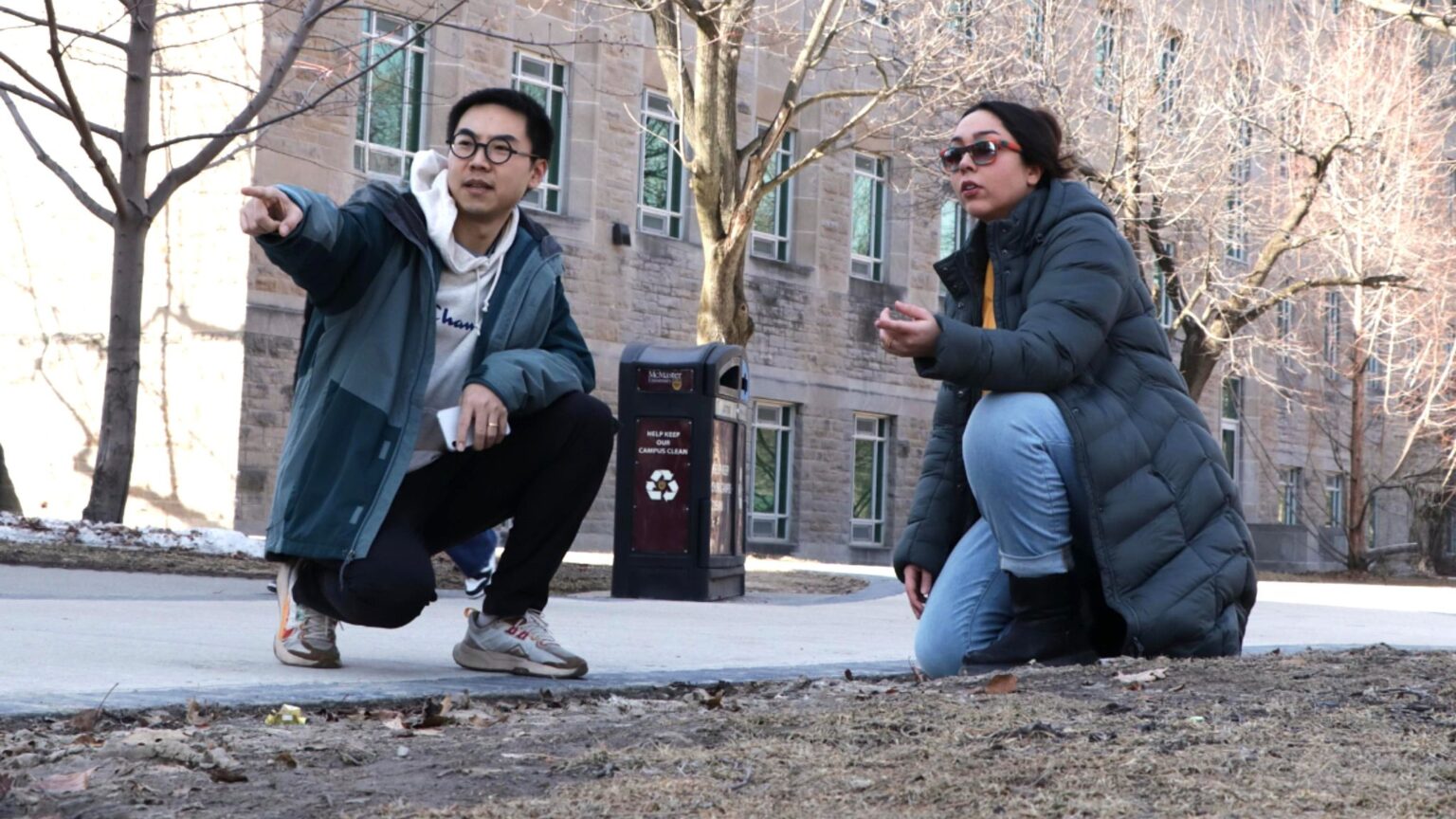
What if a university campus could manage rain where it falls by capturing it, treating it naturally and harnessing its potential to better climate resilience? That question sits at the centre of The Green Vein, a sustainability-focused design project developed by Master of Engineering Design (MEng Design) alumni Zahra Rezaei Abyaneh and Mathew Hou.
Earlier this year, their project on stormwater runoff received a Bronze Prize at the International Design Awards in Bangkok, drawing international attention to ideas grounded firmly at McMaster.
“Working on the Green Vein Project as students showed us that design can move beyond the classroom and contribute to real environmental change,” said Hou.
“Climate change can feel like a global issue that is too large to influence, but this project helped us see how thoughtful, site-specific design can make a tangible difference by managing stormwater, improving campus resilience, and creating spaces where people can learn from the landscape around them.”
A project rooted in a real challenge
With its extensive parking lots and other hard surfaces that direct runoff into municipal infrastructure, the project centers McMaster University as the optimal place to reframe stormwater runoff management.
The resulting proposal integrates green infrastructure across campus, including modified pathways, expanded green spaces and water features designed to slow, filter and store runoff.
Guided by W Booth School director Brian Baetz and working with Five Smooth Stones Restoration, a Kitchener-based firm specializing in stream and watershed restoration, the project explores how stormwater can be retained, treated and reused on site through integrated green infrastructure.
“What was different here is that the students used their human-centred design training to develop a conceptual plan that functionally addresses the stormwater management needs, but also provides an aesthetically pleasing and ecosystem-focused design for the overall betterment of our campus and the surrounding community,” said Baetz.
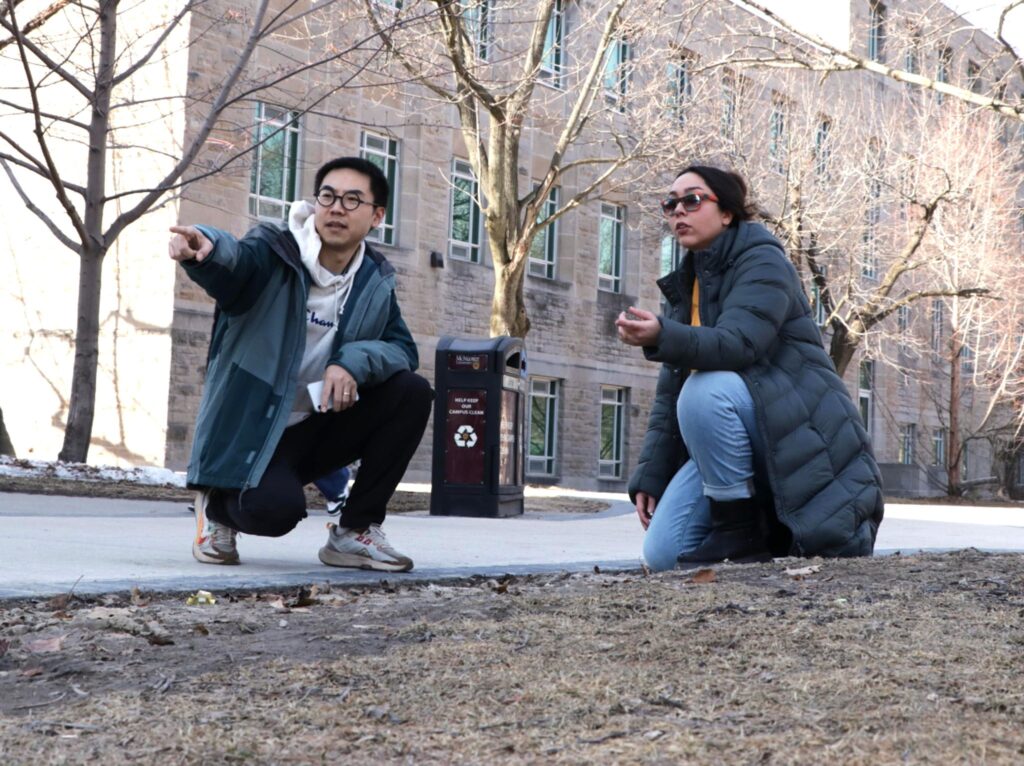
The project was selected through the MEng Design program’s annual call for proposals, led by program lead Robert Fleisig. Baetz interviewed several students before selecting Zahra and Mathew, whose backgrounds in landscape design and architecture offered complementary perspectives.
“Matt and Zahra’s award-winning work reflects how we engage our masters students through real-world projects, in this case directly connected to our own campus,” said Baetz.
“Their project is both timely and relevant as we respond to climate change and our responsibility as stewards of the Cootes to Escarpment EcoPark System.”
Design, engineering and partnership
The project focused on three key objectives: reducing runoff and supporting local ecosystems connected to the Dundas Valley, improving the quality and usability of campus spaces and reducing stormwater costs.
Students followed a structured, week-by-week process rooted in engineering analysis and design thinking, supported by ongoing coursework and mentorship.
Rather than view stormwater as waste, the design treats it as a resource.
“This project makes a compelling case that effective stormwater management can add value to a site, which is very different from the common view that this infrastructure should be buried and kept out of sight,” said Brad Fairley, director of Five Smooth Stones Restoration.
“We both gained something from the project. The students brought their ideas to life in a way that was compelling and thoughtful, while I was able to offer practical insight into the challenges of implementing those designs in the real world.”
Learning beyond the classroom
For Zahra and Mathew, The Green Vein is a clear example of applied engineering education in practice, combining technical analysis, global best practices, stakeholder engagement and place-based design.
“For us, it was meaningful to work on something that could have a real impact at McMaster and potentially inspire similar approaches elsewhere,” said Hou.
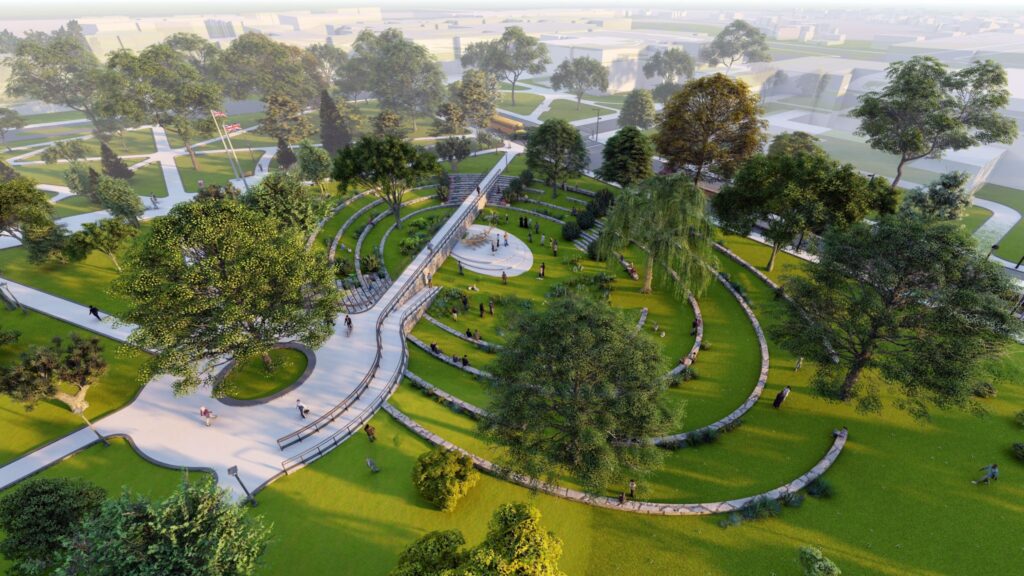
While the International Design Awards recognition marks a significant milestone, the project’s longer-term value lies in its relevance. As cities and institutions adapt to climate pressures and regulatory change, The Green Vein offers a framework that other campuses may consider. Facility Services and Nature at McMaster are collaborating to explore what components can be brought to life.
Future vision
Both Zahra and Mathew have since moved into professional roles in design and construction. Their vision for a more resilient, water-smart McMaster campus remains well positioned to inform future conversations around engineering, sustainability and campus planning.